I’m writing this article from my own experience. Venice was one of the stops on our month-long road trip through Italy with a baby. We stayed two nights, left the car on the mainland, and all day I carried my little one through the canals. And if anyone asks whether it’s worth taking a one-year-old who doesn’t yet talk to Venice — my answer is yes. But differently from how you imagine.
Some links in this article are affiliate links. If you book through them I earn a small commission, at no extra cost to you.
Contents
- Why Venice with a baby is different (and why that's good)
- What to see in Venice with a baby: our reality
- 1. Walking without a plan — the best "attraction"
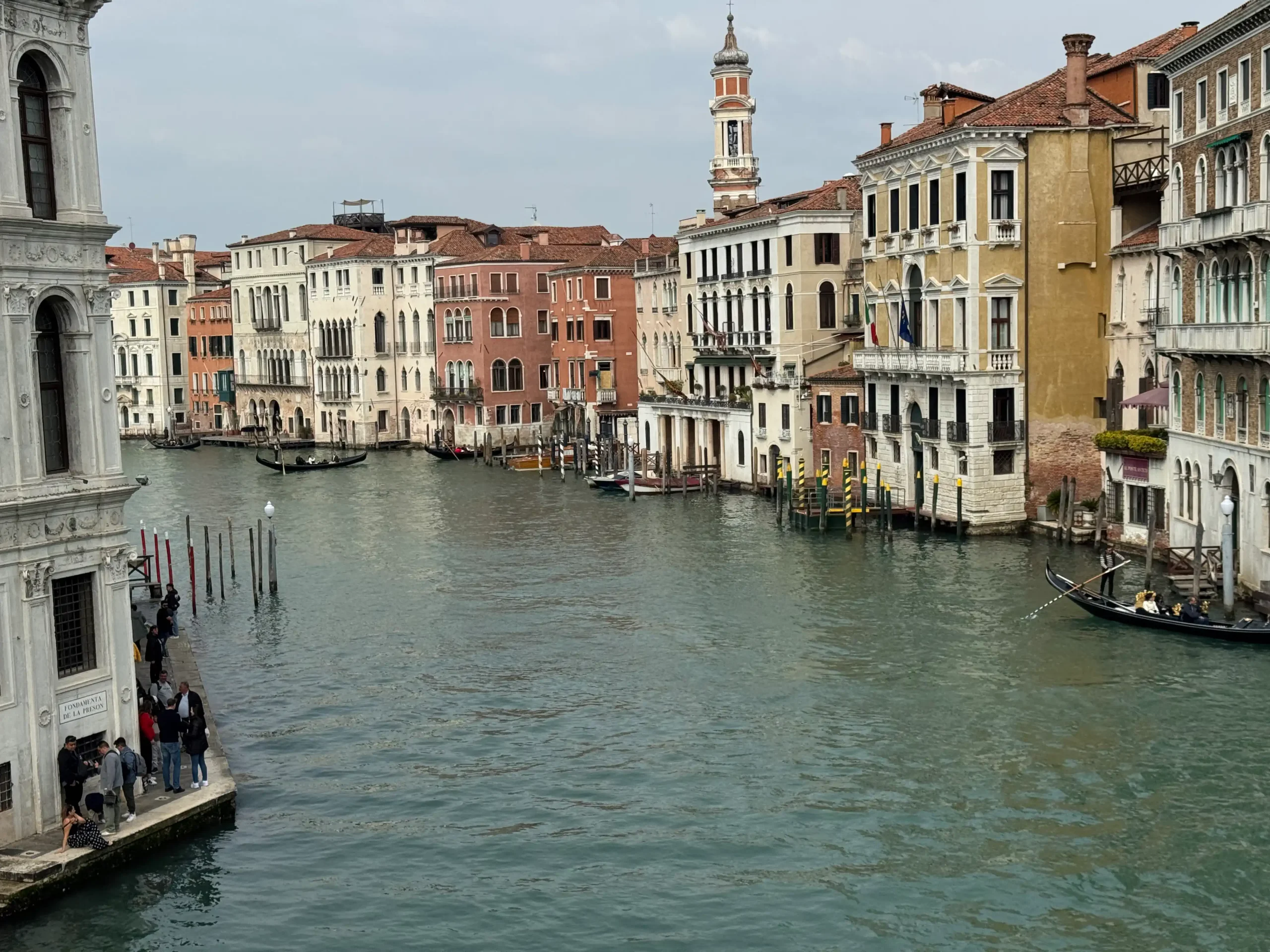
- 2. A vaporetto ride down the Grand Canal
- 3. Burano island — colours for a baby
- 4. Murano — a glass demonstration (quick)
- 5. Lido beach — a lifeline
- 6. The campos — your living room
- 7. The Rialto market in the morning
- Where to eat in Venice with a baby
- Cicchetti — the best format with a little one
- Specific places
- Practical tips: Venice with a pre-verbal baby
- Carrier vs. stroller: the big question
- Nappies and changing
- Feeding
- The afternoon nap
- Safety near the water
- Parking
- Where to stay with a baby
- How to reach Venice by car
- FAQ — questions about Venice with a baby
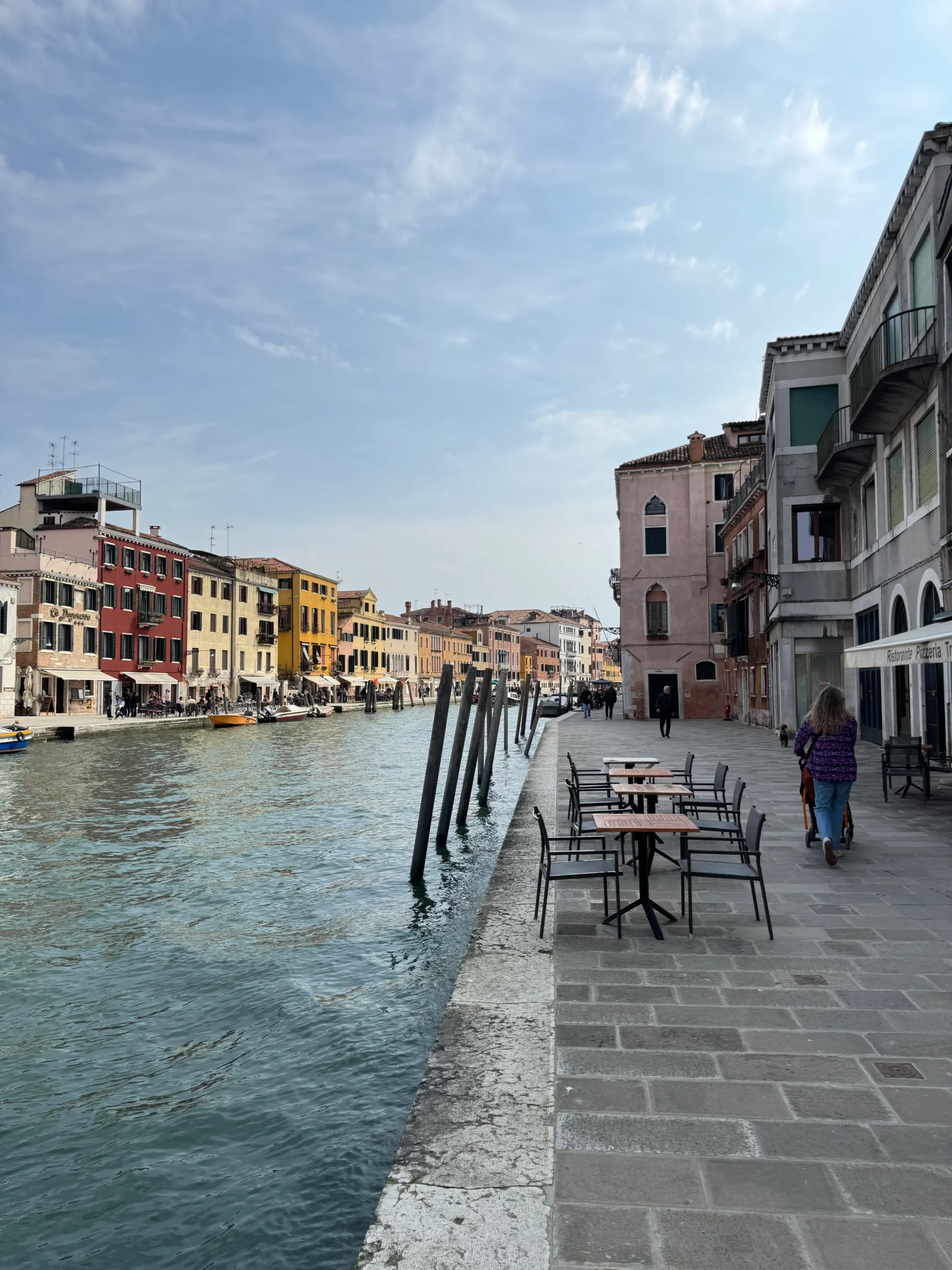
Why Venice with a baby is different (and why that’s good)
Let me start with what I had to learn myself: Venice with a baby is not the same as Venice with a five-year-old. To a five-year-old you can say “look, what a beautiful bridge!” To a one-year-old, a bridge is just an obstacle that mum has to get over together with the carrier and the nappy bag.
But there’s another side. A baby doesn’t complain that the queue is long. Doesn’t scream for ice cream. Doesn’t ask for a gondola. He just… is. He looks, touches, breathes the salty lagoon air and sleeps on your chest while you walk past a 13th-century palace.
Venice with a baby was calmer than I expected. And here’s why:
No cars. Not one. That’s Venice’s biggest advantage with a small child. You don’t have to fear he’ll run into the road. Of course there are canals (more on that later), but on the streets it’s only pedestrians and pigeons.
The vaporetto = a lullaby. The water bus rocks, hums, the wind blows — our little one would settle within three minutes. I’d sit with him in my arms and look at the Grand Canal. Those were the calmest moments of my trip.
The rhythm. With a baby you can’t rush through 10 museums a day. And that forces you to slow down. We had slow breakfasts, walked slowly, drank coffee in the campos while the little one watched and chatted to the people around. And Venice became better for it, not worse.
What to see in Venice with a baby: our reality
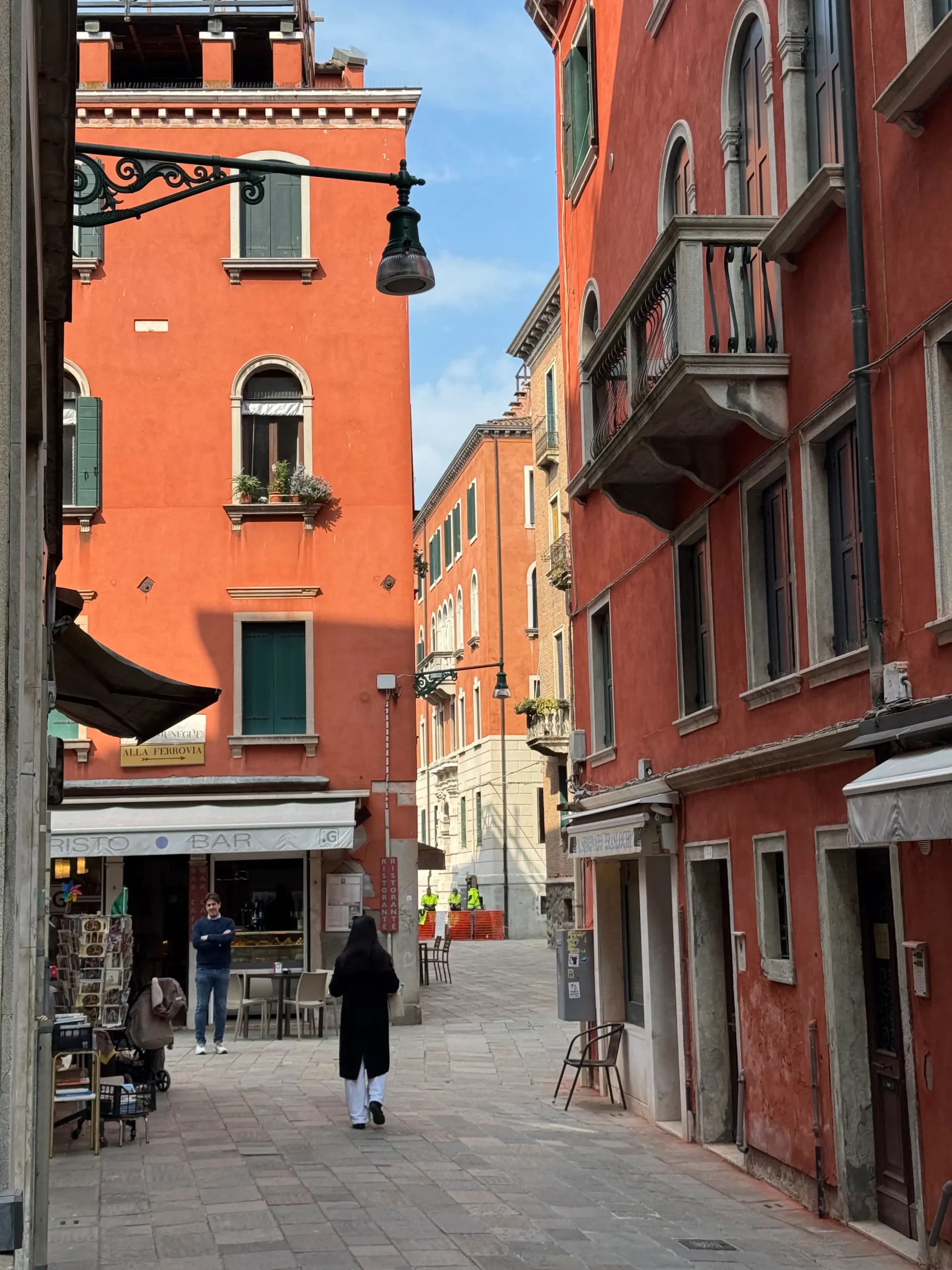
I’ll say it straight away — with a one-year-old you won’t be going to museums. Well, maybe one. But Venice is a spectacle even without museums. Here’s what worked for us.
1. Walking without a plan — the best “attraction”
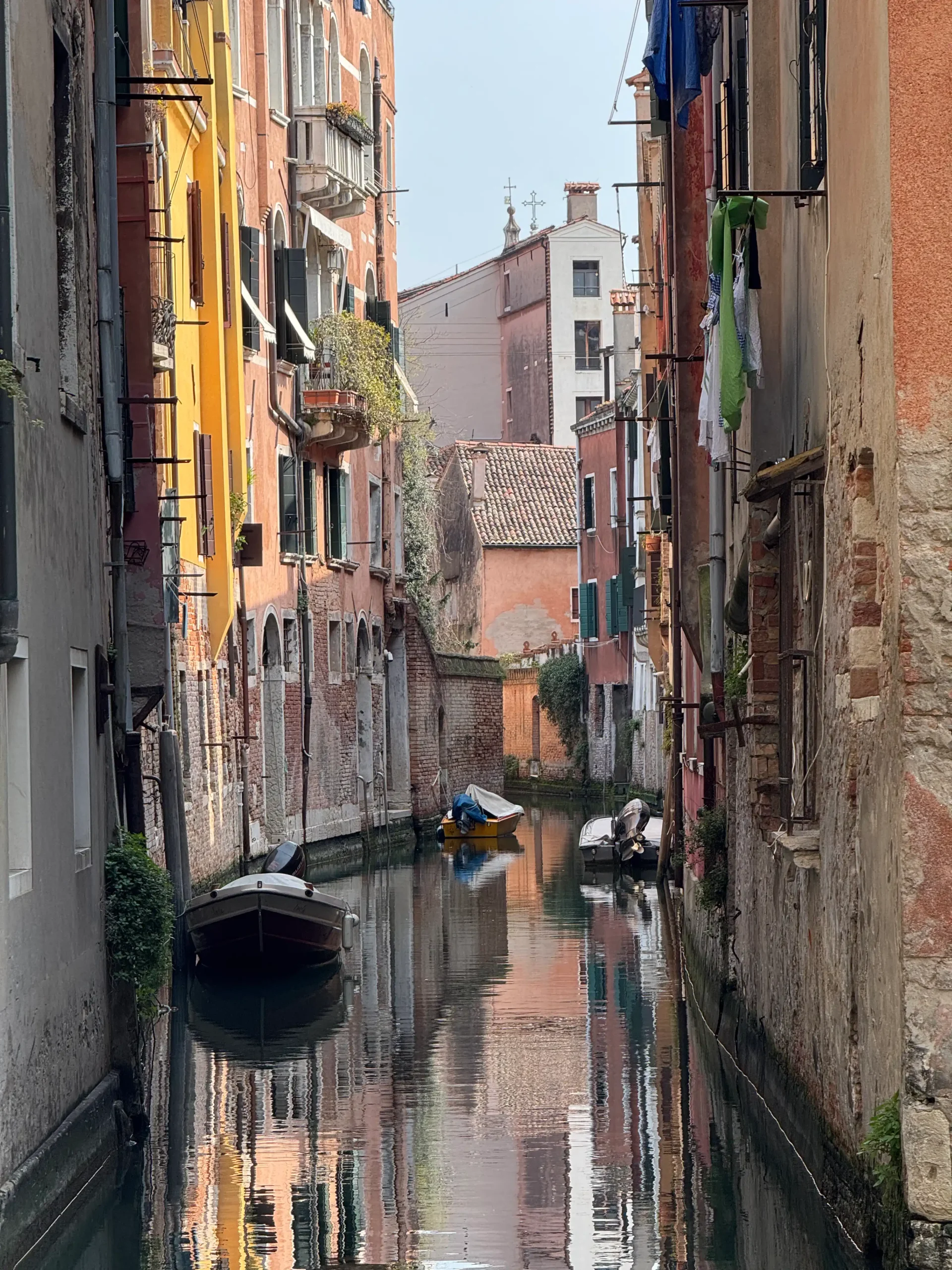
Really. Our best hours in Venice were when we simply went wherever our eyes led. Narrow lanes, canals, old doors, someone’s washing on a line above our heads. A baby doesn’t need the Doge’s Palace — he needs new colours, sounds, textures. And Venice has endless amounts of those.
The little one sat in the carrier and watched. Sometimes he’d babble, pointing a finger at a boat. Sometimes he’d just look quietly. And that was enough for me.
We found a route that works with a stroller, and off we went. It was a lot of unpopular lanes, but very authentic and empty.
2. A vaporetto ride down the Grand Canal
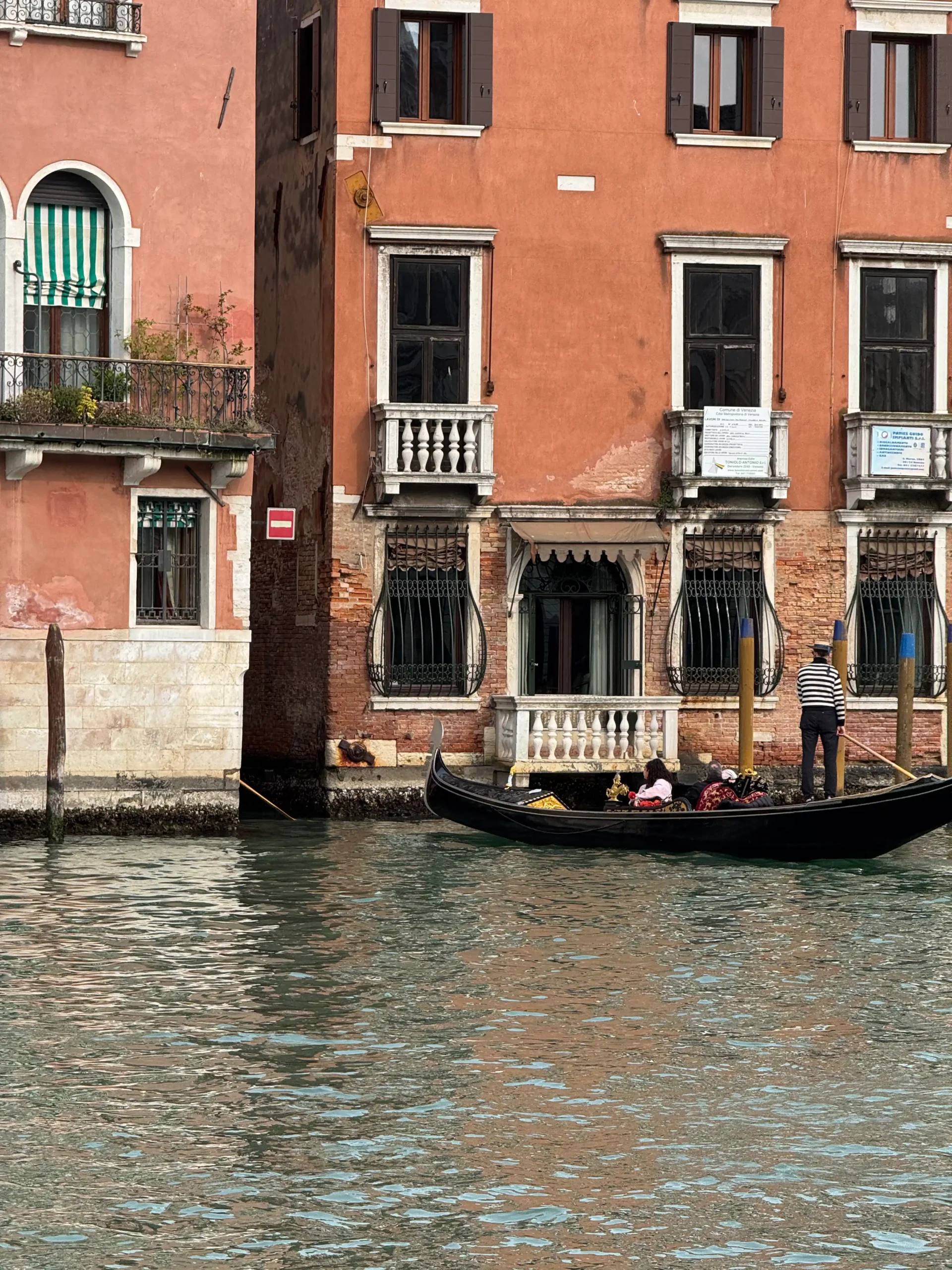
Line No. 1 travels the whole Grand Canal slowly, with stops. It’s the best free (well, almost — €9.50/ticket, free for babies under 6) tour in Venice. Palaces, bridges, gondolas — all of Venice through the window, while the little one sleeps peacefully in the carrier or watches the water.
Here’s how we “used” the vaporetto: when the baby got tired and needed calm, we’d get on the boat and cruise the canals while he slept.
Ticket: single ~€9.50, 24 hours ~€25. With a baby I recommend the 24-hour one — you’ll be getting on and off boats constantly.
3. Burano island — colours for a baby
Burano is another good day trip worth a go. We didn’t manage it, but we really wanted to. Not because there’s anything “educational” there — but because of the colours. Bright red, blue, yellow little houses — simply “wow”.
Burano is calmer than central Venice. Wider paths, fewer crowds. There’s a small playground (from the ferry terminal — turn right, along Strada di Corte Comare). And there are benches where you can sit down to feed or snack.
How to get there: vaporetto No. 12 from San Zaccaria, ~45 min. With a baby, that boat ride is the attraction itself.
4. Murano — a glass demonstration (quick)
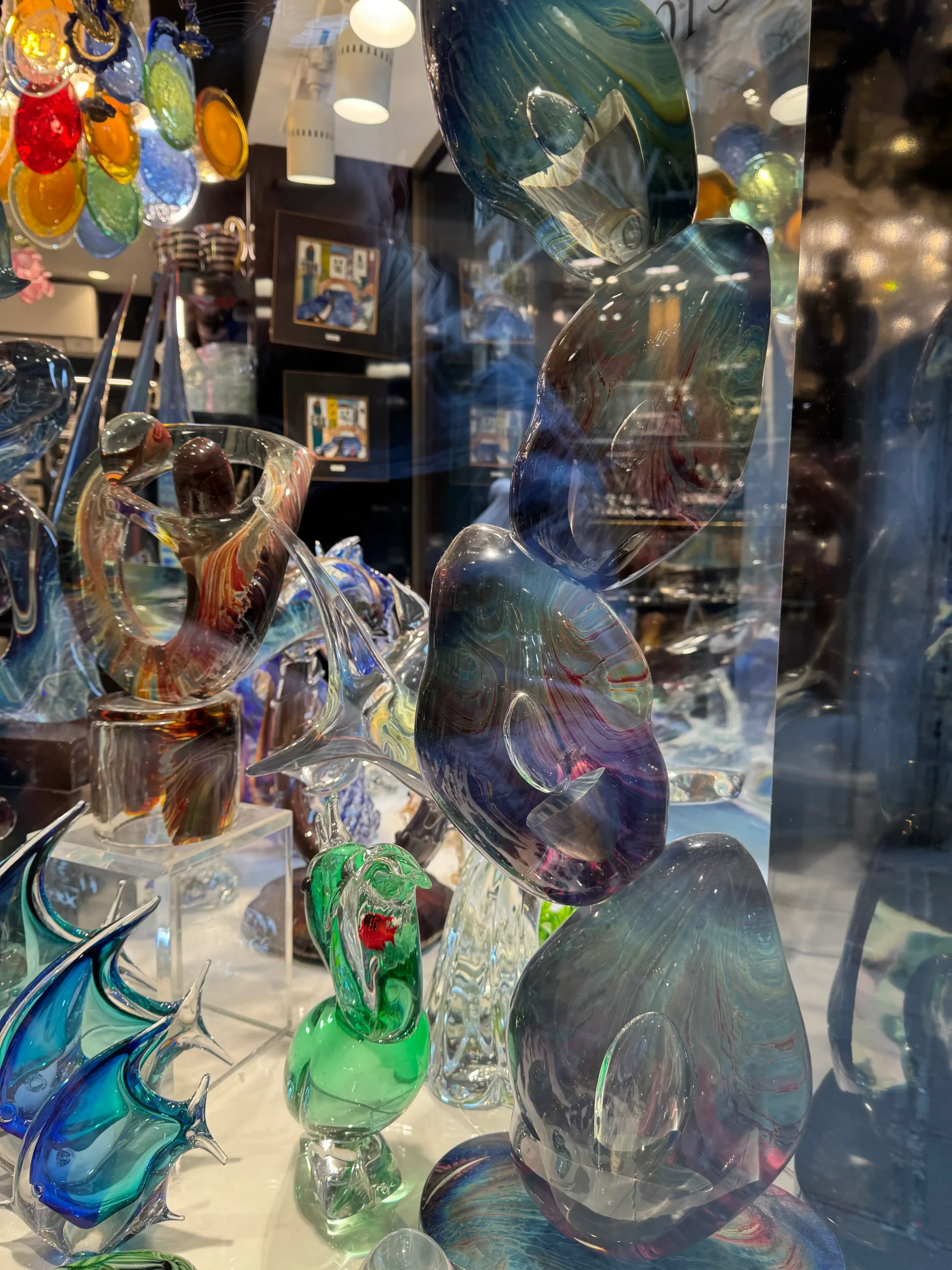
With the baby in the carrier, we popped into one glass workshop where a master made a little horse from molten glass in 5 minutes. The demonstration is free (they hope you’ll buy something). The little one watched the fire and the glass — hard to say whether he understood, but he was calm and interested.
We didn’t spend more than 20–30 min in Murano with a baby. And that was enough. The longer workshops where you make things yourself are for older children.
5. Lido beach — a lifeline
If there’s still time for a second day in Venice, I recommend sailing over to the Lido. 15 min by vaporetto from San Marco — and you’re on a beach with sand and calm, shallow water.
It’s a great place to spend time quietly on the beach. The child just sits and digs in the sand. And the parents can simply drink coffee and not rush anywhere.
Blue Moon beach is the main area, reachable straight from the vaporetto. There are free and paid parts (loungers + umbrella from ~€15–20/day).
6. The campos — your living room
With a baby, the campos (squares) become your home. Here you can sit down, feed, change a nappy on a bench (yes, that’s what I did, because there are almost no changing tables in Venice), let him crawl on the warm stones.
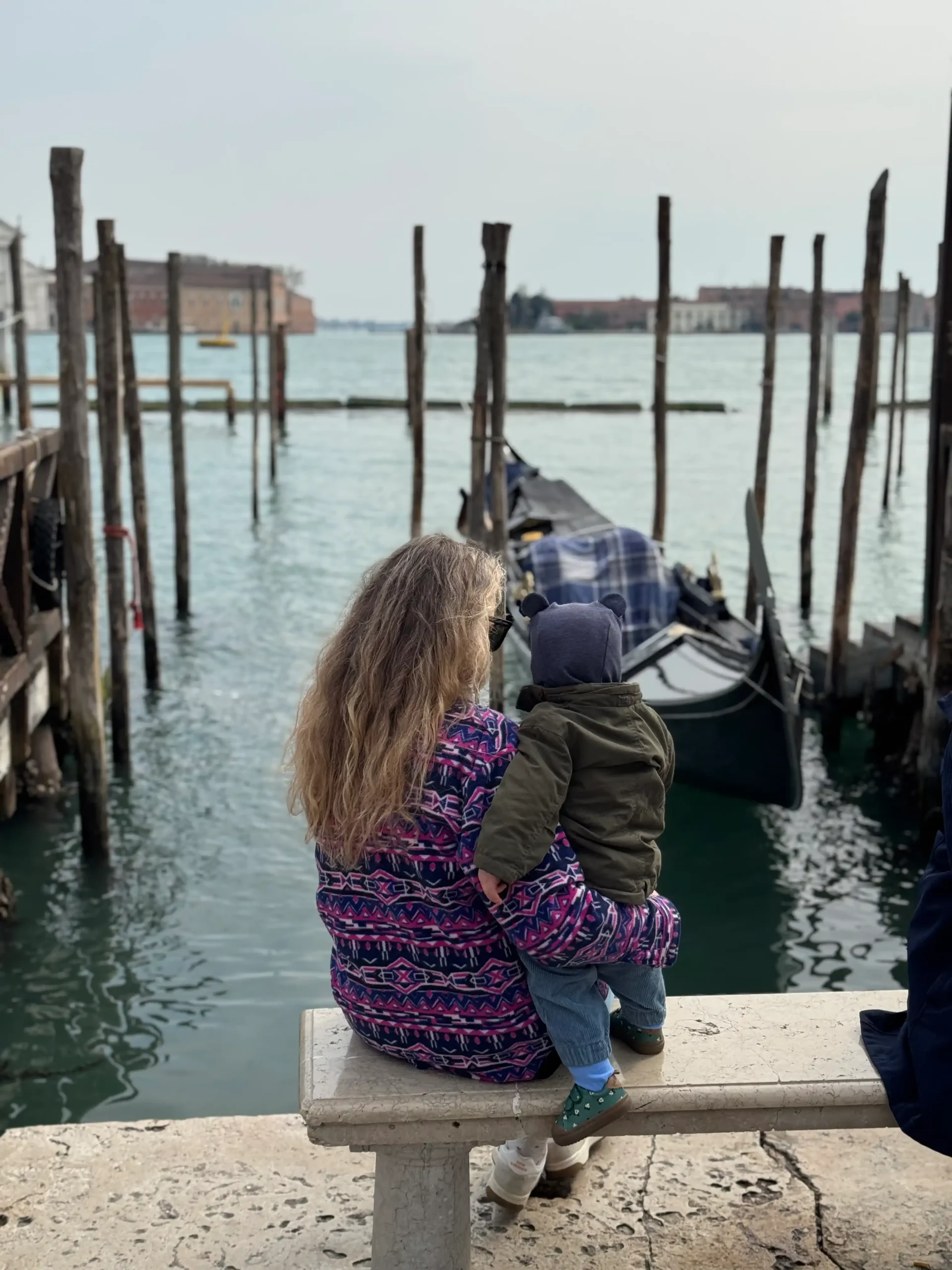
Our favourites: Campo Santa Margherita (Dorsoduro) — big, with cafés with outdoor tables, other mums with children. Campo San Giacomo dell’Orio (Santa Croce) — quieter, with shade from the trees.
7. The Rialto market in the morning
We went here not for the cultural experience but for fresh fruit. But for a baby the Rialto market was like a circus — colours, smells, people shouting, huge squid on ice. He sat in the carrier and watched everything wide-eyed.
We bought strawberries and sat by the canal. The little one ate a softened banana. The best moments usually don’t happen where you plan them.
Open: 7:30–12:00 (the fish section closed on Mondays).
Where to eat in Venice with a baby
Cicchetti — the best format with a little one
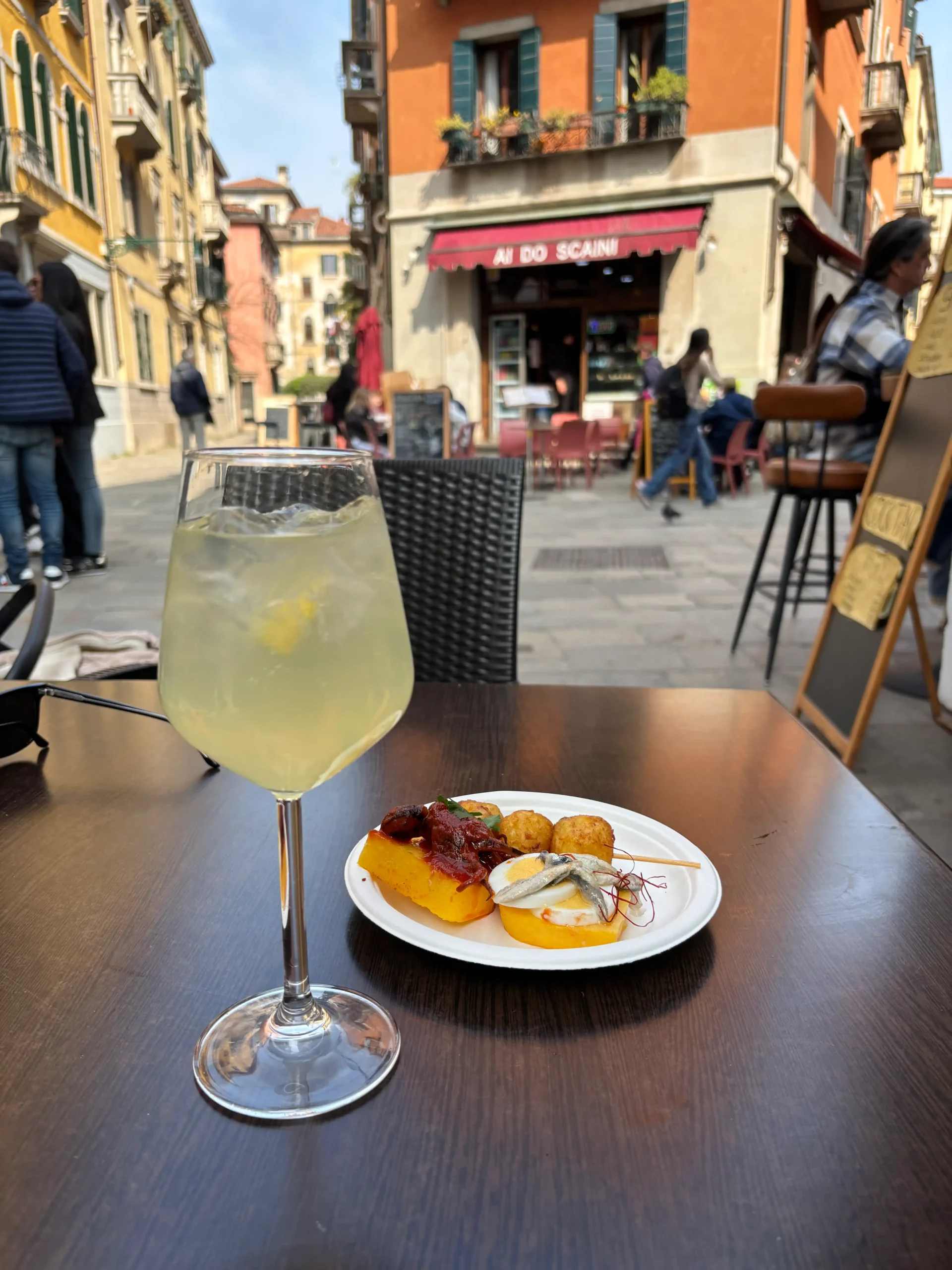
Cicchetti are Venice’s mini snacks in the bars (bacari). They cost €1–4 each. And with a baby it’s the ideal format: you come in, order at the bar, get it within a minute, eat quickly. No waiting for a waiter, no sitting for an hour. If the little one starts to scream — you just leave.
Specific places
Bacarando Corte dell’Orso (S. Marco, 5495) — our No. 1 with a baby. Why? Because there are seats (rare in a bacaro). Big wooden tables where you can put down the bag, sit the baby on your lap and eat in peace. The cicchetti choice is huge. From €1.50 each.
Rosticceria Gilson — a tavola calda: food ready-made, shown in the display case. Point a finger — you get it. Lasagne, rice, vegetables. Convenient when you’re holding the baby with one hand and a plate with the other. Dishes €5–12.
Birraria La Corte (San Polo) — a pizzeria with an outdoor area on Campo San Polo. Here you can sit down, put the little one on a blanket on the ground, and eat pizza in peace. Pizza €8–14.
Important about baby food: in Venice’s pharmacies (farmacie) and small supermarkets (Coop, Despar, Conad) you’ll find baby-food purées, cereals and formula. If you’re breastfeeding — Venice’s campos are great places to feed, with a bench and shade. Italians see it as completely normal.
Practical tips: Venice with a pre-verbal baby
Carrier vs. stroller: the big question
My verdict: carrier — No. 1. Stroller — No. 2, but you need it.
Venice has over 400 bridges. Most have steps. With a carrier you simply walk over the bridges like a normal person. With a stroller — lift, carry, put down, push, repeat.
BUT. A stroller with a baby is a lifeline for other reasons:
- Afternoon nap. The baby sleeps in the stroller — and meanwhile you drink a spritz and are a human being.
- Nappy changing. There are practically no changing tables in Venice. I changed nappies in the stroller.
- Safety near the water. There are no railings on the canals. With a baby who already crawls or pulls to standing — that’s worry No. 1. A baby strapped into a stroller can be pushed calmly along a canal. In your arms or crawling — no.
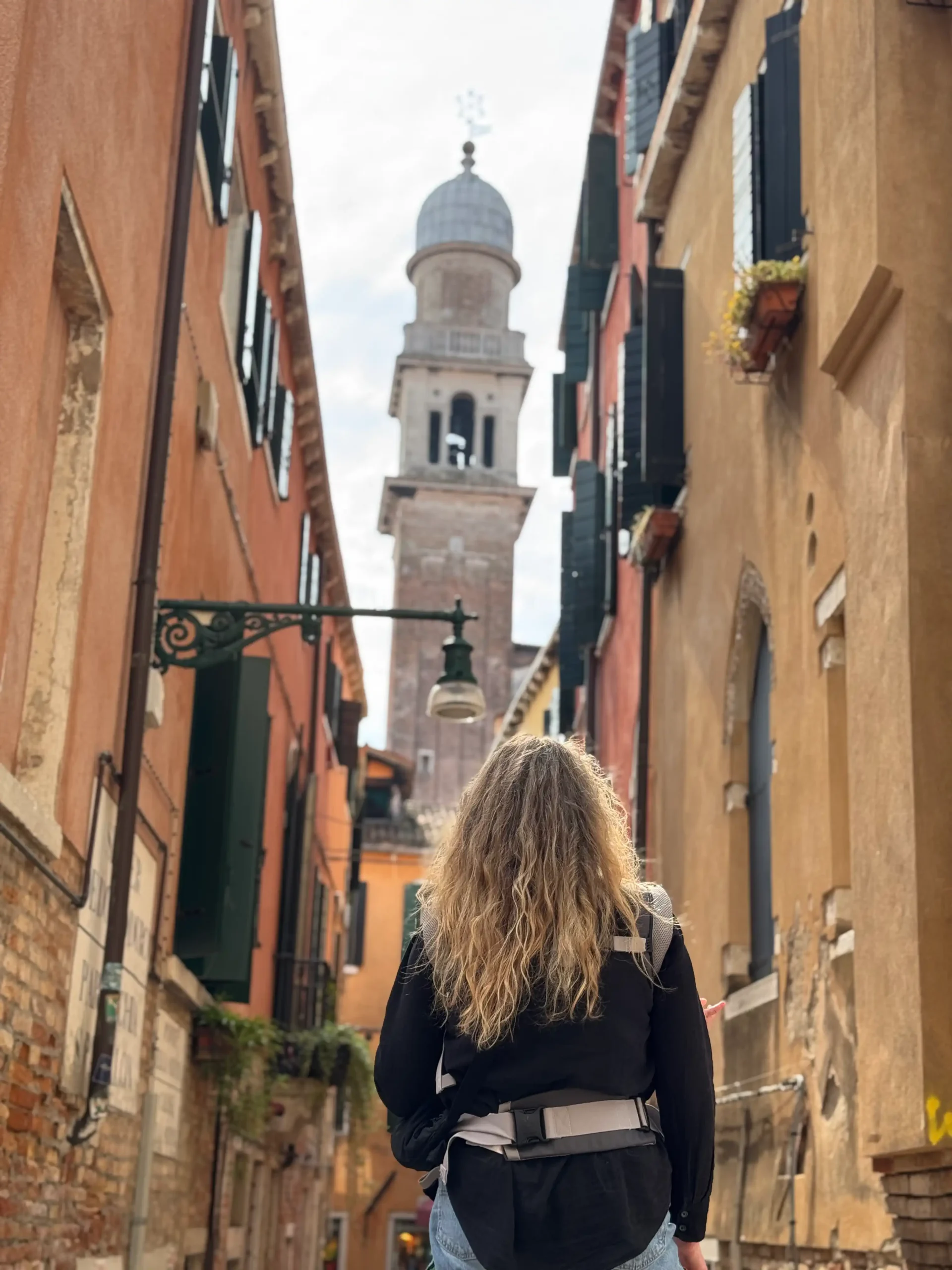
My system was this: a carrier (Ergobaby type) for bridges, narrow lanes and the vaporetto. A light folding stroller (Babyzen Yoyo type) for flat surfaces, naps and meal breaks. I had both, used both, and wouldn’t have survived without either.
Nappies and changing
I’ll say it straight: there are almost no changing tables in Venice. Not in restaurants (the toilets are too small), not in public places. Some public toilets (WC, ~€1.50) have them, but don’t count on it.
What I did: a changing mat (the folding kind) + the stroller or a bench in a campo. It sounds inelegant — but this is Italy, and no one cares. Here mums with babies are normal.
I bought nappies locally — at Coop and Despar supermarkets you’ll find all the main brands. No need to bring a month’s supply from home.
Feeding
If you’re breastfeeding — in Venice it’s easy. Squares with benches, cafés with outdoor tables — I fed in public and no one even glanced. Italians are used to it.
If you use formula — you’ll find it at pharmacies. Any café will give you hot water if you ask (say “acqua calda per il biberon” — they’ll understand).
If you’re already onto purées / BLW — in restaurants ask for a portion of boiled pasta with olive oil. That’s the classic Italian baby food and they’ll happily make it. The phrase: “pasta in bianco per il bambino.”
The afternoon nap
This dictates the whole day. And you have to make peace with it.
Our system: in the morning (8–11) — active time in Venice, we’d go sightseeing, sailing. Midday (~11:30–12:00) — eating and a nap in the stroller or on the vaporetto. Afternoon — quietly, a square. Evening — back to where we were staying.
With a baby, a day in Venice ends earlier than you’d like. And that’s normal. In a day we saw as much as someone else does in a couple of hours. But we saw it calmly.
Safety near the water
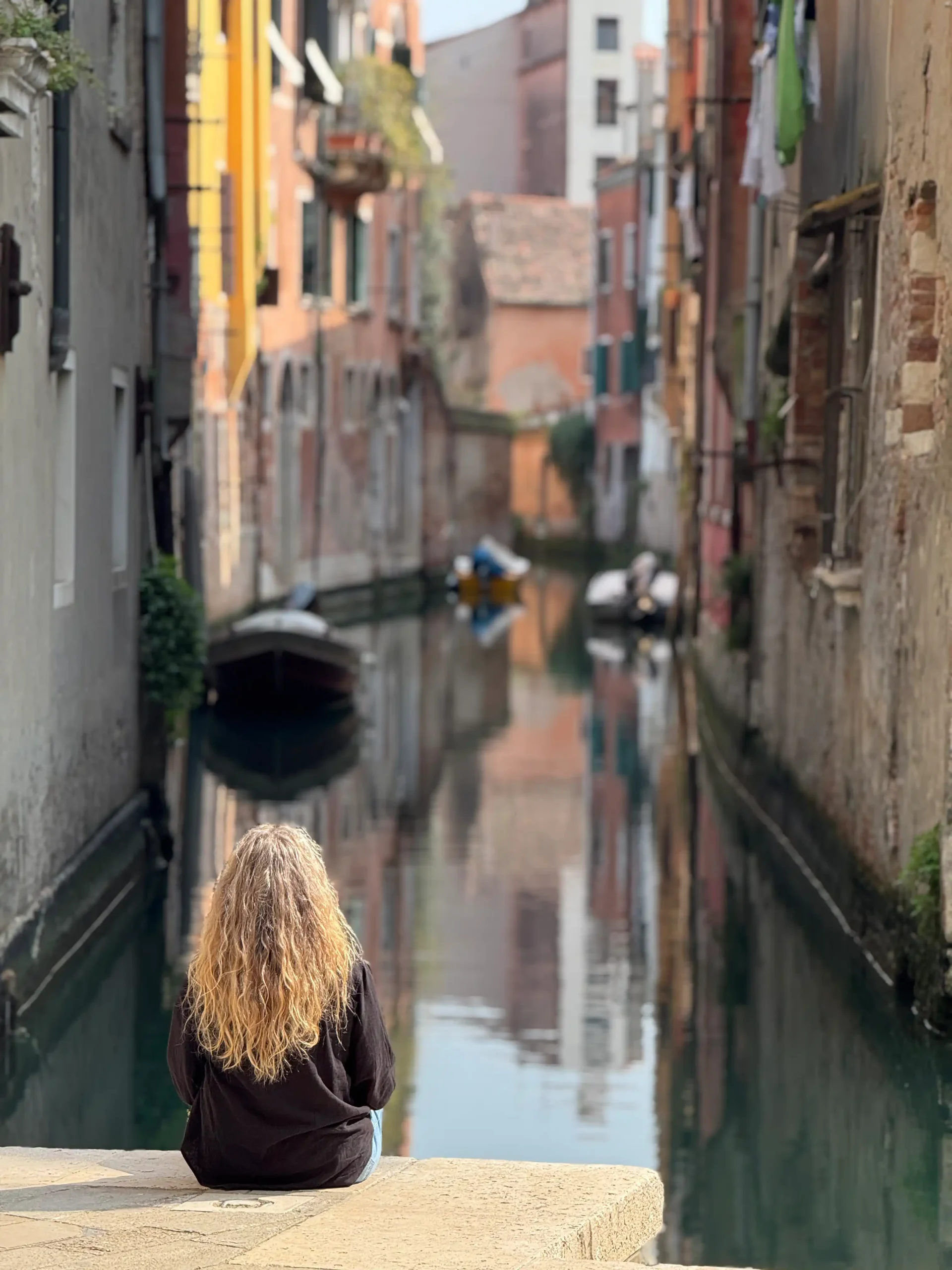
This is the one thing in Venice that gave me real anxiety. The canals have no railings. In many places the water is barely half a metre from the path. With a baby who already walks and wants to touch everything, it demands constant attention.
My rules were:
- By a canal — only in the carrier or strapped into the stroller. Never loose in your arms and never on the ground.
- In a gondola — I said no. With a one-year-old who wriggles like an eel, in an open boat without life jackets — no thanks. Maybe when he’s 3.
- The vaporetto — fine, if you hold on tight. Getting on and off, the carrier is more convenient than the stroller.
Parking
We left the car in Scaltenigo — free parking by the train station and a train to Venice ~25 min (~€5). With a baby that was the most convenient: no dragging the stroller through the chaos of Tronchetto or Piazzale Roma.
| Place | Price/day | Comment with a baby |
|---|---|---|
| Scaltenigo | €3–5 | Free parking by the train station. Train 25 minutes. |
| Mestre | €5–15 | Cheapest, train 10 min. Most convenient with a baby — less carrying. |
| Tronchetto | €25–30 | A big car park, but to the centre it’s People Mover + vaporetto. With a baby — lots of transfers. |
| Piazzale Roma | €35–40 | Closest, but expensive and often full. |
Where to stay with a baby
With a baby, the choice of accommodation matters more than ever. It’s not about “where’s cheapest” — it’s “where will I have a kitchen, a place to do laundry and a chance to rest.”
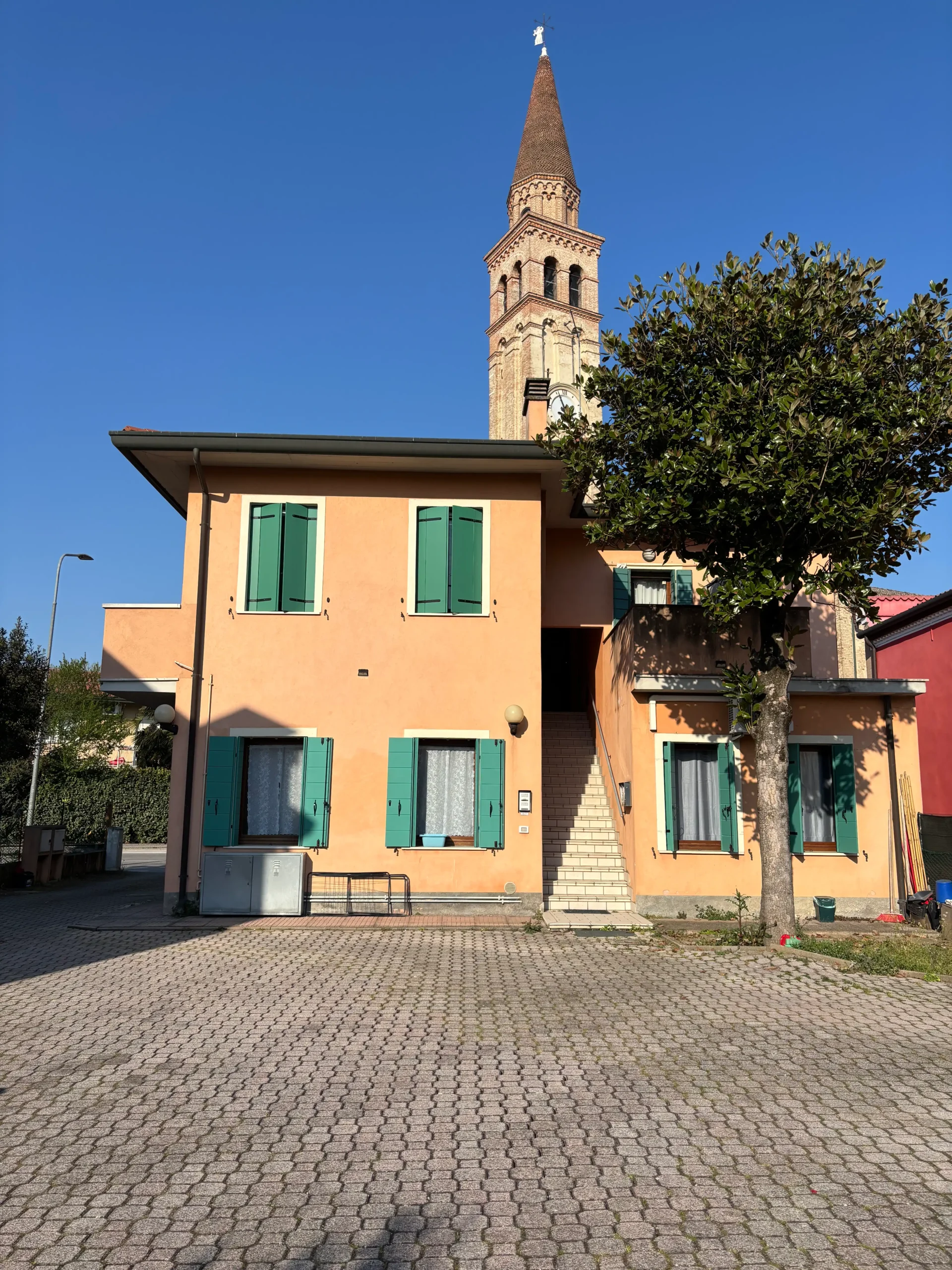
Our choice: an apartment in Scaltenigo. The best decision. After a day in Venice — returning to somewhere with a garden, quiet village streets and only local residents. A church standing in front of the windows added to the authenticity — the ringing of the bells is impossible to miss.
What to look for in accommodation with a baby:
- A kitchen — for warming purées, sterilising bottles, preparing night-time milk.
- A washing machine — with a baby it’s not a “nice to have” but a necessity.
- A cot — check whether it’s provided. Some places yes, others no.
- A bath (not just a shower) — for bathing the baby.
- Free parking — if you’re travelling by car.
Price guide:
- Agriturismo on the mainland: €80–120/night
- Apartments around Venice: €70–100/night
- Venice island (Cannaregio/Dorsoduro): €120–200/night (no lift — check! Venice hotels are often without a lift, and with a baby + stroller that matters)
How to reach Venice by car
| From | Distance | Time | Motorway toll |
|---|---|---|---|
| Florence | ~260 km | ~3 hrs | ~€25 |
| The Lake District (Garda) | ~150 km | ~1.5–2 hrs | ~€15 |
| The Dolomites (Cortina) | ~160 km | ~2–2.5 hrs | ~€10 |
| Slovenia (Ljubljana) | ~250 km | ~2.5 hrs | ~€20 + vignette |
You leave the car in Scaltenigo, Mestre, Tronchetto or Piazzale Roma. Over the Ponte della Libertà bridge (4 km) you reach the island — the car goes no further.
A tip with a baby: stop at least once on the way — for the toilet, to feed, to have a break. Italy’s motorways have excellent “Autogrill” stops with changing rooms.
FAQ — questions about Venice with a baby
Is Venice suitable with a one-year-old baby?
Yes, if you accept that the pace will be slow, museums minimal, and the day will end early. Car-free Venice is safe, the vaporetto is convenient, and Italians simply love babies.
Stroller or carrier?
Both. A carrier for bridges and the vaporetto. A light folding stroller for naps, nappy changes and calm pushing on flat surfaces. If only one thing — the carrier.
Will you find baby food in Venice?
Yes. Coop, Despar and Conad supermarkets have purées, cereals and formula. Pharmacies have more specialist products and medicines. No need to bring all your supplies.
Where do you change nappies?
Mostly in the stroller or on a bench in a campo with a changing mat. Public toilets sometimes have a changing table. Restaurants — almost never.
Is it worth taking a gondola with a baby?
My opinion — with a one-year-old who wriggles, no. Gondolas have no life jackets and are open. The traghetto (€2, a 2-minute crossing of the Grand Canal) is a faster and safer alternative to catch the gondola feeling.
Search for flights here. If something goes wrong with your flights, you can claim compensation through AirHelp or Compensair.
Staying connected? Skip expensive roaming and grab an eSIM plan — set it up before you fly and you’ll have data the moment you land.
I always recommend booking taxi transfers to and from the airports in advance. You can do that here.
Find accommodation here.
Read next: Sperlonga with a baby 2026: a white town, shallow water and the 4 days we needed — the next stop on our month-in-Italy road trip.