Some links in this article are affiliate links. If you book through them I earn a small commission, at no extra cost to you.
Contents
- Why Gravina in Puglia, and not Matera
- Day 1: the road from Salerno to Gravina
- Where we slept
- The first evening in Gravina
- Day 2: Matera, the Bond bridge and Gravina's old town
- Where to park in Matera
- The Sassi: a first look
- What you can't miss in Matera (with a baby in a carrier)
- With a baby in Matera's old town: what's important to know
- Lunch in Matera
- How much time you need for Matera
- Ponte Acquedotto: not just a film set
- San Michele delle Grotte and Gravina Sotterranea
- Day 3: the road from Gravina to Torre Santa Sabina
- Practical information
- Accommodation price guide
- With a baby in Gravina and Matera
- Is it worth going? My opinion
- FAQ: frequently asked questions
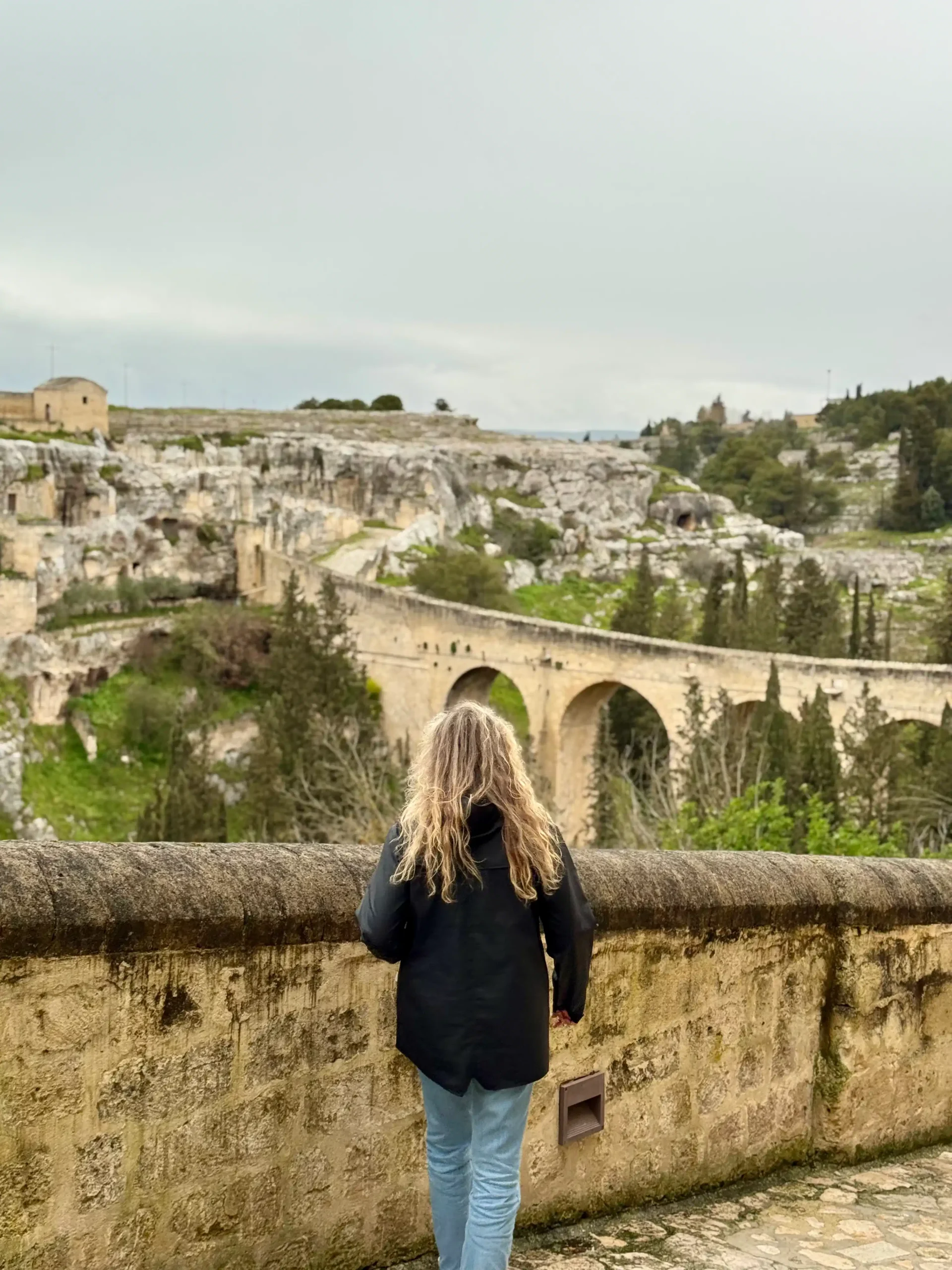
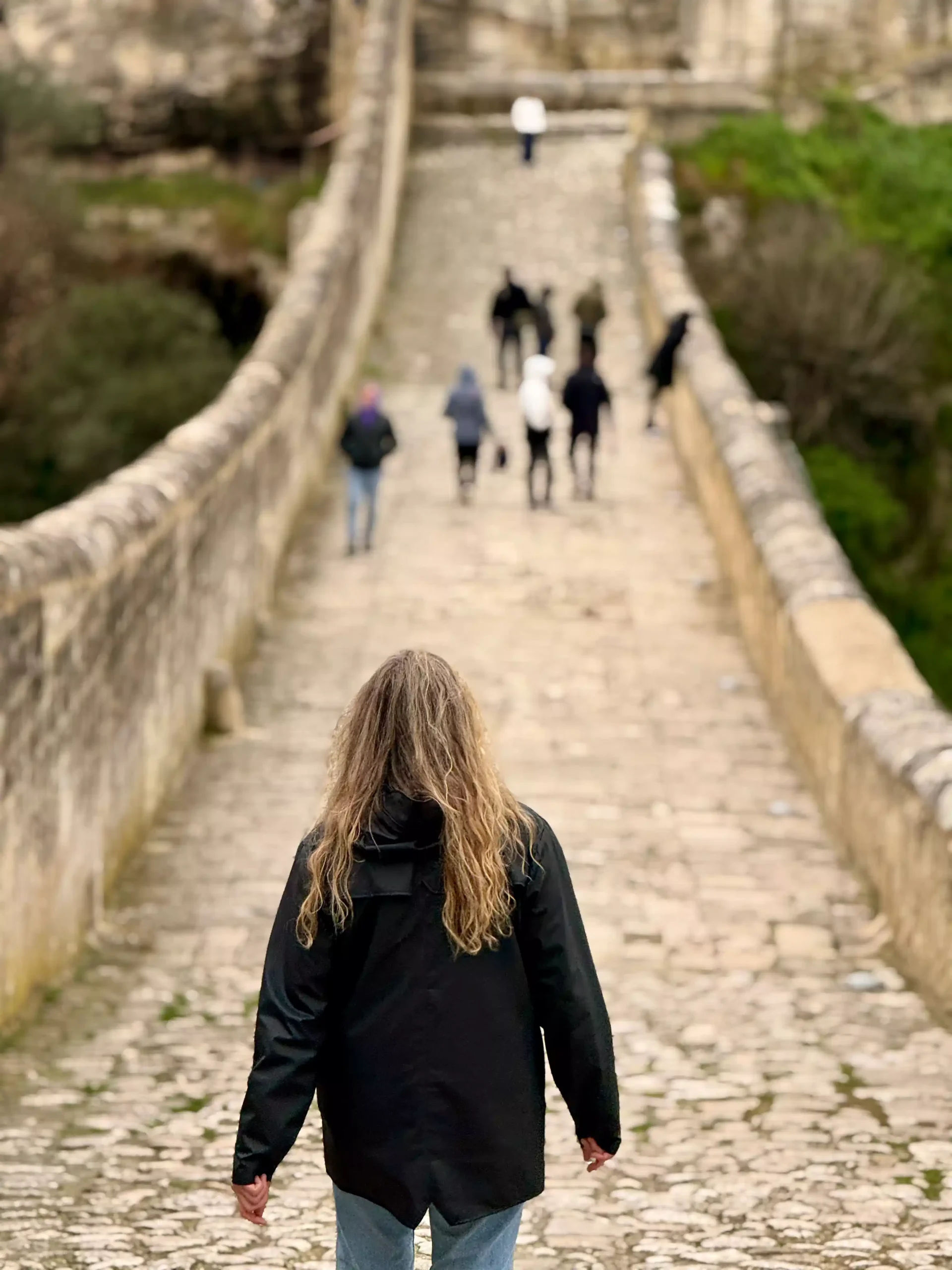
I’m standing in the middle of the bridge and below me, somewhere 37 metres down, is a deep gorge with a dried-up river and rocks that look as if someone cut them out of an old Western. And under my feet are the stone slabs on which, a few years ago, Daniel Craig staged his legendary escape from a motorbike in the Bond film No Time to Die.
This is the Ponte Acquedotto Madonna della Stella, often called simply the Ponte di Gravina or the “Bond bridge”. I’d never heard of this town before. And now here I am, standing on the bridge whose photos float around Pinterest boards, repeating to myself: how did I end up here?
The answer is simple. We were driving from Salerno to the coast on the Puglia side, and on the map I spotted Matera. We wanted to stay away from the touristy city, and we ended up in Gravina.
In this article I’ll tell you how to plan a Gravina in Puglia route with a baby: from arriving from Salerno, to a day in Matera, to leaving for the Adriatic coast. All the times, prices and small-human logistics details that I looked for myself and couldn’t find anywhere.
This article is part of a larger month-in-Italy story. If you haven’t yet read my Salerno with a baby or Tuscany Chianti region articles, start with those and come back here.
Why Gravina in Puglia, and not Matera
The first thing everyone asks: why didn’t you sleep in Matera?
The short answer: too expensive and too touristy. The longer answer: Matera is a UNESCO site, a star, everyone visits it. A night in the Sassi district can cost €200–400, and the Matera centre itself is a ZTL zone (zona a traffico limitato), which means you can’t drive in with a car. You have to leave the car outside the centre and carry the pushchair / baby / suitcases over the stone paving, often down stairs.
Gravina is 27 km away. The same Bond film has drawn more than one tourist to the town, but when we were there it felt as if we only met tourists by the bridge. Local people, a real Italian evening, accommodation half the price. Matera is a half-hour drive away.
So the plan fell into place by itself:
| Day | Route | Distance / time |
|---|---|---|
| 1 | Salerno → Gravina in Puglia | 173 km, about 2 h 20 min |
| 2 | Day trip to Matera | 27 km, about 30 min each way |
| 3 | Gravina → Torre Santa Sabina | about 150 km, 1 h 45 min – 2 h |
Day 1: the road from Salerno to Gravina
The route is simple: from Salerno the SA-RC motorway towards Sicignano, then the SS407 (called the Basentana) through the Basilicata region, and finally the SS96 towards Gravina. The road is 173 km, but you drive about 2 h 20 min, because half of it isn’t motorway. For the road we paid about €7 (only the motorway section in Campania is tolled). Add another ~€25 for a full tank of fuel.
Along the way we stopped once, at the Tito Scalo services. A toilet with a changing table (you won’t find them everywhere in Italy), an espresso for €1.20, a panini for €3.50.
At about 4 p.m. we reached Gravina. I’d been looking for accommodation with parking, so we found a wonderful place almost in the centre with an enclosed yard. Very convenient, since parking in Italy is a very big problem.
Where we slept
I found the accommodation through Booking. About €100 a night for a double room with a bathroom, a little kitchen and a way out to the yard. We chose the most authentic place we could, to feel the local culture. My tip: look not in the old town itself, but a few streets away from it. Gravina’s old town stands on rock, the streets there are narrow, some with stairs, difficult for a pushchair. Our place was in a flatter spot, but a 5-minute walk from the bridge.
Tip: when you book, write to the hosts that you’re travelling with a small child and ask about a cot (culla or lettino).
The first evening in Gravina
Once we’d settled into the room, we went out into the old town. And here’s where the thing that I liked most in Gravina happened: the evening was alive. Not alive with tourists, but with locals. Families with children on Piazza Notar Domenico, grandparents on the benches, teenagers standing around in a circle by the buildings. Everyone eating gelato. Everyone talking in three voices at once. No one feels like a sculpture in a museum.
For dinner we chose a local pizzeria and ordered a pizza to take away. We were the only tourists, but it looked like the locals love the place. In short, whatever pizzeria you choose, the pizza never disappoints.
Day 2: Matera, the Bond bridge and Gravina’s old town
We got up early. I wanted to reach Matera before 10 a.m. to avoid the tour-bus chaos. From Gravina we drove about 30 minutes via the SS96 and SS99. The road is simple, no motorways, but no traffic jams either.
Where to park in Matera
This is the first practical detail that will make you cry if you haven’t planned it yourself. The Sassi Matera old town is a ZTL zone (closed to traffic), and the cameras automatically photograph number plates. The fine is from €80, so don’t drive towards the city centre.
The options:
| Car park | Price | Distance to the Sassi |
|---|---|---|
| Parcheggio Fornaci (covered) | €1/h, €10/day | 5 min walk |
| Parcheggio Saragat (covered) | €0.50/h, €5/day | 10 min + bus |
| Street (blue lines, by Villa Comunale) | €0.70–1/h | 2–5 min walk |
| Damasco car park | about €10/day | above the old town |
The Sassi: a first look
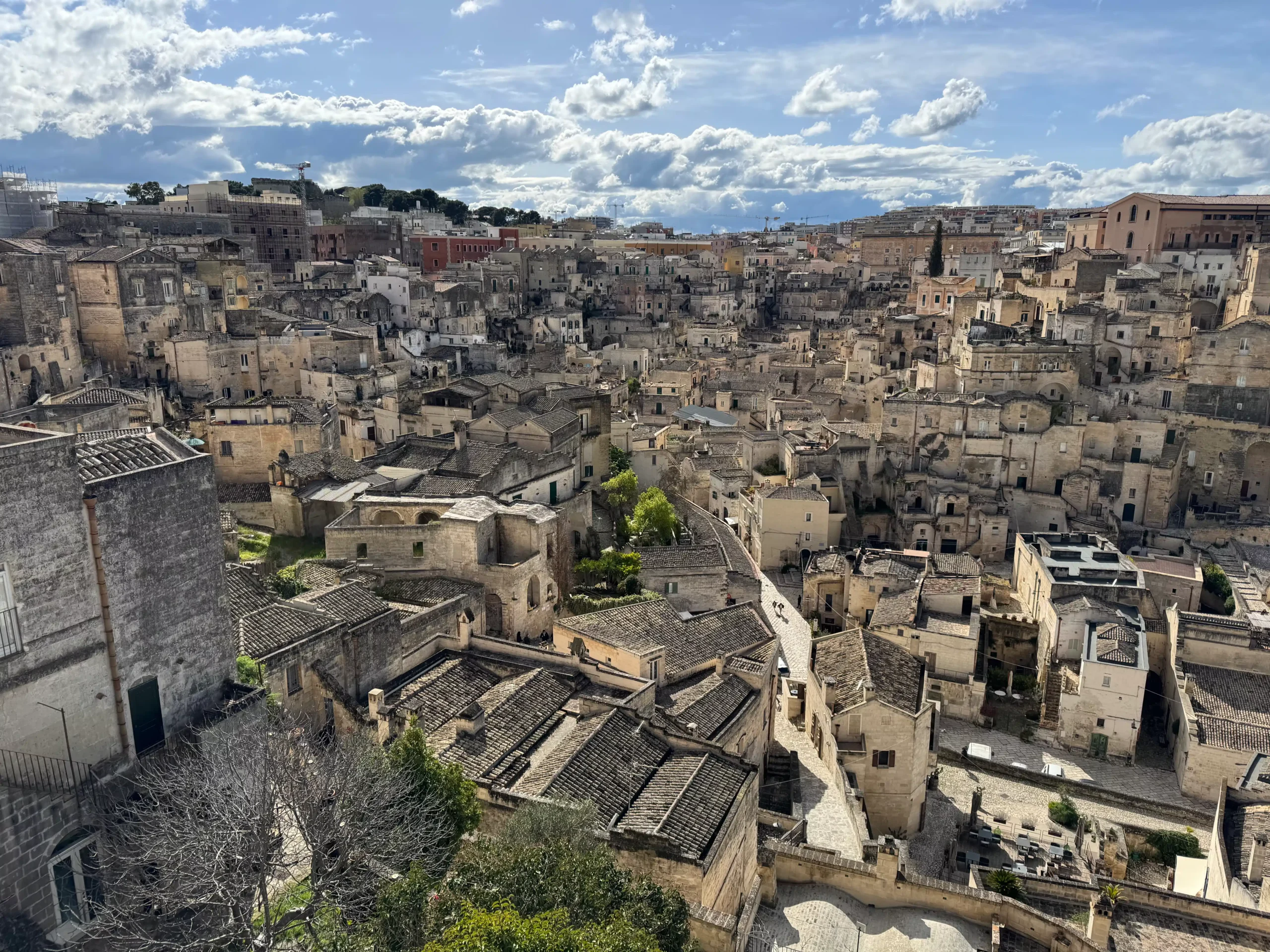
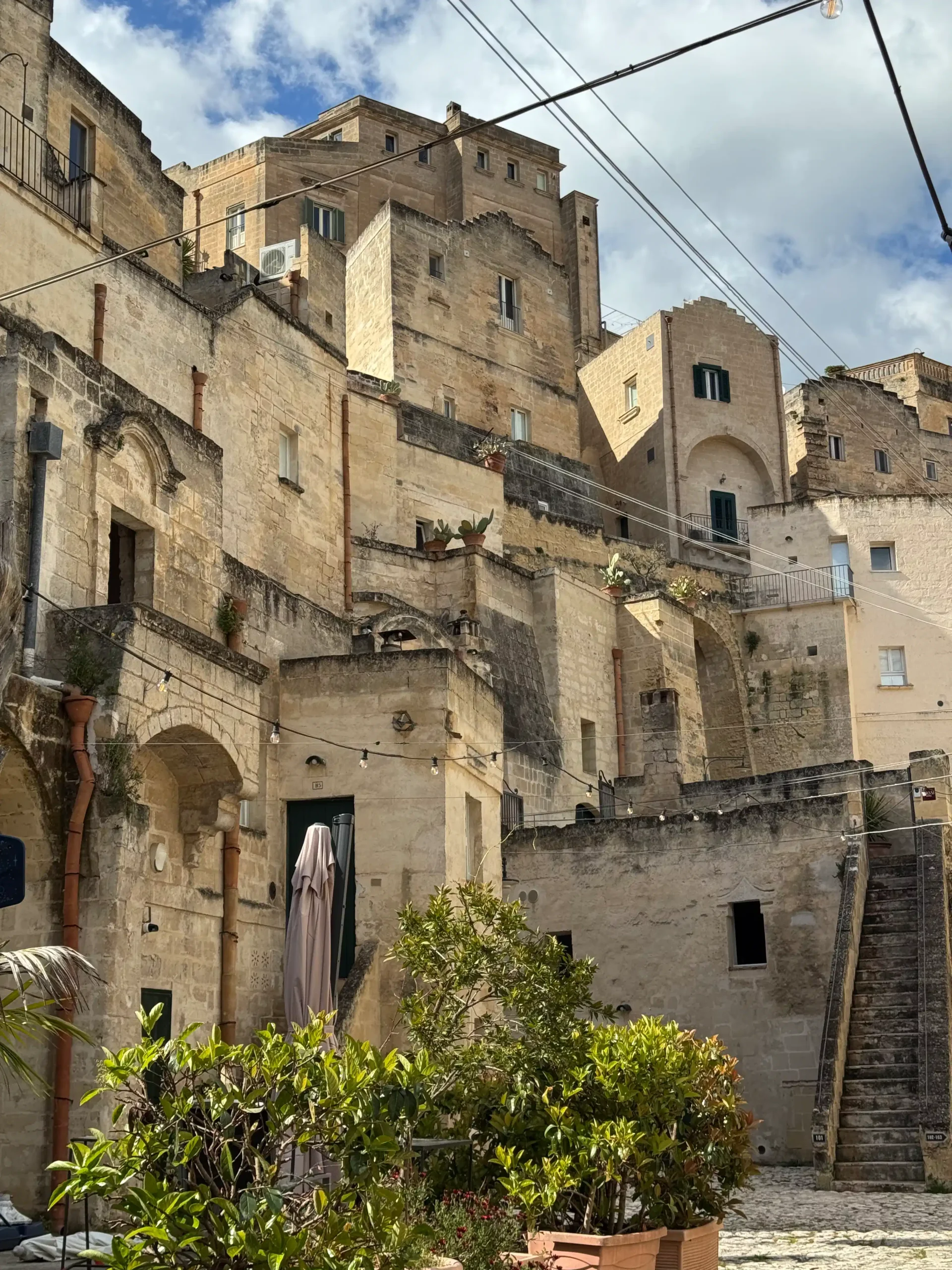
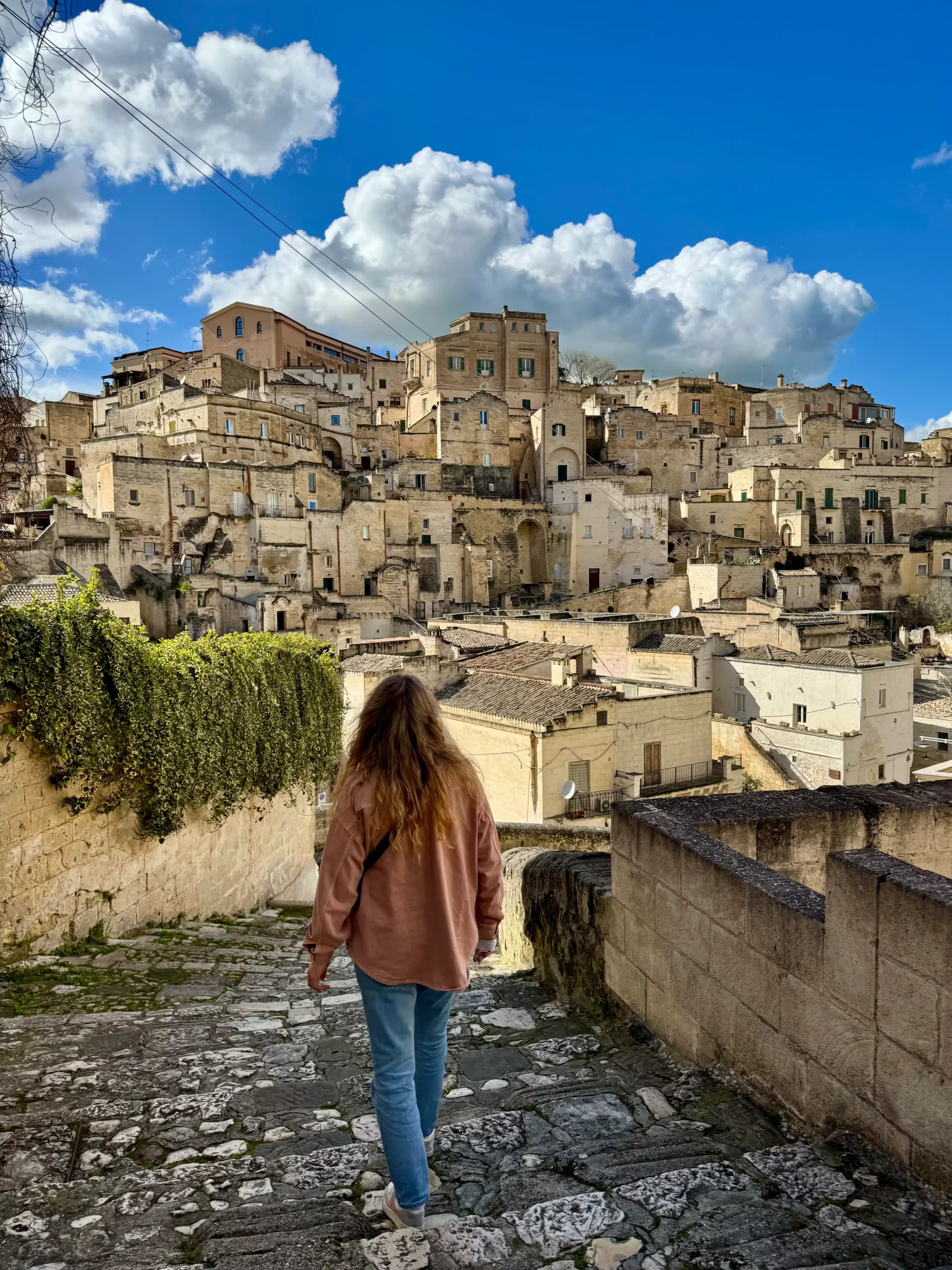
The Sassi are two districts: Sasso Caveoso and Sasso Barisano. Caveoso is more cave-like, “raw”, the most like what you saw in the photos. Barisano has become more town-like, with more buildings above the caves.
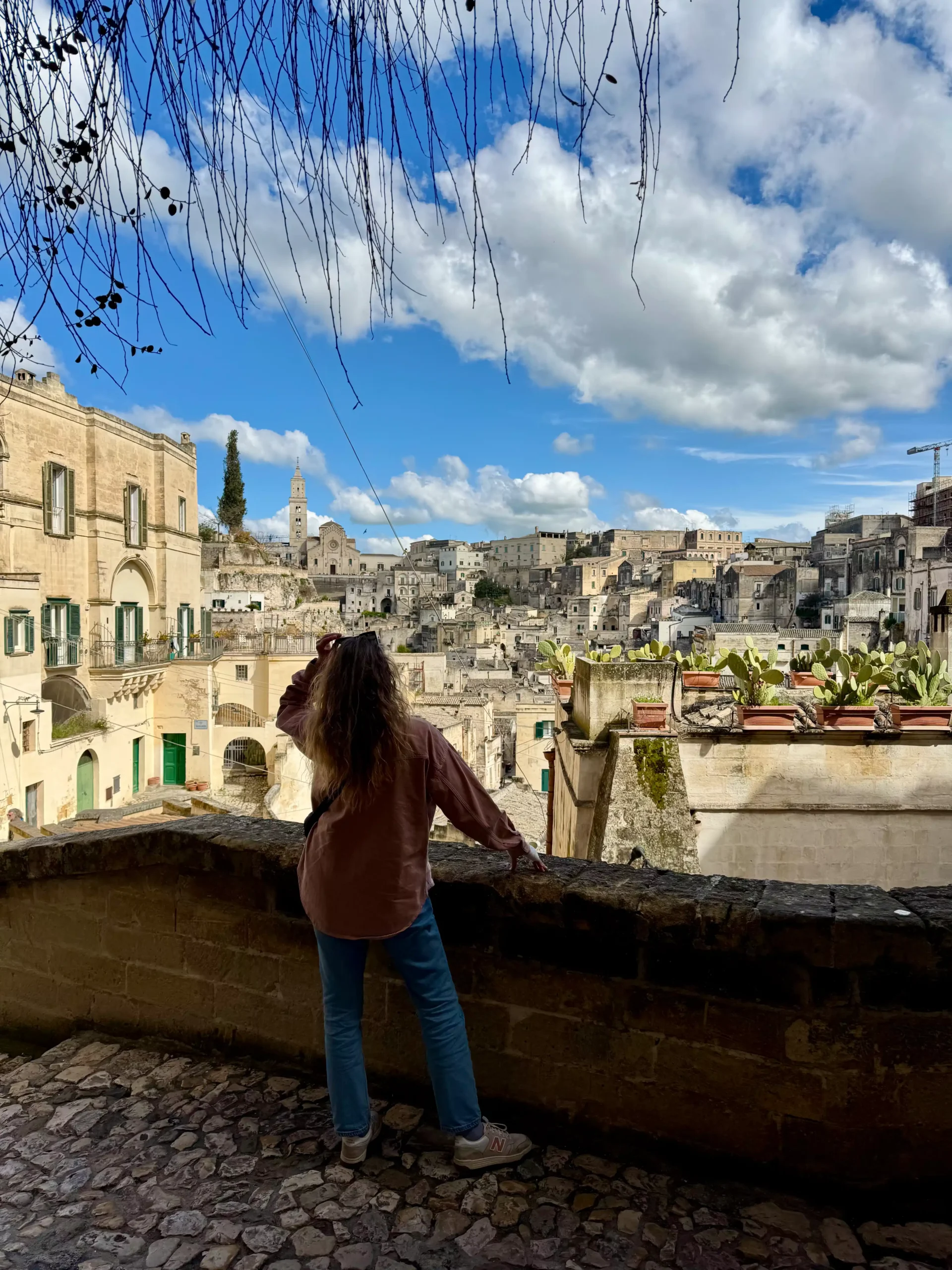
We started from Piazza Vittorio Veneto, the city-centre square. From it opens the first view of the Sassi, the one that makes you suddenly understand why everyone writes about Matera. A sea of stone houses descending into the depths, everything in a light sandy colour, simply dazzling in the midday sun.
We went down into Sasso Caveoso via Via Bruno Buozzi. It’s the only drivable street in the whole Caveoso district (for locals and authorised vehicles, of course), so for you, on foot, it’s a handy point of reference. Everything else is a labyrinth in which even Google Maps doesn’t always work.
What you can’t miss in Matera (with a baby in a carrier)
- Casa Grotta di Vico Solitario. A cave dwelling with authentic 19th-century furniture and tools. You see how people lived here until the 1950s, when the Italian government called this way of life vergogna nazionale (“a national shame”) and moved the residents out. Entry about €5.
- Piazza San Pietro Caveoso. A square above the gorge (also called a gravina, which is where the name Gravina comes from), with a church and a view of the city.
- Chiesa di Santa Maria de Idris and San Giovanni in Monterrone. Cave churches set into the rock, with old frescoes. Entry about €3.
- Matera Cathedral (Duomo), in the Civita district, on the hill above the Sassi. The view from the cathedral courtyard over Sasso Barisano is postcard-worthy.
- Cripta del Peccato Originale, if you have time (and a car). Called “the cave version of the Sistine Chapel”. It’s 10 km from Matera, requires booking in advance, entry about €10. We didn’t manage it, but next time I’ll definitely go.
With a baby in Matera’s old town: what’s important to know
The most important part of this article, if you’re reading for this reason:
- A carrier is better than a pushchair. The Sassi streets are either stone paving or stairs. Steep, irregular, often wet (water channels). Dragging a pushchair here is self-torture. My husband and I took only an Ergobaby-type carrier.
- Breaks are mandatory. In Italy the sun beats down not only in season, and the stones radiate heat. We had a couple of stops under a tree on Piazza San Pietro Caveoso, one for a pasta break and one to feed the baby on a bench.
- Toilets are rare. The best option is to go into a café, order something and ask for the toilet.
- Midday in the Sassi is a hard hour. The sun falls directly onto the stone hollows, there’s no wind, shade is rare. If you can, go early in the morning or from 4 p.m. onwards.
Lunch in Matera
We ate at a quick pasta eatery on the town square. We loved it! Local dishes I recommend:
- Pane di Matera IGP: bread no worse than Pane di Altamura. Served with olive oil.
- Crapiata materana: a simple soup of pulses and grains, once a poor person’s dish, today a delicacy.
- Cialledda: a seasonal salad with bread, tomatoes, cucumbers and olives. In summer this thing is a lifesaver.
- Strazzate: local almond biscuits. Sweet, filling, ideal with an evening coffee.
The bill for two people with a small lunch and water: about €35–45. Matera is a touch more expensive than Gravina, but still much cheaper than the touristy spots in Tuscany.
How much time you need for Matera
We spent half a day (from 10 a.m. to 4 p.m.) and went back to Gravina for the afternoon nap. That’s enough if you want to feel the atmosphere of the place, see the main sights and have a meal. But if you want to go deeper – a tour of the underground churches, the Cripta del Peccato Originale, the Murgia Materana park across the gorge – then you need a whole day or a second night.
In the evening we continued exploring Gravina’s old town.
Ponte Acquedotto: not just a film set
The Ponte Acquedotto Madonna della Stella is a symbol. A two-storey stone-arch structure 90 metres long, 37 metres high and 5.5 metres wide, built between 1743 and 1778. But the first version had stood since the 17th century. It was destroyed by the 1722 earthquake, and the local Orsini feudal lords commissioned its rebuilding, this time together with an aqueduct that brought water to the town from the Sant’Angelo springs.
Two important things that no one will tell you:
- The bridge is shorter than in the film. In the opening scene of No Time to Die it looks as if Bond is leaping across the Matera valley, but it’s actually Gravina. For the filming (2019) the bridge was covered with steel sheets so the motorbike wouldn’t damage it. Daniel Craig jumped from the railing on a rope hung from mock power cables.
- The best view isn’t from the bridge. Although it’s interesting to cross it, the most impressive thing is to see it from afar. A short path beside the bridge leads down to the Madonna della Stella cave shrine. From there you see the bridge in all its grandeur, with the old town in the background.
San Michele delle Grotte and Gravina Sotterranea
There are two more things worth going to Gravina specially for:
- Chiesa Rupestre di San Michele delle Grotte: the largest cave church in all of Puglia, carved straight into the limestone. Its most memorable feature is a place with human bones. According to legend, the residents killed during a Saracen raid rest there forever. Entry about €3.
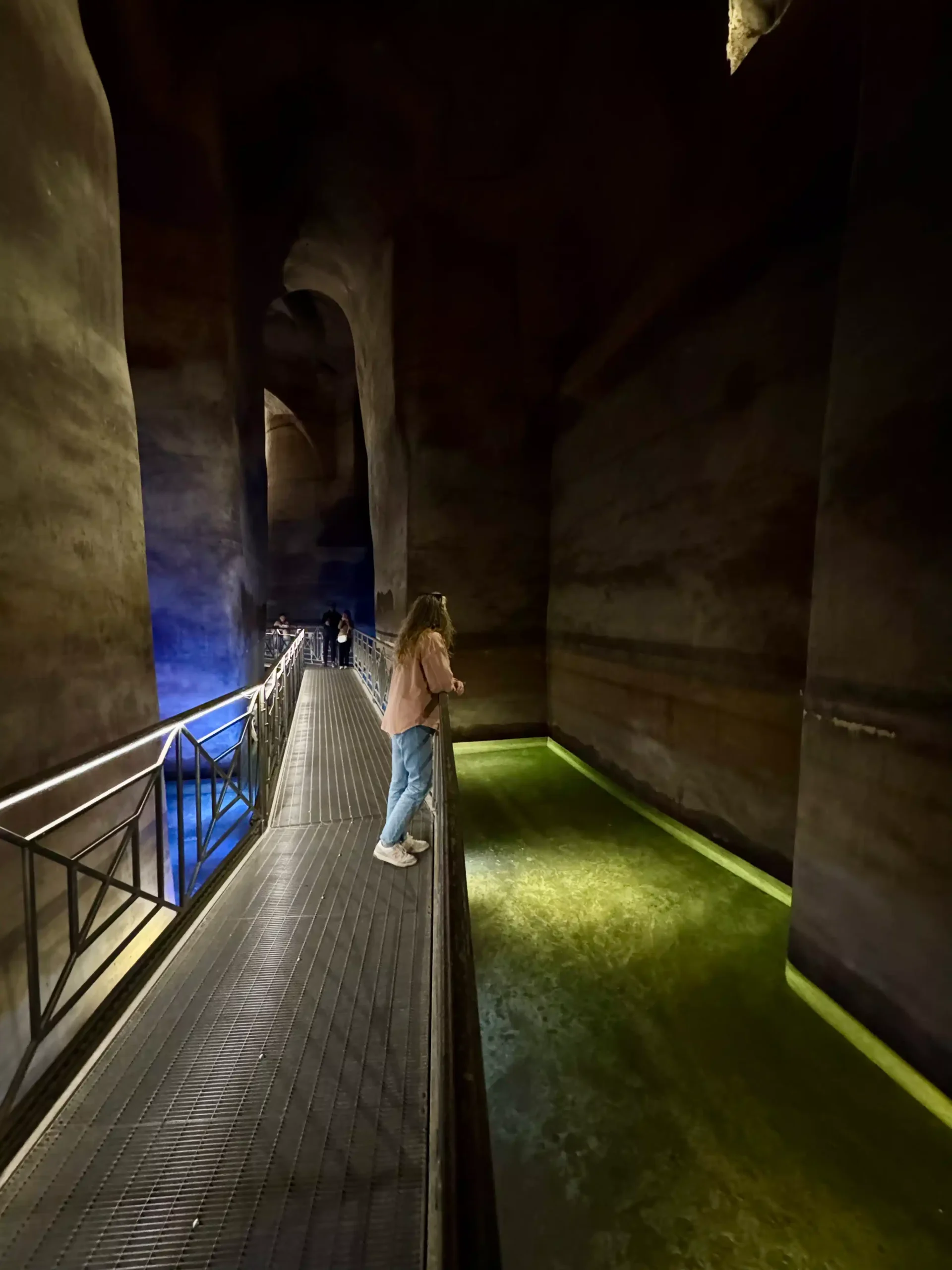
- Gravina Sotterranea: the underground labyrinth of Gravina. Tunnels, cisterns, aqueducts, cave churches, old ovens. Discovered only in 2005 by a group of cavers. An adult ticket is about €8.
Day 3: the road from Gravina to Torre Santa Sabina
The Gravina → Torre Santa Sabina route: about 150 km, 1 h 45 min – 2 h. You drive the SS96 towards Bari, then the SS379 along the coast towards Brindisi. The road is mostly motorway-standard, free, and fairly calm.
Torre Santa Sabina is a small seaside town in the Carovigno municipality, in the province of Brindisi. It’s famous for a heptagonal watchtower right by the sea (15th–16th century), blue water, shallow beaches and an evening aperitivo atmosphere.
Practical information
| Category | Detail |
|---|---|
| Best time to go | May–June or September–October. July–August is hot (35°C+) |
| Languages | Italian. English only in touristy spots |
| Payment | Card almost everywhere, but bring cash for cafés and small museums |
| ZTL in Gravina | There are restricted zones in the old town, but not as strictly monitored as in Matera |
| ZTL in Matera | The Sassi is closed. Don’t drive into the centre. |
| Cot (lettino) | Ask in advance when booking your accommodation |
| Pushchair vs. carrier | Always the carrier |
| Water bottle | Bring one. Italy has public drinking fountains (fontanelle), but not always nearby |
Accommodation price guide
- Gravina in Puglia: €70–120 a night for a B&B / small hotel
- Matera Sassi: €180–400 a night
- Carovigno / Torre Santa Sabina: €80–150 a night off season
With a baby in Gravina and Matera
A short checklist:
- A carrier is better than a pushchair
- A cot – ask in advance
- Midday heat – try to use it for the afternoon nap
- Don’t drag the pushchair into the Sassi
- Dinner restaurants often open at 19:30; earlier there’s only a bar or gelato
Is it worth going? My opinion
Yes, it’s worth it. But with a condition.
It’s worth it if you’re looking for a less touristy alternative. It’s worth it if you want to feel Puglia’s inland, not just the coast. It’s worth it if you like cave churches, stone architecture and Bond films. It’s worth it if you’re travelling with a small child and want your base location to be calm, while other points (Matera, Altamura, the Alta Murgia national park) are reachable within a half-hour’s drive.
It’s not worth it if you’re expecting the sea, beaches and a summer-holiday feeling. For that there’s already my Sperlonga with a baby, or the Salento coast towards Otranto.
In our month-in-Italy story, which led from Salerno through Tuscany’s Chianti, Sperlonga and even Venice, Gravina remained one of those places I recommend to friends when they ask not “where does everyone go” but “where would you go back to yourself”.
FAQ: frequently asked questions
Can you manage without a car in Gravina? You can, if you only want to see the town itself. But if you’re planning Matera, Altamura or the Alta Murgia park, a car works wonders. Public transport exists (buses, trains), but it’s less frequent and slower.
Is the “Bond bridge” free? Yes. You can walk across the bridge free of charge at any time of day. The nearby Madonna della Stella cave shrine has a separate entry ticket (about €3).
How much time do you need for Gravina? To see the main sights – a day and a half. With an underground tour and dinner – two days. If you want to use it as a base for Matera and the surroundings – three nights.
Is one day enough for Matera? It’s enough. But honestly – staying overnight in Matera has its own magic, thanks to the illuminated Sassi streets.
Is Gravina suitable for families with small children? Yes. A smaller town than Matera, fewer tourists, a calmer pace, simpler living. The only challenge is the steep stairs in the old town and the bridge with its deep gorge (but it’s safely fenced).
When is the worst time to go? July–August. Hot, dry, lots of tourists by the bridge. We went in early April and it was the ideal date: spring-like weather, few tourists.
Find flights here. If something goes wrong with your flight, you can claim compensation via AirHelp or Compensair.
Staying connected? Skip expensive roaming and grab an eSIM plan — set it up before you fly and you’ll have data the moment you land.
I always recommend booking airport transfers in advance. You can do that here.
Find accommodation here.