South Korea often ends up on people’s “too expensive for me” list — completely without reason. A country that looks like a city from the future can cost less than Western Europe, if you know where to eat, where to sleep and which card to use for transport. Here are concrete numbers in won and euros, not vague reassurances that “maybe it’ll work out cheap.”
Some links in this article are affiliate links. If you book through them I earn a small commission, at no extra cost to you.
Contents
- How much does a day in South Korea cost?
- Accommodation: from €10 to €80 per night
- Hostels
- Goshiwon — lowest price, smallest space
- Jjimjilbang — a sauna as your accommodation
- Food: how to eat well and cheaply
- Markets and street food
- Convenience stores — the budget secret
- Restaurants: local prices vs tourist prices
- Transport: metro, buses and tourist cards
- Seoul Climate Card — unlimited travel at a fixed price
- K-Pass — a transport cashback discount
- Discover Seoul Pass — worth it or not?
- KORAIL Pass — trains across the whole country
- Attractions: what it costs to get into the famous spots
- Free places and experiences
- Paid attractions and their prices
- Total daily budget: three scenarios
- Scenario A: minimal budget (about 39–46 €/day)
- Scenario B: comfortable budget (about 68 €/day)
- Scenario C: the middle path (about 35–40 €/day)
- Quick ways to save
- FAQ
One technical thing before we start: Korea’s currency is the won (₩). A rough guide — 1,400 ₩ ≈ 1 €. All prices are given at that ratio, so the euros here are always approximate. Check the latest exchange rate before your trip and treat the euro figures as guidance, not an exact sum.
How much does a day in South Korea cost?
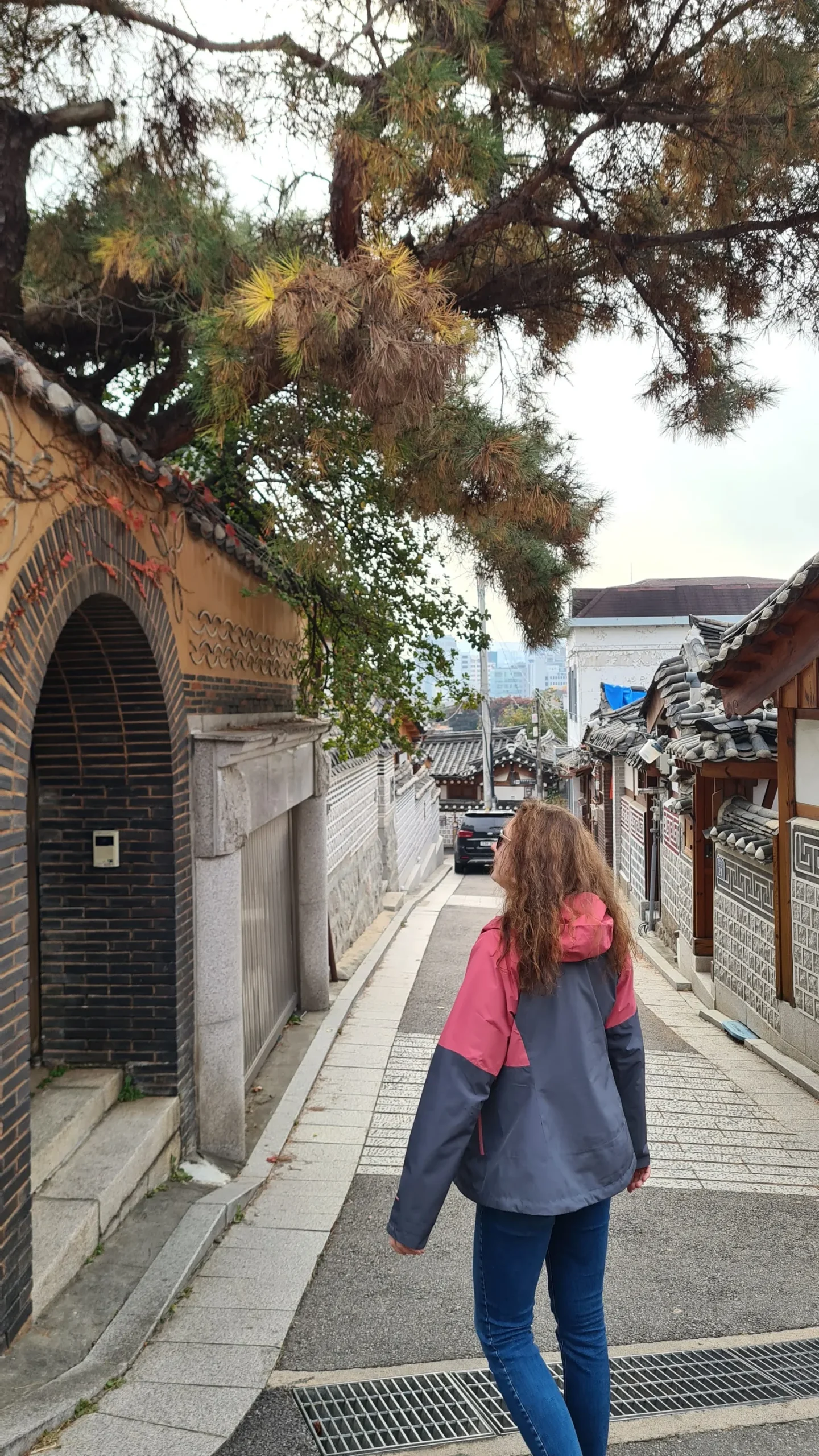
A budget traveller’s daily spend including accommodation is about 55,000–65,000 ₩ (roughly 39–46 €). That covers a bed in a hostel dorm, a few meals from a market or convenience store, getting around by metro and on foot, and free or cheap sights. A mid-range traveller spends 130,000–170,000 ₩ (roughly 93–121 €) a day — with a private room and restaurants.
The difference between those two figures comes almost entirely down to your decisions about accommodation and food. Transport in Korea is cheap for everyone, and some of the best things are free. The easiest way to control your budget is through your bed and your plate. Below is each category on its own, so you can build your own plan around what you actually need.
Find accommodation here.
Accommodation: from €10 to €80 per night
In Seoul the choice of accommodation is wide — and there really are options that won’t inflate your budget. From a dorm bed to a tiny goshiwon room or even a sauna with a sleeping hall, there’s a solution for every wallet.
Hostels
A bed in a hostel dorm in Seoul costs from 10,000 to 30,000 ₩ (7–21 €) a night, depending on location and quality. In Hongdae, Itaewon or Insadong you’ll find well-reviewed hostels with a dorm bed for 14,000–20,000 ₩ (10–14 €). A private room in a hostel starts from 35,000 to 50,000 ₩ (25–36 €).
When choosing where to stay, check the distance to the metro station — it’ll save you both time and money. One more small thing: see whether breakfast is included (often rice, eggs and toast for free).
Goshiwon — lowest price, smallest space
A goshiwon is the Korean equivalent of something between a capsule hotel and a student dorm. The room is usually 4–6 m², with a bed, a desk, sometimes a mini kitchenette. Traditionally meant for students, but some of them take short-term visitors too. The monthly price is 200,000–480,000 ₩ (roughly 143–343 €), depending on the Seoul district. For a longer trip it’s not a bad alternative: some accept a few nights’ booking, and then a night works out to 25,000–50,000 ₩ (18–36 €).
The downside is clear: the space is tiny, there’s little privacy, and showers are usually shared. The upside is just as clear — it’s cheaper than a private hostel room, and utilities are usually already included. If you’re planning to spend a week or two in Seoul and spend your days out anyway, a goshiwon lets you cut your accommodation bill considerably.
Jjimjilbang — a sauna as your accommodation
A jjimjilbang is a Korean bathhouse with relaxation lounges, where you can spend the night on a mat on the floor. It sounds strange, but it’s one of the most memorable experiences in the country and one of the cheapest ways to sleep: 12,000–20,000 ₩ (roughly 9–14 €) a night. For that money you get a bathhouse complex with hot pools and several saunas, a locker, bedding and a shared sleeping hall.
Practical tips: arrive late in the evening so you spend more time sleeping than paying for empty hours. The men’s and women’s bath sections are separate, and undressing is required — that’s just how it works. A jjimjilbang is perfect for a transit night before an early flight, or simply when you want to experience Korea not as a tourist but the way locals live.
Food: how to eat well and cheaply
Food is the easiest budget to control in Korea — you can eat well on even 7 € a day if you know where. Avoid tourist-spot menus and you’ll eat fantastically for very little. Koreans take food seriously, so even the cheapest places serve genuine traditional dishes — you certainly won’t go hungry.
Markets and street food
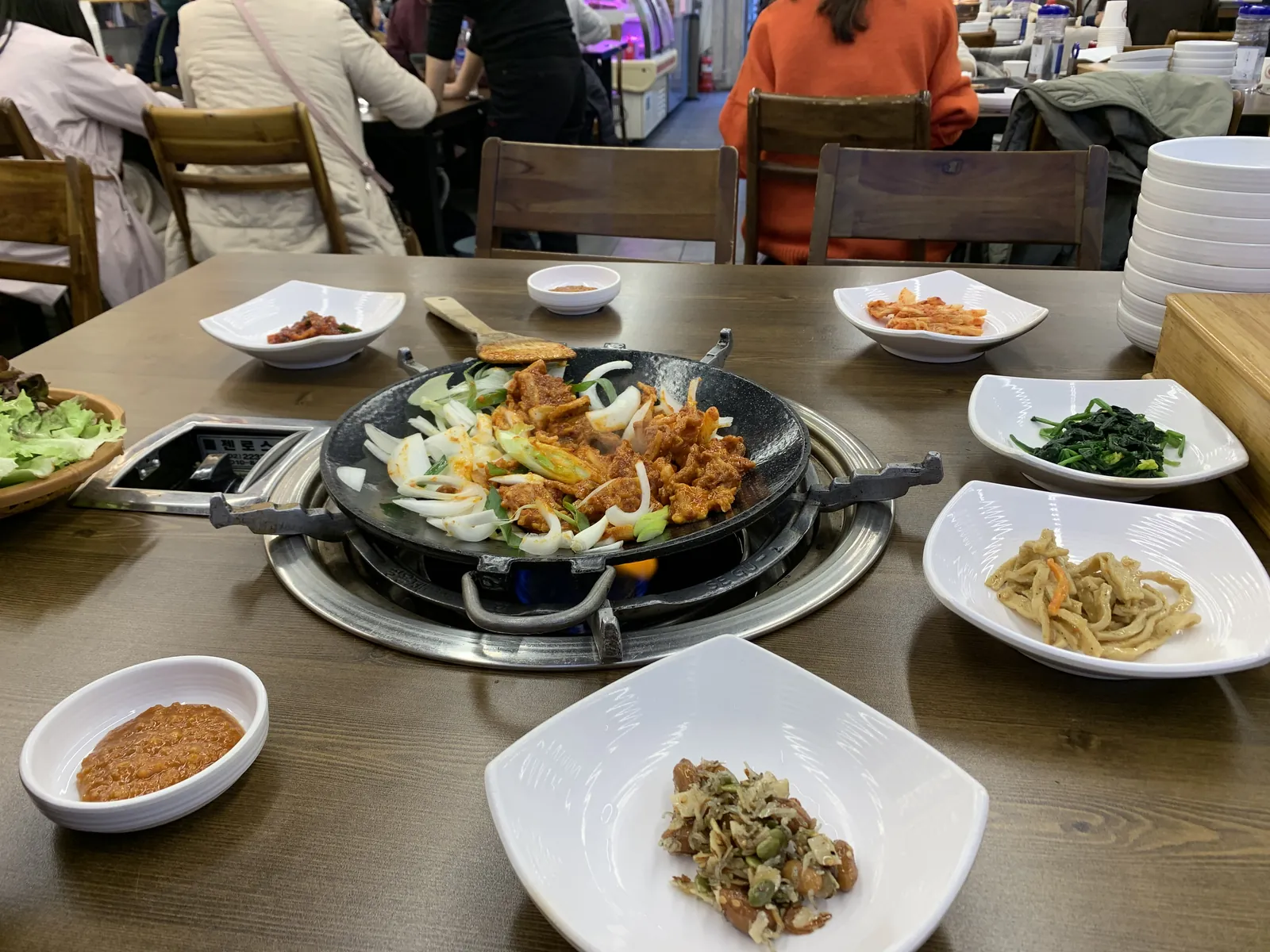
Gwangjang Market in Seoul is the centre of budget food. Bindaetteok (mung bean pancakes) — about 5,000 ₩ (3.5 €); mayak gimbap (mini rice rolls) — about 3,000 ₩ (2 €); bibimbap — 6,000–7,000 ₩ (4–5 €). Tteokbokki (spicy rice cakes in sauce) at the market or street stalls — 3,000–5,000 ₩ (2–3.5 €). You sit at a shared table, point with your finger and eat — no menu translation needed.
Myeongdong street offers similar dishes, but at some stalls the prices are higher than at Gwangjang — you’re paying for the location, not the food. If you’re building a food basket at the lowest prices, Namdaemun Market and Gwangjang Market are your best allies. Bonus: at a market you can often taste several things in small portions instead of one big dish.
Convenience stores — the budget secret
CU and GS25 convenience stores in Korea aren’t just a kiosk — they’re a full-blown budget canteen. A triangle kimbap (samgak gimbap) — 1,100–1,800 ₩ (roughly 0.80–1.30 €). A dosirak lunchbox you can heat in the store’s microwave — 3,500–5,000 ₩ (2.5–3.5 €). A hot ramen — 1,200–2,500 ₩ (roughly 0.90–1.80 €).
A filling three-part lunch from a convenience store comes to about 8,000–12,000 ₩ (6–8.5 €). Hot water for ramen at the counter is free, and stores almost always have a little table to eat at. Convenience stores are exactly what lets you cut your food budget the most without going hungry.
Restaurants: local prices vs tourist prices
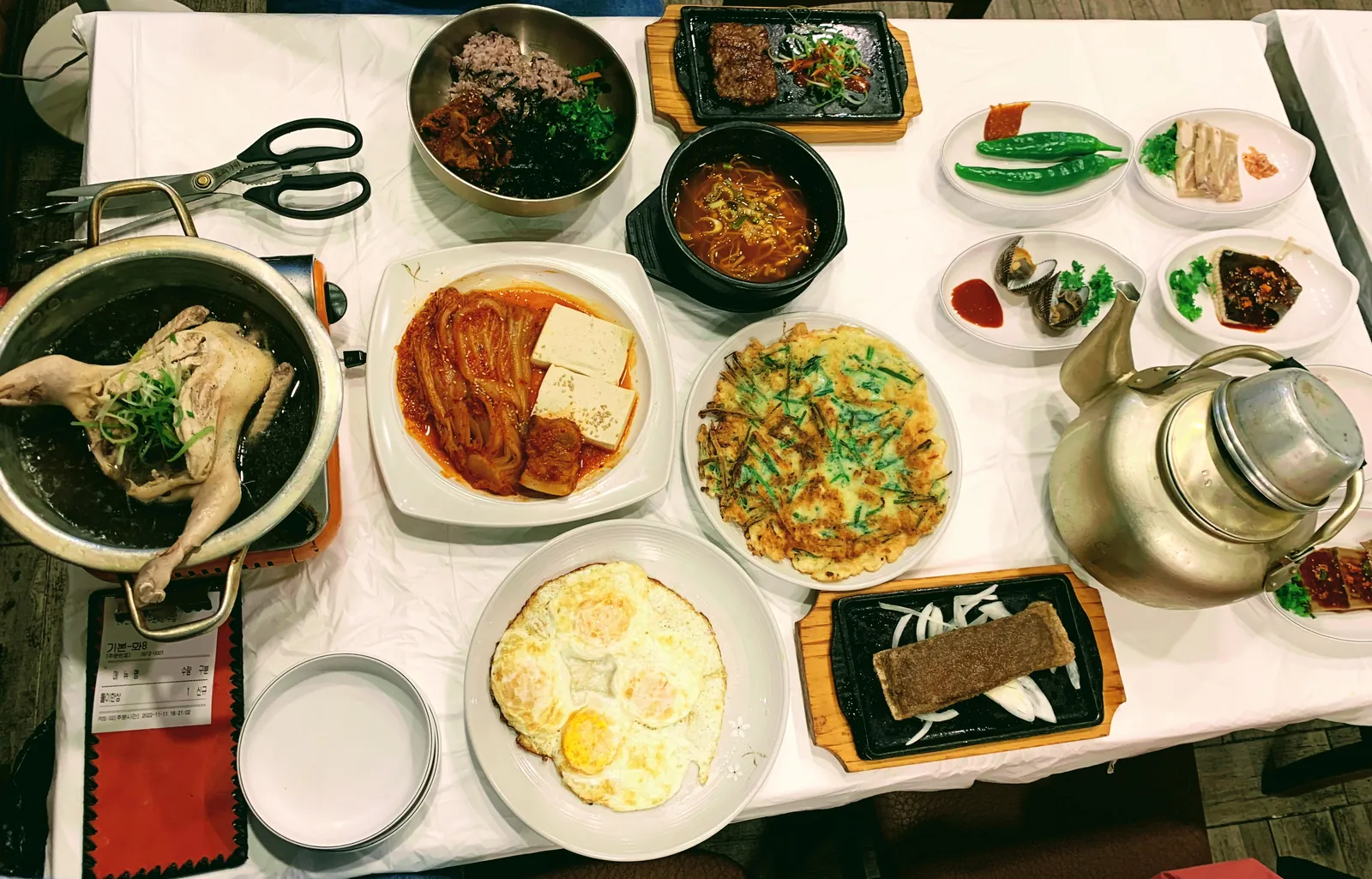
Local Korean restaurants (gukbap, sundubu jjigae, galbitang) serve a filling meal for 8,000–12,000 ₩ (6–8.5 €) a dish. Kimchi and a few banchan (side dishes) come free — that’s tradition, not an exception, and you can often refill them for free. Samgyetang (chicken and ginseng soup) — about 12,000–16,000 ₩ (8.5–11 €).
In tourist areas, especially Myeongdong and Insadong, the same dish can cost 15,000–25,000 ₩ (11–18 €). Korean BBQ (samgyeopsal) in a restaurant starts from about 12,000 ₩ (8.5 €) a portion, but two people usually need at least two portions — budget accordingly. Still, it’s an experience worth spending a little more on at least once.
Daily food budget summary
- Very frugal (mostly convenience stores and markets): 10,000–18,000 ₩ (7–13 €) a day
- Moderate (cafés and one restaurant): 20,000–35,000 ₩ (14–25 €) a day
- Comfortable (restaurants and one BBQ night): 40,000–60,000 ₩ (28–43 €) a day
Transport: metro, buses and tourist cards
The Seoul metro is one of the best in the world: clean, precise, with English signage. A single ride with a T-Money card costs 1,550 ₩ (roughly 1.10 €). The card itself costs about 2,500 ₩ (1.80 €) and is bought at metro stations or convenience stores. A transfer within 30 minutes between metro and bus is free. A single bus ride is also about 1,550 ₩ with the card.
On average, a traveller spends about 6,000–15,000 ₩ (4–11 €) a day on transport in Seoul, unless you take a lot of taxis.
Seoul Climate Card — unlimited travel at a fixed price
If you’re planning to move around intensively for several days, the Seoul Climate Card is worth considering — an unlimited-use card for the metro and city buses. Approximate prices for the short-term (tourist) versions:
- 1 day — about 5,000 ₩ (roughly 3.5 €)
- 2 days — about 8,000 ₩ (roughly 6 €)
- 3 days — about 10,000 ₩ (roughly 7 €)
- 5 days — about 15,000 ₩ (roughly 11 €)
- 7 days — about 20,000 ₩ (roughly 14 €)
Add a one-off fee for the physical card — about 3,000 ₩ (2 €). When is it worth it? If you make roughly 4–5 rides a day or more and switch districts, the Climate Card already pays off compared to T-Money. For a few short rides a day, T-Money is usually cheaper and simpler.
K-Pass — a transport cashback discount
K-Pass works differently: it’s a government programme that refunds part of your transport costs when you travel by public transport at least 15 times a month. It refunds roughly 20–53% of your fares, depending on the category. Foreigners with an alien registration number can register too — which makes it genuinely useful only for a longer trip or living in the country. For a short trip, the Climate Card is more practical.
Discover Seoul Pass — worth it or not?
The Discover Seoul Pass is a tourist card giving free or discounted entry to more than 70 Seoul attractions (palaces, museums, amusement parks) plus a transport function. Approximate prices:
- 24 hours — about 50,000 ₩ (roughly 36 €)
- 48 hours — about 70,000 ₩ (roughly 50 €)
- 72 hours — about 90,000 ₩ (roughly 64 €)
When is it worth it? Do the maths directly: Gyeongbokgung Palace — 3,000 ₩; Lotte World — about 62,000 ₩; N Seoul Tower observatory — about 21,000 ₩. If within one card window you plan Lotte World plus 2–3 more paid attractions, the card pays off. If you’re only strolling through palace courtyards and parks — you don’t need it, since those are cheap or free. The card is for foreign tourists only: Korean citizens can’t buy it.
KORAIL Pass — trains across the whole country
If your trip covers not just Seoul but also Busan, Gyeongju or other cities, the KORAIL Pass is worth considering — an unlimited KTX high-speed train ticket for foreign tourists only. Approximately:
- 2-day flexible (2 chosen days out of 10) — from about 121,000 ₩ (about 86 €)
- 3 consecutive days — from about 150,000 ₩ (about 107 €)
- 5 consecutive days — from about 244,000 ₩ (about 174 €)
A single Seoul–Busan KTX ticket costs about 60,000 ₩ (43 €) per passenger. If you plan two or three such routes, the KORAIL Pass can pay off. If you’re going to Busan and back just once, it’s usually cheaper to buy separate tickets online in advance.
Attractions: what it costs to get into the famous spots
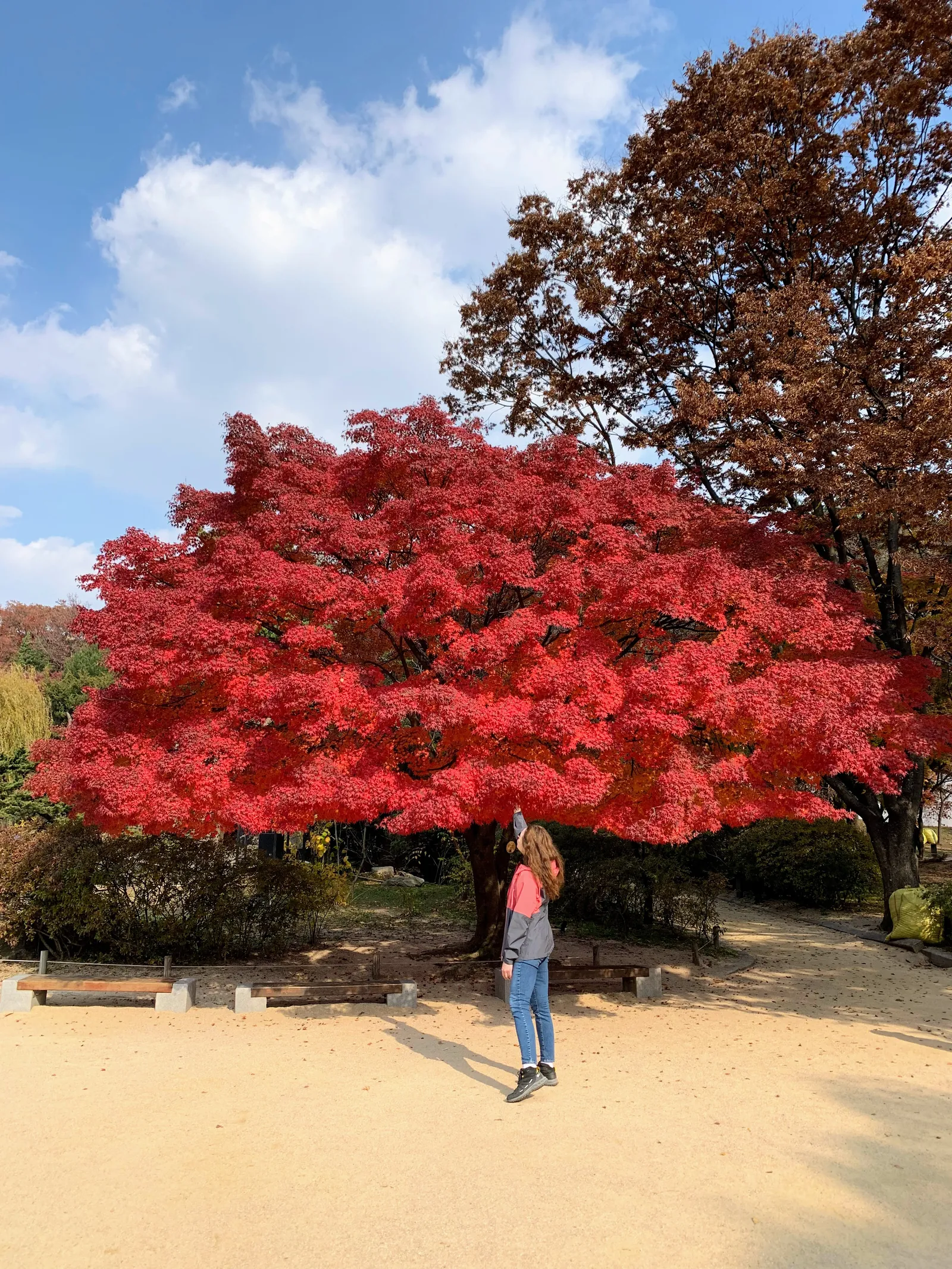
A large share of the best things in Korea are free or almost free. Palaces, museums, parks and hikes — for nothing, or for the price of a few portions of street food.
Free places and experiences
- Bukhansan National Park — a granite-rock park on the edge of Seoul with hikes and viewpoints. Free entry.
- Namsan mountain and park — a hike to the top on foot (about half an hour from Hoehyeon station), a panorama over the city. Free. The N Seoul Tower observatory is paid (about 21,000 ₩ / 15 €).
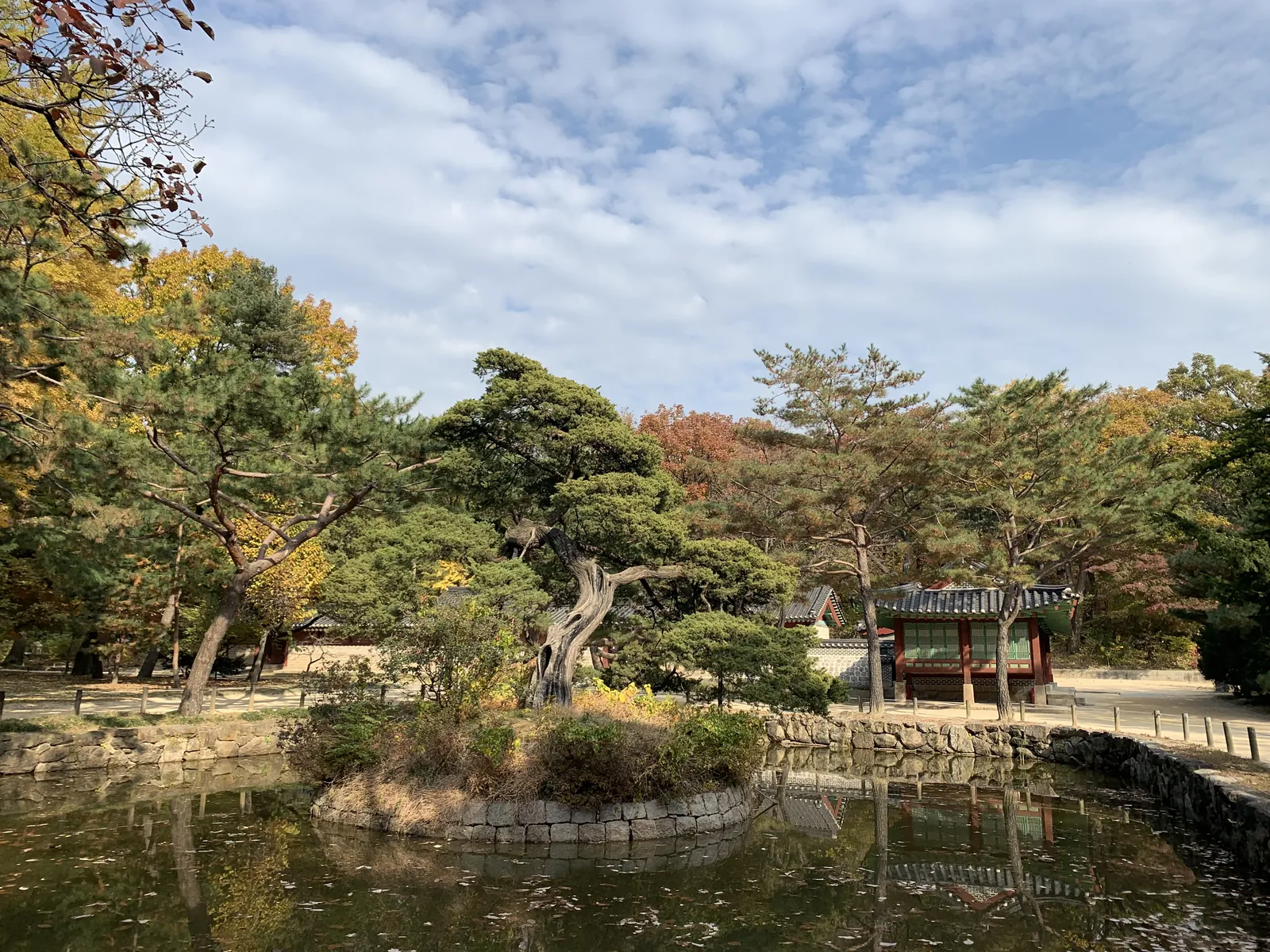
- Palaces with a hanbok — dressed in traditional Korean clothing you enter Seoul’s main palaces (Gyeongbokgung, Changdeokgung, Deoksugung and others) for free. Hanbok rental — 15,000–25,000 ₩ (11–18 €) for 2–4 hours.
- War Memorial of Korea (Yongsan district) — a huge exhibition, free entry.
- National Museum of Korea — one of the largest in Asia, main exhibition free.
- Cheonggyecheon stream — a restored waterway in the city centre, great for an evening walk. Free.
Paid attractions and their prices
- Gyeongbokgung Palace (without a hanbok) — 3,000 ₩ (2 €)
- Combined palace ticket — about 10,000 ₩ (7 €)
- N Seoul Tower observatory — about 21,000 ₩ (15 €)
- Lotte World — about 62,000 ₩ (44 €)
- Everland — from about 62,000 ₩ (44 €)
Total daily budget: three scenarios
Three realistic daily budget scenarios for one person. The numbers are approximate but close to reality — pick the one that matches your travel style.
Scenario A: minimal budget (about 39–46 €/day)
- Accommodation: a bed in a hostel dorm — 14,000 ₩ (10 €)
- Food: convenience store + market + convenience store in the evening — 15,000 ₩ (11 €)
- Transport: 5–6 rides with T-Money — 8,000–10,000 ₩ (6–7 €)
- Attractions: park, market, Cheonggyecheon — 0 ₩ (free)
- Total with accommodation: about 55,000 ₩ (39 €)
Scenario B: comfortable budget (about 68 €/day)
- Accommodation: a private hostel room — 40,000 ₩ (29 €)
- Food: two restaurants and a coffee — 30,000 ₩ (21 €)
- Transport: Climate Card, 1 day — 5,000 ₩ (3.5 €)
- Attractions: palaces and hanbok rental — 20,000 ₩ (14 €)
- Total: about 95,000 ₩ (68 €)
Scenario C: the middle path (about 35–40 €/day)
- Accommodation: a jjimjilbang or a good hostel dorm — 17,000 ₩ (12 €)
- Food: convenience store and one restaurant — 20,000 ₩ (14 €)
- Transport: T-Money — 10,000 ₩ (7 €)
- Attractions: Gyeongbokgung and a free stroll — 3,000 ₩ (2 €)
- Total: about 50,000 ₩ (36 €)
Quick ways to save
- Eat at the market, not on the tourist street — Gwangjang and Namdaemun give you the most for the same money.
- Buy a T-Money card on your first day — you save on every ride and don’t need to hunt for small change.
- Make the most of free attractions — national parks, Seoul’s museums, streams and mountains cost nothing.
- Wear a hanbok to the palaces — the rental often pays for itself just in the entry you save, and you keep the photos.
- Choose lunch sets — many Korean restaurants offer cheaper set menus during the day than the same dishes in the evening.
- Compare the KORAIL Pass with separate tickets in advance — if you’re only taking the train twice, separate tickets are often cheaper.
- Do the Discover Seoul Pass maths for your specific day — if you’re not planning Lotte World, it’s usually cheaper to buy separate tickets.
You’ll find the full plan for travelling around South Korea, routes and practical tips in my South Korea traveller’s guide.
FAQ
What’s the minimum a day in South Korea costs?
A very frugal traveller (a dorm bed, convenience-store and market food, free attractions) can get by on roughly 37,000–55,000 ₩ (26–39 €) a day, counting accommodation.
Is Seoul more expensive than other South Korean cities?
Seoul is the most expensive city in the country, especially for accommodation. Busan, Gyeongju or Jeju Island offer cheaper places to stay, though food and transport prices across the country are roughly similar.
When is the Discover Seoul Pass worth buying?
The Discover Seoul Pass pays off if within one validity window you plan several pricier attractions — for example, Lotte World (about 62,000 ₩) and N Seoul Tower (about 21,000 ₩) on the same day. If you’re only visiting palaces and parks, it’s not worth it — they’re cheap or free.
Is it safe to sleep in a jjimjilbang?
Yes — jjimjilbangs are places Koreans stay overnight regularly. A locker for your belongings with a key is usually included in the price. The sleeping hall is used by both sexes together, but the bath and changing sections are always separate.
What’s the difference between a T-Money card and the Seoul Climate Card?
T-Money charges each ride separately (about 1,550 ₩). The Seoul Climate Card is a fixed price for unlimited use on chosen days (from about 5,000 ₩ for one day). The Climate Card pays off if you make roughly 4–5 rides a day or more.
My other South Korea guide: the full South Korea traveller’s guide (Seoul to Jeju).
Search for flights here. If something goes wrong with your flights, you can claim compensation through AirHelp or Compensair.
Staying connected? Skip expensive roaming and grab an eSIM plan — set it up before you fly and you’ll have data the moment you land.
I always recommend booking taxi transfers to and from the airports in advance. You can do that here.

Travel Without Chaos: South Korea — 14-Day Itinerary Without a Car (+ National Parks)
14-day South Korea itinerary — complete PDF guide, no car needed. Seoul, Seoraksan, Jeonju, Jeju and Hallasan. Daily plans, budgets, hotels and transport.