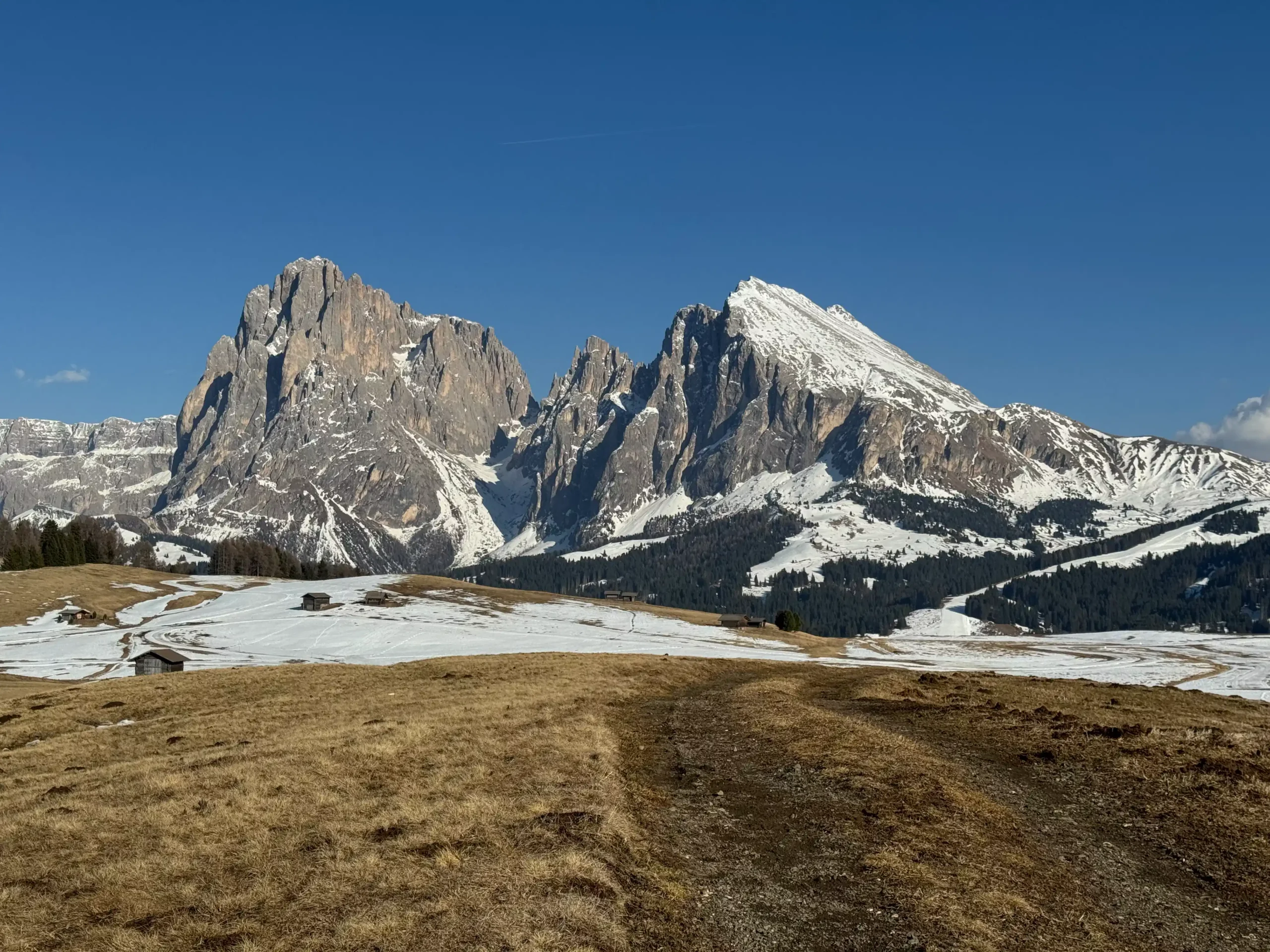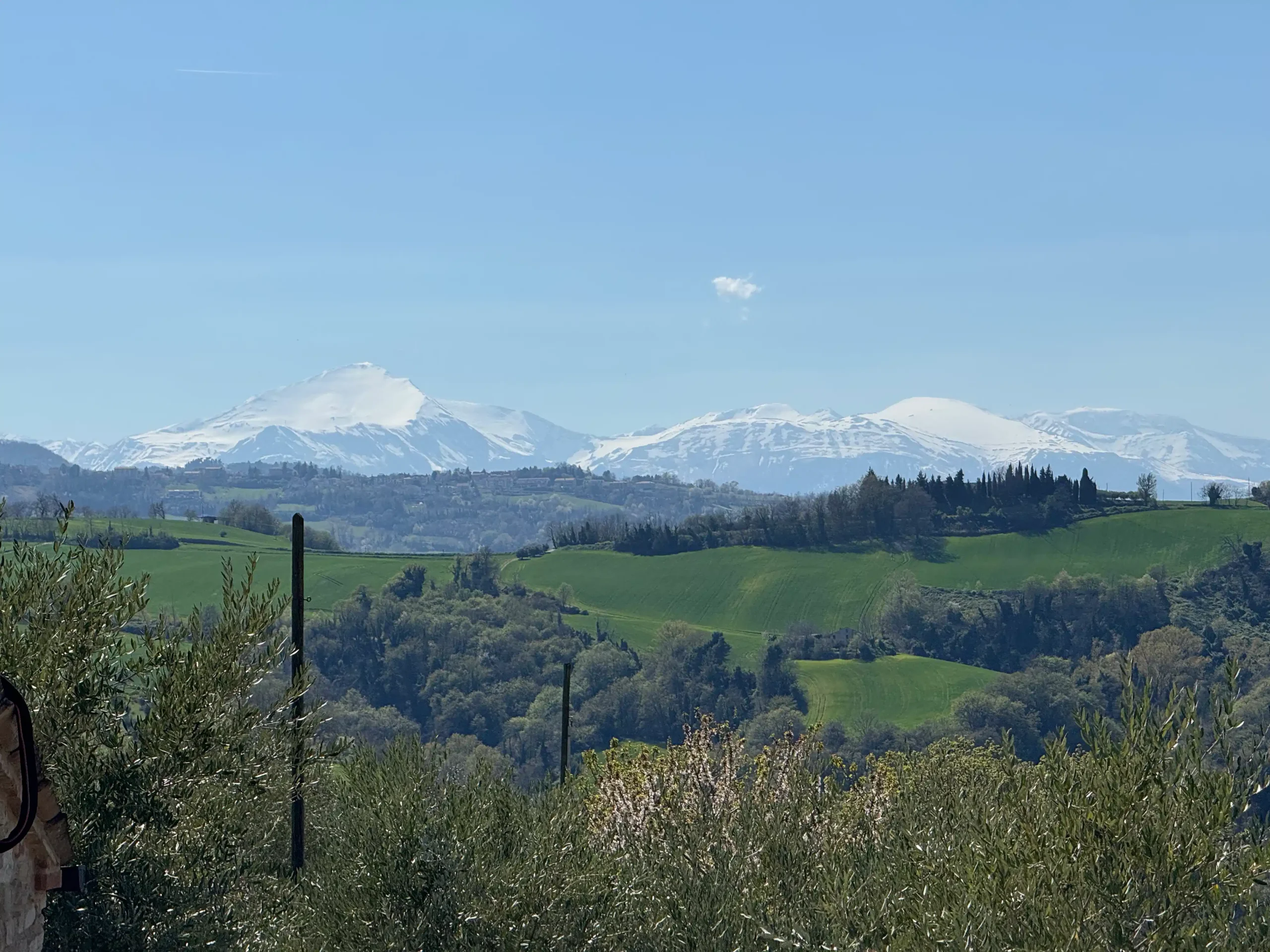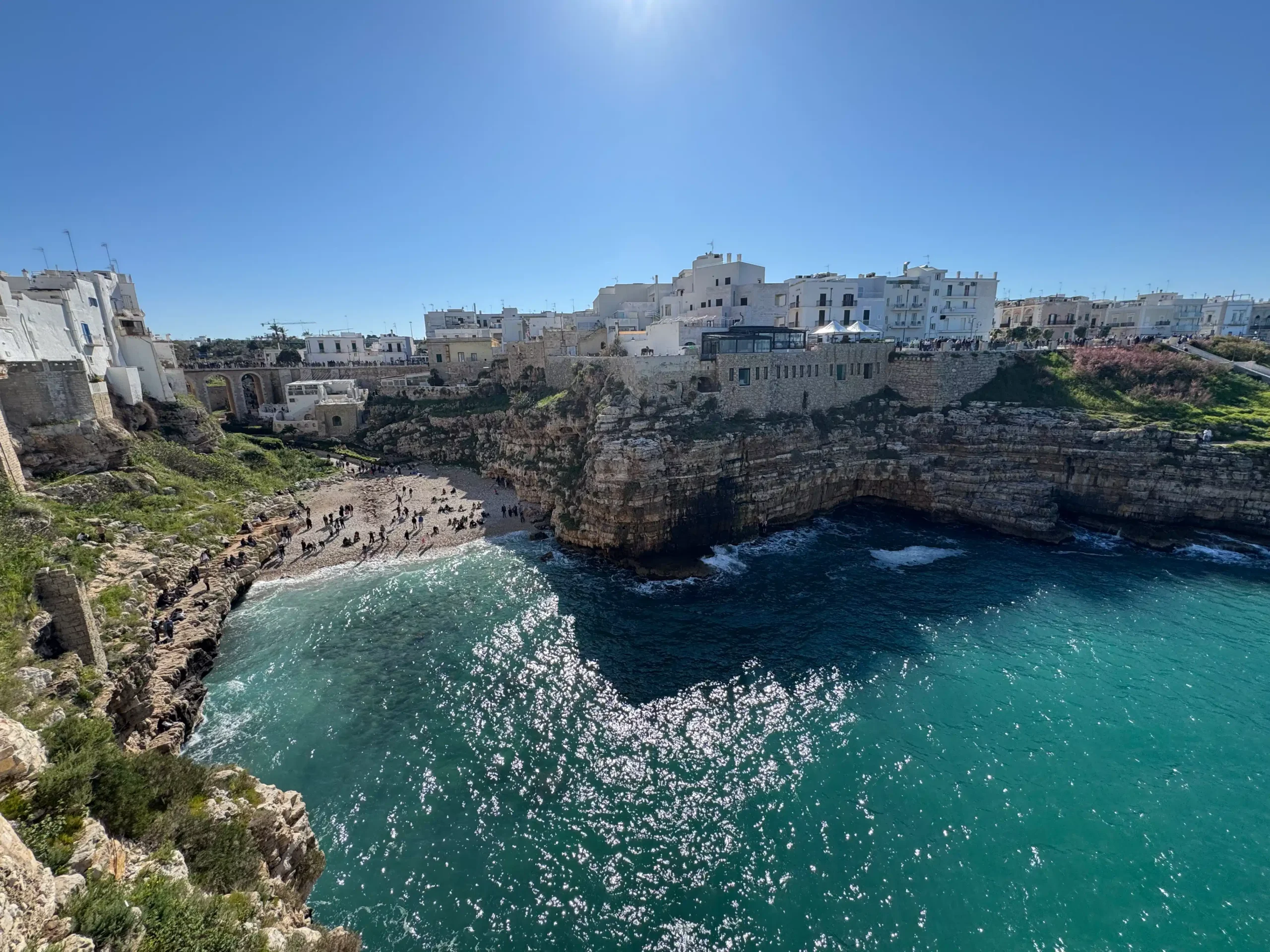
The evening I understood why we chose Salerno
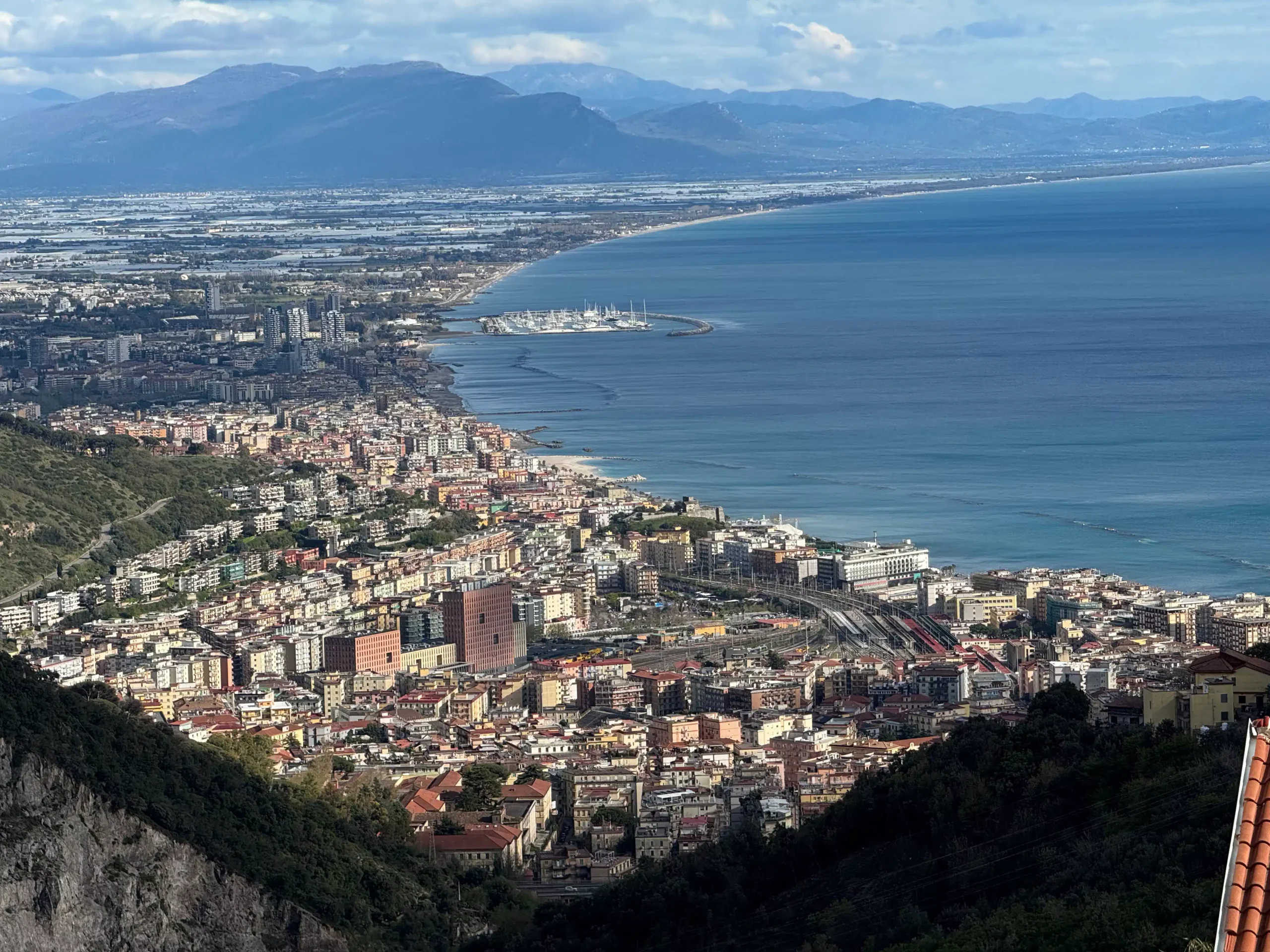
I’m standing on the balcony, and below, far below, the city lights flicker, the lights of ships move in the harbour, and somewhere in the distance, like a mirage, the edges of the Amalfi Coast glow. Below, everything is lit up; above my head, the stars; and suddenly you realise that the choice to stay in Salerno – not in Amalfi, not in Positano, not in Sorrento – was one of the best decisions of this trip.
Some links in this article are affiliate links. If you book through them I earn a small commission, at no extra cost to you.
Contents
- The evening I understood why we chose Salerno
- Why Salerno, and not Amalfi or Positano?
- Pompeii: the first stop on the way from Tuscany
- The reality with a baby in Pompeii
- Tickets and practical info
- The Vesuvius question
- Day 1 in Salerno: the old town, our own pace
- Salerno's old town: what to see in 3–4 hours
- Lunch: where to eat with a baby
- Evening: aperitivo
- The Amalfi Coast. A delicate subject with a baby
- Logistics: how to reach the Amalfi Coast from Salerno
- Amalfi: why it works with a baby
- Positano: a danger zone with a pushchair
- Ravello: a good option with a baby, but for another day
- Caserta, Cetara, Vietri sul Mare and a slow goodbye to Italy
- Leaving Salerno — when the rain sets the pace
- The road — the A30 and that inevitable stop
- Caserta — when a palace looks even grander in the rain
- Vietri sul Mare: a ceramics town 4 km from Salerno
- Cetara: a small fishing town and colatura di alici
- The last evening on the Salerno heights
- Practical tips for travelling to Salerno with a baby
- What to pack
- Is Salerno safe with a baby?
- What isn't great in Salerno
- Cost summary
- What I'd do differently next time
- Is it worth going to Salerno with a baby?
We came here after four nights in Tuscany (if you read the previous article about Tuscany with a baby, this is the continuation of that same route). From Montespertoli to Salerno via Pompeii is 580 km, nine hours with stops. Long? Yes, especially with a child, but the driving itself in Italy, from point A to point B, can be no less impressive.
In this article I’ll tell you what three nights in Salerno with a 1-year-old baby looked like, why we chose the mountain rather than the seafront, what we managed to see, and why Pompeii with a little one is more of a challenge than a stroll.
Why Salerno, and not Amalfi or Positano?
When planning a trip to southern Italy with a baby, the thing I agonised over longest was where to stay. Every guide out there shouts “Positano! Amalfi! Ravello!”, and these are beautiful towns, but with a little one the prices and the reality turn out to be different.
| Town | Room price with breakfast (spring) | Practicality with a baby |
|---|---|---|
| Positano | €220–380/night | Very poor (stairs, nowhere to park) |
| Amalfi | €180–300/night | Medium (stairs, but at least one flat road) |
| Ravello | €160–260/night | Good, but isolated, empty in the evenings |
| Sorrento | €150–250/night | Good, but far from the Amalfi Coast |
| Salerno | €95–150/night | Very good |
Salerno is a big city (130,000 inhabitants), not a tourist resort. That means: there are real shops, pharmacies, pavements suited to a pushchair, normal restaurants not just for tourists, and, most importantly, human prices. From here it’s 30 km to Amalfi, 1 h to Pompeii, 1 h 15 min to Naples.
We stayed in an apartment on the mountain above the city (the Croce district, above the old town). €90 a night for a small flat with a balcony, from which you can see not only the Salerno coast but also the start of the Amalfi Coast, the Costiera Cilentana to the south, and the sea to the horizon. Three nights = €270.
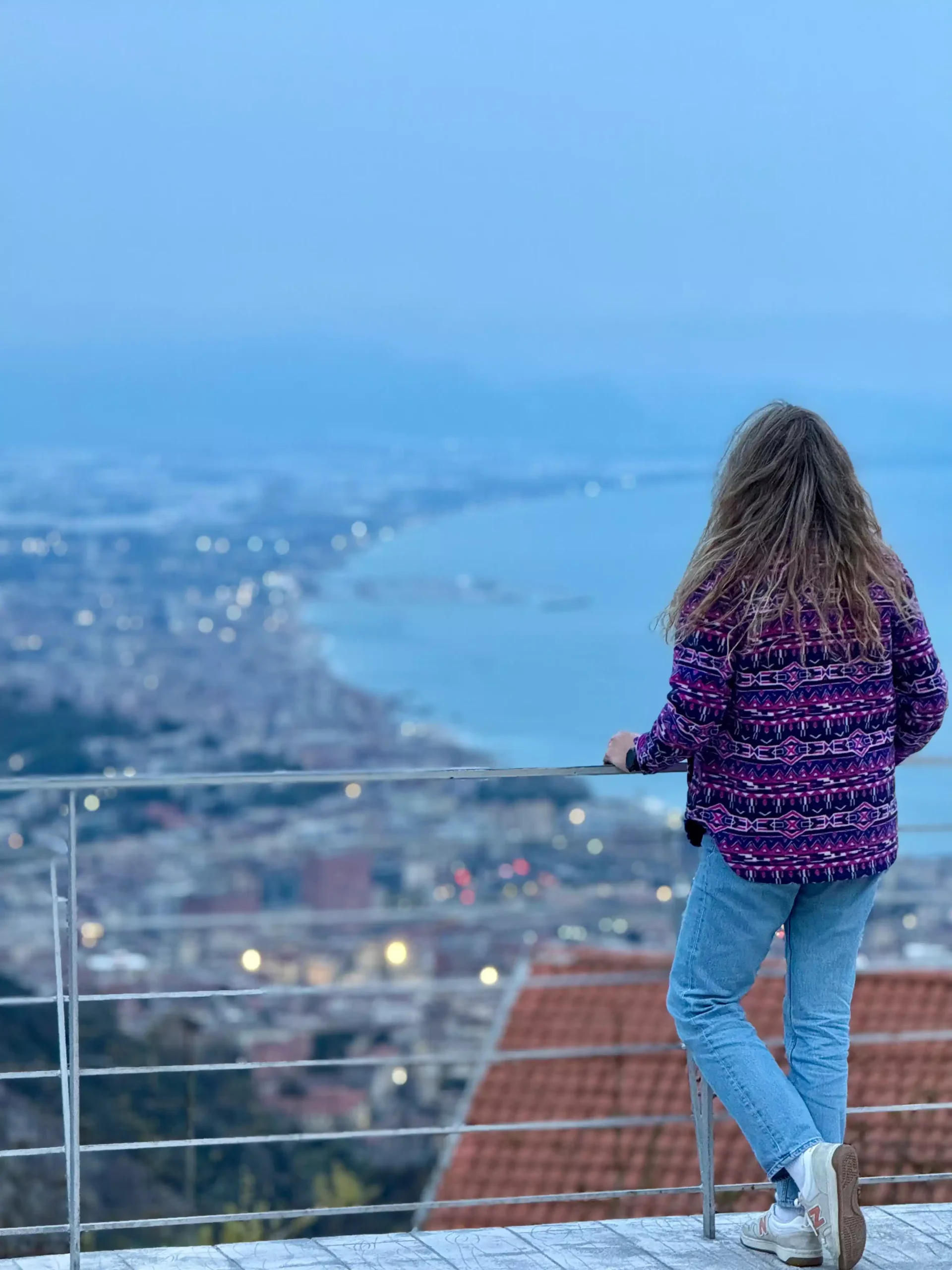
There’s one catch to that mountain: the road up is a series of hairpins, narrow, and coming back in the evening with a tired baby after an outing takes patience. But when you’re up there it’s calm, cool even on a hot day, and the sleep quality is twice as good as down in the centre by the cars.
Pompeii: the first stop on the way from Tuscany
Combining the move from Tuscany to Salerno and a visit to Pompeii in one day was a risk, but it paid off, because Pompeii is on the way (if you’re driving the A1 motorway from Florence), and going back to it from Salerno, even at 1 h distance, means a there-and-back drive that tires you out with a baby.
The reality with a baby in Pompeii
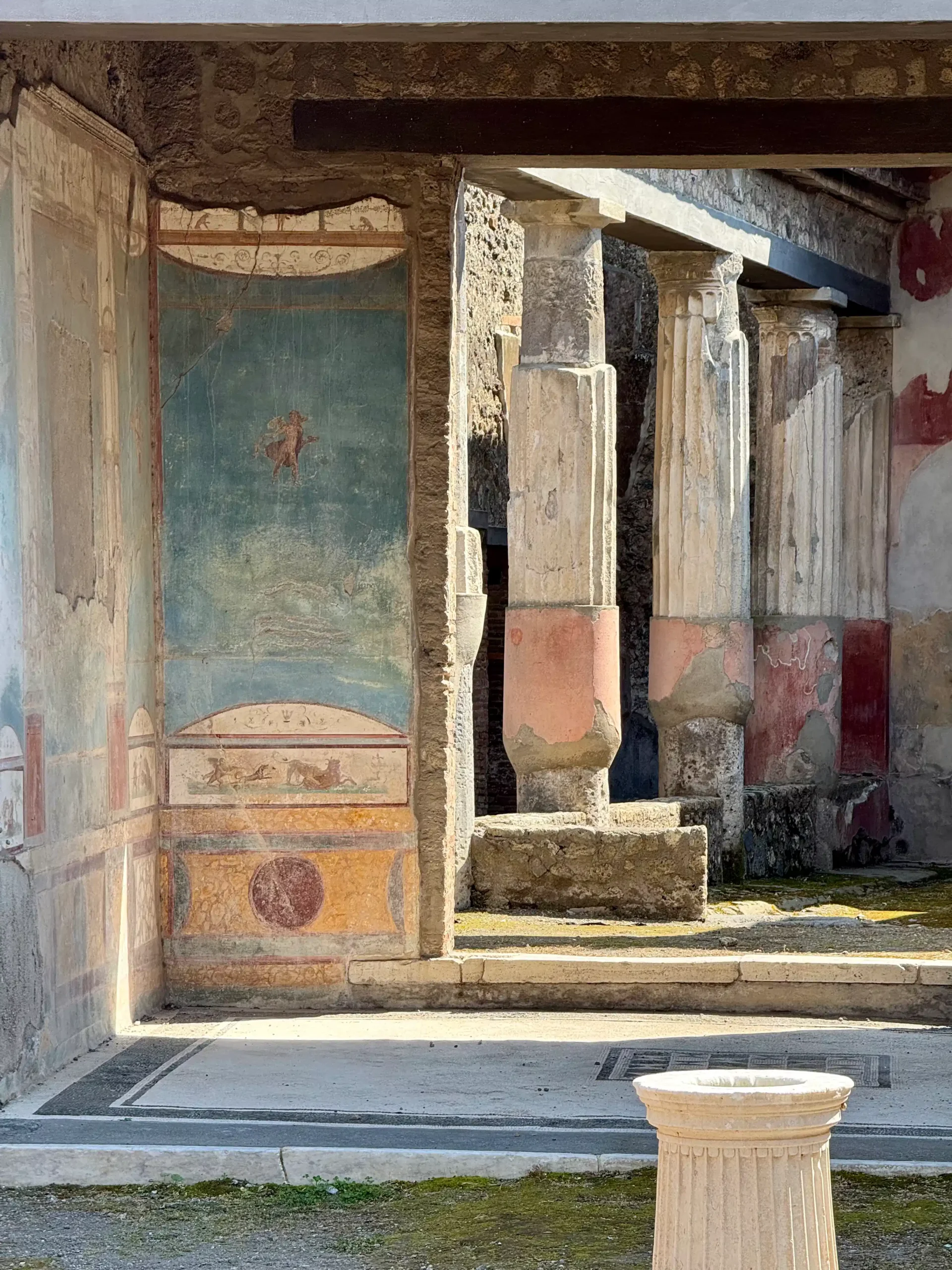
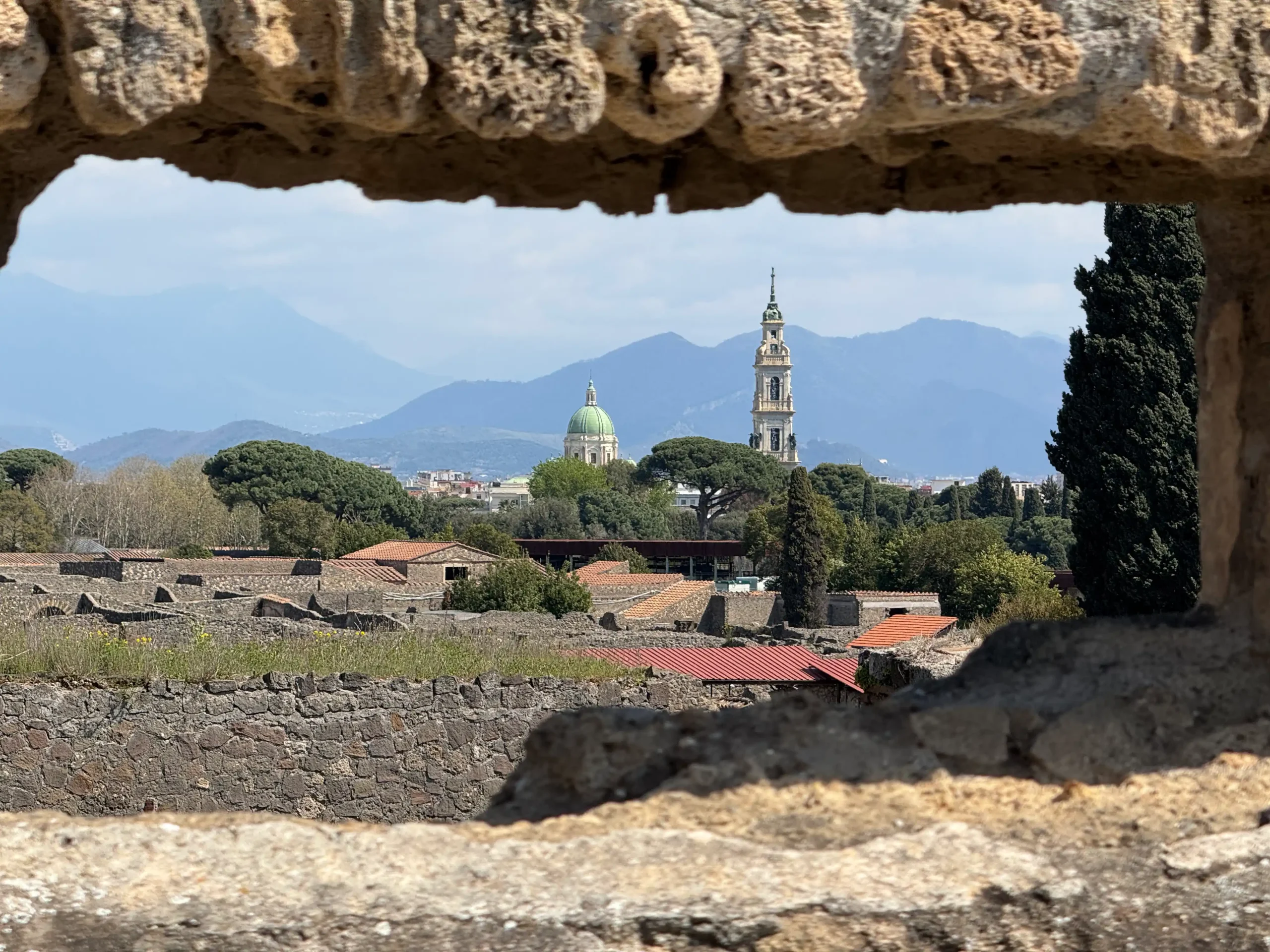
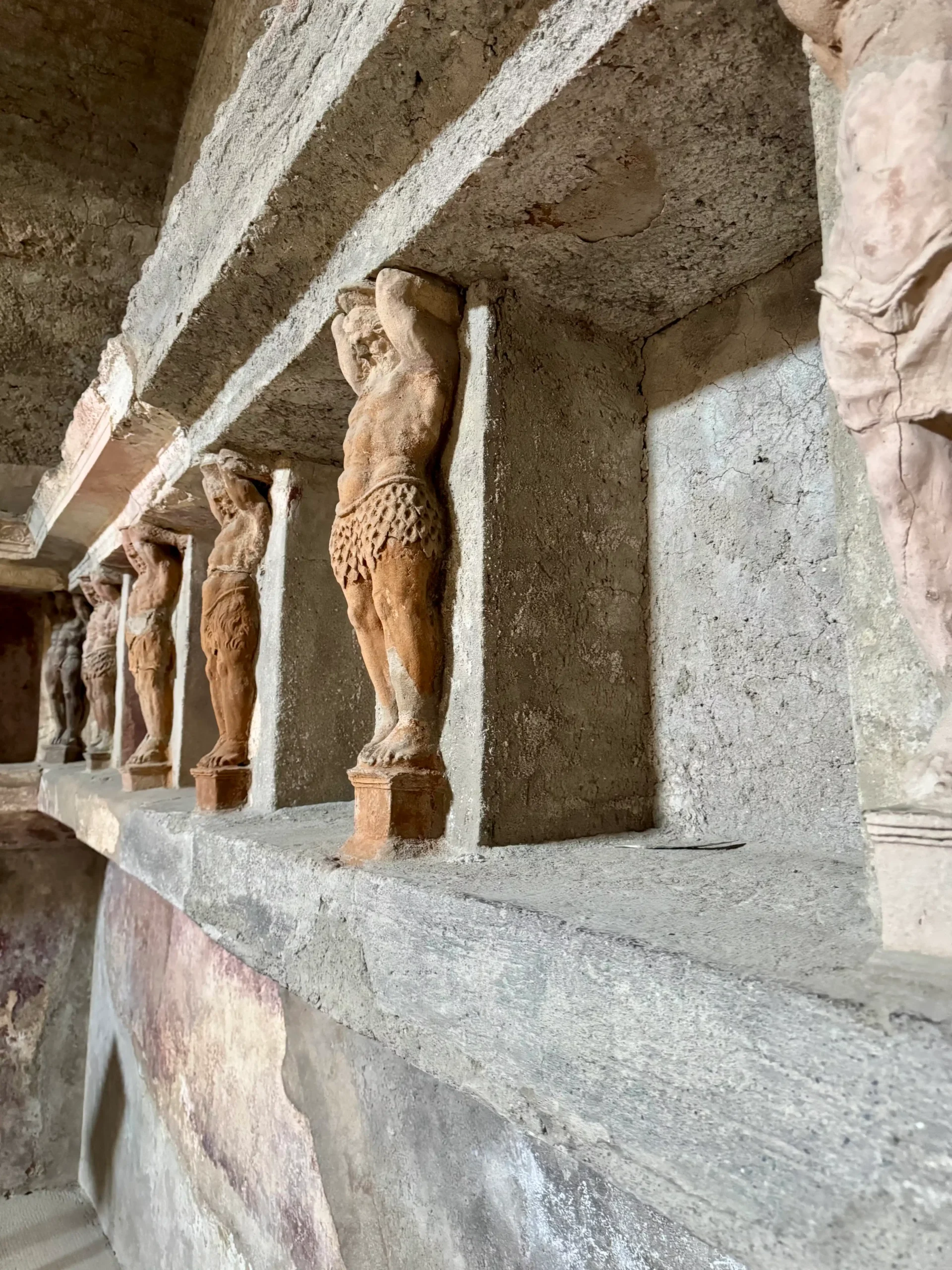
Pompeii is a large archaeological ruin. Not a small museum, not a pavilion, but a city. From edge to edge it’s 1.5 km, and across the whole site there’s no pushchair paradise: stony, uneven Roman streets, pavements with large stone slabs the Romans used as “pedestrian crossings” over the mud (they’re high, a pushchair won’t roll over them).
What we did:
- We gave up the pushchair idea. We left it in the car. We carried the baby in a carrier (the Ergobaby Omni worked for us, but any ergonomic one will do). It’s the only way in Pompeii with a small child.
- We arrived at 11:30 in the morning (it opens at 9:00). The first two hours are the best: the mass of tour buses arrives around 11:00, in summer the heat from 12:00 becomes unbearable, and there’s practically no shade in the ruins. Since it was off season, arriving later suited us too: a moderate number of people, not hot.
- We took two litres of water. Inside there are drinking-water fountains (fontanelle), but not everywhere.
- We chose a short route. Not all of Pompeii, just the central part: the Forum, the House of the Vettii, the Lupanar (the one “museum” we joked, even with a baby, not to forget), the Large Theatre. We spent 2.5 hours, whereas tourists without children spend about 5–6 hours.
Tickets and practical info
- Ticket: €22 for an adult, free for children under 18 (with a passport or birth certificate)
- Booking: advisable in summer via the official site pompeiisites.org. In spring we got in without a booking within 10 min.
- Entrance: choose Porta Marina (the main one) or Piazza Anfiteatro (a smaller flow)
- Parking: Pompei Parking by the Porta Marina entrance, €5 for the whole day
- Toilets: there are some by each main entrance and in the Forum square. There are no baby changing tables.
The Vesuvius question
Climbing Vesuvius with a baby we didn’t plan and I don’t advise it. From the car park to the crater it’s 800 m uphill on a volcanic-ash path, with steep slopes and wind at the top. You won’t push a pushchair, and in a carrier a child after two hours of Pompeii is already sleepy and unhappy. We saw Vesuvius from the Pompeii lowlands. That was enough. We owe it to ourselves – we’ll come back without the baby.
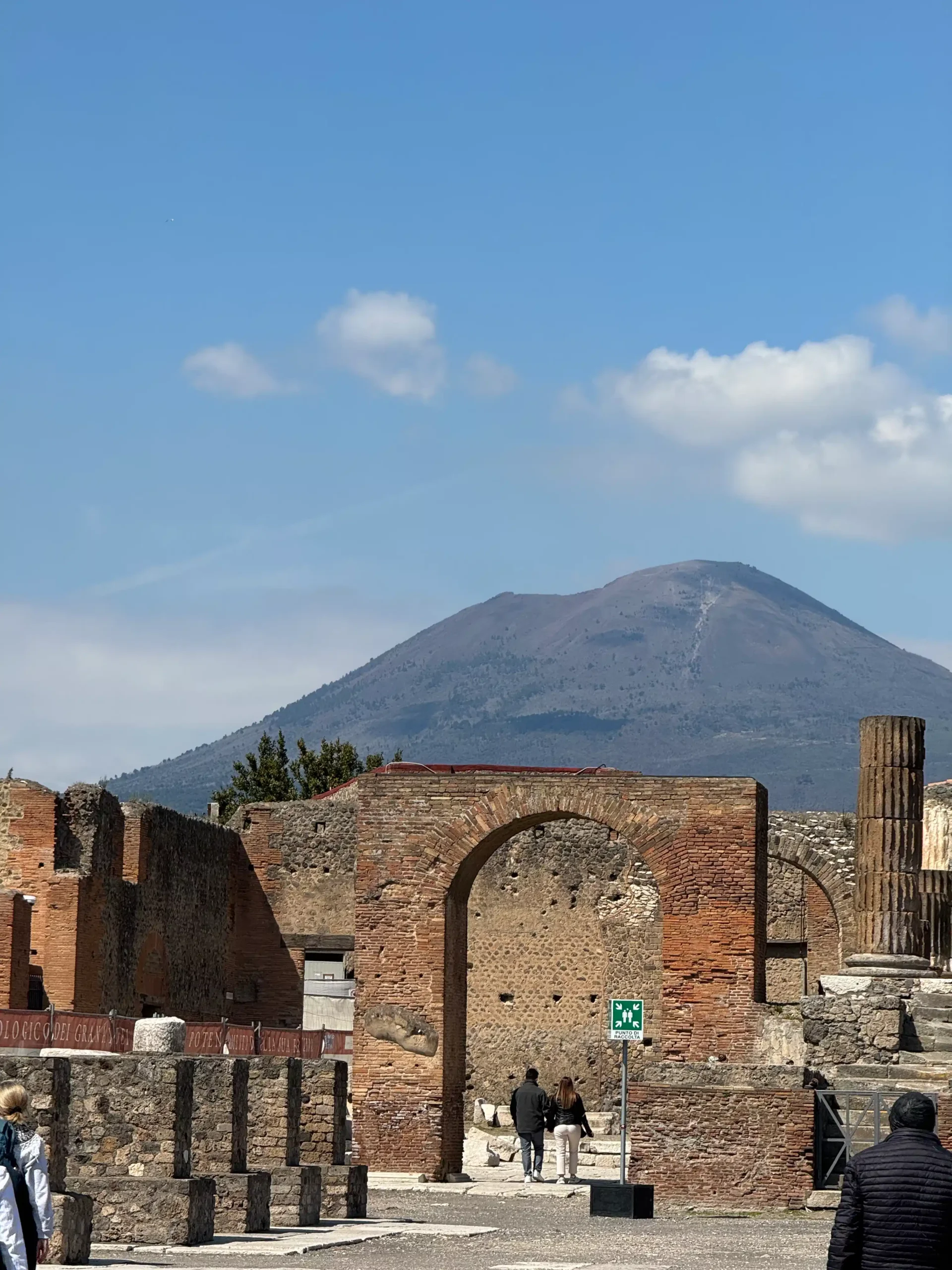
After Pompeii we got in the car, 50 minutes to Salerno, and by 18:00 we were already in the apartment.
Day 1 in Salerno: the old town, our own pace
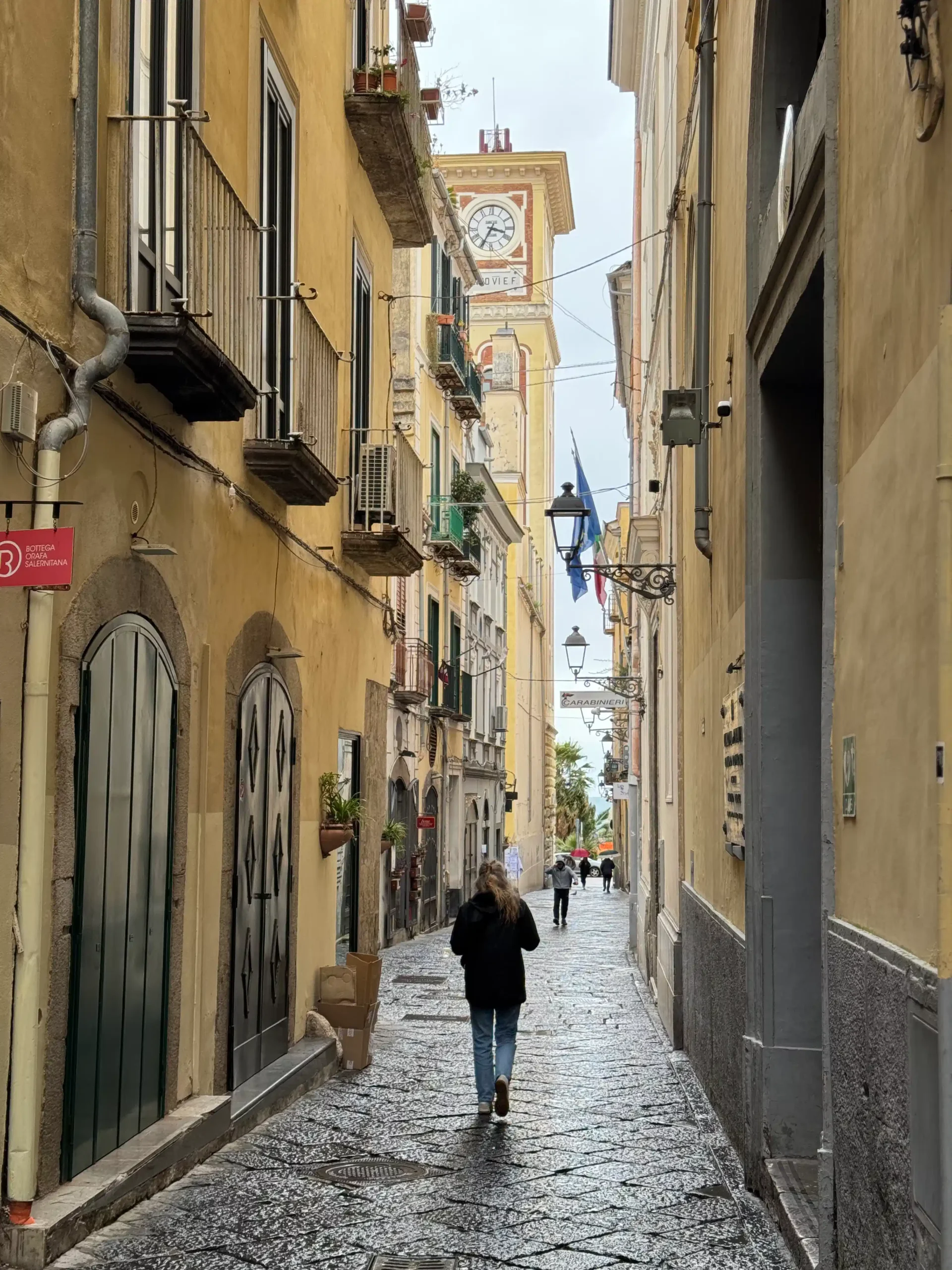
The next morning (really our first day in Salerno after Pompeii) we realised we needed a day without rushing. With a baby, the first day of adjusting to a new place is a sacred thing. If you don’t give the child that time, you’ll pay in the evening in the currency of tears. We were a little unlucky with the weather, as it rained all day, but we still didn’t want to sit in the apartment. After all, there’s no bad weather, only bad clothing.
Salerno’s old town: what to see in 3–4 hours
Salerno’s old town (Centro Storico) is simpler than that of most Italian cities: one main narrow street, Via dei Mercanti, with cross lanes opening onto it, and a few squares. You can go with a pushchair, but in places the narrow streets force you to carry the child in your arms (we left the pushchair in the apartment and used the carrier).
What’s really worth seeing:
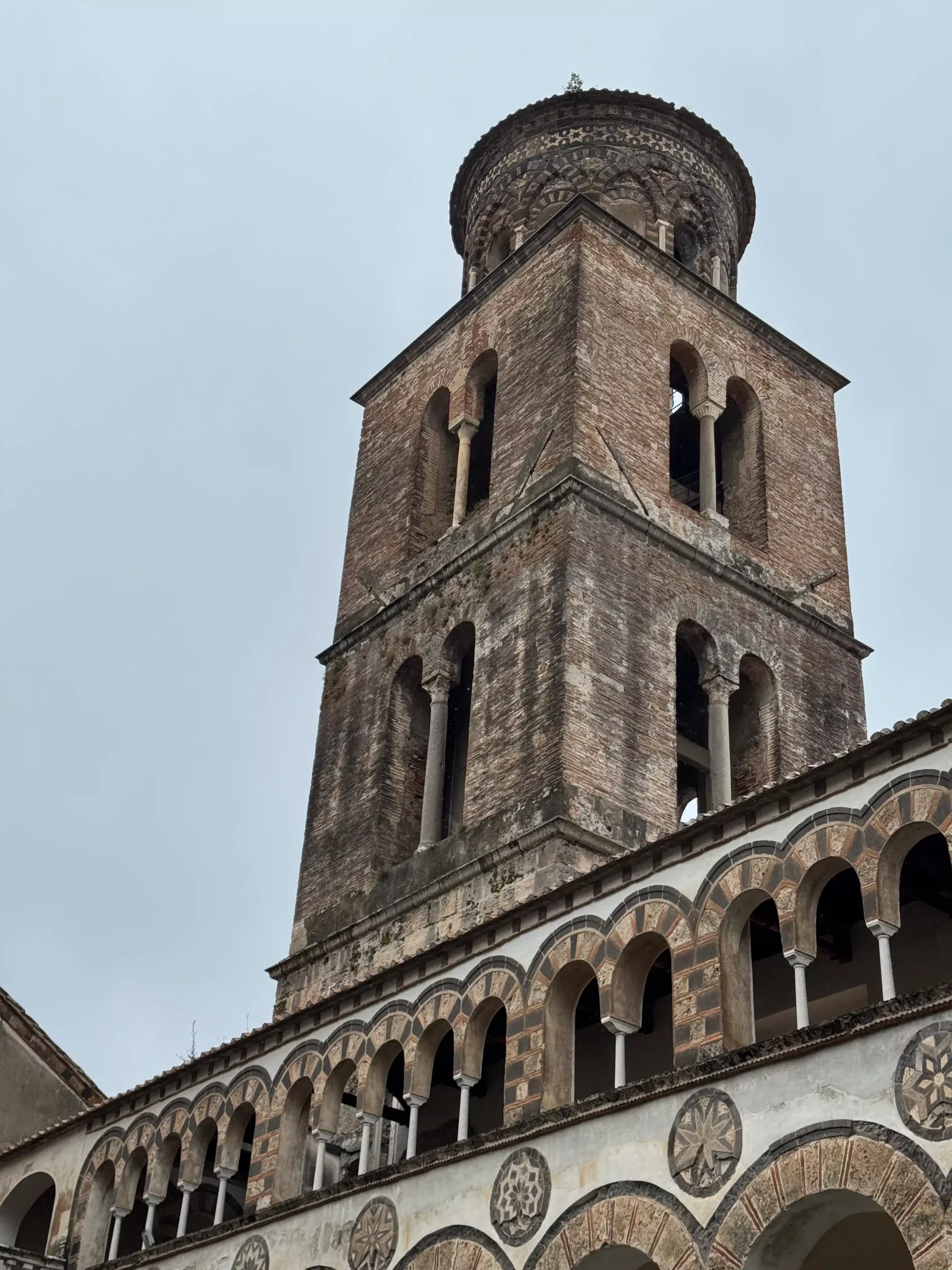
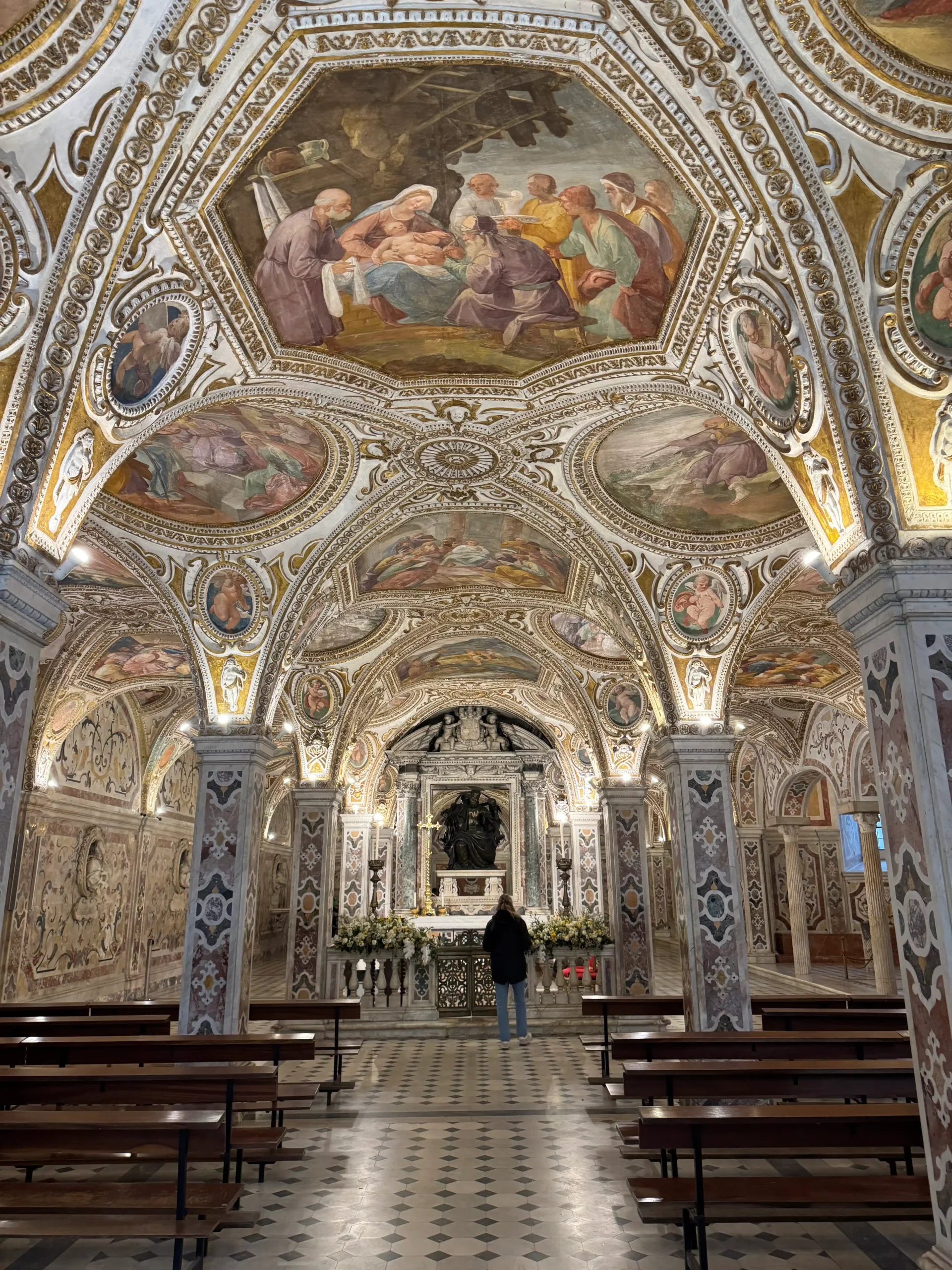
- Salerno Cathedral (Duomo di Salerno). Built in the 11th century, with wonderful remnants of Byzantine-style mosaics and a crypt where, it’s said, St Matthew is buried. Entry is free, the crypt €3. It’s cool inside, so it’s a good place to hide from the heat with a baby.
- Giardino della Minerva. A 14th-century botanical garden, one of the oldest in Europe, on a terraced slope above the old town. Entry €3. It can be hard with a pushchair (stairs), but with a carrier it’s lovely. Calm, green, almost no tourists, and the sea view from the top terrace costs more in emotion than any other public view in Salerno.
- Lungomare Trieste. Salerno’s seafront promenade, 2 km along the sea. A pushchair paradise: flat, wide, with palm trees, benches and ice-cream kiosks every 100 metres.
Lunch: where to eat with a baby
Italians love babies, and any restaurant you carry a little one into will greet you with smiles and “che bello!“. That’s not even a question; the question is practicality: is there a high chair, is there room for a pushchair, is the kitchen fast enough.
Our recommendation in Salerno’s old town: Trattoria Da Sasà (Via Diaz). A family restaurant, they have high chairs (not everyone in Italy does), and the prices are reasonable:
- Spaghetti alle vongole (pasta with clams): €14
- Frittura di paranza (a fry-up of small local fish): €16
- A half portion of pasta for the child: €6
- House wine (1/2 l): €6
- Total for two with an extra for the child: €48
After lunch we went back to the apartment for a pisolino (afternoon nap). It’s a sacred ritual in Italy, and with a baby it becomes very logical. From 14:00 to 16:30 everything is closed anyway (riposo), so what could be better than the baby napping on the balcony with a sea breeze.
Evening: aperitivo
Around 18:30 back into town. In Italy there’s the tradition of the aperitivo: before dinner, in the bars from 18:00 to 20:00, a glass of wine or a cocktail is €5–8, and often you get a little snack free with your drink. In Salerno the aperitivo culture is strong in the bars of Largo Campo square. Children run about, dogs sniff around, older people chat quietly.
The Amalfi Coast. A delicate subject with a baby
The second day is the one people travel to Salerno for: the Amalfi Coast (Costiera Amalfitana). But I’ll say it in advance: the Amalfi Coast with a 1-year-old baby is a challenge, not a stroll through a postcard. We didn’t choose this route because of unusually strong wind and rain, but below I give the information on what you’d need to know.
Logistics: how to reach the Amalfi Coast from Salerno
Three options:
| Option | Cost | Duration | Suitability with a baby |
|---|---|---|---|
| Car | Fuel €8–12 + parking | 35 min to Amalfi | ⚠️ Complicated |
| SITA bus | €3 one way | 1 h 15 min | ❌ Packed, no room for a pushchair |
| Ferry (Travelmar) | €9 to Amalfi, €12 to Positano | 35 min to Amalfi | ✅ The best option |
I recommend choosing the ferry, and it’s the best decision of the day. Salerno’s port (Molo Manfredi) is a 5-minute walk from the old town, and the ferry leaves every 1–1.5 h from April to October. You can be out on the open deck.
Tip: book ferry tickets in advance via travelmar.it. In summer they can sell out, especially to Positano.
Amalfi: why it works with a baby
Amalfi (the town) is, in my opinion, the only town on the Amalfi Coast where you can realistically spend a day with a baby. Unlike Positano (where the town is a slope with stairs) or Ravello (where you have to climb a mountain), Amalfi’s centre is flat.
The central Piazza del Duomo with its cathedral and its 62-step staircase is the heart. From there you walk along Via Lorenzo d’Amalfi, which is narrow but passable with a pushchair, with shops, gelaterias and limoncello kiosks.
What I suggest:
- A seaside café for breakfast. Andrea Pansa (founded in 1830) on Piazza del Duomo. Expensive (cappuccino €4, sfogliatella – a traditional pastry – €4), but there’s history there.
- Amalfi Cathedral. Entry to the cathedral + the Chiostro del Paradiso (the cloister) €3. The cloister is a little gem: white Gothic columns, palm trees, silence.
- The seafront promenade. Smaller than Salerno’s, but passable with a pushchair, and the view of the harbour is lovely.
Lunch in Amalfi is expensive. Trattoria Da Maria (Salita Cassese) is a good choice: pasta €14–18, parmigiana di melanzane (aubergine bake) €12. €62 in all for two with a child’s portion. These are Amalfi prices now, not Salerno’s.
Positano: a danger zone with a pushchair
After lunch take the ferry to Positano (€12 one way, 25 min). The most beautiful postcards in the world open up right there, but the reality is: Positano is built on a slope. The whole town is one great vertical staircase winding from the top down to the shore.
A pushchair in Positano = a joke. It’s all stairs.
A tip if you still want to go to Positano with a baby:
- Don’t climb to the top. Stay by Spiaggia Grande beach, where it’s flat.
- Try a granita di limone for €4. In summer it’s a real lifesaver.
- Stroll the seafront street for a few hundred metres and come back by ferry.
Ravello: a good option with a baby, but for another day
Ravello is the third large town on the Amalfi Coast, but it’s in the mountains, above Amalfi. It’s reachable only by bus from Amalfi (€1.80 one way, 25 min, a winding road). From Ravello opens the best sea view in Italy.
If the Amalfi Coast seems too complicated a challenge to travel with a child, I suggest heading to a far calmer but also beautiful seaside town – Sperlonga. I’ve written more about it in a separate article.
Caserta, Cetara, Vietri sul Mare and a slow goodbye to Italy
In the morning, when through the apartment window we saw grey clouds and rain running down the paths, we were mildly worried, but travelling with a baby teaches you one thing – to travel according to circumstances. So we packed, put the little one in the car seat and set off towards Caserta.
Leaving Salerno — when the rain sets the pace
Before setting off we gave half an hour to feeding and changing the little one – that’s the golden rule of travelling with a baby. Nobody wants a traffic jam on the A30 motorway with a crying, hungry child.
The road — the A30 and that inevitable stop
From Salerno to Caserta, driving the A30 motorway without stops, is about 1 hour 15–20 minutes. But with a baby “without stops” isn’t an option. Near Nola we stopped – the little one started to get restless, and it was a perfect chance for him to have a break from the seat and for us to catch our breath.
The motorway rest stops in Italy – the “Autogrill” type – are actually quite well set up for families. We found a place to change him, a coffee machine (very necessary after an early morning) and shelter from the rain.
Caserta — when a palace looks even grander in the rain
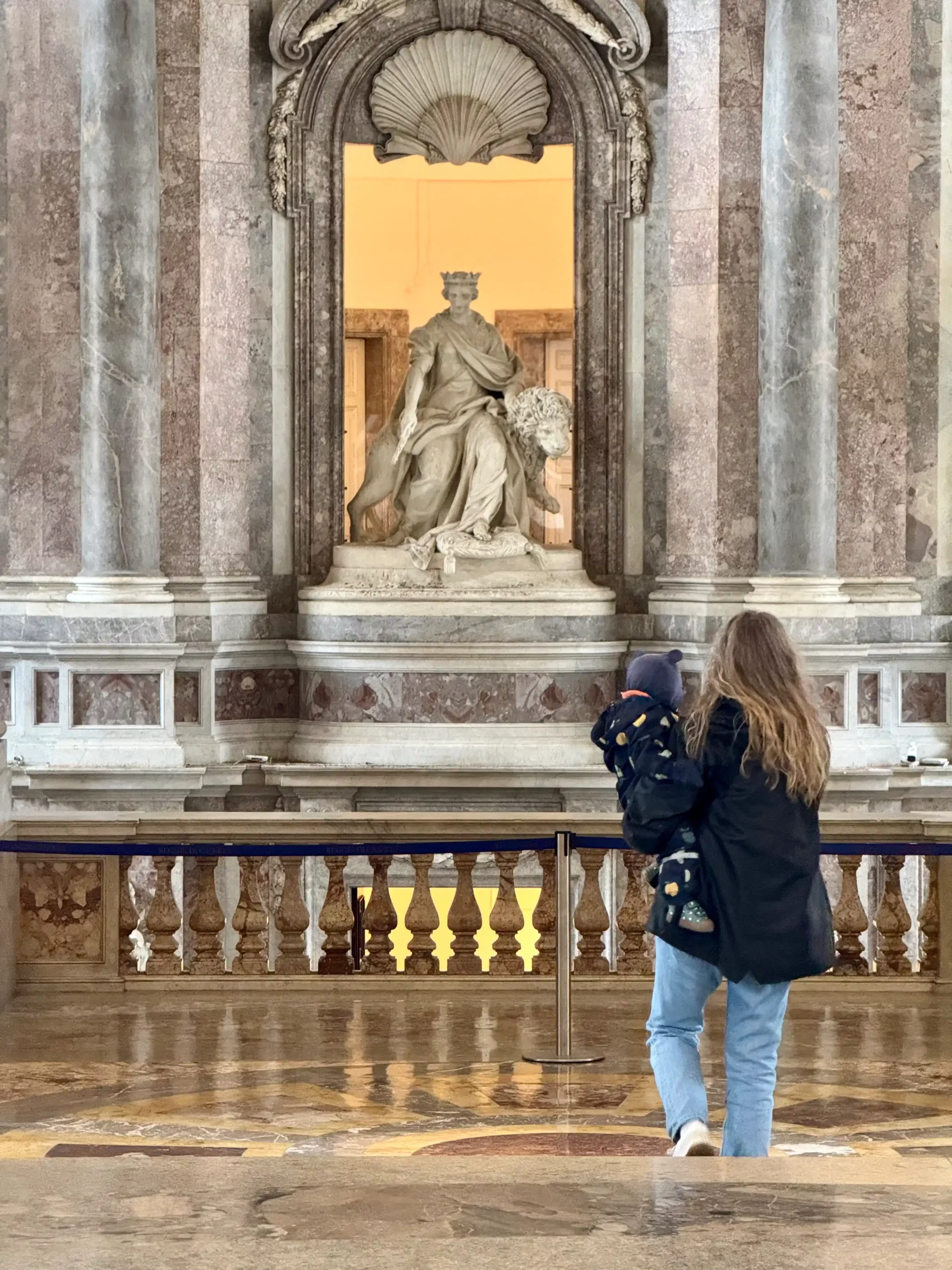
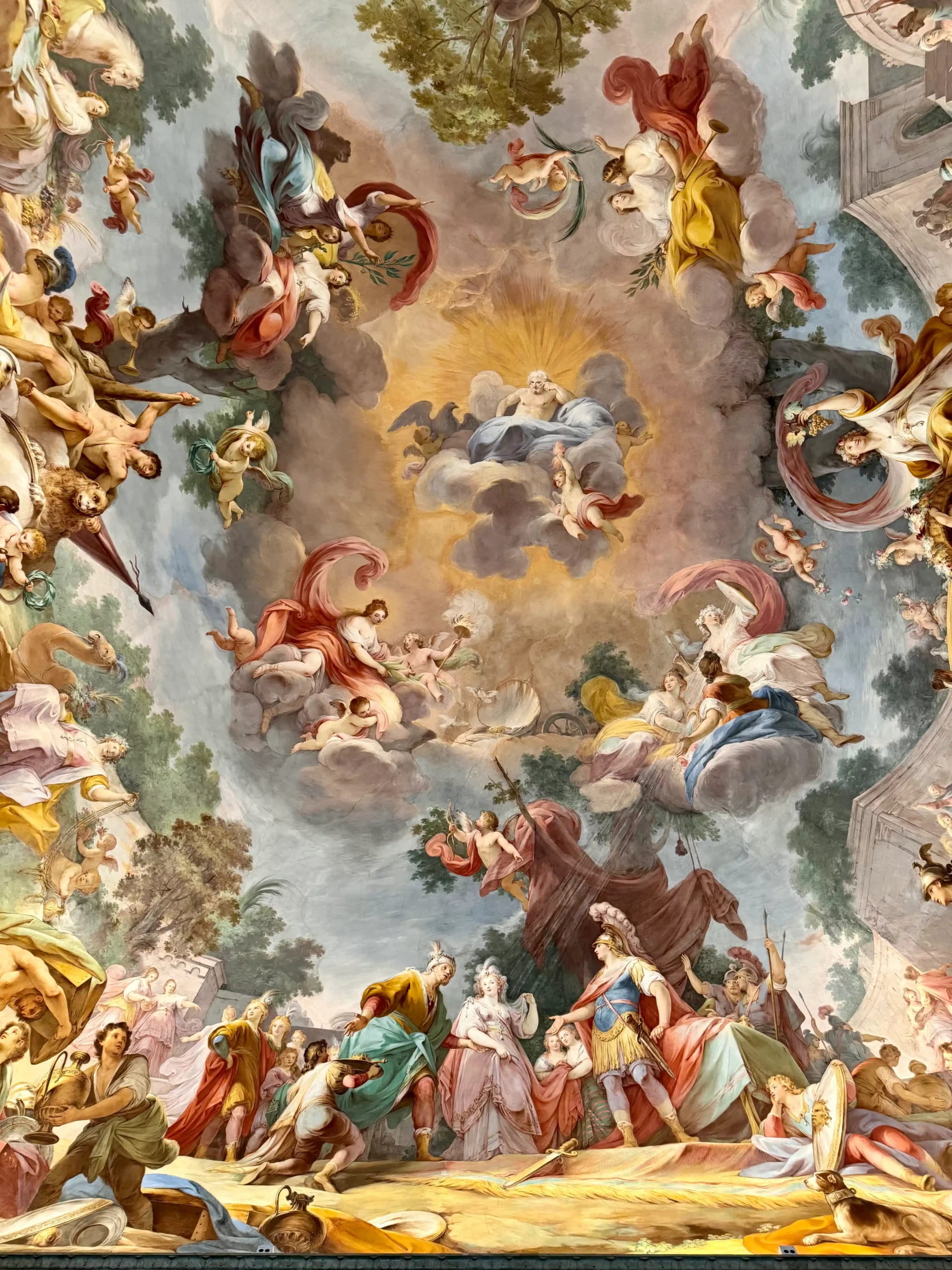
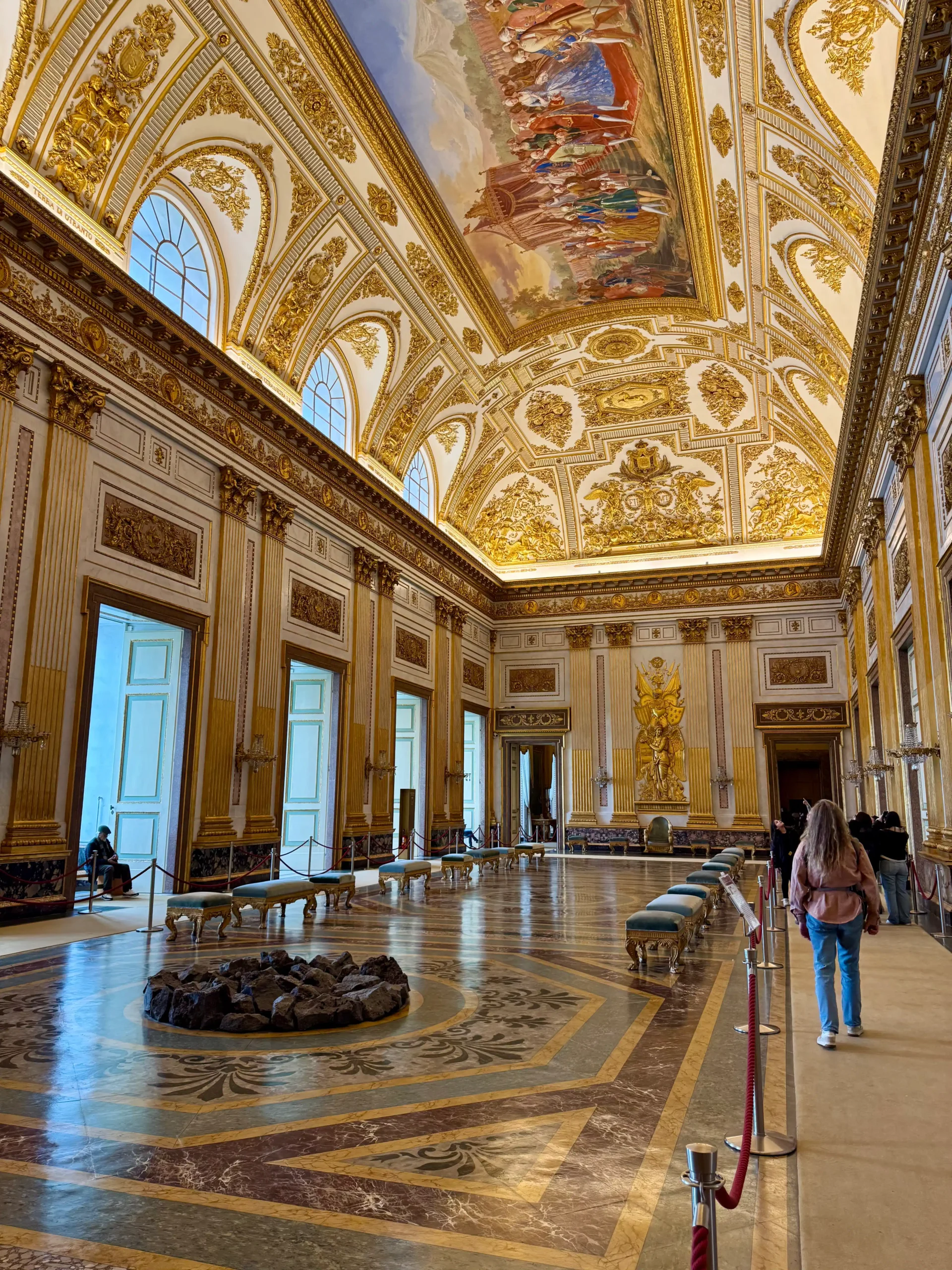
The Reggia di Caserta has an incredible atmosphere on a rainy day. Several times fewer tourists than on sunny days, the halls less noisy, and the enormous façade through the grey clouds looks like a set for some historical drama. The pushchair moved perfectly through the palace – the floors are level, the corridors wide.
The little one stayed in a good mood longer than we expected – a new environment, the echoes of the vaults, the buzz of people. They say this palace resembles Versailles; I thought there would be more on display – we walked through all the open rooms and halls fairly quickly.
If the weather is good enough, below I give the information on what else you can see around here.
Vietri sul Mare: a ceramics town 4 km from Salerno
Vietri sul Mare is the first town on the Amalfi Coast if you’re driving from Salerno. Only 4 km from our hotel, 10 min by car. Because of that closeness it’s often skipped, and quite undeservedly.
Vietri is the capital of ceramics. The whole coast is famous for its colourful ceramics, but in Vietri they’re born. The main street, Corso Umberto I, is full of ceramic shops: plates from €12, jugs from €25, large decorative panels from €80.
Vietri also has a beach – not the best, but functional: a strip of dark sand, with a concrete embankment, reachable with a pushchair.
Cetara: a small fishing town and colatura di alici
10 km from Vietri is Cetara, a small fishing village that most tourists skip. It’s famous for one thing: colatura di alici. It’s an ancient anchovy-brine sauce formula, a direct descendant of the Roman garum. Delicious on pasta, on pizza, on bread with olive oil. A small bottle (100 ml) of good colatura costs €12–18.
In Cetara you can have lunch at Trattoria Pesce Spada:
- Spaghetti con colatura di alici (the local classic): €14
- Tonno alla Cetarese (tuna marinated in tomatoes): €18
- Local white wine (a glass): €5
The last evening on the Salerno heights
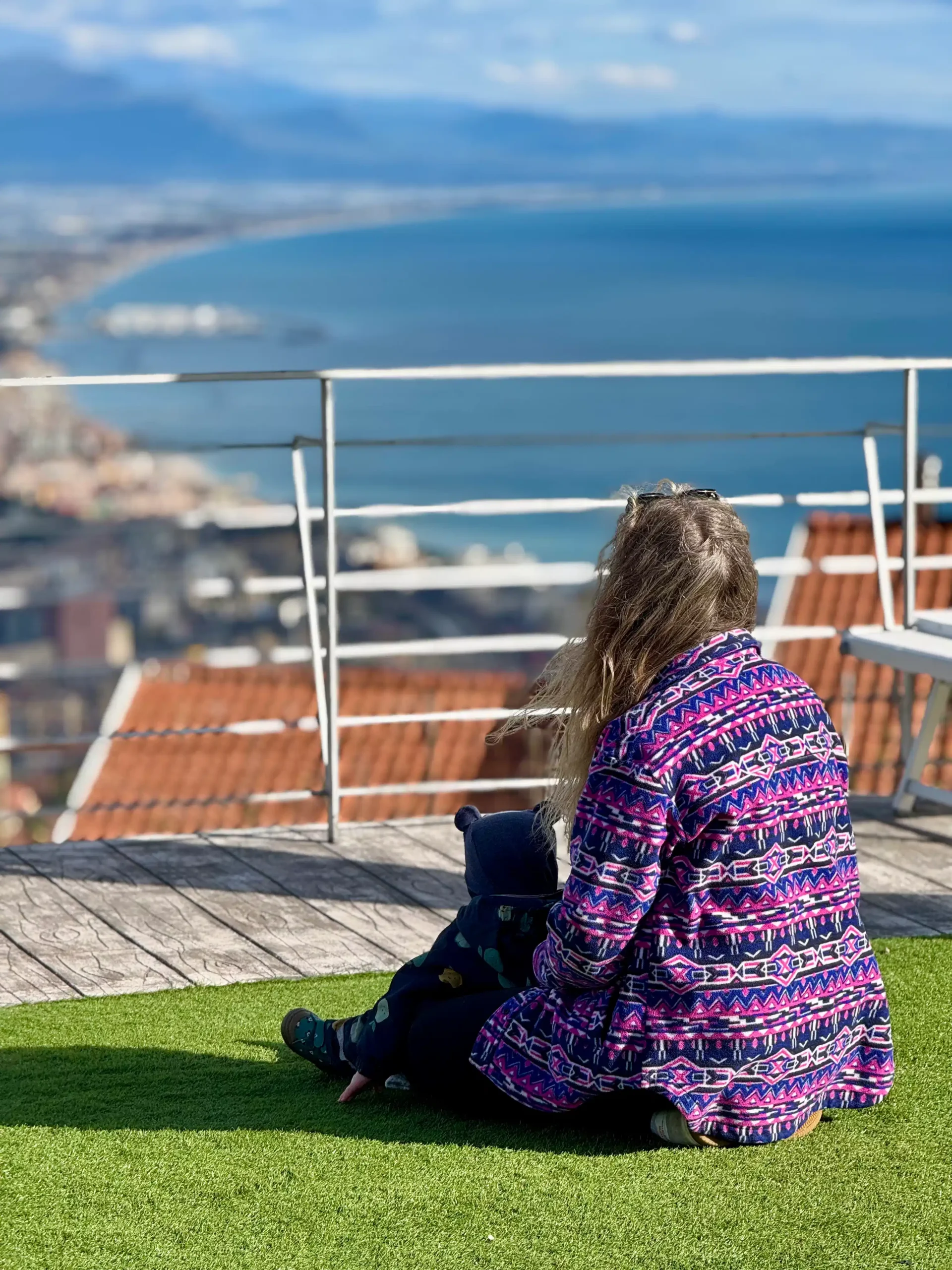
Italians say: “Vedi Napoli e poi muori” – see Naples and then you can die. I’d say it differently: see Salerno in spring, with a small child, on the mountain, and you’ll understand what that saying is worth.
Practical tips for travelling to Salerno with a baby
What to pack
For a baby in spring (15–22°C by day, 10–14°C at night):
| Item | How many | Comment |
|---|---|---|
| A light jumper | 2 | It’s always colder towards evening |
| A thin scarf/muslin | 2 | Everywhere |
| A sun hat | 1 | Essential even in spring |
| SPF 50+ baby sun protection | 1 | The Italian sun is the Italian sun |
| A swimsuit | 1 | Only if the baby enjoys changing water temperatures |
| A carrier (ergonomic) | 1 | Mandatory for Pompeii and Positano |
| A light, smooth-rolling pushchair | 1 | For the Salerno promenade and Amalfi |
| Food/snacks | For a few days | You’ll find everything in Italy, but for the first 24 h it’s better from home |
| A first-aid kit | 1 | Thermometer, paracetamol, plasters, saline solution |
Is Salerno safe with a baby?
Short answer: yes, very. Salerno is one of the safest cities in southern Italy. Not once did we feel uncomfortable, even walking with the pushchair through narrow streets in the evening. In most places the baby drew enthusiastic reactions from the locals (Italians really love children), not resentment.
Typical safety precautions: don’t keep your phone in your pocket on the street, keep a tourist backpack closed on the pushchair, watch your handbag in restaurants. The same as in any big European city.
What isn’t great in Salerno
- The pushchair pavements are narrow in places. In the old town in places you simply walk down the middle of the street, because that’s easier.
- In the evening by the seafront it can be loud. From weekend evening on, the scooters buzz.
- Noisy. It can be noisy living in the lower part of the city.
- Limited English. Italians in the south speak less English than in the north.
Cost summary
| Category | Total for 3 days (3 people, baby free) |
|---|---|
| Hotel on the mountain (3 nights, with breakfast) | €270 |
| Food + drinks | ~€280 |
| Pompeii tickets + parking | €49 |
| Ferries to Amalfi and Positano (both adults, return) | €84 |
| Parking and fuel in the Salerno region | ~€45 |
| Ceramics and souvenirs | €38 |
| Total | ~€826 |
On average €275 per day for three, with a baby, with breakfast, including the Amalfi day’s expenses.
What I’d do differently next time
- I’d give Pompeii a whole day. Pompeii needs a full day and isn’t really suited to just dropping in on the way past.
- I’d go to Ravello. It stayed unseen, along with the whole Amalfi Coast. They say it’s comfortable there with a pushchair – a flat little path and the wonderful Villa Cimbrone gardens.
- I’d spend half a day at Paestum. 40 km south of Salerno are three superbly preserved Greek temples (5th century BC). They stayed unseen. Easily passable with a pushchair (unlike Pompeii).
- I’d book a limoncello-making class. On the Amalfi Coast there are family farms that run 1–1.5 h classes, prices €25–40/person. With a baby in a carrier it would work out.
- I’d go later in spring. We were there in early April, the sea still cold (17°C), some seaside cafés closed. Mid- to late May is probably a better compromise between the tourist crowds and working infrastructure.
Is it worth going to Salerno with a baby?
Short answer: yes, and it’s the best base to choose in southern Italy with a small child.
Salerno has everything: the coast, the infrastructure, the prices, access to Amalfi, Pompeii, Paestum. With a baby you value not “breathtaking views with stairs” but practical logistics. Salerno is practical logistics with a sea view.
Three nights is the minimum if you want to fit in Pompeii, Amalfi-Positano and at least one small town. Five nights would be ideal if you wanted to add Ravello, Paestum and one day simply on the balcony with a book.
If you haven’t yet read my article about 4 nights in Tuscany with a baby in the Chianti region, start there. Italy from Florence to Salerno via Pompeii is one of the best routes in Europe with a little one, if you have 7–10 days.
Find flights here. If something goes wrong with your flight, you can claim compensation via AirHelp or Compensair.
Staying connected? Skip expensive roaming and grab an eSIM plan — set it up before you fly and you’ll have data the moment you land.
I always recommend booking airport transfers in advance. You can do that here.
Find accommodation here.