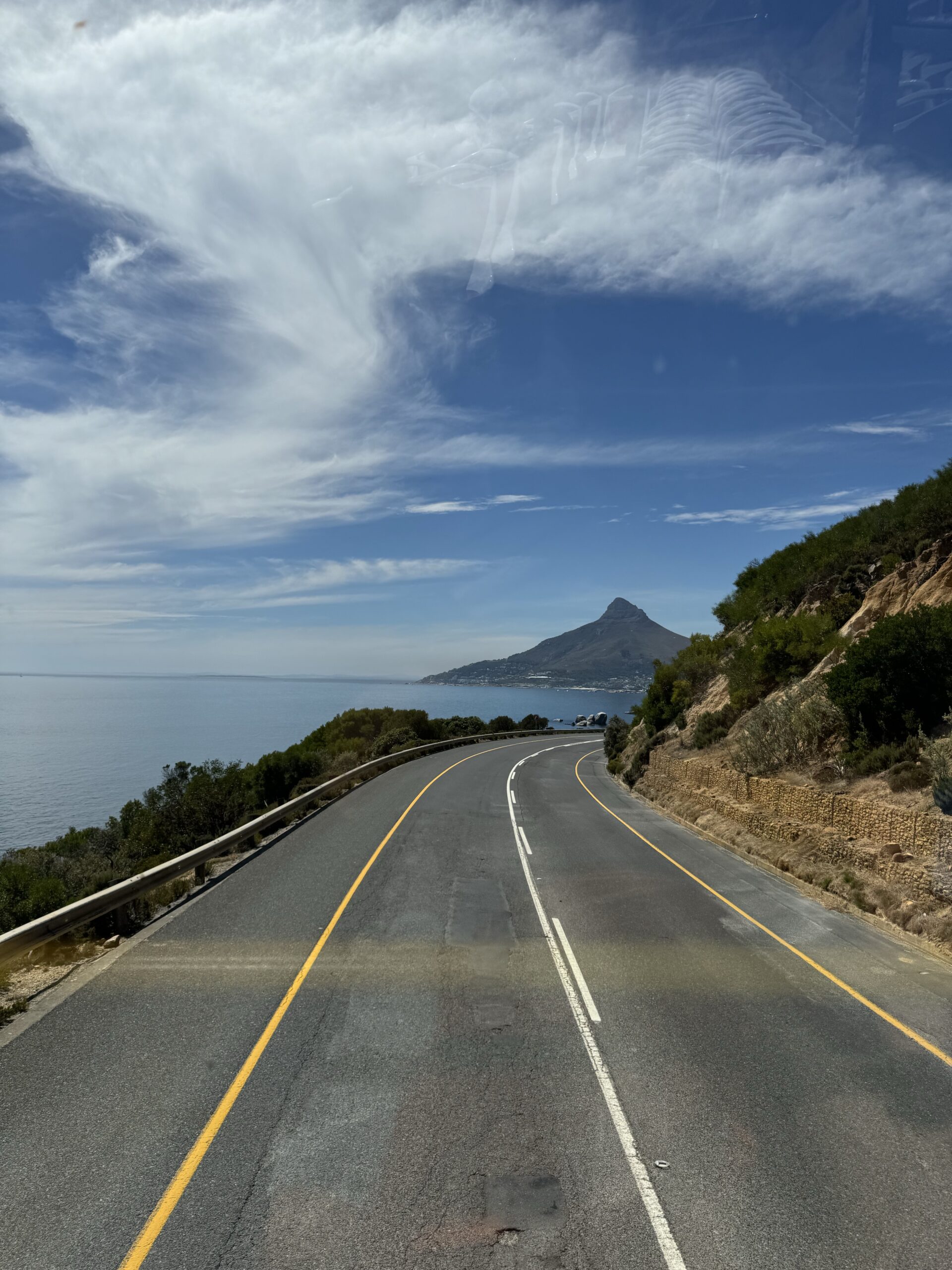
For those who love driving and aren’t afraid to drive in South Africa, the Garden Route is the most beautiful road worth taking.
Some links in this article are affiliate links. If you book through them I earn a small commission, at no extra cost to you.
Contents
- What is the Garden Route?
- When to go?
- Stop No. 1: Mossel Bay — where it all begins
- Stop No. 2: Wilderness — a front-row seat at nature's theatre
- Stop No. 3: Knysna — the oyster heart
- Stop No. 4: Plettenberg Bay — waves, whales and beaches
- Stop No. 5: Bloukrans Bridge — adrenaline over the abyss
- Stop No. 6: Tsitsikamma National Park — where the road ends (and begins)
- A detour from the route: Oudtshoorn
- Practical tips for travellers
- Why does this road hook you?
What is the Garden Route?
It’s a roughly 300-kilometre stretch of coast in south-eastern South Africa, officially running from Mossel Bay to Storms River. UNESCO included it in its network of biosphere reserves, and many travellers call this route one of the most beautiful coastal drives in the world. Here lush native forests, fynbos vegetation, lagoons, cliffs, waves and wildlife all meet — you can see dolphins, whales and even sharks. Before the trip, it’s worth checking the visa requirements.
The distance from Cape Town to the start of the route, Mossel Bay, is about 400 km, so the journey itself begins before you officially set foot on the Garden Route.
When to go?
The best time for the trip is from November to March (the South African summer). Read more about the best time to travel to South Africa in a separate article. The days are long, the weather warm, and the water temperature pleasant enough for swimming. But if you want to watch whales, choose June–November, when the Southern Right Whales migrate along the coast.
Worth knowing: even in summer the evenings can be cool, and rain is possible here at any time. The Garden Route got its name for a reason: there’s no shortage of moisture here.
Stop No. 1: Mossel Bay — where it all begins
A small coastal town with a mild climate and a friendly atmosphere. This is where Bartolomeu Dias first came ashore in 1488, and the Dias Museum tells that story vividly. But the best thing to do in Mossel Bay is to dive with seals or leap off the rocks of the St Blaize trail straight into the water (if you’re brave enough).
Santos Beach is a great spot for your first coffee with an ocean view, while a long day at the wheel still waits ahead.
Stop No. 2: Wilderness — a front-row seat at nature’s theatre
The name speaks for itself. Wilderness is an oasis of calm, where lagoons, lakes and rivers weave together. Here you can kayak across the Wilderness lagoon, watching flamingos and kingfishers, or simply lie on the beach and listen to the waves.
Wilderness is part of the Garden Route National Park, so there’s no shortage of walking trails. The Half Collared Kingfisher trail leads along the river through dense forest, and that walk could be called meditation in nature.
Stop No. 3: Knysna — the oyster heart
If the Garden Route had a capital, it would be Knysna. The town sits by a stunning lagoon, guarded on both sides by massive rocky heads (the Knysna Heads). The view from the top of them is such that a phone simply can’t convey the scale.
Knysna is famous for its oysters. The Knysna Oyster Festival is one of the biggest events in the region, but even outside the festival, in any coastal restaurant you can order fresh oysters with wine and feel that life is good.
The lagoon is home to rare seahorses, and around the town stretch old, deep forests hiding the last Knysna elephants — although seeing them is almost impossible.
Stop No. 4: Plettenberg Bay — waves, whales and beaches
Plettenberg Bay (locals just say “Plett”) is the town where you want to stay longer than you planned. Blue-flag beaches, warm water, pods of dolphins leaping in the waves just a few dozen metres from shore.
The Robberg Nature Reserve near Plettenberg Bay offers one of the best hikes on the whole Garden Route. The trail goes around the peninsula, past seal colonies, and every turn reveals a new perspective: turquoise water, white sandy strips, cliffs, wind. Allow about 4 hours, but you won’t want to rush.
Stop No. 5: Bloukrans Bridge — adrenaline over the abyss
Between Plettenberg Bay and Storms River stands Bloukrans Bridge, the highest commercial bungee jump in the world: 216 metres. Even if you don’t plan to jump, it’s worth stopping to watch others do it. The screams echo in the gorge, and just standing on the bridge, looking down, is already an experience.
Stop No. 6: Tsitsikamma National Park — where the road ends (and begins)
Tsitsikamma is the crown of the Garden Route. 80 kilometres of wild coastline with steep cliffs, old yellowwood forests and clear rivers.
Storms River Mouth is a place that takes your breath away. Suspension bridges lead over the river mouth, where green water meets the ocean waves. The sound here is incredible: the boom of the waves, the chirping of birds, the whisper of the wind in the trees.
Here you can kayak through the Storms River gorge, hike the Otter Trail (one of the most famous walking trails in South Africa), or simply sit on the rocks and watch the ocean do what it has been doing for millions of years.
A detour from the route: Oudtshoorn
Although Oudtshoorn isn’t formally on the coast, it’s just an hour’s drive from George, and it’s worth making the detour. This is where the Klein Karoo begins: a dry, hot, wide land where ostriches are farmed and vineyards grow.
The Cango Caves, huge limestone caves, are one of the natural wonders that surprise travellers most in South Africa. Narrow passages, giant stalactites and stalagmites, a cool silence underground that contrasts with the hot air outside.
Practical tips for travellers
- The car. The Garden Route doesn’t need a 4×4. The roads are in good condition, paved and well marked. An ordinary rental car from Cape Town or George airport is enough. They drive on the left, as in the UK.
- How much time to give it? The ideal option: 5–7 days. You can do it in 3, but then it will be a race, not a journey.
- Accommodation. From budget hostels to luxury cottages with an ocean view. In Knysna and Plettenberg Bay the choice is the biggest. In summer (December–January) it’s recommended to book in advance, because South Africans themselves love this route.
- Safety. The Garden Route is one of the safest regions in South Africa. Follow standard precautions: don’t leave valuables in view in the car, lock the doors.
- Budget. South Africa is wallet-friendly. You can eat well for €10–15, and accommodation for two starts from €30–40 a night.
Why does this road hook you?
The Garden Route isn’t about one specific place or one big “wow” moment. It works as a whole: the landscapes change, the light shifts, each town’s character differs. In the morning you kayak on a lagoon, during the day you hike along the cliffs, in the evening you eat fresh oysters with wine, watching the sunset over the Indian Ocean.
It’s a journey where time slows down. Where the road matters more than the destination. Where every turn reminds you that the world is bigger and more beautiful than it sometimes seems from your window at home.
If you’ve ever dreamed of a road trip that would be adventure, rest and nature therapy all in one, the Garden Route is the place to start.
And if you want to see what an independent trip to South Africa looks like with safari and Cape Town, read about my independent trip to South Africa.
Search for flights here. If something goes wrong with your flights, you can claim compensation through AirHelp or Compensair.
Staying connected? Skip expensive roaming and grab an eSIM plan — set it up before you fly and you’ll have data the moment you land.
I always recommend booking taxi transfers to and from the airports in advance. You can do that here.
Find accommodation here.