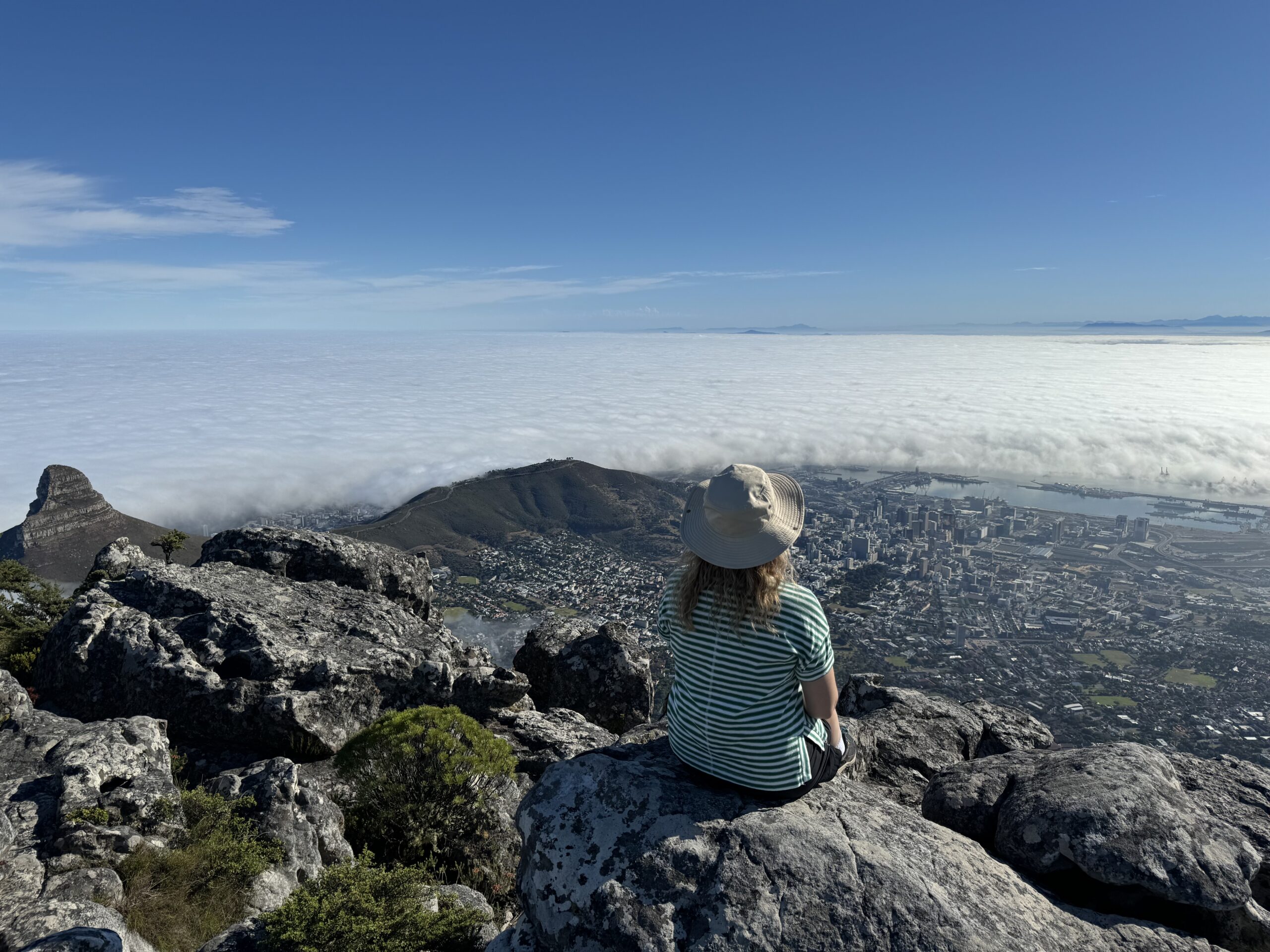
The first time I saw Table Mountain, I understood why people talk about it. It’s enormous and flat, as if someone had sliced off the summit with a knife and left a perfect table in the sky. I’ve never seen anything like it anywhere. From it you can see Cape Town, two oceans, and on top a white “tablecloth” of cloud often lies. The first time I climbed up, I didn’t feel like I was on a mountain at all, because the flat top creates a completely different impression. No wonder it’s considered one of the wonders of the New World.
Some links in this article are affiliate links. If you book through them I earn a small commission, at no extra cost to you.
Contents
A mountain older than the Himalayas
Table Mountain is roughly 600 million years old, which means it was here long before the Alps, the Andes or the Himalayan ranges. Its formation began with tectonic processes and glaciers, and the geological layers visible on its slopes tell a story that started even before life crawled out of the water onto land.
The highest point, called Maclear’s Beacon, reaches 1,085 metres (3,563 feet) above sea level. The flat summit stretches about 3 kilometres from one edge to the other, and it’s precisely because of this that the mountain got its name: from a distance it looks like a giant table set between sky and earth.
In 2011, Table Mountain was officially recognised as one of the New 7 Wonders of Nature in a worldwide vote.
Hoerikwaggo: a mountain in the sea
Long before Europeans reached the Cape of Good Hope, the local Khoisan (Khoi and San) people called this mountain Hoerikwaggo, which means “Mountain in the Sea”. To them it was a sacred place with deep spiritual meaning. Khoisan paintings and traces show that people lived in this region for tens of thousands of years, and the mountain was at the centre of their worldview.
The first European to describe Table Mountain in writing was the Portuguese sailor António de Saldanha, who climbed to the summit in 1503. Later, in the days of the Dutch colonists, the mountain became a navigation landmark and a source of fresh water for ships sailing to Asia.
A tablecloth of clouds
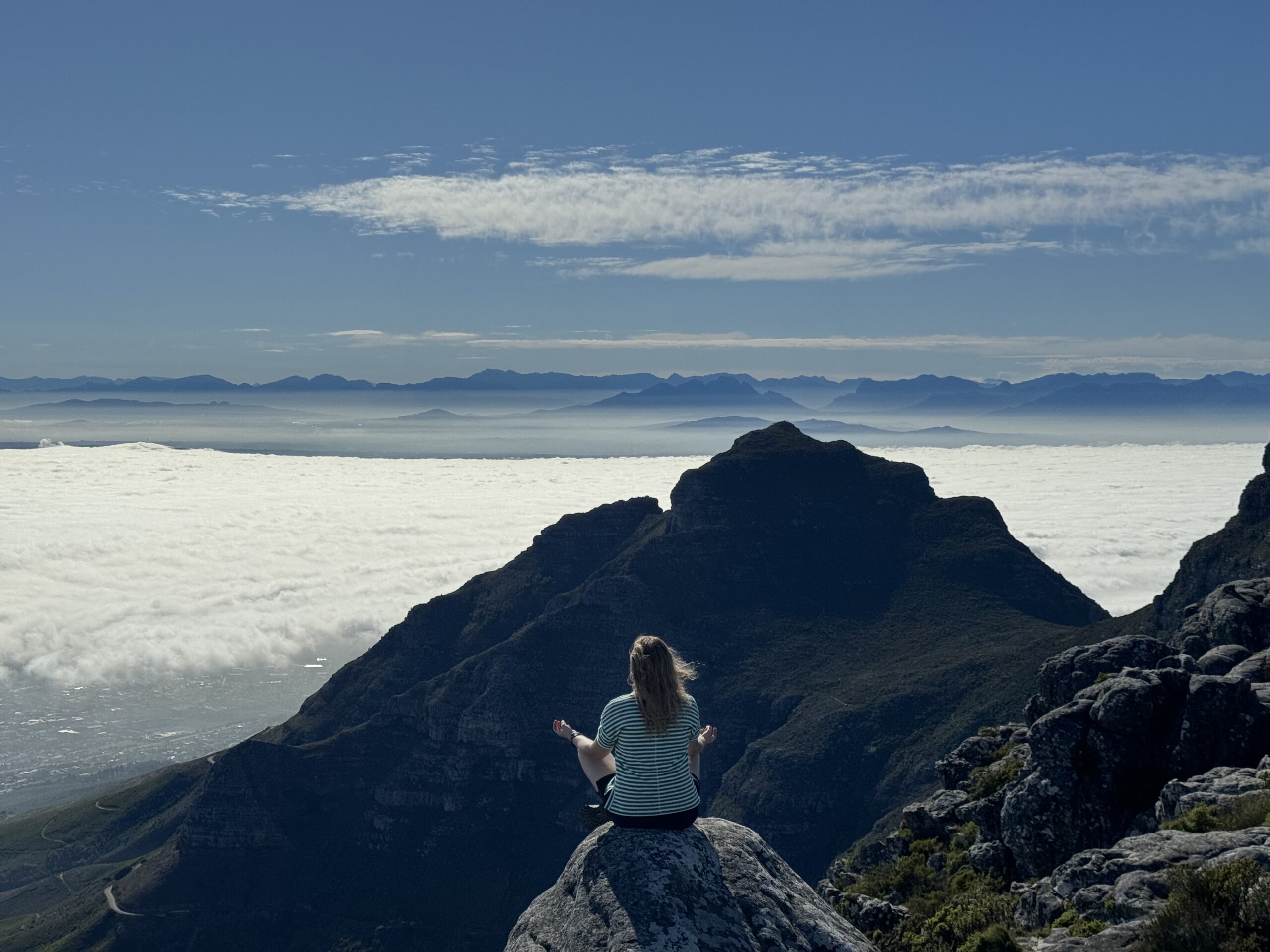
One of the more fascinating phenomena of Table Mountain is the so-called tablecloth: a white blanket of cloud that covers the flat summit and slowly slides over the mountain’s edges like a cloth laid over a table.
This phenomenon occurs when moist air from the Atlantic Ocean rises up the mountain’s slopes. Reaching the summit, the air cools, the moisture condenses and a cloud forms. A strong south-easterly wind (known as the “Cape Doctor”) pushes this cloud over the mountain’s edge, where it dissolves again in the warmer air.
The result looks incredible: as if someone had thrown a white sheet over the mountain, one that constantly moves but never falls. You can watch it for hours and never get bored. I was very lucky to see this tablecloth, because you don’t always manage to.
How to get to the top?
The Cableway
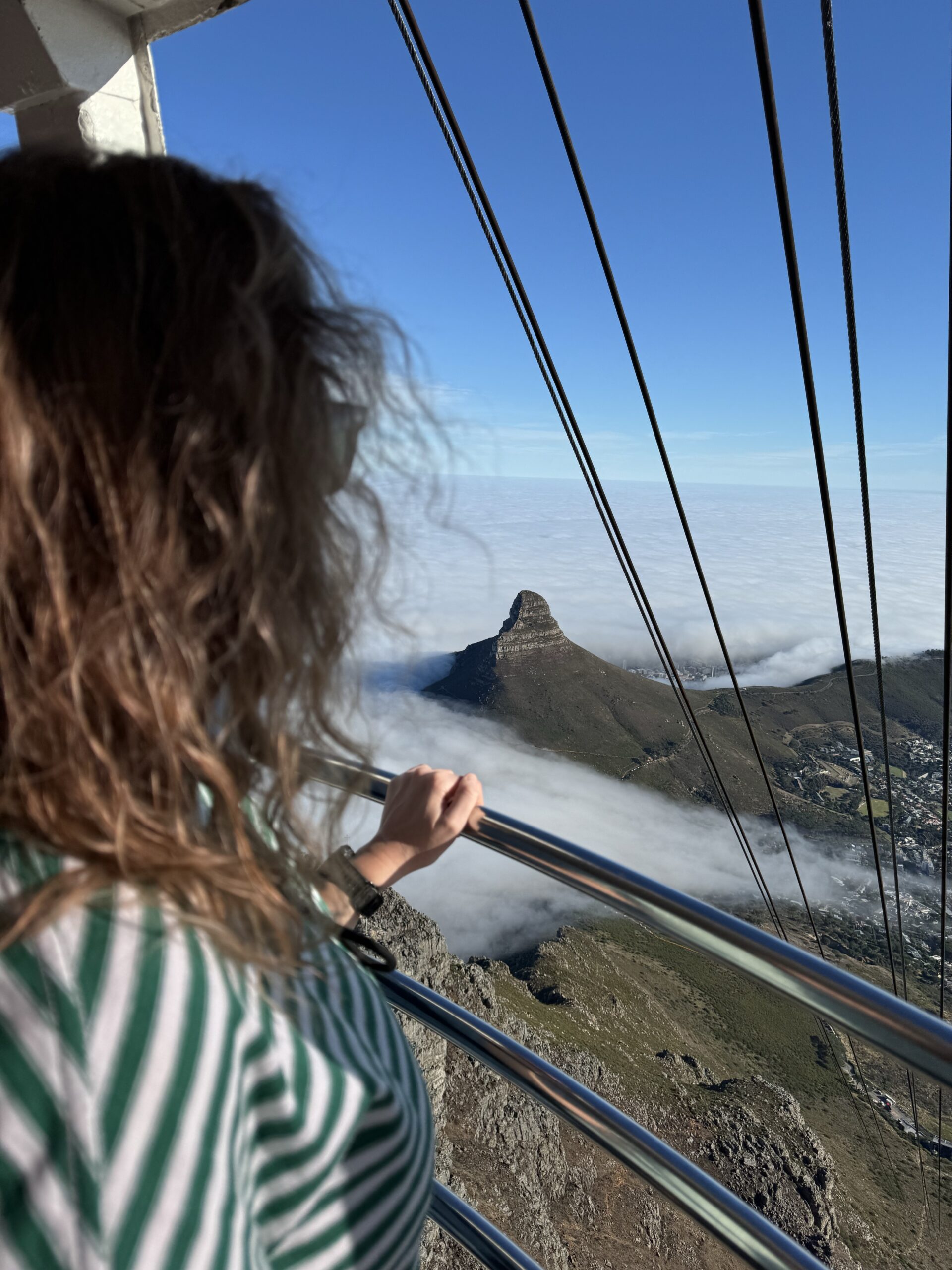
This is the fastest and most convenient way. The first cableway was built back in 1929, and today’s cars are modern and rotate 360 degrees during the journey, so all passengers see the panorama from every side. The ride up takes about 5 minutes, and the view through the window is unrepeatable.
Practical information:
It’s best to buy tickets online in advance through the official website, as queues can be long, especially in season.
The cableway doesn’t run in strong wind. That means on the day you plan to go up, everything can change within an hour. Tip: have a backup plan.
At the top there are walking paths, a café and viewing platforms.
On foot: Platteklip Gorge
If you want to feel the mountain with your legs and your heart, the most popular walking route is Platteklip Gorge. It’s the most direct path to the top, up the front face of the mountain. The route is well marked, but don’t underestimate it: it’s about 600 metres of elevation gain over 2–3 hours of intense climbing.
The trail starts near Tafelberg Road, about 1.5 km from the cableway station. The whole way is stone steps winding through the gorge. At the top you reach the flat summit, and that’s when you understand why the climb was worth every drop of sweat.
For me the ideal option was to go up by cableway and walk down. The descent takes less effort.
Other routes: experienced hikers can choose Skeleton Gorge (via the Kirstenbosch Botanical Garden side), India Venster (with some scrambling) or Kasteelspoort (from the Camps Bay side). In all there are more than 350 classified routes to the summit. Each has its own character, its own views, its own challenges.
Flora that exists only here
Table Mountain is part of the Cape Floral Region, on the UNESCO World Heritage list. It’s the smallest of the world’s six floral kingdoms, but one of the richest.
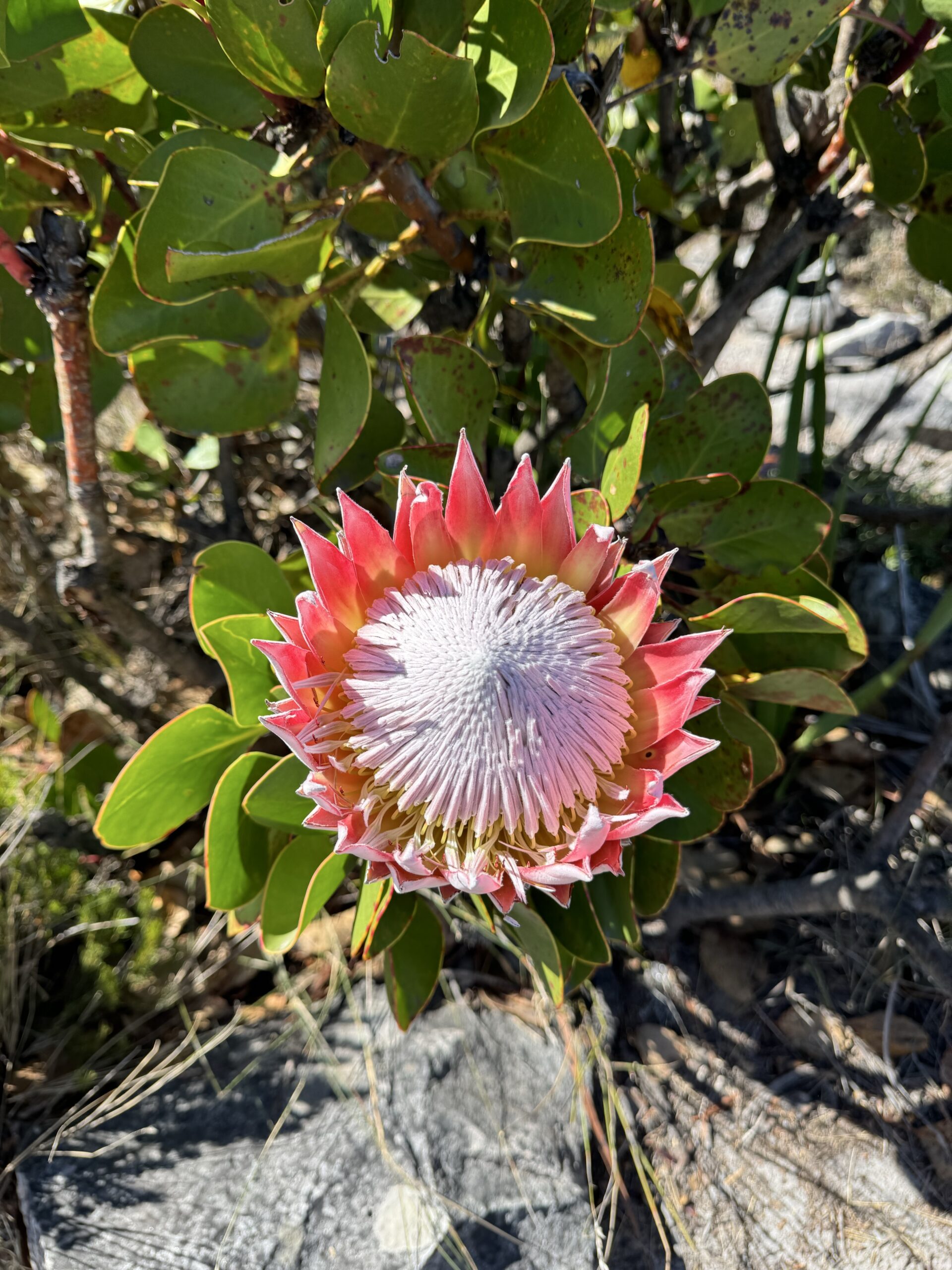
Here grows fynbos (Afrikaans for “fine bush”), a unique vegetation type found only in the south-west of South Africa. Fynbos is made up of three main groups: proteas (large shrubs with wide blooms), ericas (low, heather-like plants) and restios (reed-like plants).
The numbers are staggering: the Cape Floral Region alone is home to about 9,000 plant species, of which 69% are found nowhere else in the world. That means that as you walk across the summit of Table Mountain, you’re stepping through one of the biologically richest places on the planet.
Wildlife on the mountain
Table Mountain isn’t just a kingdom of plants. Living here are:
Reptiles and insects — many endemics, not all of which scientists have even described yet.
Dassies (rock hyrax) — small, fluffy little animals that look like rabbits but, astonishingly, their closest relative is… the elephant. They lie on the rocks at the top and pose for tourists like professional models.
Baboons — seen on the slopes, sometimes bold and curious. Never feed them or keep food out in the open.
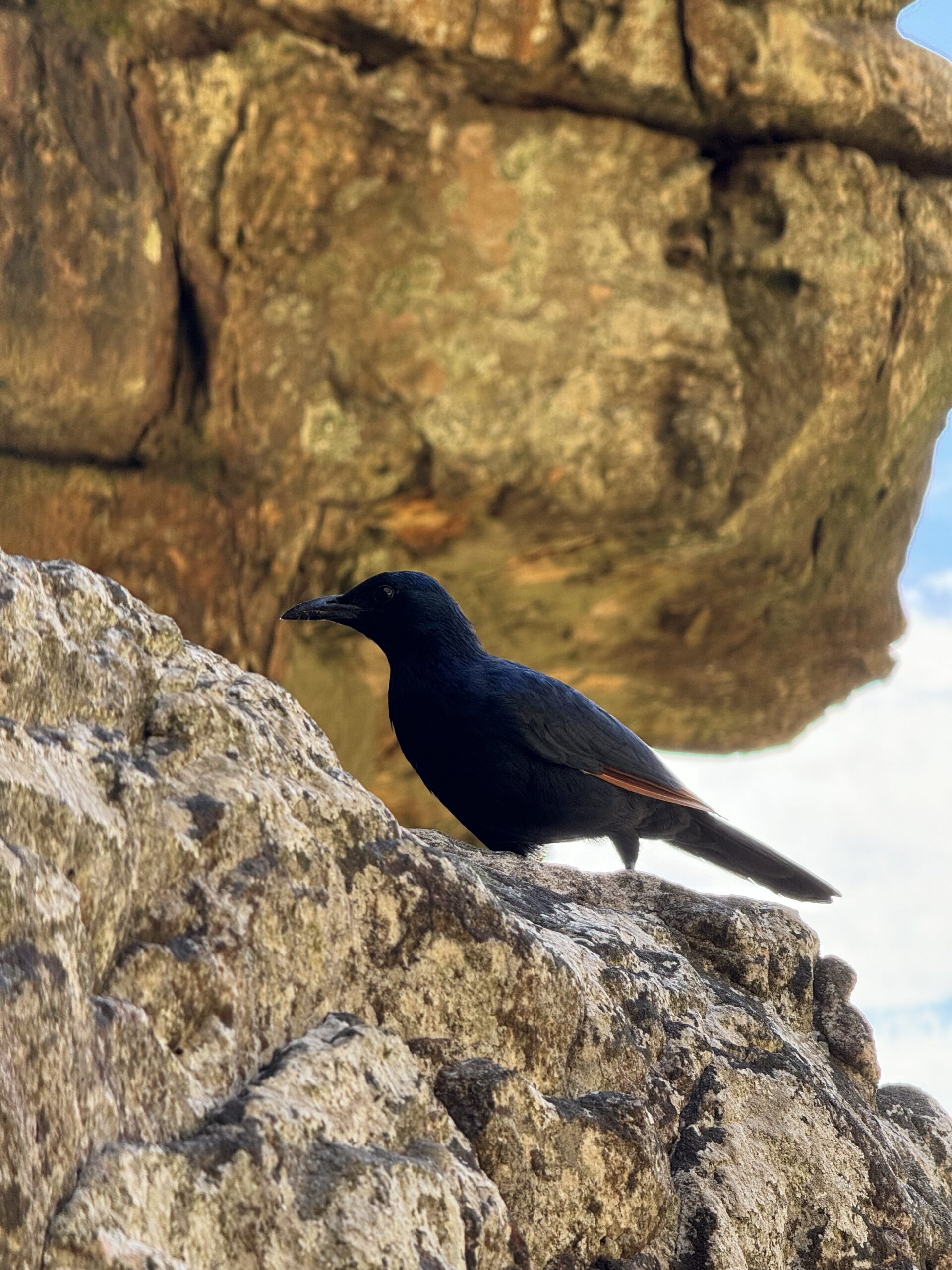
Birds — from the black eagle to the sugarbird, which feeds on protea nectar. For birdwatchers it’s simply paradise here.
When to go?
| Season | What to expect |
|---|---|
| December–February (summer) | Long, warm days, little rain. The biggest tourist crowds. The cableway runs the longest hours. |
| March–May (autumn) | Pleasant weather, fewer people. Fynbos still in bloom. A great time for hiking. |
| June–August (winter) | Rain, wind, short days. But when it clears, the views are crystal clear. The fewest tourists. |
| September–November (spring) | Wildflowers bloom. Wind is frequent, but days get longer. A good compromise between weather and crowds. |
Whatever the season, the weather on Table Mountain can change within minutes. The summit is almost always cooler and windier than below. Take a warm layer, even if the sun is shining in Cape Town.
I chose to travel between seasons, in March, and that timing paid off well. Although it’s cooler on the mountain, it wasn’t cold.
Practical tips
- Footwear. If you’re walking up, wear sturdy hiking boots. The stone steps can be slippery, especially after rain.
- Water. Take at least 2 litres of water per person. There are no water sources at the top accessible to hikers.
- Signal. Mobile signal works at the summit, but the battery drains quickly from taking photos, so a power bank is a good friend.
- Timing. Start the hike early in the morning. The afternoon often brings wind and cloud. The last cableway car down is at a fixed time, so plan accordingly.
- Getting there. You can reach the cableway station by car (there’s a car park), by taxi, or by hop-on hop-off bus (the City Sightseeing route stops at Table Mountain).
A view that changes your perspective
Standing on the summit of Table Mountain, a view opens up before you that no words can fully convey. On one side you see the centre of Cape Town, the ridges surrounding the bay, Robben Island (where Nelson Mandela was imprisoned). On the other — the endless Atlantic Ocean, the Twelve Apostles mountain chain, Camps Bay beach with its strips of white sand and palm trees.
At sunset everything turns gold and pinkish-orange. The wind dies down. The city below begins to glitter with lights. And in that moment you understand that some places are bigger than their physical dimensions. Table Mountain is one of them.
More than a tourist attraction
Table Mountain isn’t just a place you climb for a photo. It’s a living centre of an ecosystem, where every spring species bloom that grow only on this mountain and nowhere else on Earth. It’s a place where millennia of history intertwine, from the Khoisan’s sacred rites to the modern city growing at its foot. It’s a mountain that every day “puts on” a different tablecloth of cloud and reminds us that nature knows how to create spectacles better than any human.
If you’re travelling to Cape Town and have only one free day, give it to Table Mountain. Not because the guidebooks say so. But because some things you need to see with your own eyes, feel on your own skin and breathe into your own lungs. Table Mountain is exactly that kind of thing.
And if you want to see how it fits into a whole trip, read about my independent trip to South Africa — the safari and Cape Town.
Search for flights here. If something goes wrong with your flights, you can claim compensation through AirHelp or Compensair.
Staying connected? Skip expensive roaming and grab an eSIM plan — set it up before you fly and you’ll have data the moment you land.
I always recommend booking taxi transfers to and from the airports in advance. You can do that here.
Find accommodation here.