Some links in this article are affiliate links. If you book through them I earn a small commission, at no extra cost to you.
Contents
- An intermediate stop: two nights in Montesilvano
- Why Sant'Elpidio Morico
- Day 1: arrival and the town on the neighbouring hill
- Walks into the town
- Walking as the programme
- Day 2: Fermo, "the Marche region's sister to Siena"
- What Fermo is
- Leaving the car
- Piazza del Popolo
- Palazzo dei Priori and the Sala del Mappamondo
- The Cisterne Romane
- The Duomo and Colle del Girfalco
- Lunch in Fermo
- Impression
- Day 3: the journey to Castelrotto
- Practical information
- Accommodation price guide
- With a baby in the Marche hills
- Is it worth going? My opinion
- FAQ: frequently asked questions
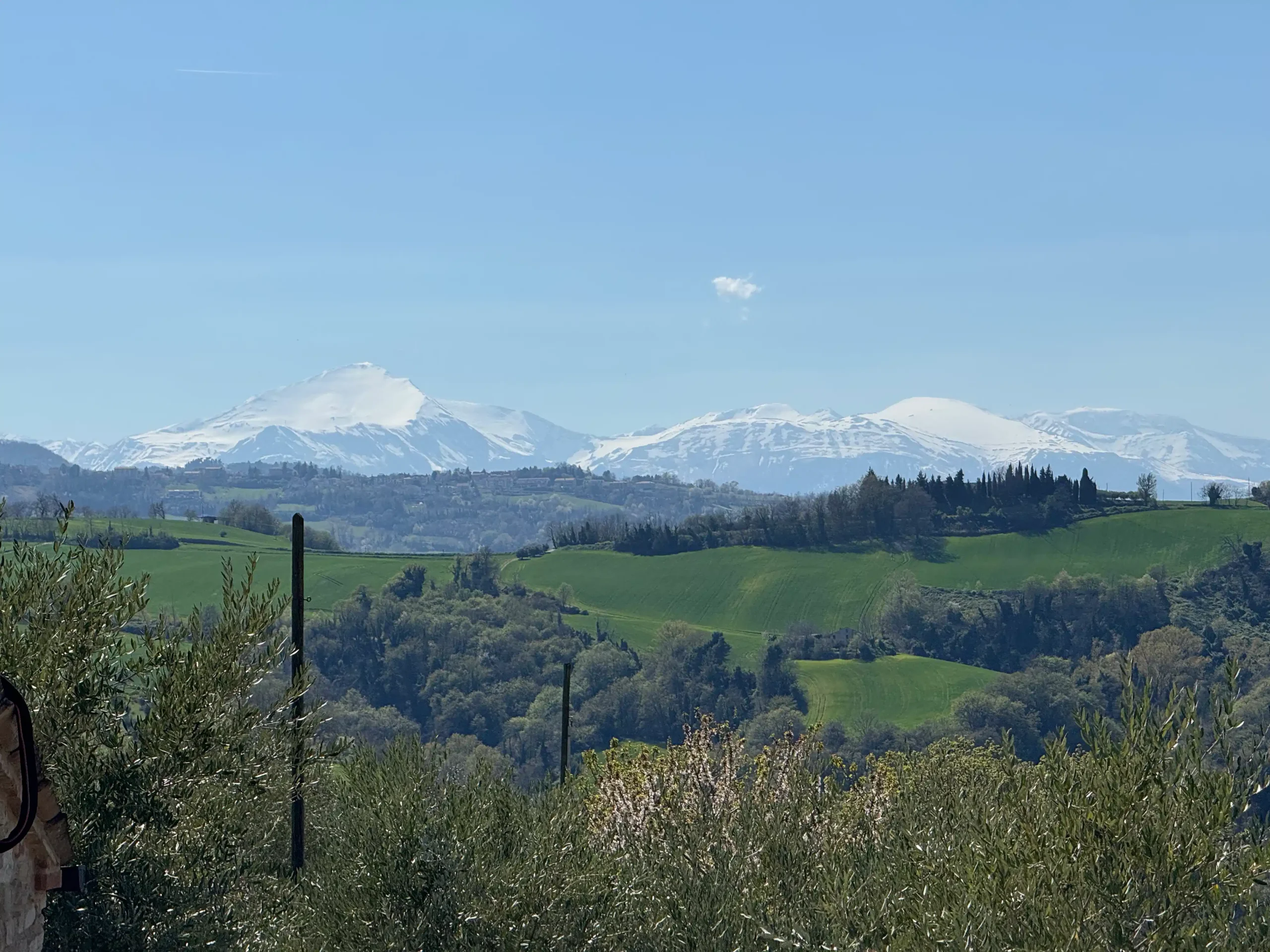
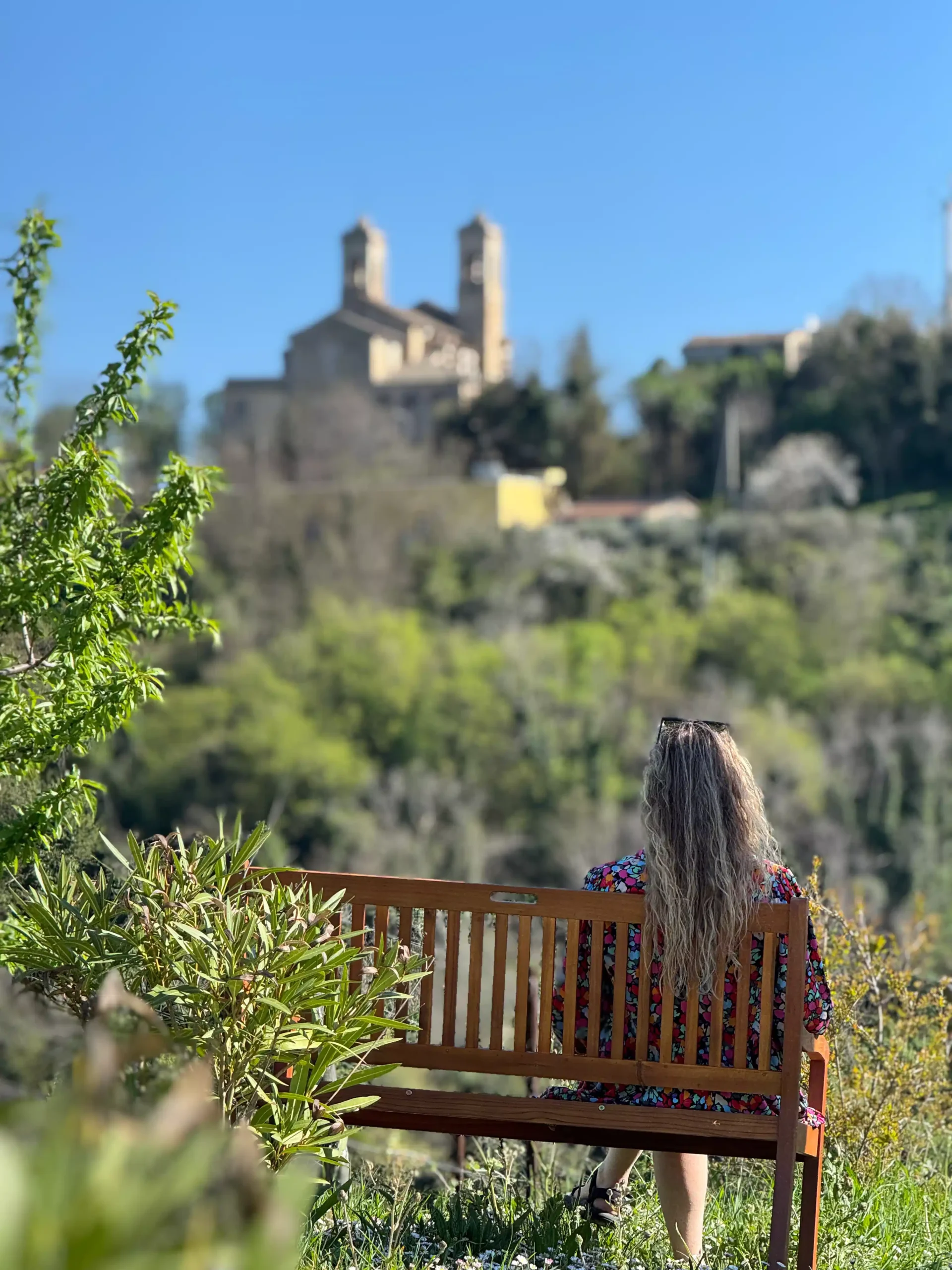
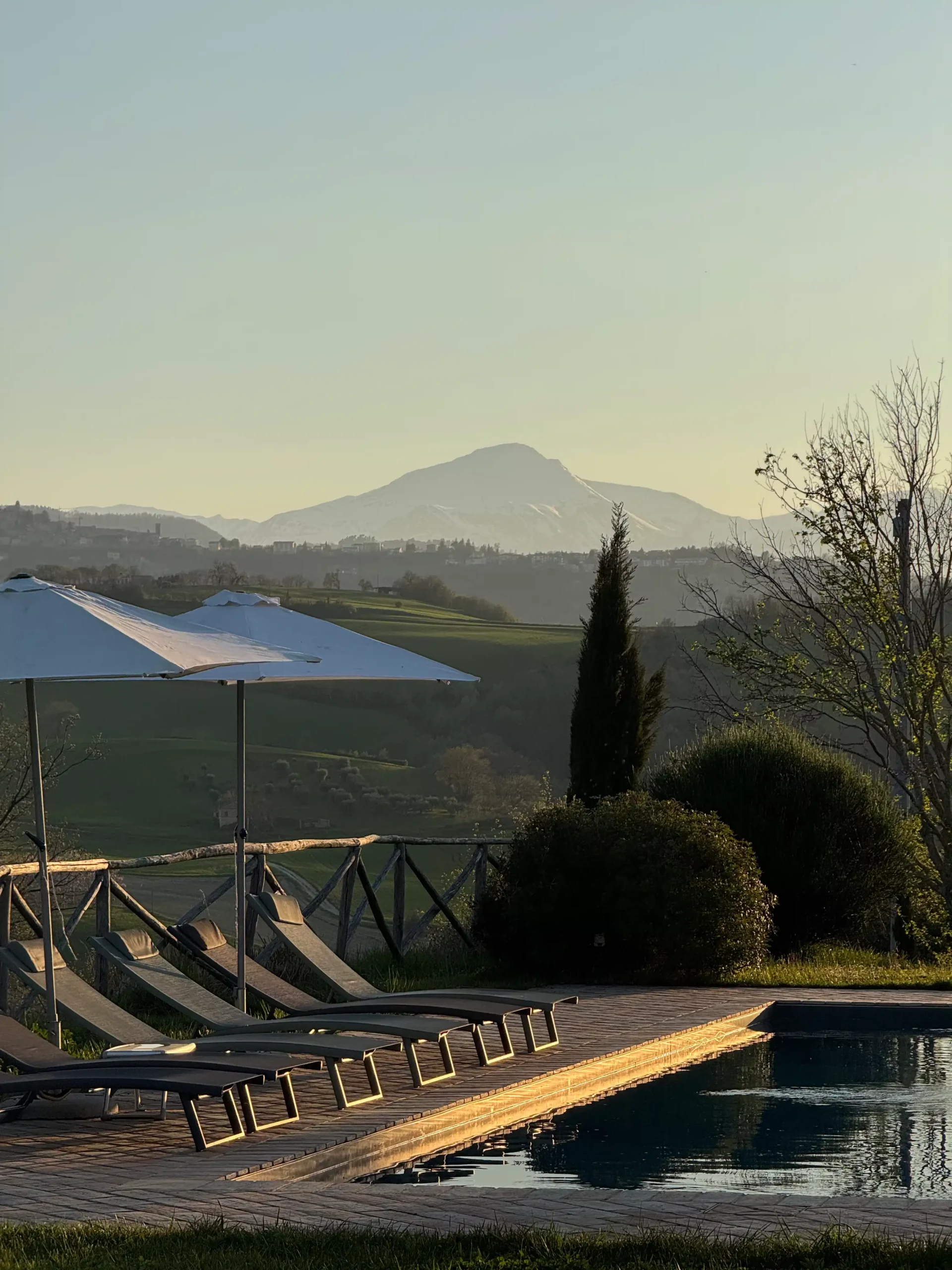
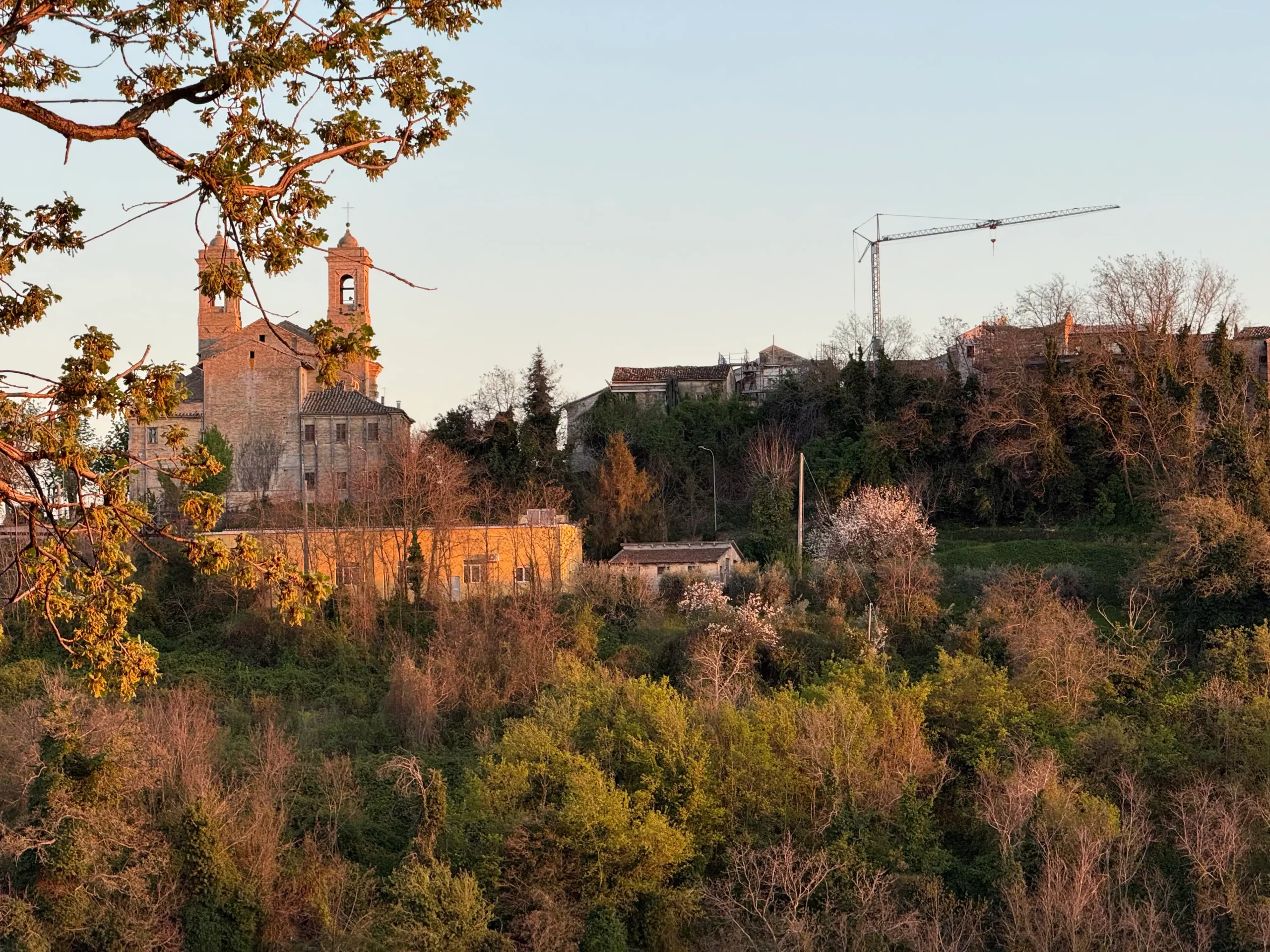
I open the shutters on the first morning. The sun hasn’t yet risen over the hill, but it has already coloured the mist hanging over the valley. In the distance, maybe a kilometre away, on a neighbouring hill, two bell towers. The church of Sant’Michele. Around it a handful of stone houses clustered into a single sphere. All of this is Sant’Elpidio Morico.
And I’m thinking one thing: I’ve never heard the name of this place. But it reminds me of Tuscany.
The same hilly landscape. The same lines of olive trees. The same lone cypress in the middle of a field. Only without Tuscany’s prices, without Tuscany’s tour buses.
The Marche region is still not an Italian star. And that’s the best news I can offer you if you’re a traveller who has already seen Florence, already been to Siena, already understands that the best Italy doesn’t begin in a tourist square.
In this article I’ll tell you about three nights in the town of Sant’Elpidio Morico, a day in the city of Fermo, and an opening two-night stop in Montesilvano. All our figures, mistakes, discoveries. With a 1-year-old baby, in a carrier, and a wish to raise a glass of wine in the evening, when the locals begin their passeggiata.
This article continues our month-in-Italy story. If you’re starting from the beginning – Salerno, Tuscany’s Chianti, Sperlonga, Gravina in Puglia and Venice.
An intermediate stop: two nights in Montesilvano
Before reaching the Marche region, one intermediate stop awaited us. Montesilvano, in the Abruzzo region, on the coast north of Pescara. It’s a place that slotted into our route not because of tourist fame, but because of logic: after the 700 km journey from Torre Santa Sabina, we wanted two nights simply to catch our breath.
Accommodation: an apartment right by the sea, with a large balcony and a view of the Adriatic. About €100 a night through Booking. The child had room to crawl, we had room to stretch out.
The first day was the beach. Without discipline. Without a goal. Without a tourist list. We just walked along the shore, ate gelato (€2), looked at the horizon. It was the end of April, the water still cold, the beach almost empty. That was exactly what we needed.
The second day was meant to be a trip to the Gran Sasso mountains. From Montesilvano to the Campo Imperatore plateau is about a 1 h 30 min drive. It’s one of Italy’s more impressive landscapes, called “Italy’s little Tibet”. But when we reached the foot of the mountains, a police car and a barrier were already standing by the road: the road was closed due to avalanche danger. Spring, the snow melting, the mountains throwing off rocks and wedges of snow. We turned back.
I’ll admit the mistake straight away: before setting off, I should have checked the state of the Strada Maestra del Parco (SP17a) on the meteo.gransasso.it page. It’s always updated in real time. If you travel to Gran Sasso in spring, it’s a must.
How would I rate Montesilvano? A short stop, not a destination. If you’re travelling along Italy’s east coast and need a rest between two long stretches, it’s fine here. But if you’re taking a summer holiday, I’d recommend Vasto, Termoli or San Benedetto del Tronto instead. Montesilvano is convenient, not special.
Why Sant’Elpidio Morico
On the morning of the third day we drove from Montesilvano to Sant’Elpidio Morico. About 80 km, an hour’s drive, mostly on the A14 motorway to the Porto Sant’Elpidio exit, then up back roads into the hills.
Why Sant’Elpidio Morico? The answer is simple: I was looking at Booking photos and got hooked on an agriturismo whose background, on a neighbouring hill, had a small town with two bell towers. The landscape looked like freshly cleaned Tuscan postcards. The price – about €100 a night. Three nights. An instant saving.
Only later did I start looking into what this town is. Sant’Elpidio Morico is a small frazione (settlement) in the Monsampietro Morico municipality, in the province of Fermo, in the south of the Marche region. Population – about 700. Legend has it that the town was founded in 1061 by the Norman Malugero Melo, son of Drogo of Apulia, who fled political turmoil to the foot of the Apennines. He had three sons: Pietro, Elpidio and Rinaldo. Three sons – three castles. They were named Monsampietro Morico, Sant’Elpidio Morico and Monte Rinaldo. All three towns still stand.
But a legend is a legend. Real historians say the word Morico came not from a wife named Morica, but from the shape of the urban plan: the hill towns were laid out in the form of a wedge (a Picene tradition). Sant’Elpidio Morico came under Fermo’s jurisdiction in 1316, and with small interruptions has remained there to this day.
Day 1: arrival and the town on the neighbouring hill
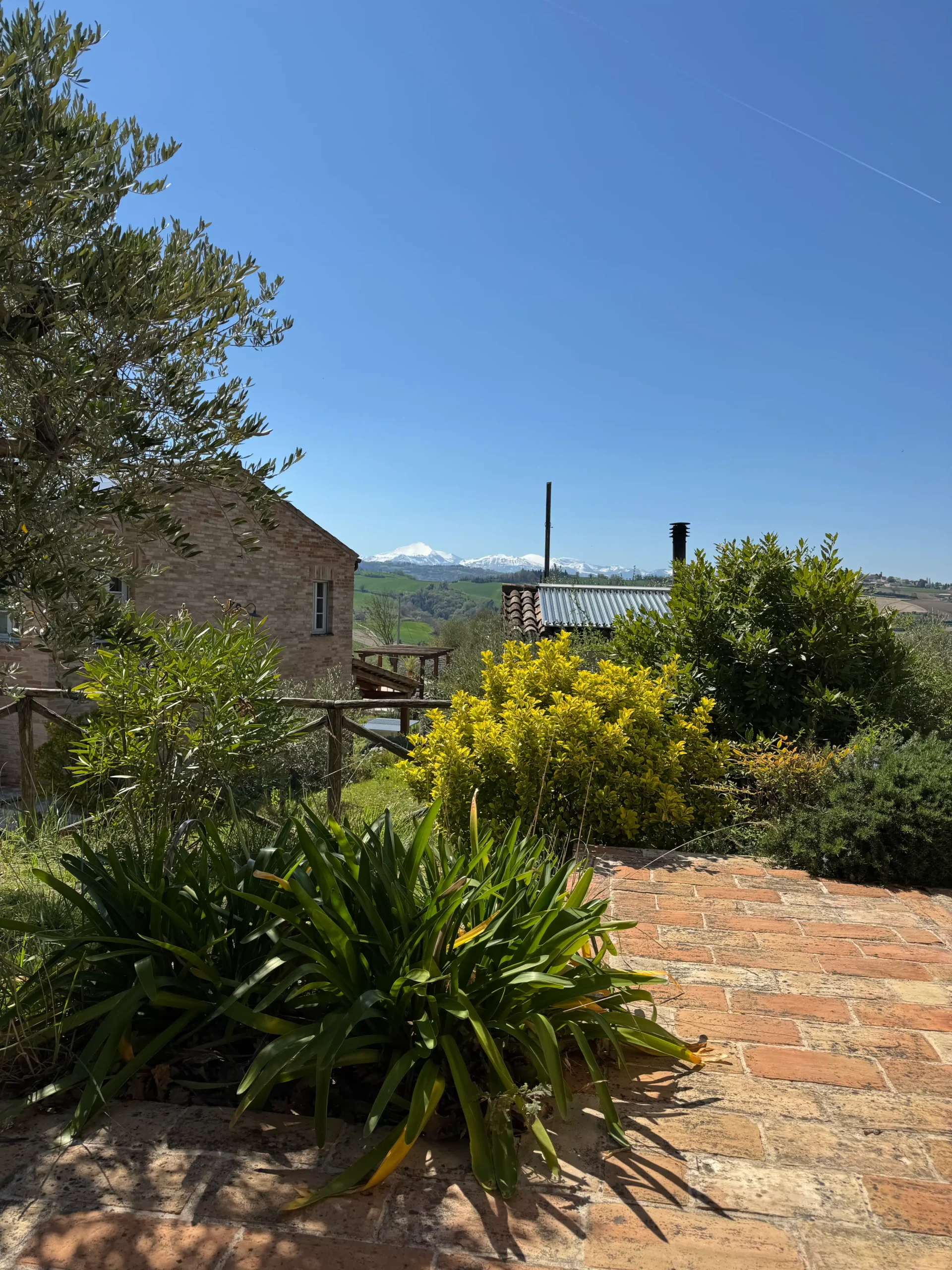
The agriturismo was about a kilometre from the town. That meant that through the terrace window we saw the whole of Sant’Elpidio Morico, like a miniature model, with bell towers twice as tall as the town itself. In the evening, when they lit up, it looked like a signal of two torches, created for us.
Walks into the town
From our farm to Sant’Elpidio Morico was maybe 15 minutes on foot, down into the valley, then up the hill. With a baby sleeping in the carrier, this walk became our ritual. Every day we went and came back at least once, sometimes twice.
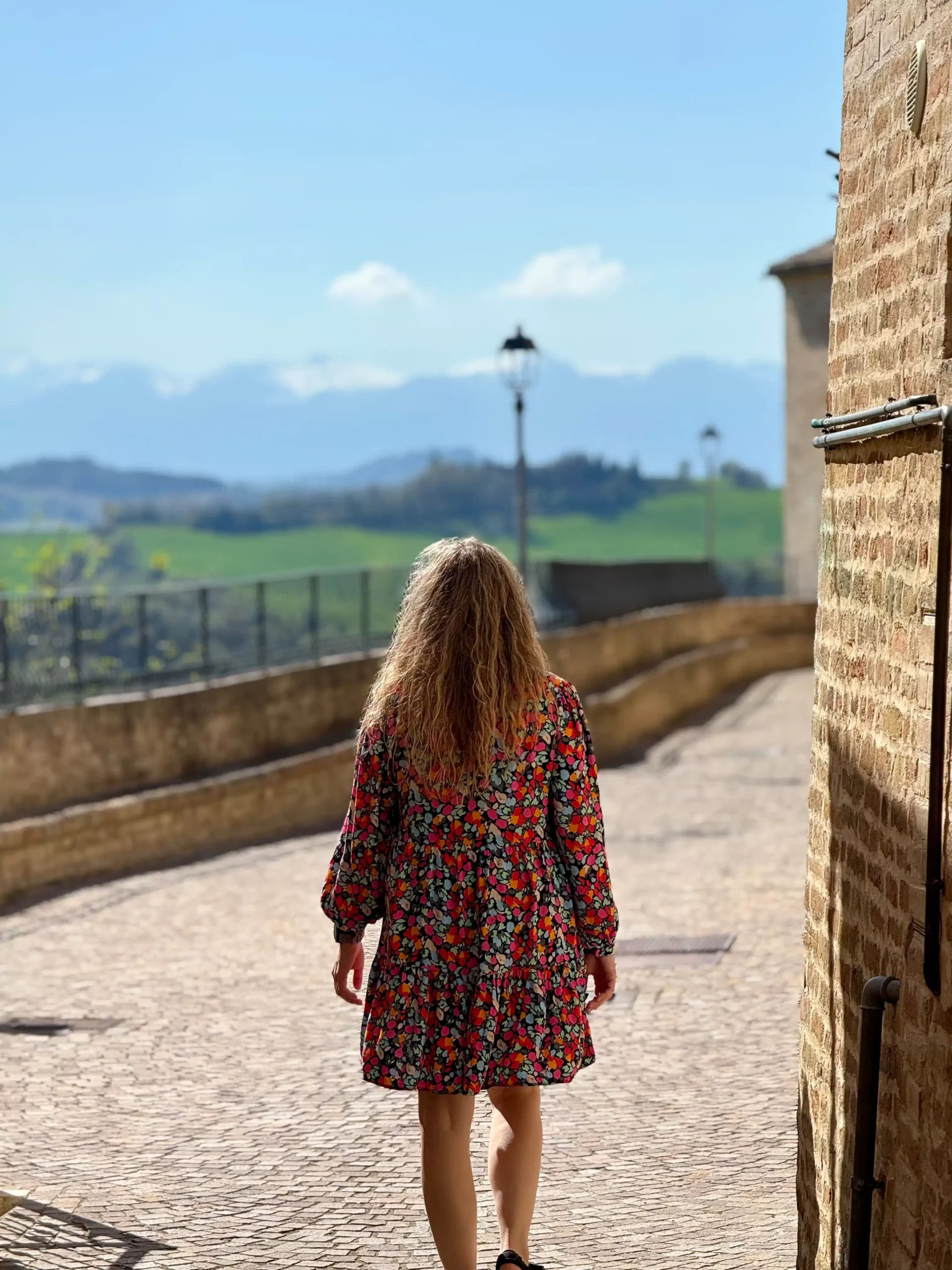
What you’ll see in little Sant’Elpidio Morico:
- The church of San Michele Arcangelo with two identical bell towers (17th century). This is the very view you saw in the photo that made you linger. Inside – a triptych by Vittore Crivelli with the Virgin Mary, the Child and saints (1496). Entry is free, but the church is open only at certain hours. The best time is Sunday morning, before or after mass.
- The castle (under reconstruction). Sant’Elpidio Morico has an old fortification system with surviving remnants of towers. Restoration work is underway in the central old town, so you’ll see scaffolding, stone blocks, construction equipment.
- The walls and gates. The whole old part is enclosed by a wall. One of the more striking spots is the old covered passage that leads to a square with the former town hall. You walk about 50 metres down a lane, and the town ends. It really is a small gem.
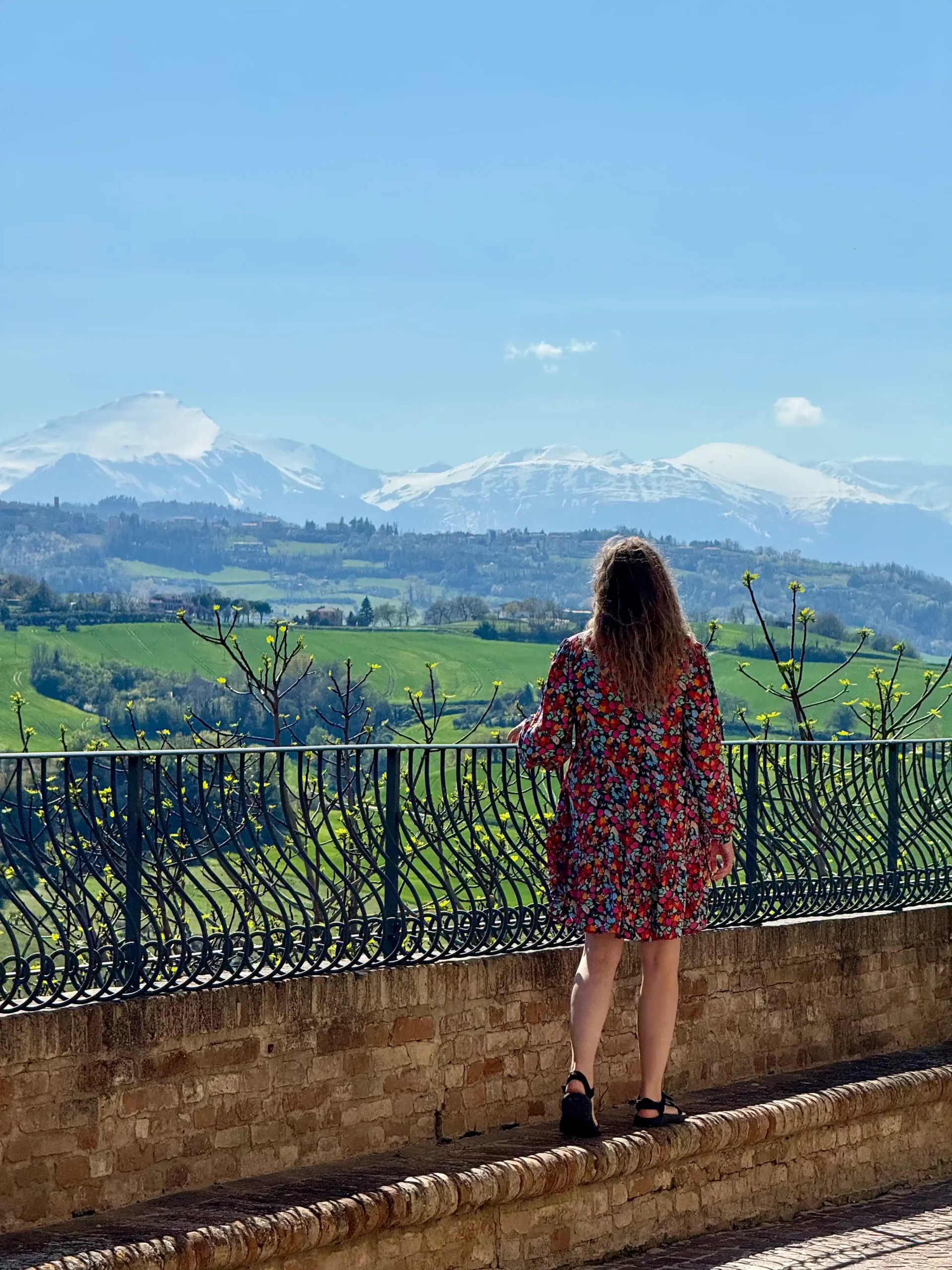
- The panorama. From the edges of the old town you can see the Apennine mountains (on clear days), the valley of the Ete Vivo river, and the neighbouring hill towns.
Walking as the programme
The first thing that surprised me about this town: there’s nothing you need to do in it. There’s no museum. No star restaurant. No TripAdvisor list. No queue at a shrine. The programme itself is that you walk slowly.
Day 2: Fermo, “the Marche region’s sister to Siena”
On the second day we decided to visit Fermo, the provincial capital. The distance from Sant’Elpidio Morico to Fermo is about 15 km, 25 min by car on hilly back roads (SP237, SS210).
What Fermo is
Fermo (its old name Firmum Picenum) is an old city, founded by the Piceni, later a Roman colony (264 BC). It stands on the Girfalco hill, at 320 metres, with a panorama of the Adriatic Sea to the east and the Sibillini mountains to the west. It’s a small city (population about 37,000), but with a history of an independent republic, a papal palace and one of the largest Roman cisterns in the world.
Leaving the car
We parked outside the old town (the inner part is a ZTL zone, as in every Italian town where there’s anything worth seeing). A paid street space cost about €1 an hour. The EasyPark app worked. It’s about a 10-minute walk up steps into the old town. With a baby in a carrier that’s part of the independent trip, though there’s also a paid little bus that takes you up.
Piazza del Popolo
We started from the main square. Piazza del Popolo, 135 metres long and 34 metres wide, is bordered on three sides by 16th-century arcaded porticoes of brick masonry. On the far side – the massive Palazzo Apostolico, the current town hall. On the near side – the Palazzo dei Priori (13th century), with a statue in front. At the corners – the Baroque-covered Palazzo degli Studi with the Biblioteca Spezioli (more on it below) and the Loggiato San Rocco.
The square is one of the most beautiful on Italy’s central coast. A rare place where you walk through the porticoes and feel as if you’re in a large room. In the evening all the locals gather here for aperitivo (a spritz – €5, a glass of wine – €4).
Palazzo dei Priori and the Sala del Mappamondo
The Palazzo dei Priori today houses the collection of Fermo’s civic museum. On the ground floor is the tourist information centre, where you can buy a ticket:
- A single site: €4
- A combined ticket to all the city’s sites: €8 (children under 6 free)
- Valid for one year (wonderful if you plan to come back)
I recommend seeing:
- The Sala del Mappamondo (Globe Hall). Located on the upper floor of the Palazzo dei Priori. In the hall is a huge wooden globe, made by the monk Amanzio Moroncelli in 1713, covered in Fabriano paper with a map of the world of the time (which, mind you, is not yet very accurate on the Australian side). Beside the globe is the Biblioteca Spezioli, one of the oldest public libraries in Italy (17th century), with three thousand manuscripts and 300,000 documents. The hall’s ceiling is frescoed.
- The Pinacoteca Civica (picture gallery). Five rooms, from Gothic to Baroque, with Rubens, Vittore Crivelli, Andrea Boscoli and others. A small but high-quality collection. About 30–40 minutes is enough.
The Cisterne Romane
The Roman cisterns, built in the 1st century BC – 1st century AD, when the city was still Firmum Picenum. 30 spherical underground chambers, arranged in three parallel lines, 2,200 sq m of total area. An engineering masterpiece: water collected from the Apennine springs would reach the city above them. The cisterns were in use right up to the beginning of this century.
The entrance is from Via degli Aceti, next to Piazza del Popolo. A guided tour is compulsory, led by a guide, lasting about 40–45 minutes.
The Duomo and Colle del Girfalco
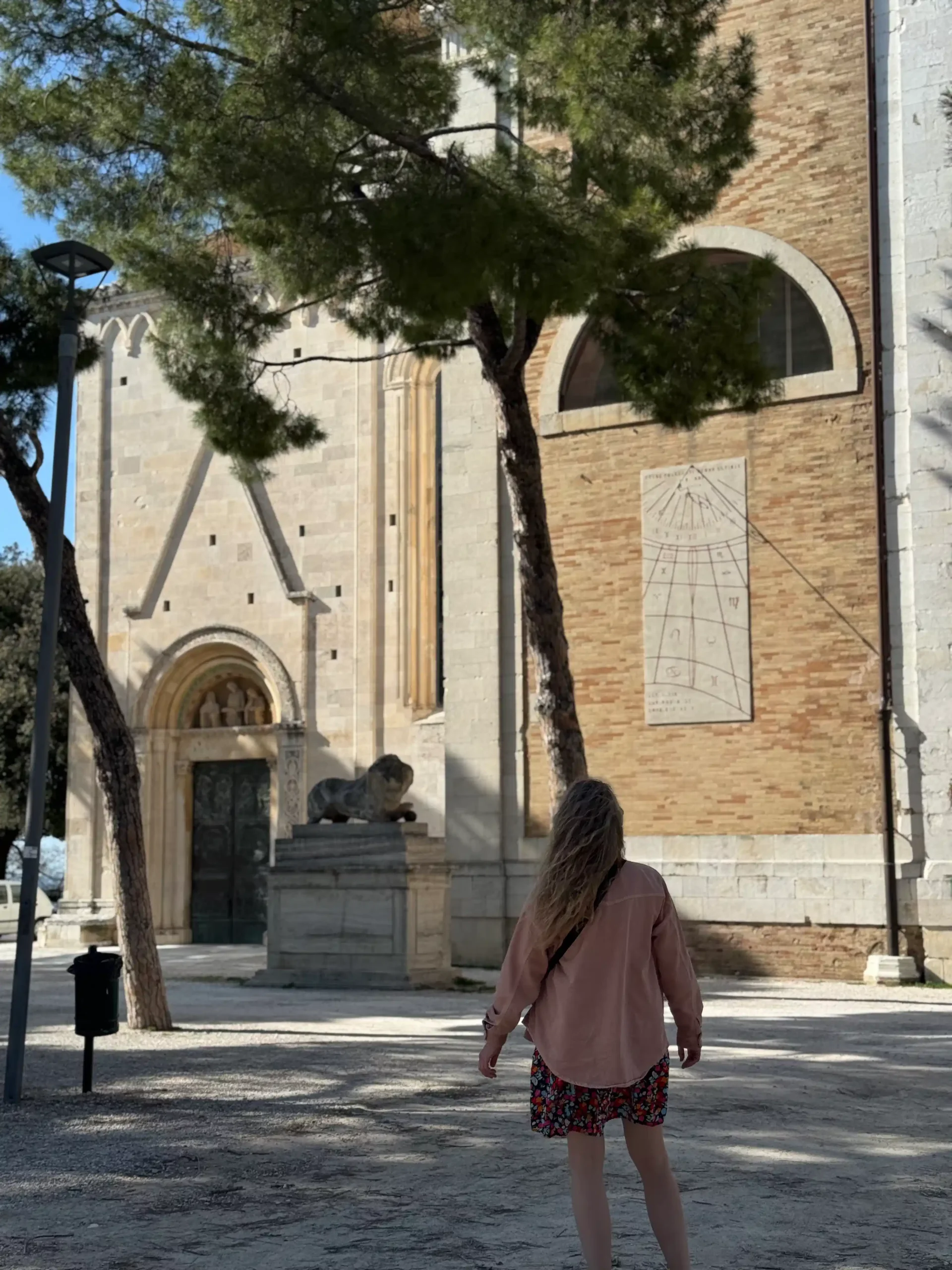
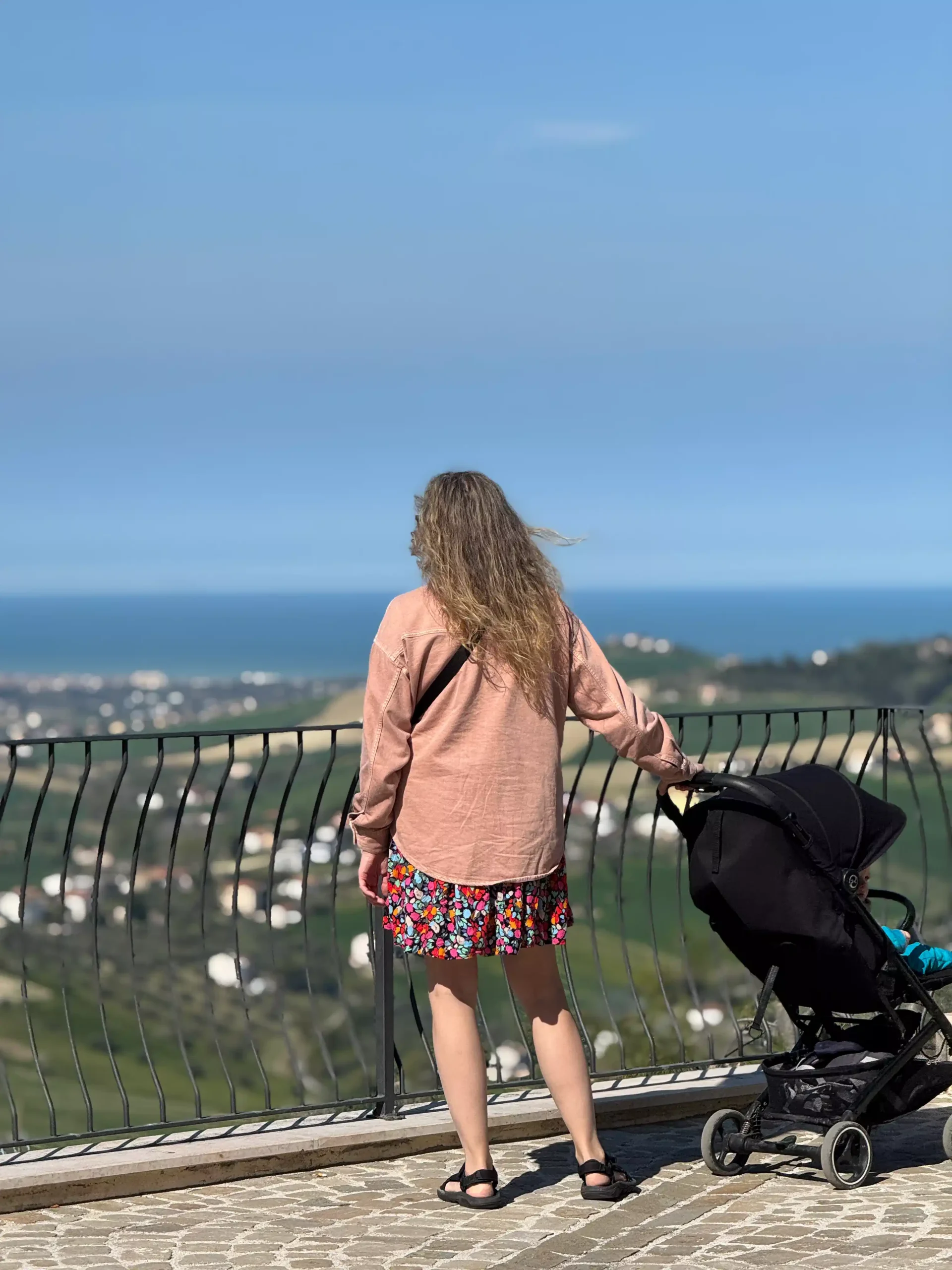
From Piazza del Popolo we climbed the Colle del Girfalco hill, on which stands the Cathedral (Cattedrale di Santa Maria Assunta). A Neoclassical church with Gothic elements (a 15th-century façade, an 18th-century interior). Less impressive inside than out, but the panorama from the cathedral courtyard is breathtaking: the whole edge of the Marche region, all the way to the sea, in flat light.
Lunch in Fermo
The main dishes of Marche cuisine:
- Vincisgrassi. The Marche region’s lasagne, with meat, chicken offal (heart, liver), mushrooms and besciamella.
- Ciauscolo. A soft, almost spreadable sausage. With bread and olive oil – ideal.
- Olive all’ascolana. These are large green olives, stuffed with a meat filling, rolled in breadcrumbs and deep-fried.
The bill for two people with a drink: about €40.
Impression
A couple of hours is enough to see the main sights, but you could spend a whole day here if you want to get more familiar with the history. Fermo is definitely worth one day of a trip.
Day 3: the journey to Castelrotto
On the third morning the alarm rang at 5 a.m. Ahead of us lay the journey to Castelrotto, in the South Tyrol Dolomites: about 800 km, 9 hours of driving, if without stops.
We set off at 6 a.m., while the little one was still asleep. The only stop was around 8 a.m. to rest and have breakfast. An autogrill by the A14 motorway: two cappuccini and two cornetti about €10.
The route: Sant’Elpidio Morico → the A14 towards Bologna → the A22 (Brenner) towards Bolzano → Castelrotto. The road toll – about €60–70. Plus a full tank of fuel, another €80 or so.
A tip if you’re doing a similar journey: take food from the agriturismo. On the trip to the mountains this saved not only €30–40 but also time.
Practical information
| Category | Detail |
|---|---|
| Best time to go | April–June or September–October |
| Sant’Elpidio Morico accommodation | Agriturismo, rural B&Bs – from €80/night off season |
| Visiting Fermo | A couple of hours for the main centre, half a day with the museums |
| Combined Fermo museums ticket | €8 (children under 6 free), valid for 1 year |
| The cisterns | A 40–45 min tour, bring a jumper |
| Pasta fresca from a village shop | €3–5 for 500 g, filling for three eaters |
| ZTL Fermo | The old town is closed, park at the bottom of the hill |
| Payments | Card almost everywhere, cash only for village alimentari |
| Pushchair vs. carrier | Carrier. Always the carrier |
Accommodation price guide
- Sant’Elpidio Morico agriturismo: €80–130/night
- Monsampietro Morico B&B: €60–100/night
- Fermo centre hotel: €90–150/night
- Porto Sant’Elpidio (coast): €70–120/night in summer
With a baby in the Marche hills
A short checklist:
- An agriturismo is the Marche region’s best place with small children
- Walks into the village towns – calm, safe, with minimal tourists
- Cooking dinner at home – saves money and nerves with a 1-year-old
- Don’t try to see many sights in a day – the Marche pace is slow, and that’s its magic
- In spring, check the state of the Gran Sasso road before heading into the mountains
Is it worth going? My opinion
In short: loved it. I recommend it if…
It’s worth it if you want the Tuscany feeling, but without Tuscany’s tourists. The Marche region’s hilly places look the same, but the prices are about 30–40% lower, and the locals don’t speak English to you before you’ve even asked.
It’s worth it if you’re travelling with a small child and for you a slow pace is not a mistake but a goal. The child sleeps off the previous day’s sleep, you and your husband sit on the terrace, look at the hills, drink a good Verdicchio (the Marche region’s wine), and think that maybe this is the holiday feeling you need after months of work.
It’s worth it if you like history in layers. Sant’Elpidio Morico has a legend of Norman origin. Fermo has a Picene, Roman and papal history. All these layers fit into a half-hour walk.
It’s not worth it if you’re expecting evening entertainment, a boom of cafés, seaside life. The Marche’s hilly inland is quiet in the evening. The aperitivo tradition exists, but it ends before 9 p.m. After that – only the stars above the hills.
Our verdict: three nights was enough, it didn’t drag. We could have stayed four, but five would already have brought the feeling that something was missing. The route: Sant’Elpidio Morico as the calm base, Fermo as a one-day destination, the neighbouring towns (Monsampietro Morico, Monte Rinaldo, Servigliano, Petritoli) as walking alternatives if you stay longer.
FAQ: frequently asked questions
Is Sant’Elpidio Morico worth a special visit? The town itself – no. But as a base for about 3–4 days of exploring the Marche region – yes. From here you can reach Fermo in half an hour, Ascoli Piceno and the Monti Sibillini park in an hour, and the coast in 40 min.
Do you need a car? Absolutely. Public transport in the Marche countryside is fairly rare.
How much time do you need for Fermo? A couple of hours for the main square and the Cisterne Romane. Half a day with the museums. A full day if you want to go deeper (the Pinacoteca, the Teatro dell’Aquila, a Duomo tour).
Is the Marche region suitable for families with small children? Very. A slow pace, few tourists, an agriturismo with room to crawl. The only drawback – the old towns have uneven street paving.
When is the worst time to go? Mid-July to August. Hot, more Italians on holiday, the agriturismi mostly booked. Spring and early autumn are the golden times.
Is it worth staying in Montesilvano? Only as an intermediate stop. As a holiday destination – no. If you’re travelling along the coast, Vasto, Termoli or San Benedetto del Tronto are better.
How long does the drive from Sant’Elpidio Morico to Castelrotto take? About 9 hours with small stops. 800 km mostly on the A14 and A22 (Brenner). Road tolls and fuel – about €130–150 one way.
Does the Marche region’s cuisine differ from Tuscany’s? Essentially yes. In Tuscany – ribollita, pici, bistecca alla fiorentina. In the Marche region – vincisgrassi, olive all’ascolana, ciauscolo, brodetto (a seafood soup on the coast). The overall feeling – cosy, filling, less elegant, more of a felt peasant cuisine.
Find flights here. If something goes wrong with your flight, you can claim compensation via AirHelp or Compensair.
Staying connected? Skip expensive roaming and grab an eSIM plan — set it up before you fly and you’ll have data the moment you land.
I always recommend booking airport transfers in advance. You can do that here.
Find accommodation here.