Some links in this article are affiliate links. If you book through them I earn a small commission, at no extra cost to you.
Contents
- Why Torre Santa Sabina in particular
- Day 1: from Gravina on the way to Alberobello
- Alberobello: parking and orientation
- Two districts: Rione Monti and Rione Aia Piccola
- What's really worth seeing
- First impression
- Lunch in Alberobello
- A tip about time
- Arrival in Torre Santa Sabina
- Evening walks
- Day 2: Polignano a Mare and Ostuni
- Polignano a Mare: the one whose photo you've seen hundreds of times
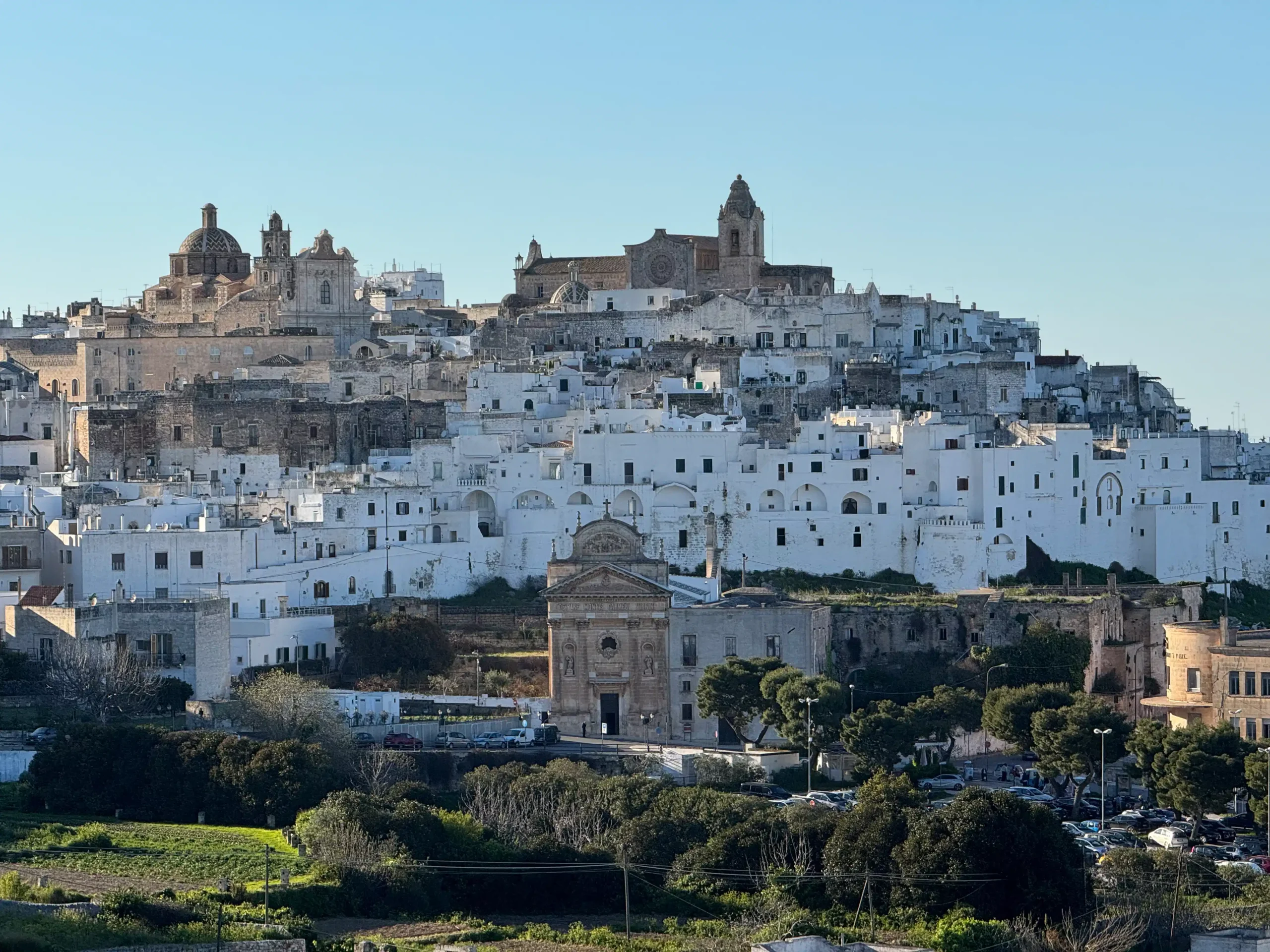
- Ostuni: the white town seen from the heights
- Raised flag: the Torre Santa Sabina castle
- Day 3: the long drive to Montesilvano
- Practical information
- Accommodation price guide
- With a baby
- Is it worth going? My opinion
- FAQ: frequently asked questions
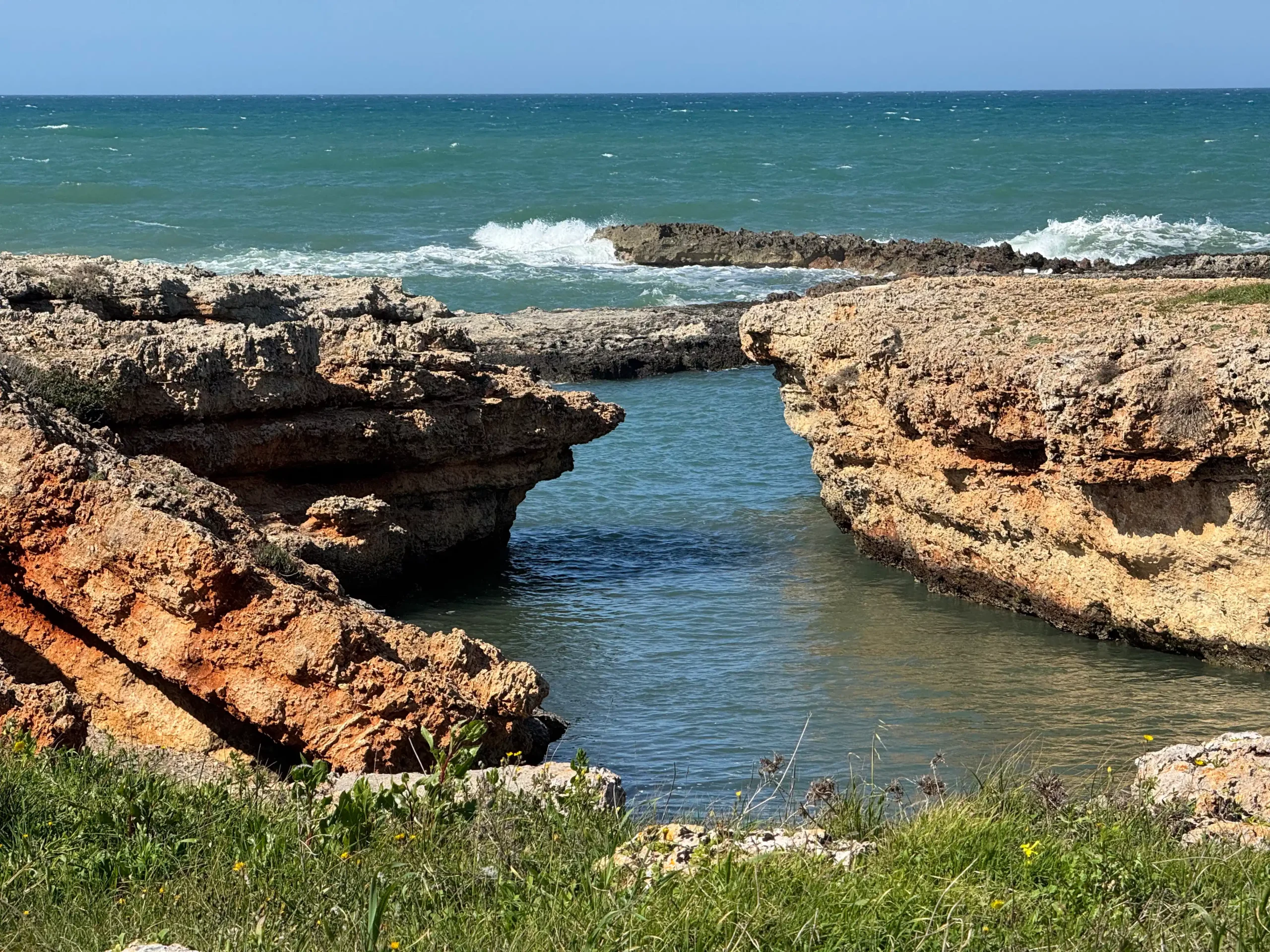
Torre Santa Sabina is a small seaside town in the Carovigno municipality, in the province of Brindisi, in the northern part of Salento. In summer there’s a feverish Italian-holiday life here, with aperitivo until midnight and the “Tre Vele” (Legambiente’s green-beaches mark). In April maybe three families live here, there are two customers in the shop, the sea is cold, and this is the very best version of the town if what interests you is peace, not the movida.
This place became our base for three days and two nights. From here we set off to Alberobello, Polignano a Mare and Ostuni – three spots none of which you should miss if you’re travelling around Puglia for the first time. In this article I’ll tell you how we planned everything with a small person (1 year old), what we saw, how much it cost, and what we’d do differently.
This article is part of our month-in-Italy story. We came to Torre Santa Sabina from Gravina in Puglia, and earlier we stayed in Salerno, Tuscany’s Chianti region, Sperlonga and Venice.
Why Torre Santa Sabina in particular
A fair question. On the Puglia coast the choice is considerable. Polignano a Mare, Monopoli, Ostuni Marina, Otranto, Gallipoli, Lecce… Why did we end up in this little town whose name doesn’t even come up first in a Google search?
Three reasons:
- A strategic point between Bari and Brindisi. From here it’s 40 minutes to Alberobello, half an hour to Ostuni, a couple of hours to Bari and Matera. The centre of Puglia within a single car journey.
- Fewer tourists. Polignano a Mare, Monopoli and Ostuni are still quiet in April, but by mid-July they’re already a nightmare. Torre Santa Sabina is quiet always, except for three summer weeks.
- Prices. To stay in the same region, but €50–100 cheaper than in the star towns on the coast.
The route we put together looked like this:
| Day | Route | Distance / time |
|---|---|---|
| 1 | Gravina in Puglia → Alberobello → Torre Santa Sabina | about 120 km, with a whole afternoon stop in Alberobello |
| 2 | Torre Santa Sabina → Polignano a Mare → Ostuni → back | about 130 km for the day |
| 3 | Torre Santa Sabina → Montesilvano | about 700 km, 7 h |
Day 1: from Gravina on the way to Alberobello
We left Gravina after breakfast. Everything simply fell into place logically: Alberobello is on the way to the coast, so we decided to head straight to the trulli town, and then settle in at Torre Santa Sabina.
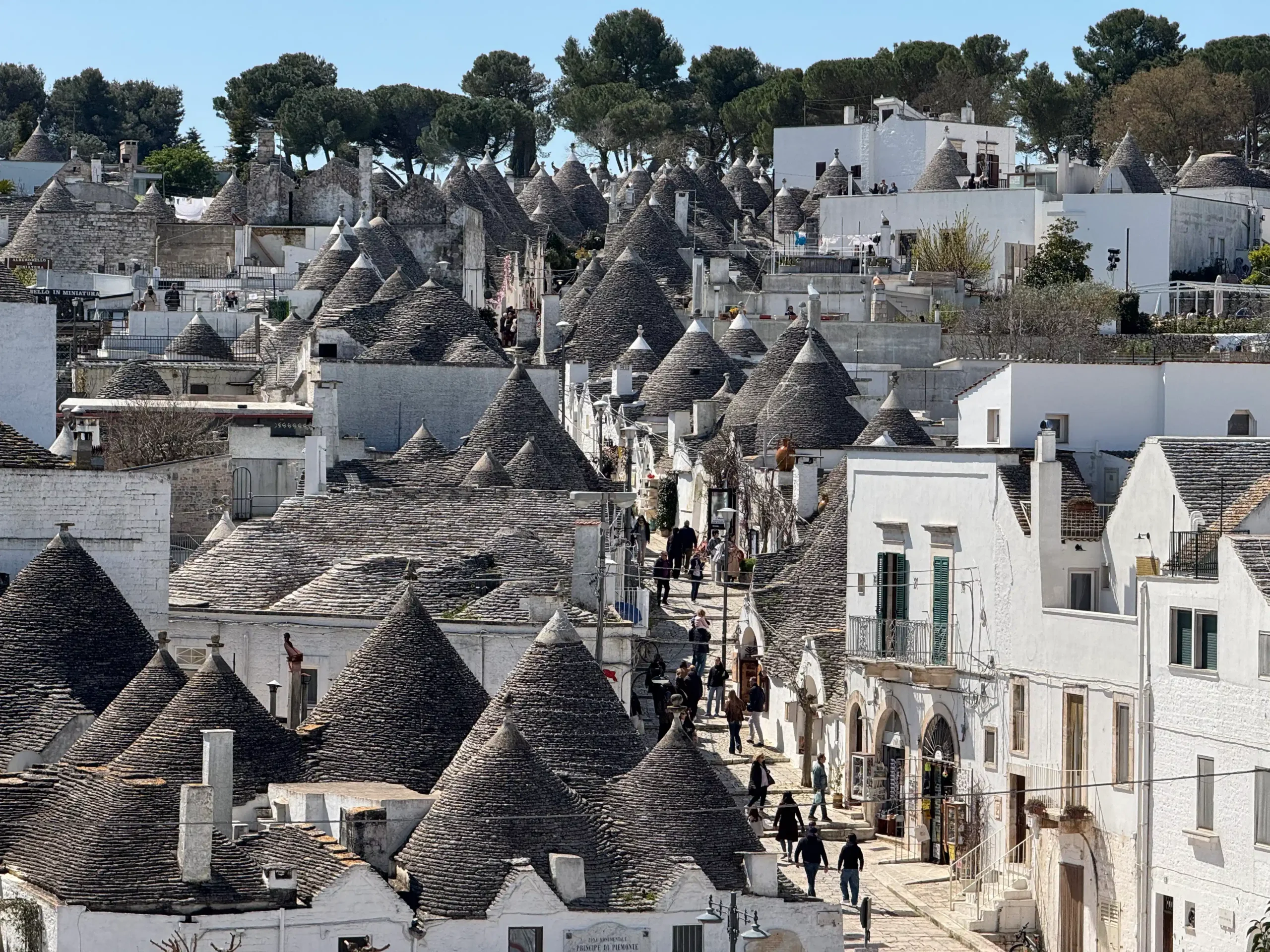
The road Gravina → Alberobello: about 90 km, 1 h 30 min. You drive through Altamura, Putignano, the beautiful fields of the Valle d’Itria, farmers’ dry-stone walls, a sea of lone olive trees. The same April that left the sea greyish here brought out the green so much that the farmer’s little hills look like children’s drawings.
Alberobello: parking and orientation
Arriving in Alberobello, the first thing: where to leave the car. The trulli district is a ZTL (a zone closed to traffic), so you won’t reach the town centre. The best options:
| Car park | Price | Distance to Rione Monti |
|---|---|---|
| Largo Martellotta street | paid, blue lines, about €1/h | right by Rione Monti |
| Viale Indipendenza | often free (white lines) | 5 min walk |
| Private car parks | about €5–10 a day | various, near the centre |
We left the car by Largo Martellotta. About €6 for four hours. On the way in you’ll also find cheaper options further from the centre, but with a baby in a carrier it’s worth staying closer.
Two districts: Rione Monti and Rione Aia Piccola
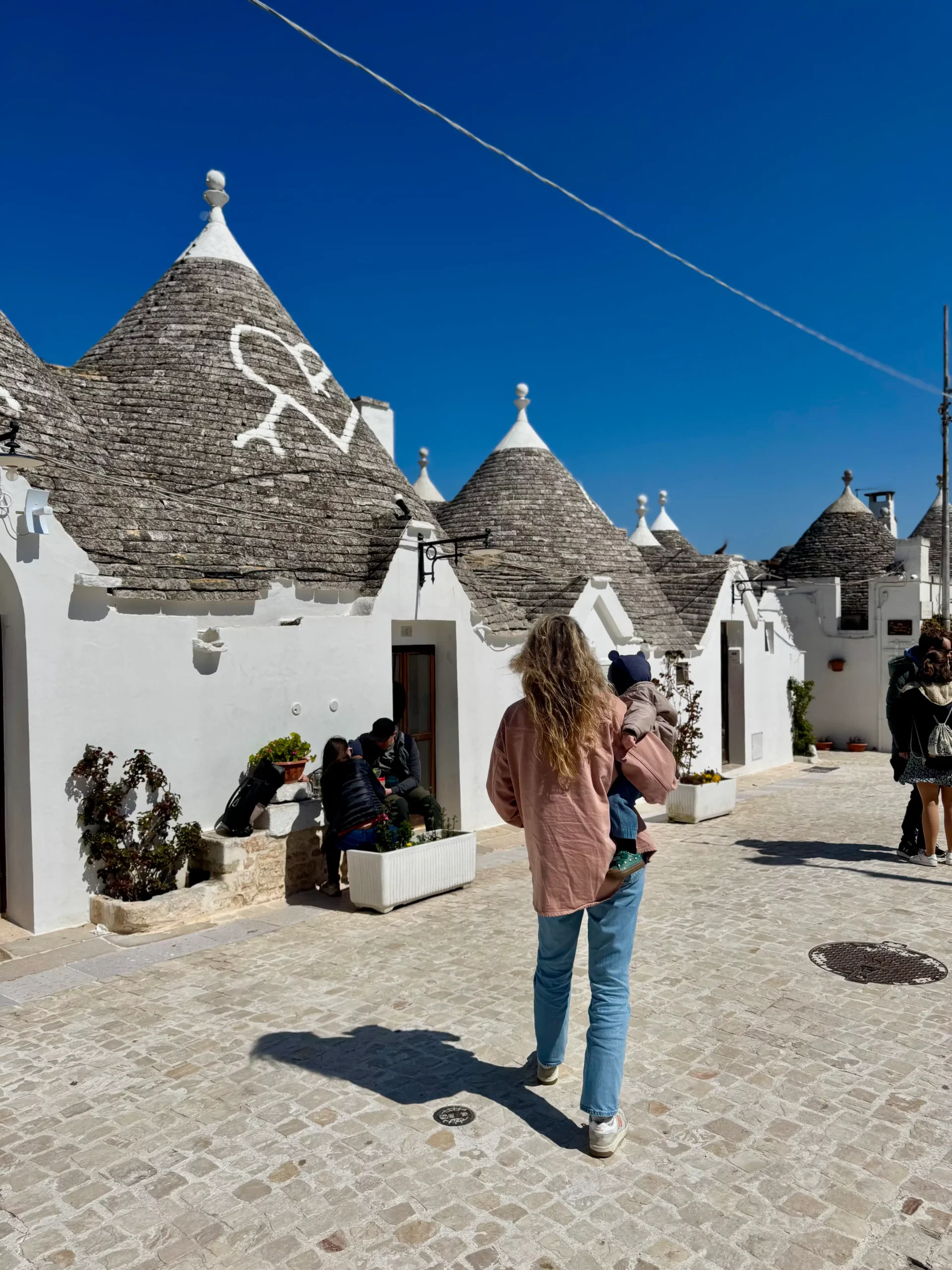
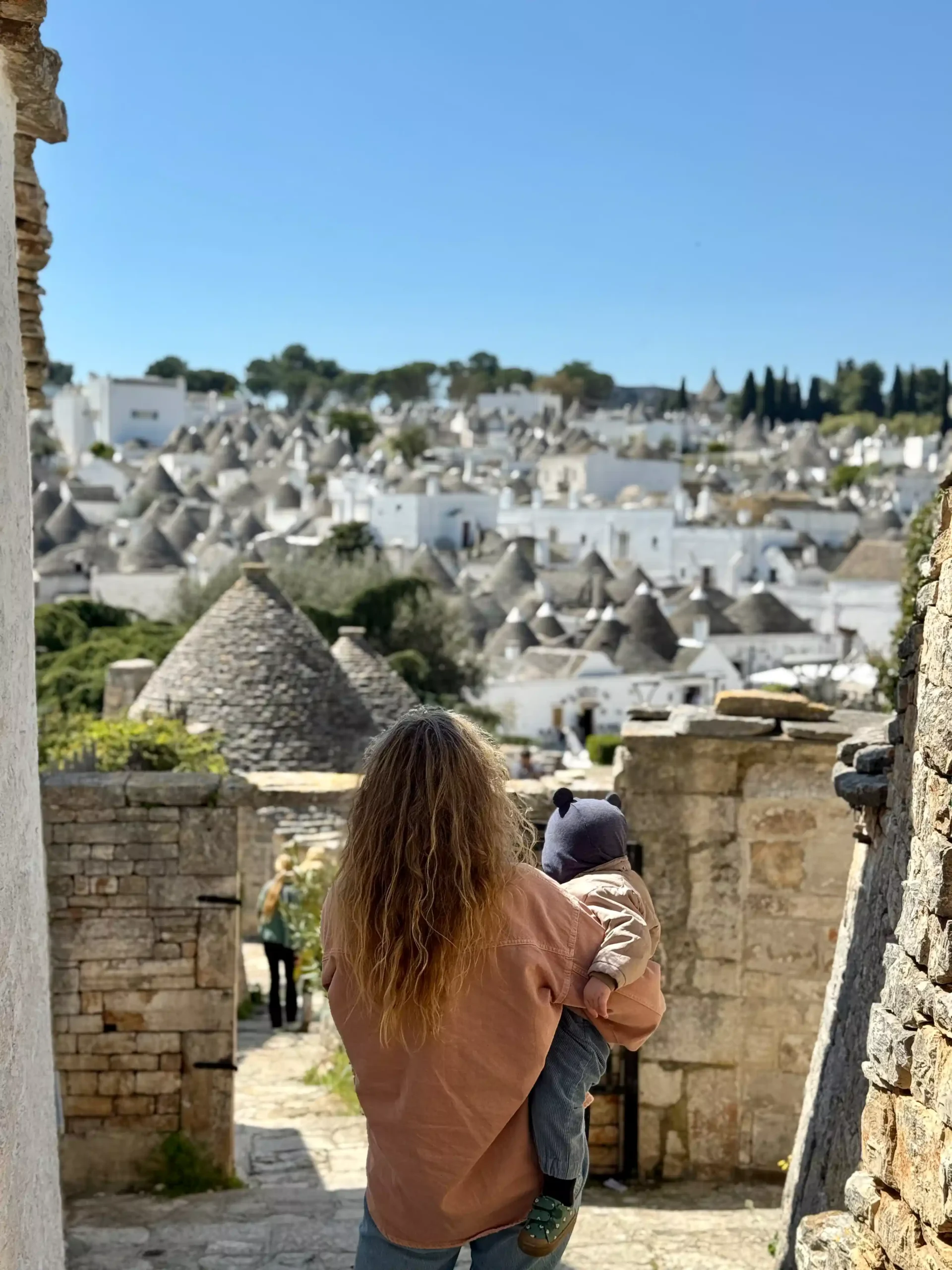
Alberobello with a baby isn’t difficult. The trulli districts are small, with stone lanes, but not as steep as Matera’s Sassi. You could go with a pushchair, but a carrier is still simpler, especially when you want to bend down quickly to see what a trullo looks like inside through the door.
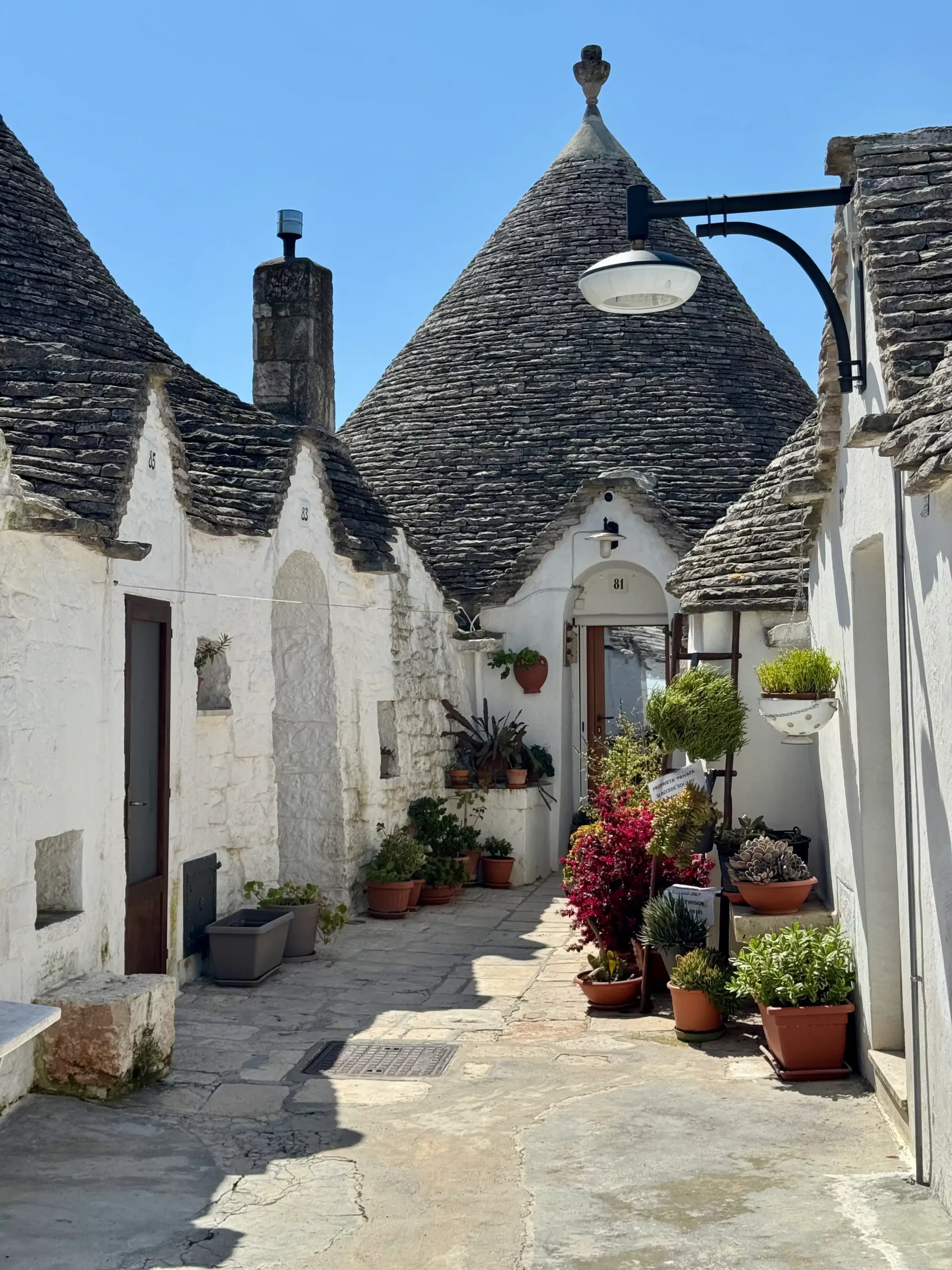
Rione Monti – the southern district, the largest and most touristy. About a thousand conical roofs. Almost every first trullo is a shop: handmade crafts, olive oil, limoncello, magnets, taralli, traditional linen goods. The lanes are named after Italian mountains of the First World War (Via Monte Nero, Via Monte San Michele and so on).
Rione Aia Piccola – more modest, the north-eastern side of the town. About 400 trulli, most still lived in by locals. Commercial activity is forbidden there, so you won’t find shops. But it’s quieter, more authentic, less touristy.
What’s really worth seeing
- Chiesa di Sant’Antonio. The only trullo-shaped church in the world. Built in 1927, with a classic conical roof and a stone altar inside. Entry free.
- Trullo Sovrano. The only two-storey trullo. An 18th-century noble residence, now a small museum with authentic furniture. Entry about €2. You’ll feel how small life was in these spaces: the bed, the fireplace, the water cisterns all in one room.
- Trullo Siamese. Two merged trulli, their conical roofs shared. On one of the town’s oldest streets. You can’t go inside, but it’s interesting from the outside.
- Casa Pezzolla (Museo del Territorio). 15 joined trulli turned into a museum of the territory. The best place to understand how and why these little houses came about. Entry about €4.
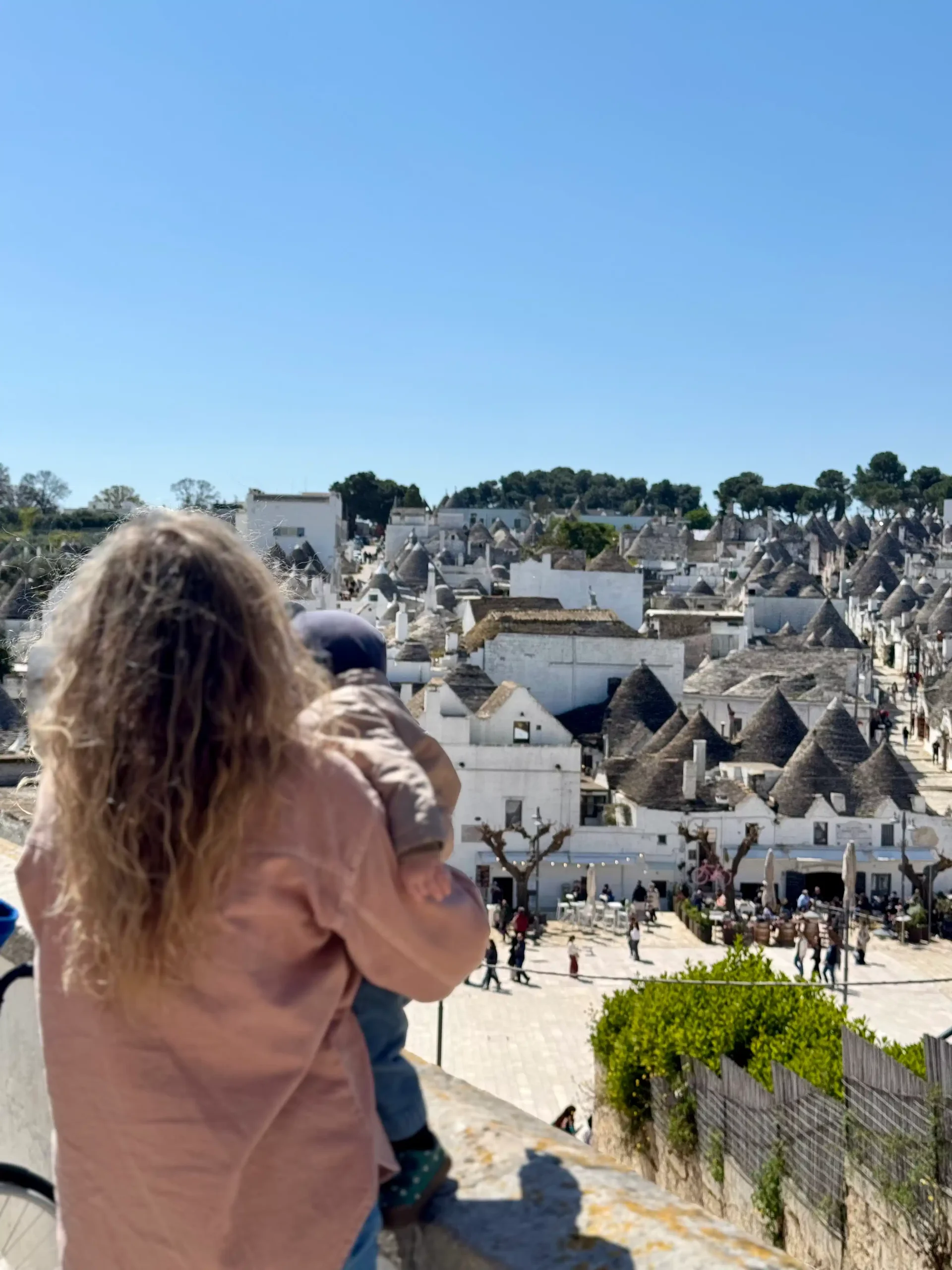
- Belvedere Santa Lucia. A viewing terrace above Rione Monti. From here you get that postcard photo that floats around the internet. Best to go in the evening or early morning, when the shadows are long.
First impression
The truth? Lots of tourists. Even in April. The main Via Monte Pertica felt like a duty, like letting Polish, German and Italian coaches through the door all at once. But nothing changes the fact that when you turn into a neighbouring lane, suddenly everything relaxes, and you’re left alone with two or three conical roofs and the smell of April air.
I hadn’t expected there to be so many trulli in Alberobello. Reading before the trip, I imagined maybe two or three blocks. In reality it’s hundreds of buildings, whole districts, two sets of UNESCO sites. For the first time you understand that this isn’t an artificial tourist garden, but a real town.
Lunch in Alberobello
How much does it cost?
- Orecchiette con sugo di pomodoro (little ears in tomato sauce) – €9
- A Pasqualino sandwich (a local speciality: a rosetta roll with tuna, capers, salami and cheese) – €6
- Two Peroni beers – €6
- A bottle of water – €2
About €30 in total.
A tip about time
If you’re asking how much time you need for Alberobello: 3–5 hours is enough. We spent about an hour and a half in the afternoon before driving on to the coast.
Arrival in Torre Santa Sabina
From Alberobello to Torre Santa Sabina: about 50 km, 40 min. You drive through Locorotondo (I suggest stopping on the way to at least see what a “white circular town” looks like), Cisternino, San Vito dei Normanni, and finally reach the coast via the SS379.
Accommodation: we found an apartment through Booking, about €100 a night. The place was about 100–200 metres from the sea.
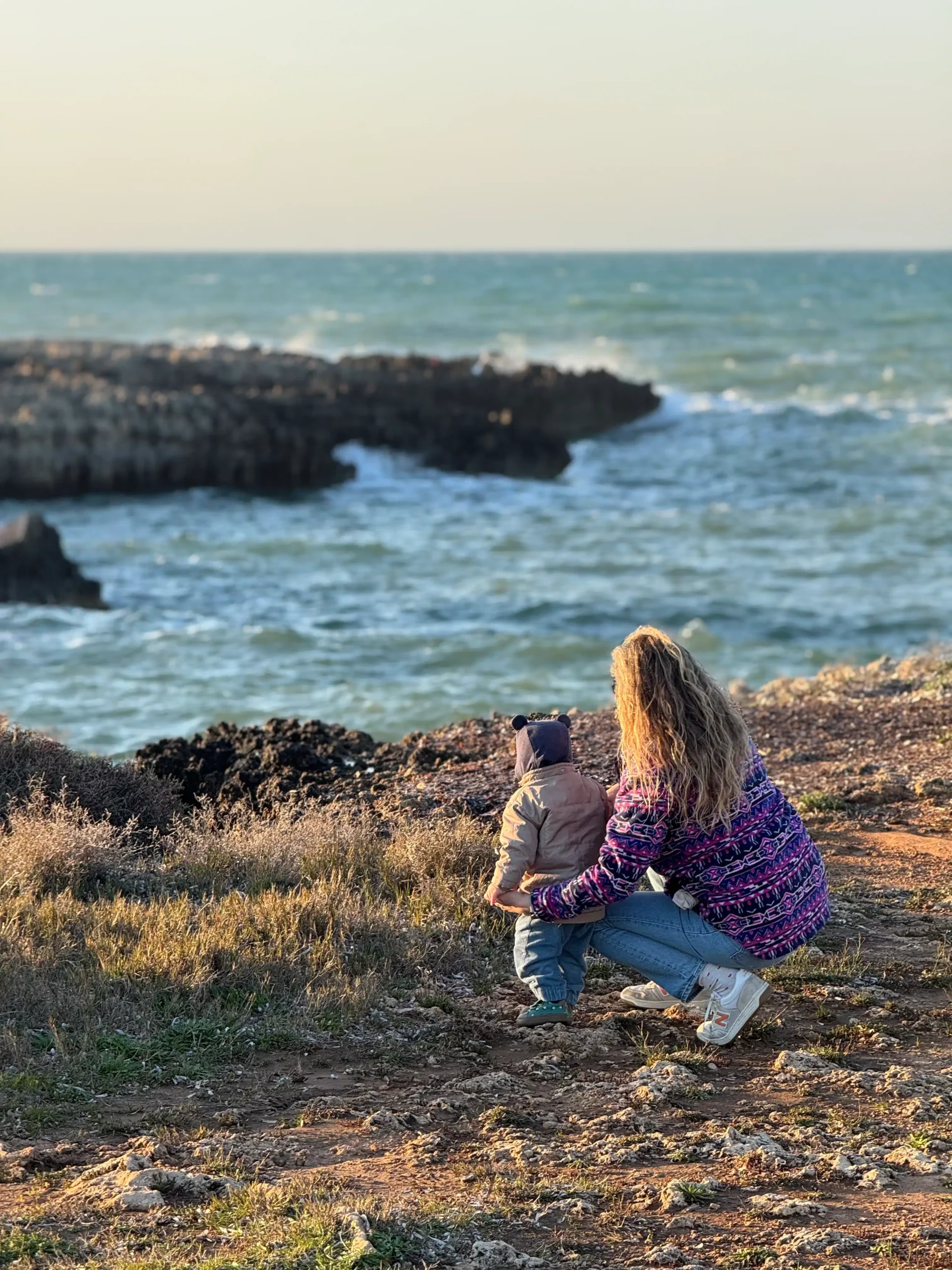
The programme for the first evening was simple: a walk along the coastal path. The best investment in silence of the whole trip.
Evening walks
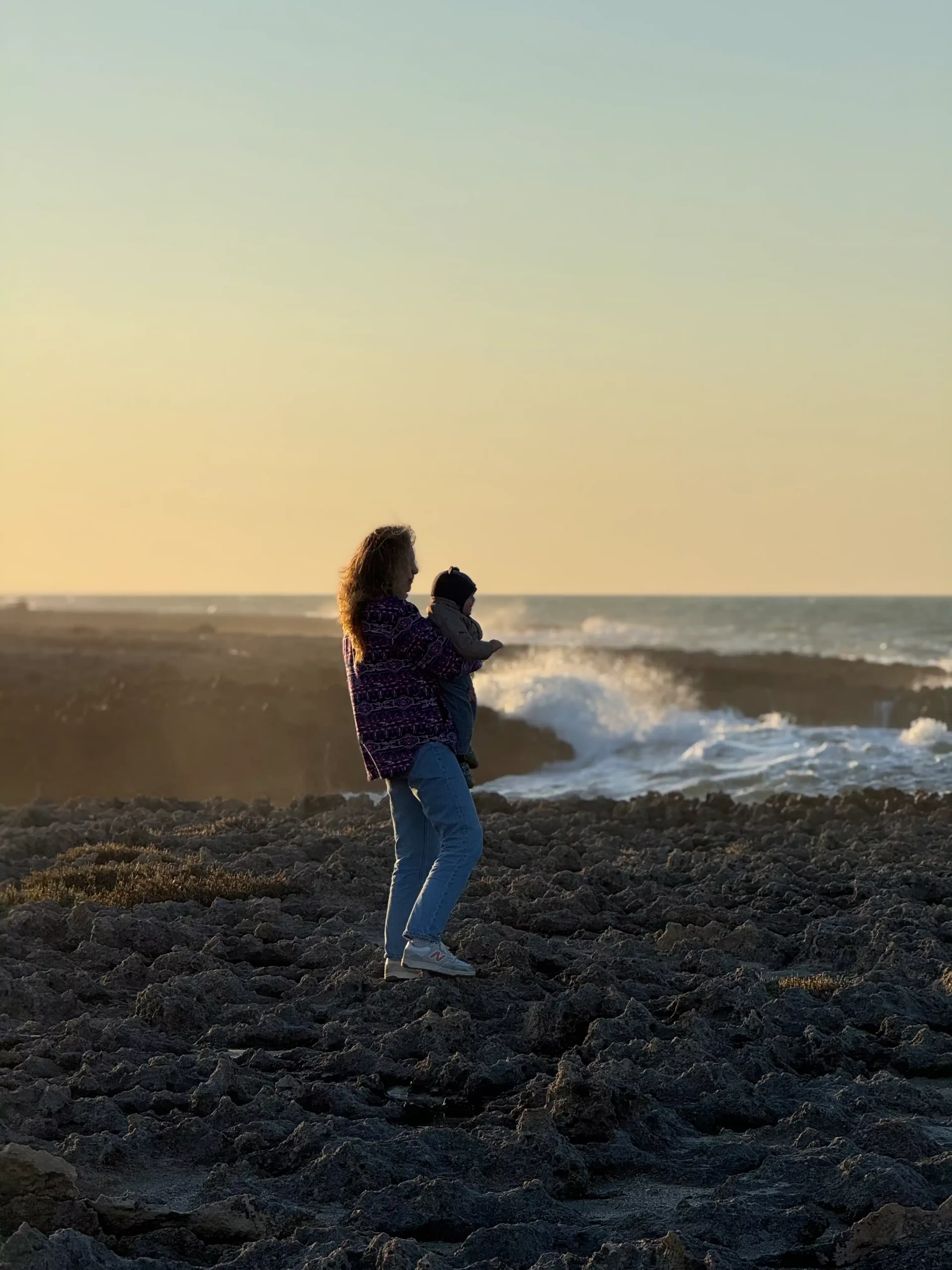
The second thing that made an impression was the passeggiata. The Italian tradition of the evening stroll. Even out of season, the locals leave home around 6 p.m., walk along the shore, stop at a bar, order a spritz (about €5), and chat.
Day 2: Polignano a Mare and Ostuni
On the second day we decided to visit two towns. Polignano a Mare in the morning, Ostuni in the afternoon. The distance between them is about 50 km, and both are on the way back to Torre Santa Sabina.
Polignano a Mare: the one whose photo you’ve seen hundreds of times
We arrived around 10 a.m. We left the car outside the old town (in Puglia there’s a template: ZTL in everything that’s an old town, so you leave the car on the edge and walk).
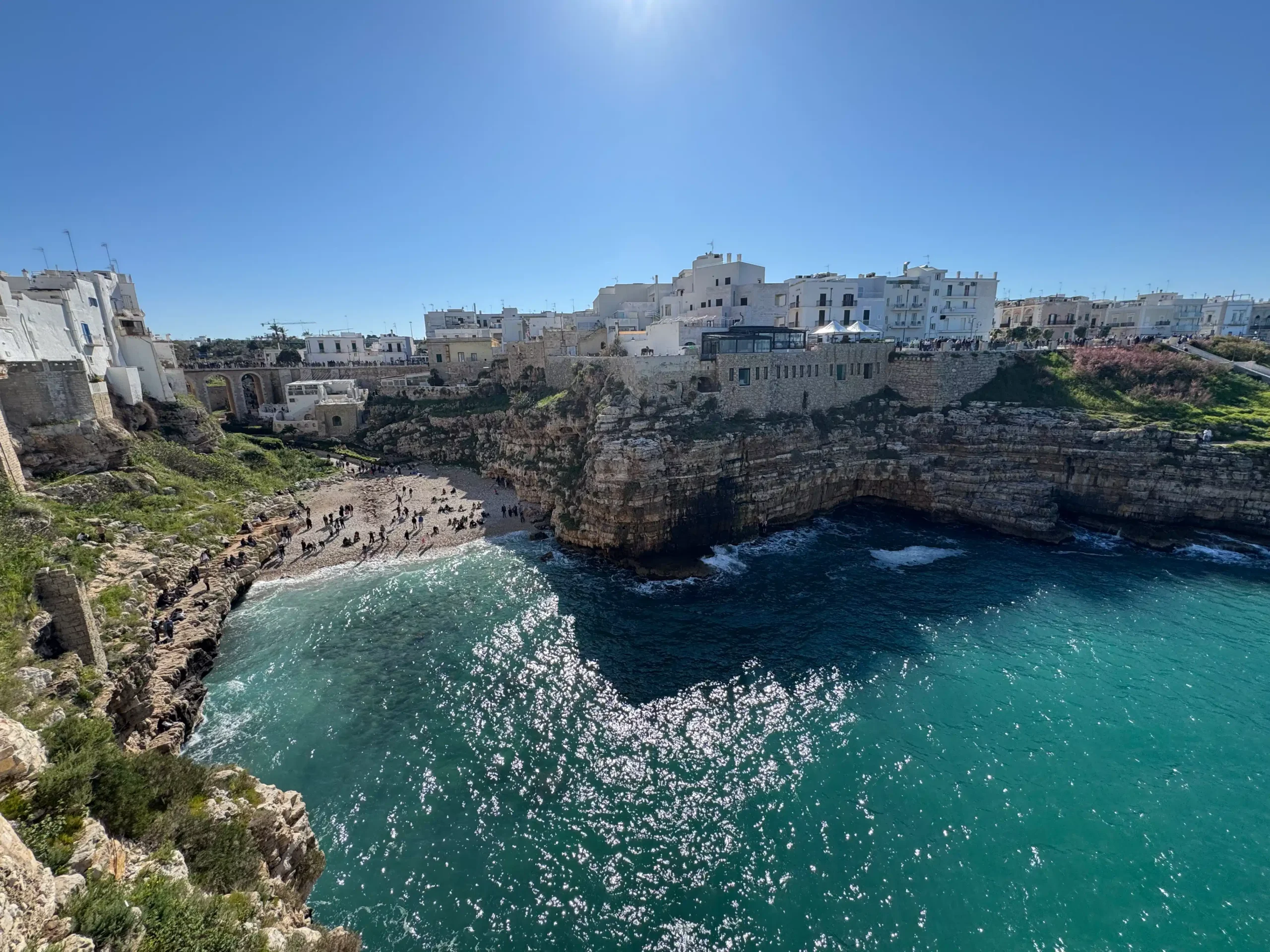
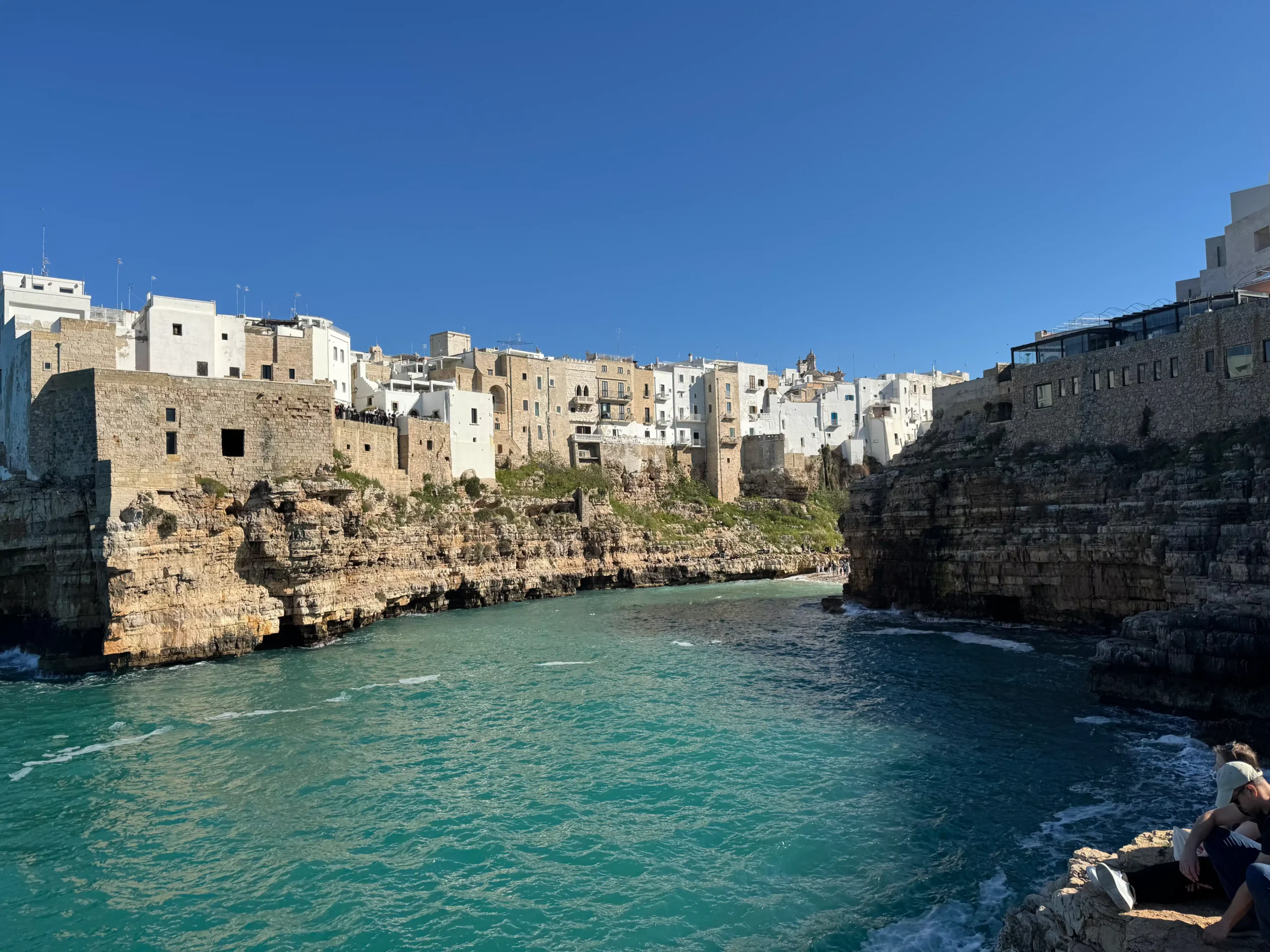
Polignano a Mare is that town whose photographed beach suddenly starts to look familiar: white houses, dizzying cliffs, blue sea, a stone bridge above. This is Cala Porto, often called Lama Monachile. The name of the cove comes from the lama (a dry riverbed) that used to flow through the town to the sea. The beach is small, with round pebbles, not sand. In summer it’s overcrowded. In April there are plenty of people too.
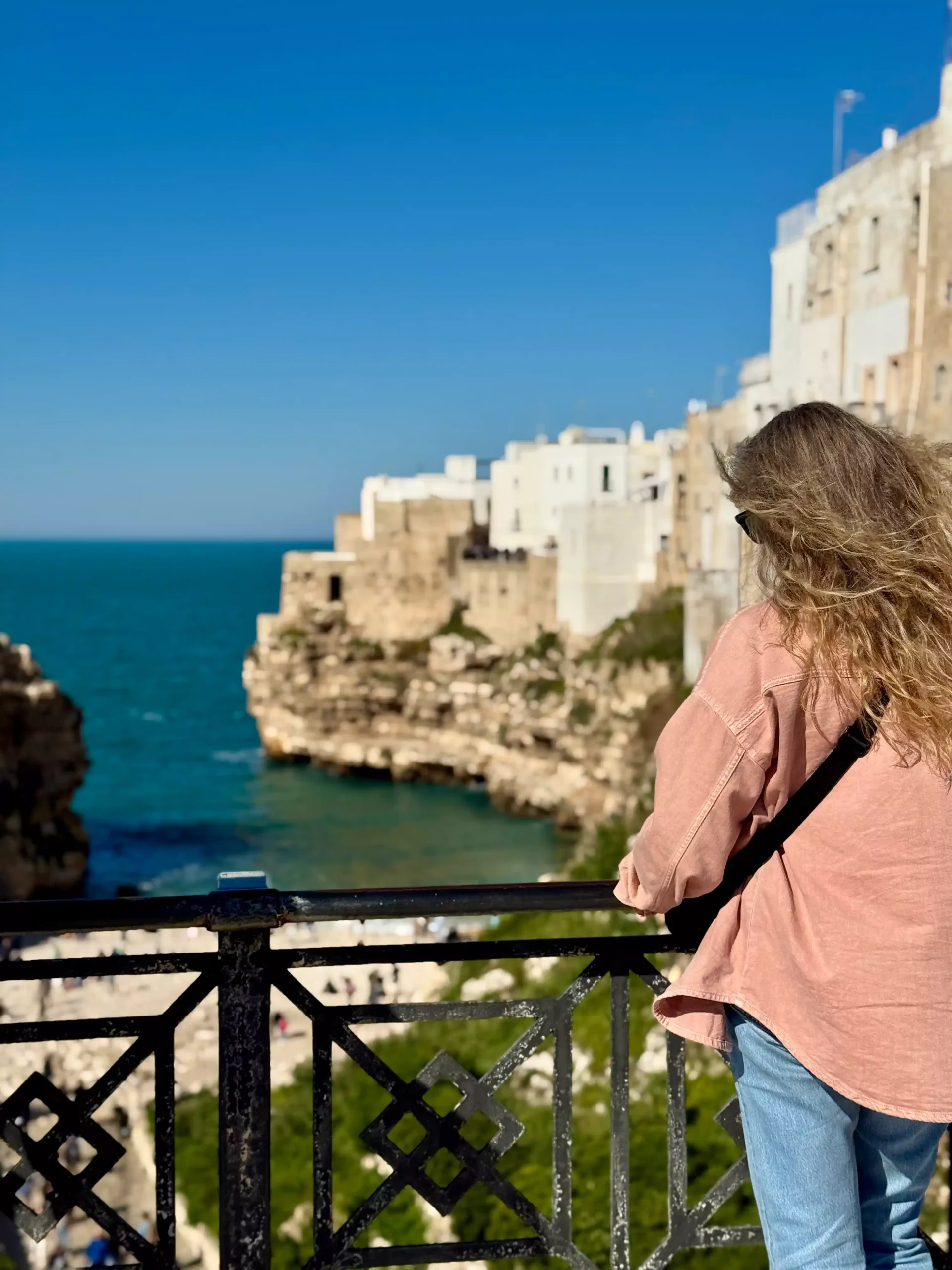
We didn’t swim, because the water was 16°C. But our programme was this:
- The view from the Ponte Borbonico bridge. The old stone bridge from which you see the beach from above. This is the very photo you saw on Pinterest boards. The biggest crowds come here too, so morning is the best time (we arrived around 10:30 and it was fine).
- The old town. White narrow lanes, balconies with flowers, and on the walls the poesie sui muri (poems), left by the local poet Guido il Flavio. In summer the terraces are lively.
- The Domenico Modugno statue. A three-metre bronze sculpture on the seafront promenade, arms spread towards the sea. Modugno, born in Polignano in 1928, wrote and sang Nel blu dipinto di blu (better known as Volare).
- The Pietra Piatta viewpoint. Between the Modugno statue and the cliffs there are steps (the Scalinata Volare) that lead down to a flat rock terrace. From there – the best view of the old town and Lama Monachile. Fewer tourists than from the bridge.
- Arco Marchesale. The main gate into the old town. An 18th-century structure, until 1780 with a drawbridge. Through it you enter the old town.
We spent about two hours in Polignano. That’s really enough if you don’t go swimming. With a baby the logistics are easy: the lanes are stone, but flat. A carrier is still better than a pushchair, of course.
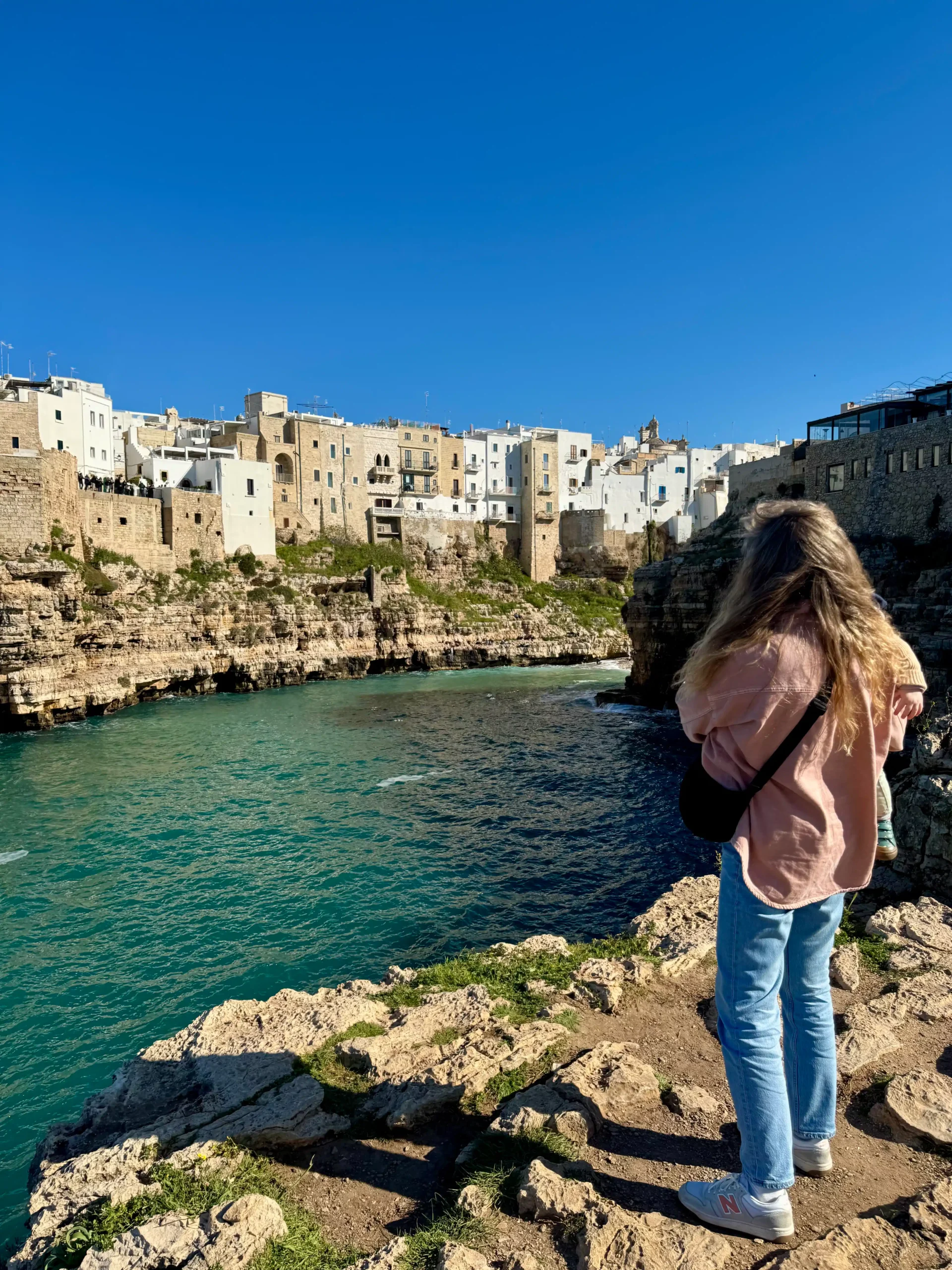
Lunch in Polignano: a small focaccia barese (with tomato, olives, oregano) about €3.50. A bottle of water €1.50.
A word about Grotta Palazzese: this is the famous restaurant in a natural cave grotto above the sea. If you’re travelling without children and want to celebrate some occasion – book a month ahead.
Ostuni: the white town seen from the heights
From Polignano to Ostuni you drive about 35 km (40 min). The road is mostly through olive groves, with the edge of the sea visible now and then.
Ostuni is called La Città Bianca (“the white town”), because all the houses of the old town are whitewashed with lime. The tradition began in the Middle Ages as protection against the plague: lime disinfects. The tradition stayed, and today you look at a white sea of buildings on a hill.
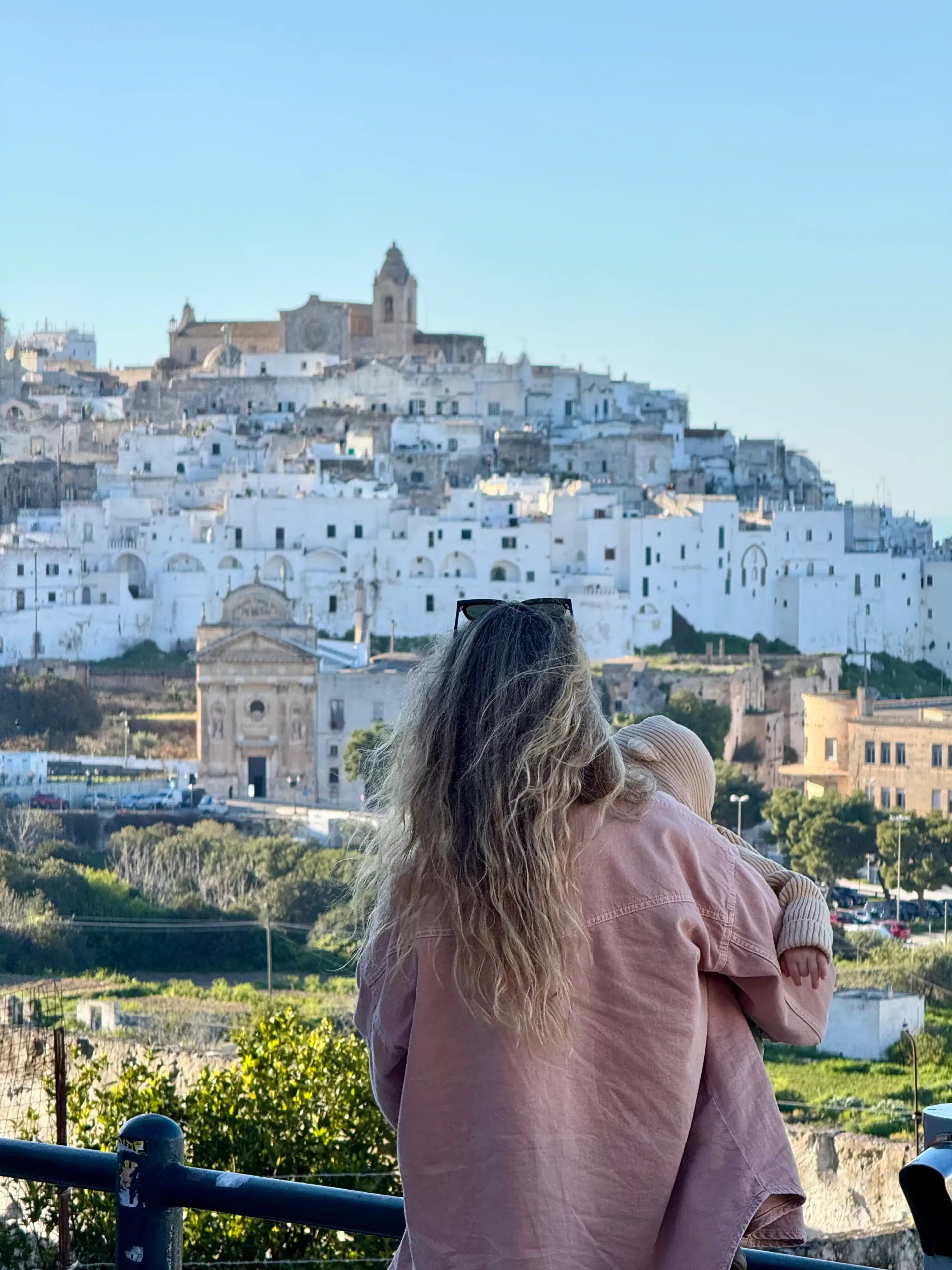
What you can’t miss:
- The panorama from Largo Beato Giuseppe Tovini. Ostuni looks like a heap of chalk on the flat Puglia plain. A postcard that never ends.
- Piazza della Libertà. The main square. The Colonna di Sant’Oronzo – a tall 18th-century column dedicated to the town’s patron saint. Around it cafés, restaurants, that Italian evening just beginning.
- The Cathedral (Concattedrale di Maria SS. Assunta). 15th century, with a rose window of 24 rays. Entry free. The interior is plain, but the verticality is impressive.
- The white lanes. Simply let yourself get lost. Every lane is narrow, white, with no fewer than three cats and flower pots on the doors. One of those towns where the camera can’t hold the emotional charge.
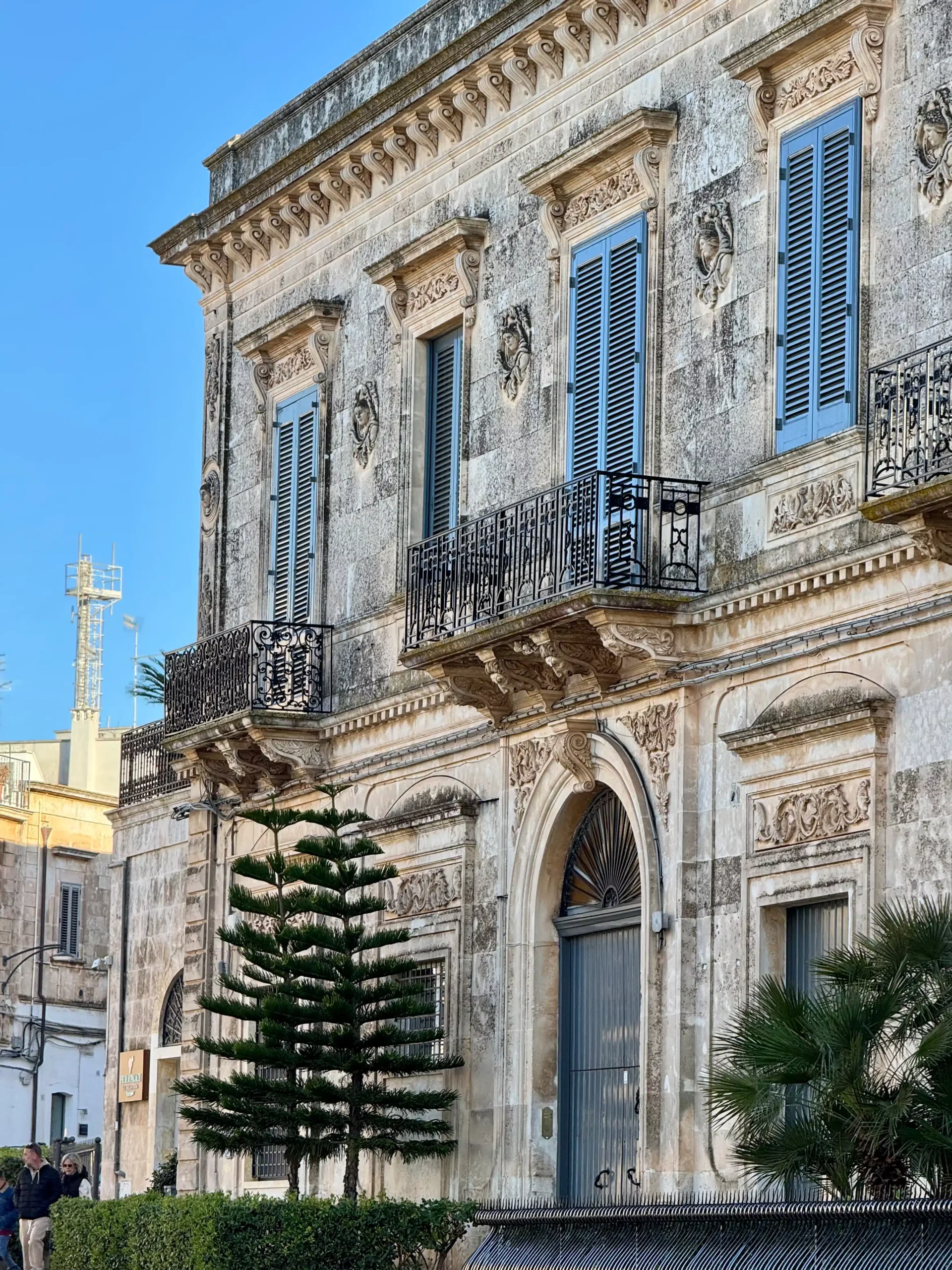
Raised flag: the Torre Santa Sabina castle
One of the things that gives this town its name is the Torre di Santa Sabina – an octagonal tower fortress right by the sea. Built in the 15th–16th century as a watchtower of the Carovigno feudal lords. At night the soldiers would light a fire on top to warn the neighbouring tower about approaching Turkish pirates.
The shape is interesting: quadrangular, with four angular blades oriented to the points of the compass. Italians call them “cappello da prete” (a priest’s hat), because it resembles an old priest’s headwear. There are only three towers of this shape in all of southern Italy.
Day 3: the long drive to Montesilvano
The morning of the third day meant we had to drive to Montesilvano in the Abruzzo region, on the coast. The road is about 700 km, on the A14 motorway (the “Adriatic Coast motorway”). By our calculation, with stops it should take about 7 hours.
The route: Torre Santa Sabina → the A14 by Bari → straight along the coast through Foggia, Vasto, Pescara → Montesilvano.
We drove it in one go, with two stops (one for the toilet, one for lunch). The distances on this stretch are no joke. The A14 from Bari to Pescara has tolls of about €25–30. For fuel for a full tank – another €70 or so. The total one-way driving cost for the car is about €100 (roads + fuel). Tip: along the way there are many autogrill stops with toilets, changing tables, espresso and fast food, but the prices here are 30–50% higher than in town. Don’t be surprised.
When we arrived in Montesilvano, we were all already tired. But that’s another article.
Practical information
| Category | Detail |
|---|---|
| Best time to go | April–June or September–early October |
| The July–August situation | A wave of tourists, prices twice as high, can be too hot with a small child |
| ZTL Alberobello | The trulli district is closed to traffic, park by Largo Martellotta |
| ZTL Polignano a Mare | The old town is closed, a paid street outside the centre |
| ZTL Ostuni | The old town is closed, a paid street or car park at the bottom of the hill |
| Payment | Cards everywhere, but bring cash for small museums |
| Cot (lettino) | Ask in advance when booking |
| Pushchair vs. carrier | A carrier is better in all three places |
| Water bottle | Bring one. Especially in summer |
Accommodation price guide
- Torre Santa Sabina: €80–150 off season, €150–300 in July–August
- Alberobello (inside a trullo!): from €120, up to €350 in summer
- Polignano a Mare: €100–250 off season
- Ostuni: €90–200 off season
With a baby
A short checklist:
- A carrier is always better than a pushchair
- Puglia’s stone lanes are common, flat, not as dizzying as Matera’s Sassi
- The evening passeggiata by the sea is the perfect end to a day
- Don’t set off to eat at Grotta Palazzese with a 1-year-old baby (too expensive, too echoey)
- The summer midday in the white lanes is very hot and sunny; plan breaks
Is it worth going? My opinion
Short answer: not bad at all. The longer answer:
It’s worth it if you’re interested in the centre of Puglia, not just the coast. It’s worth it if you want a single base for three spots (Alberobello, Polignano, Ostuni). It’s worth it if you’re tired of beach-type holidays and want a place where walking among white houses in the evening is the whole programme.
It’s not worth it if you’re expecting a summer seaside holiday with swimming. April’s Adriatic is beautiful, but not for bathing. In summer it’s hot and touristy here. Spring or early autumn are the golden seasons.
Second: two nights was enough.
Third: our mistake – too little time for Ostuni. If we did it again, I’d spend not two hours in Polignano but an hour and a half, and that extra half hour would go to Ostuni.
Of our month-in-Italy story, which led from Salerno through Tuscany’s Chianti, Sperlonga, Gravina in Puglia and Venice, Torre Santa Sabina remained one of the least showy, but one of the calmest places.
FAQ: frequently asked questions
Is Torre Santa Sabina suitable for a holiday without children? In summer – definitely. There’s nightlife (the Guaranà beach club, aperitivo bars), a Blue Flag beach, seafood restaurants. Off season – calm, almost silent.
Do you need a car? Without a car you’ll struggle badly. Public transport exists (buses to Carovigno, Brindisi), but it’s infrequent and slow. Reaching Alberobello, Polignano and Ostuni without a car is a nightmare.
How much time do you need for Alberobello? 3–5 hours is enough. With a tour inside a trullo (Trullo Sovrano) – half a day.
Is Polignano a Mare crowded? In summer – yes, especially in the late afternoon. In spring and autumn it’s manageable. Our experience in April was very good.
Is Ostuni too touristy? Less than Polignano, more than Torre Santa Sabina.
Is it worth staying in one of the trulli in Alberobello? The experience is really interesting. The trulli inside are authentic, mostly renovated, with a bathroom, a little kitchen and air conditioning. But the prices are high (from €120 off season), and in summer the trulli are often damp and cool (usually a plus, but occasionally a minus).
How long does the drive from Torre Santa Sabina to Montesilvano take? About 7 hours with stops. 700 km mostly on the A14 motorway. Roads and fuel – about €100.
Is it safe to leave a car on the street in Torre Santa Sabina? Yes, it’s a small town, locals. Our experience – no problems. Just don’t leave valuables in visible places, as anywhere in Italy.
Find flights here. If something goes wrong with your flight, you can claim compensation via AirHelp or Compensair.
Staying connected? Skip expensive roaming and grab an eSIM plan — set it up before you fly and you’ll have data the moment you land.
I always recommend booking airport transfers in advance. You can do that here.
Find accommodation here.