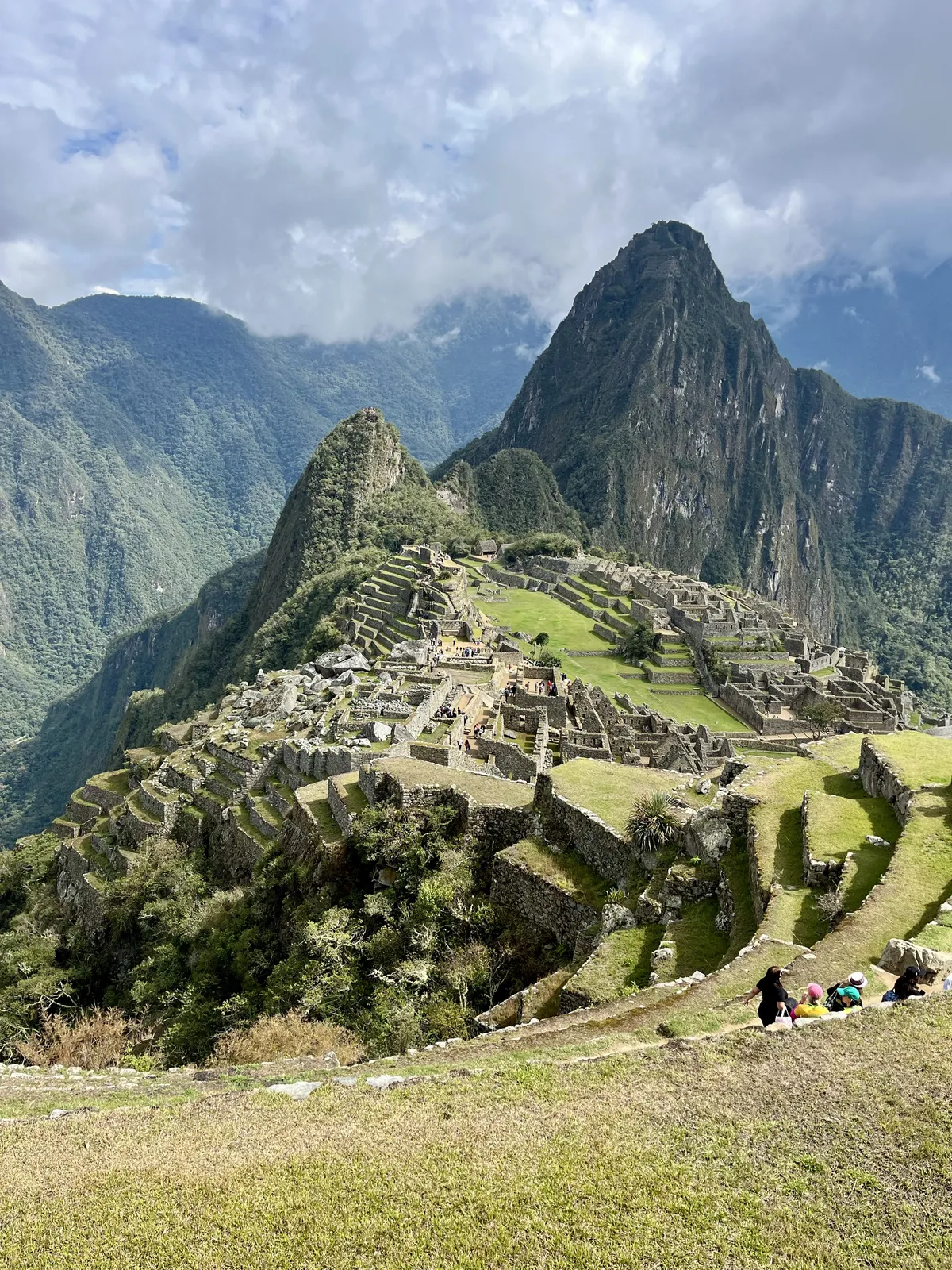
Cusco is the city where you plan to spend two days and end up staying a week. Here every little street leads to something unexpected: an Inca stone wall beneath a Spanish building, a small café with the best ceviche you’ve ever eaten, or a viewpoint that opens onto a sea of orange roofs all the way to the horizon.
Some links in this article are affiliate links. If you book through them I earn a small commission, at no extra cost to you.
Contents
- How many days to give Cusco? (the optimal plan)
- What to see in Cusco's old town (free and with a ticket)
- Free places
- Paid places
- Boleto Turístico: is it worth buying and how to use it
- Day trips from Cusco: the Sacred Valley, Rainbow Mountain and more
- 1. The Sacred Valley — a full day
- 2. Rainbow Mountain (Vinicunca) — a full day
- 3. Other options
- Where to eat in Cusco: local dishes and the best places
- What you must try
- Where to eat (specific places)
- Where to stay in Cusco: districts and prices 2026
- Best districts
- Prices 2026
- How to cope with the altitude in Cusco (3,400 m)
- How much does Cusco cost in 2026? (daily budget)
- Budget traveller (~$25 ≈ 20 €–40 USD ≈ 35 € / day)
- Mid-range traveller (~$60 ≈ 55 €–100 USD ≈ 90 € / day)
- Extra one-off costs
- Practical tips for travelling Cusco on your own
- FAQ
For me, Cusco was both an acclimatisation stop before Machu Picchu and one of the best parts of the trip. In this article I’ve written up everything worth visiting on your own, how many days you need, where to eat, where to stay and how much it costs. Concrete numbers, tested places, not a single “look it up on Google” tip.
How many days to give Cusco? (the optimal plan)
The short answer: a minimum of 3 full days, ideally 4–5. And here I’m talking only about Cusco and its immediate surroundings, without Machu Picchu.

Why so many? First, the altitude. Cusco is 3,400 m above sea level, and on the first day the body simply demands rest. Second, there’s so much around Cusco that one day isn’t enough for the old town alone.
My recommended plan:
| Day | What to do |
|---|---|
| Day 1 | Acclimatisation. A slow walk around the old-town centre, Plaza de Armas, San Pedro market, coca tea. No climbs. |
| Day 2 | The Cusco old town seriously: Qorikancha, the San Blas quarter, the 12-angle stone, Sacsayhuamán, Cristo Blanco. |
| Day 3 | The Sacred Valley: Pisac, Ollantaytambo, Moray, the Maras salt pools. |
| Day 4 | Rainbow Mountain (Vinicunca) or a free day exploring Cusco’s cafés, museums, markets. |
| Day 5 | Spare / start of the Machu Picchu trip / an additional hike. |
If you have only 3 days, skip Rainbow Mountain and combine days 1–2 (but only if you feel fine with the altitude).
What to see in Cusco’s old town (free and with a ticket)
Cusco’s old town is on the UNESCO World Heritage list, and it’s one of those rare cases where the status is completely deserved. In a few hundred metres you can pass from the Inca empire to Spanish colonialism and back.
Free places
Plaza de Armas — the central square where everything begins and ends. Here stand the huge Cusco Cathedral (paid entry, ~25 soles) and the Jesuit church. But the square itself, the arcades and the people-watching are a free pleasure.
The 12-angle stone (Piedra de los 12 Ángulos) — on Hatunrumiyoc street, right in the wall. One of the masterpieces of Inca engineering: a huge stone with exactly 12 angles that fits perfectly with the surrounding stones without any mortar.

The San Blas quarter — the artisans’ district on a hill above the centre. Narrow stone streets, colourful balconies, art galleries, ceramics workshops. Here you can just get lost and enjoy it. San Blas square itself has a small church with the famous wooden altar.
San Pedro market — the heart of Cusco. Here locals buy food, flowers, natural herbs. For tourists it’s the best place to taste cheap local food (soup + main course from 5–8 soles). And a tip: come in the morning, when everything is fresh.
Cristo Blanco — a white statue of Christ on a hill above Cusco (a bit like Rio, only smaller). The climb takes ~20 min from Sacsayhuamán, and the view over the city is worth every step.
A free walking tour — several companies offer 2–3 hour tours in English from Plaza de Armas. There’s nothing to pay upfront, but you leave the guide a tip at the end (20–50 soles is an acceptable amount).
Paid places
Qorikancha (Temple of the Sun) — the former most important Inca temple, on whose foundations the Spanish built the Santo Domingo church. The Inca stonework below is so perfect you can’t slip a sheet of paper between the stones. Entry: 40 soles ($11 ≈ 10 € USD), not part of the Boleto Turístico.
Sacsayhuamán — a giant Inca fortress on a hill above Cusco (15 min by taxi or 30 min on foot). The stone blocks weigh up to 120 tonnes and are fitted so precisely that it all looks impossible. Here you need the Boleto Turístico (the partial ticket, 70 soles).
Cusco Cathedral — stunning inside, full of paintings from the colonial period (including the famous “Last Supper” with a guinea pig on the table). Entry ~25 soles or with the religious ticket (50 soles, covering several churches).
Boleto Turístico: is it worth buying and how to use it
The Boleto Turístico is a combined ticket that lets you into up to 16 archaeological sites and museums in the Cusco region.
Options:
| Ticket type | Price | What it covers | Validity |
|---|---|---|---|
| Full (General) | 130 soles (~$35 ≈ 30 € USD) | 16 sites: Sacsayhuamán, Qenqo, Puka Pukara, Tambomachay, Pisac, Ollantaytambo, Moray, Chinchero + museums | 10 days |
| Partial I (Circuit I) | 70 soles (~$19 ≈ 17 € USD) | Sacsayhuamán, Qenqo, Puka Pukara, Tambomachay | 1 day |
| Partial II (Circuit II) | 70 soles (~$19 ≈ 17 € USD) | Pisac, Ollantaytambo, Moray, Chinchero | 2 days |
| Partial III (Circuit III) | 70 soles (~$19 ≈ 17 € USD) | Museums in Cusco city | 1 day |
| Students (with ISIC) | 70 soles (full) | Everything as the full ticket | 10 days |
Is it worth it? If you plan to visit Sacsayhuamán and the Sacred Valley (and you should), the full ticket at 130 soles is the best choice. Bought separately those tickets would cost more.
Where to buy? At the COSITUC office in Cusco (Av. El Sol 103) or at the Sacsayhuamán ticket office by the entrance. You can pay in soles or by card.
Day trips from Cusco: the Sacred Valley, Rainbow Mountain and more
Cusco is a great base from which to reach several unforgettable places. Here are the three most popular day trips:
1. The Sacred Valley — a full day
The Sacred Valley stretches along the Urubamba River between Cusco and Machu Picchu. Here the Inca civilisation left several stunning places:
- Pisac — an archaeological complex on a hilltop with terraces and an impressive view. Below, in the town of Pisac, there’s a colourful market (especially on Sundays). Included in the Boleto Turístico.
- Ollantaytambo — a well-preserved Inca fortress with huge terraces. The climb to the top rewards you with the view. From here many board the train toward Machu Picchu. Included in the Boleto Turístico.
- Moray — circular, concentrically shrinking terraces that resemble an amphitheatre. Scholars think the Incas experimented here with agricultural crops at different temperatures. Included in the Boleto Turístico.
- The Maras salt pools — hundreds of small white pools on the mountainside, used for salt extraction since Inca times. Not included in the Boleto Turístico, separate entry ~10 soles.
How to get there on your own?
- Colectivo (minibus) from Cusco’s bus station (Av. Grau): Cusco → Pisac ~5 soles, Cusco → Ollantaytambo ~10 soles, Ollantaytambo → Cusco ~10 soles. Maras/Moray are reached from Chinchero or Ollantaytambo (colectivo + taxi).
- An organised tour: from ~$30 ≈ 25 € USD without lunch, from ~$45 ≈ 40 €–70 USD ≈ 65 € with lunch and extra stops.
2. Rainbow Mountain (Vinicunca) — a full day
Colourful mineral-striped rock at 5,200 m. It looks unreal in photos, and live too. But it’s a serious physical challenge.
What to know:
- Bus journey from Cusco: ~3 h one way.
- The hike from the stopping point: ~1.5–2 h uphill (6 km, ~600 m of ascent).
- Price with a tour: $20 ≈ 18 €–50 USD ≈ 45 € (bus + guide + breakfast + lunch). An extra fee at the trail: ~10 soles.
- You can hire a horse along the way (~50 soles).
- Important: do it AFTER 2–3 days of acclimatisation in Cusco. 5,200 m without preparation is dangerous.
- Best time: January–March (greener surroundings, but more cloud) or May–October (clear skies, but drier).

3. Other options
- Humantay Lake — a turquoise lake in the mountains (~$25 ≈ 20 €–40 USD ≈ 35 € with a tour, at ~4,600 m). Less known, but unforgettable.
- Tipón and Pikillacta — less touristy Inca and pre-Inca archaeological complexes. Included in the Boleto Turístico.
Where to eat in Cusco: local dishes and the best places
Cusco food is one of the best things in this city. And I’m not talking about the tourist restaurants on the ground floor of Plaza de Armas (avoid those if you can).

What you must try
- Ceviche — raw fish marinated in citrus juice with onions and ají peppers. The Cusco version is often made with river trout (trucha).
- Lomo saltado — stir-fried beef with onions, tomatoes, soy sauce and chips. The best Peruvian classic.
- Cuy al horno — roasted guinea pig. Yes, I know how it sounds. But in Cusco it’s a festive traditional dish, and if you dare, it’s worth trying at least once.
- Sopa de quinoa — hot quinoa soup, perfect on cold days (and Cusco evenings are cold).
- Alpaca meat — similar to beef, only leaner. Found in many restaurants in steak form.
- Freshly squeezed juice cocktails — at San Pedro market from 3 soles. Mango, passion fruit, aguaymanto (Peruvian berries).

Where to eat (specific places)
| Place | Type | Price per person | What to expect |
|---|---|---|---|
| San Pedro market | Market food stalls | 5–10 soles | Soups, mains, juice cocktails. The cheapest and most authentic option. |
| Pachapapa (San Blas) | Traditional restaurant with a courtyard | 30–50 soles | Cuy, trout, dishes baked in a clay oven. A cosy courtyard. |
| La Cusqueñita | Picantería (local eatery) | 15–25 soles | Chicharrón, adobo, cuy al horno on Sundays. Locals go here. |
| Jack’s Café | International / brunch | 20–35 soles | Good breakfast, coffee, Western dishes. Popular among travellers. |
| Menú del día restaurants (side streets) | Set lunch | 8–15 soles | Soup + main + drink. Look for “MENÚ” signs on boards in the street. |
Pro tip: on the second-floor balconies of restaurants on Plaza de Armas the view is lovely, but prices are 2–3x higher than two blocks away. If you want the view, go only for a coffee. Go elsewhere for lunch.

Where to stay in Cusco: districts and prices 2026
Best districts
San Blas — on the hill above the centre, quiet, lots of cafés and small hotels. 5 min on foot from Plaza de Armas, but it feels like a separate world. The only downside: steep slopes, which with a backpack and altitude sickness the first days can be (not) fun.
Centro (around Plaza de Armas) — convenient, everything nearby, but noisier and more expensive. Good if you’re staying 1–2 nights.
San Cristóbal — even higher than San Blas, even quieter, good panoramic views. Cheaper, but further from everything.
Prices 2026
| Type | Price per night | What you get |
|---|---|---|
| Hostels (dorm room) | $6 ≈ 5 €–12 USD ≈ 11 € | A bed in a shared room, WiFi, sometimes breakfast. |
| Hostels (private room) | $15 ≈ 13 €–30 USD ≈ 25 € | A private room in a hostel, shower, WiFi. |
| Mid-range hotels | $30 ≈ 25 €–60 USD ≈ 55 € | A double bed, private bathroom, breakfast, courtyard. |
| Boutique hotels | $60 ≈ 55 €–120 USD ≈ 105 € | Stylish interior, colonial building, better location. |
| Luxury hotels | $150 ≈ 135 €+ USD | Belmond Palacio Nazarenas, JW Marriott. Historic buildings, spa. |
How to cope with the altitude in Cusco (3,400 m)
This is the section I wish someone had explained to me before the trip. Cusco is 3,400 m above sea level. If you fly straight from Lima (sea level), you’ll feel the difference in the first hours.
Symptoms: headache, nausea, breathlessness, insomnia, fatigue. For most it passes within 1–2 days.
What to do:
Coca tea (mate de coca). You’ll get it at every hotel and café for free or for a few soles. It’s legal, natural and really helps.
On the first day: nothing. Seriously. Don’t plan any hikes, excursions or physical activity. Walk slowly, sit in a café, watch the city.
Drink plenty of water. 3–4 litres a day. Dehydration worsens the symptoms.

Eat light. For the first days choose soups, rice, light food. Heavy fatty dishes weigh you down.
Soroche pills. You can buy them over the counter at Cusco pharmacies (~5 soles). They help with the headache.
If you plan Rainbow Mountain or another high point: do it NO earlier than day 3 in Cusco. Optimally, day 4–5.
How much does Cusco cost in 2026? (daily budget)
Budget traveller (~$25 ≈ 20 €–40 USD ≈ 35 € / day)
| Expense | Price per day |
|---|---|
| Accommodation (hostels, dorm room) | $8 ≈ 7 €–12 USD ≈ 11 € |
| Food (market + menú del día) | $8 ≈ 7 €–12 USD ≈ 11 € |
| Transport (colectivo, on foot) | $2 ≈ 2 €–5 USD ≈ 4 € |
| Entries / activities | $5 ≈ 4 €–10 USD ≈ 9 € |
| Total | ~$25 ≈ 20 €–40 USD ≈ 35 € |
Mid-range traveller (~$60 ≈ 55 €–100 USD ≈ 90 € / day)
| Expense | Price per day |
|---|---|
| Accommodation (private room, mid-range) | $25 ≈ 20 €–50 USD |
| Food (restaurants, one good dinner) | $15–25 USD |
| Transport (taxi, colectivo) | $5–10 USD |
| Entries / excursions | $10–20 USD |
| Total | ~$60–100 USD |
Extra one-off costs
| Item | Price |
|---|---|
| Boleto Turístico (full) | ~$35 USD (~130 soles) |
| Qorikancha entry | ~$11 USD (~40 soles) |
| Sacred Valley tour (group) | ~$30–70 USD |
| Rainbow Mountain tour | ~$20–50 USD |
| Cusco Cathedral | ~$7 USD (~25 soles) |
Practical tips for travelling Cusco on your own

Soles, not dollars. It’s better to pay in soles everywhere. Cusco is full of exchange offices (the best rates on Av. El Sol). Many places take cards, but the market and colectivos: cash only.
The colectivo is your friend. Minibuses run everywhere: to the Sacred Valley, to other towns. They cost a few soles. They stop when you raise your hand, and the routes are marked on the windscreen.
Taxis: agree the price before getting in. Cusco taxis have no meters. From the centre to San Blas: ~5 soles. From the centre to the bus station: ~8 soles. From the airport to the centre: ~15–20 soles.
Tap water is not drinkable. Buy bottled or use a filter / purification tablets.
Protect your belongings. Cusco is a safe city, but petty theft (especially in crowded minibuses and the market) happens. Backpack on your front, phone in your pocket.
Internet. WiFi at hotels and cafés works well. If you want mobile internet, a SIM card (Claro or Movistar) can be bought from ~15 soles with data. I recommend using eSIM cards (Airalo, Saily).
Weather. Warm by day (15–20°C in the dry season), but at night it drops to 0–5°C. Layering is rule #1. Always have a warmer layer with you.
Season. Dry: May–October (less rain, clear skies, more tourists). Rainy: November–March (cheaper, but wet in the afternoons). Shoulder months (April, November): the golden mean.
FAQ

Is it safe to travel Cusco on your own? Yes. Cusco is one of the safest cities in Peru for tourists. The centre and San Blas are well lit and visitors walk around at any time of day. At night in the further districts be more careful, but that’s a standard rule anywhere in the world.
Is Cusco good for vegetarians / vegans? Definitely. In the San Blas district there are several purely vegetarian / vegan restaurants (Green Point, The Plant Based Cusco). At San Pedro market you’ll find fresh fruit and vegetable dishes.
How do you get to Cusco?
- By flight from Lima: ~1.5 h, from $40–80 USD one way (LATAM, Sky Airlines, JetSMART).
- By bus from Lima: ~20–22 h on the night bus (Cruz del Sur, Oltursa), from ~$25–50 USD.
- By bus from Arequipa: ~10 h, from ~$15–25 USD.
- By bus from Puno: ~6–7 h, from ~$10–20 USD.
Do you need a visa? No. Holders of most Western passports (EU, UK, US and others) can stay in Peru without a visa — up to 183 days a year for tourism. I’ve written about it in more detail in a separate article.
How long before Machu Picchu to arrive in Cusco? A minimum of 2 days, ideally 3. You need time to acclimatise, and Cusco has enough to do that those days aren’t “empty.”
Is it worth hiring a guide in Cusco city? For the old town, a free walking tour + exploring on your own is enough. Sacsayhuamán and Qorikancha are better with a guide (the context and history add a lot), but they’re doable without. In the Sacred Valley a group tour is convenient if you don’t want to deal with transport.
What’s the currency in Peru? The Peruvian sol (PEN). In early 2026: 1 USD ≈ 3.7 PEN, 1 EUR ≈ 4.0 PEN. At ATMs (BCP, Interbank) you can withdraw soles with Visa/Mastercard.
Planning a trip to Peru? Read my other articles too: the Peru entry guide (visa and vaccinations), altitude sickness in Peru, Colca Canyon, and how to reach Machu Picchu independently.
Search for flights here. If something goes wrong with your flights, you can claim compensation through AirHelp or Compensair.
Staying connected? Skip expensive roaming and grab an eSIM plan — set it up before you fly and you’ll have data the moment you land.
I always recommend booking taxi transfers to and from the airports in advance. You can do that here.
Find accommodation here.
Travel Without Chaos: Peru — Classic 20-Day Itinerary Without a Car (+ Inca Trail)
Classic 20-Day Trip to Peru — Complete PDF Guide