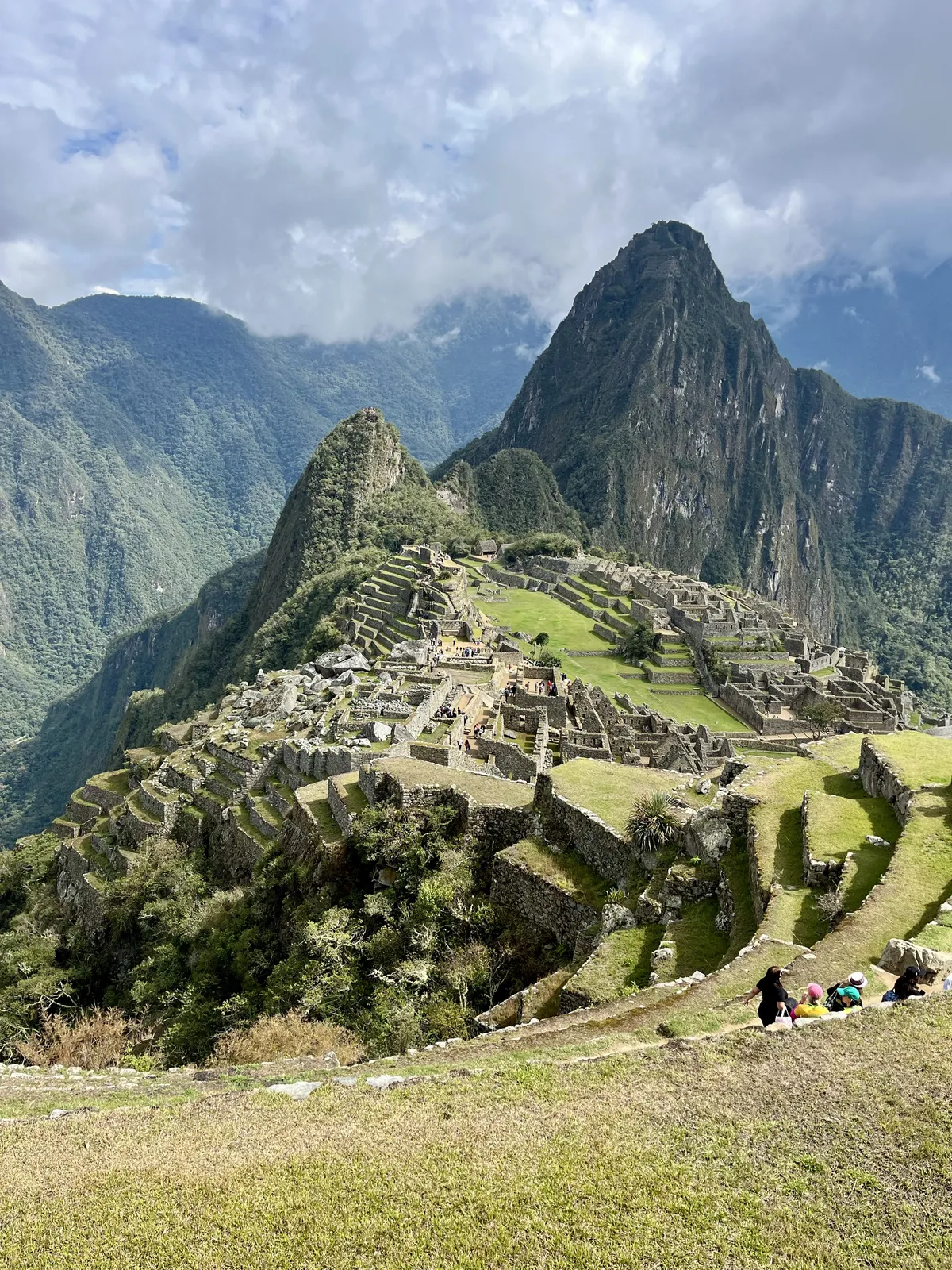
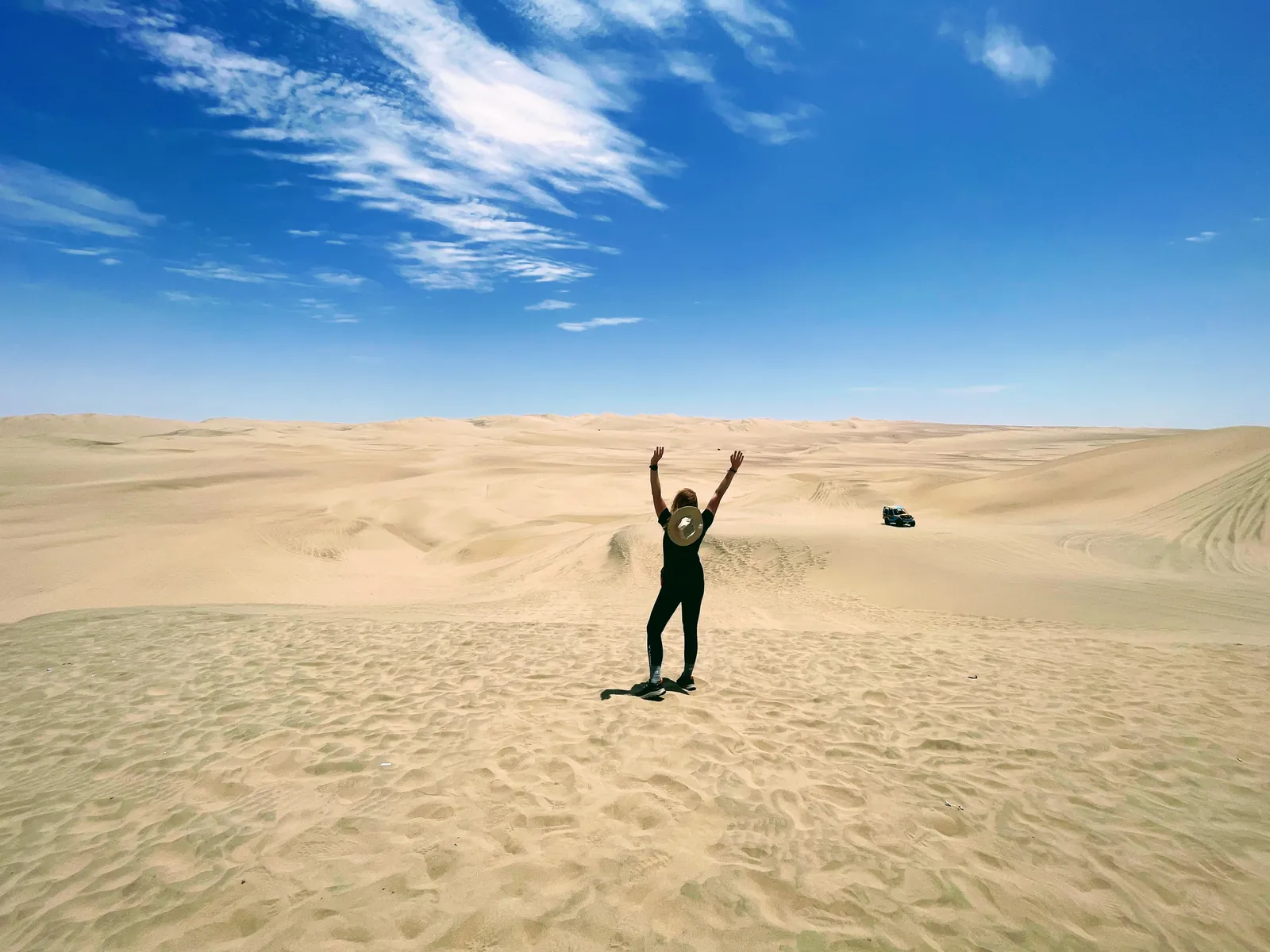
My first night in Cusco. I’m lying in the hotel room, staring at the ceiling, unable to fall asleep. My heart is beating faster than it should. My head aches — not badly, but constantly, as if someone had pulled a too-small hat over it. And that feeling that my lungs are too small — as if I were breathing through a straw. I sit up in bed and think: “Well, there you go — soroche.”
Some links in this article are affiliate links. If you book through them I earn a small commission, at no extra cost to you.
Contents
- What is altitude sickness and why does it strike in Peru?
- Peru city altitudes: where altitude sickness is most likely
- Altitude sickness symptoms — how to recognise them?
- Mild altitude sickness (AMS — Acute Mountain Sickness)
- Moderate altitude sickness
- Severe altitude sickness (HACE / HAPE — life-threatening!)
- 10 practical tips for avoiding altitude sickness in Peru
- 1. Acclimatise gradually — don't fly straight to Cusco!
- 2. On the first day — do NOTHING
- 3. Drink water — lots of water
- 4. Coca tea and coca leaves — the local remedy for soroche
- 5. Eat light
- 6. Avoid alcohol (at least the first 24–48 hrs)
- 7. Sleep well (or at least try)
- 8. Diamox (acetazolamide) — medication for prevention
- 9. Ibuprofen — a simple helper
- 10. Listen to your body — and don't be afraid to say "stop"
- The optimal Peru route for acclimatisation
- Recommended route (with acclimatisation)
- The mistake most tourists make
- Coca tea and coca leaves — what they are and are they safe?
- How it's used:
- Legality — important!
- Does it work against altitude sickness?
- A first-aid kit for a trip to the Peruvian mountains
- For altitude sickness
- General travel kit (additions)
- Altitude sickness with children — is it safe to travel to Peru as a family?
- Recommendations by age:
- Altitude sickness in other Peru spots — short notes
- Arequipa (2,335 m)
- Colca Canyon (3,300–4,900 m)
- Cusco (3,399 m)
- Puno / Lake Titicaca (3,827 m)
- Rainbow Mountain (5,036 m)
- Frequently asked questions (FAQ)
- Summary: altitude sickness in Peru is real, but manageable
Before the trip I thought altitude sickness in Peru was something that happens to other people. I’m a sporty person, I walk a lot, I’ve never had health complaints. But altitude is democratic. It doesn’t care how much you run or how many times you’ve been to the gym. And it caught up with me too.
I’m writing this article because clear, practical information about mountain sickness on a Peru trip is surprisingly hard to find in one place. And Peru is one of the most popular South American destinations, where altitude sickness affects most travellers. Not everyone badly — but almost everyone at least a little. And it’s better to know in advance what to do.
An important warning: this article is not medical advice. Before your trip, talk to your own doctor, especially about medication (Diamox, ibuprofen). I’m sharing my experience and the information I relied on when preparing for the trip — but I’m a traveller, not a doctor.
If you’re planning a trip to Peru — start with my articles on Arequipa and Colca Canyon. Both fit perfectly into an acclimatisation plan.

What is altitude sickness and why does it strike in Peru?
Altitude sickness (or mountain sickness, which locals in Peru simply call soroche) is the body’s reaction to the reduced amount of oxygen in the air at high altitude. The higher you climb, the less oxygen there is in every breath. And your body simply can’t adapt fast enough.
Symptoms usually start at around 2,500 m (8,000 ft), though some more sensitive people can feel them from as low as 2,000 m.
Why is it especially relevant in Peru? Because many of the most popular tourist spots are VERY high up. And the most common scenario looks like this: a person flies into Lima (almost sea level, ~160 m), boards another plane, and an hour and a half later finds themselves in Cusco — at 3,399 m. From zero to three and a half thousand metres in 90 minutes. The body is in shock.
And here’s what’s important: altitude sickness doesn’t depend on physical fitness. It can strike a marathon runner, a grandmother, or a teenager. It’s an individual bodily response tied to genetics and how fast you adapt — not to your training.
In Peru you’ll hear the word “soroche” everywhere. When a hotel worker asks “¿Tiene soroche?” — they’re asking whether you’re feeling the altitude. And they’ll most likely offer you coca tea. But more on that later.
Peru city altitudes: where altitude sickness is most likely
This is a key section. Before you plan your route, look at this table — and you’ll understand why the order of your travel matters.
| Place | Altitude (m) | Altitude (ft) | Risk level | Note |
|---|---|---|---|---|
| Lima | 0–160 m | 0–525 ft | ✅ No risk | On the coast, no acclimatisation needed |
| Nazca | 520 m | 1,706 ft | ✅ No risk | Low, hot |
| Arequipa | 2,335 m | 7,661 ft | 🟡 Low–medium | A great place to acclimatise! |
| Machu Picchu | 2,430 m | 7,972 ft | 🟡 Medium | Lower than Cusco — acclimatise beforehand |
| Sacred Valley | 2,792 m | 9,160 ft | 🟡 Medium | Lower than Cusco — a good first-night alternative |
| Huaraz | 3,052 m | 10,013 ft | 🟠 Medium–high | A trekking base, needs acclimatisation |
| Cusco | 3,399 m | 11,152 ft | 🔴 High | Most travellers feel symptoms here |
| Chivay | 3,635 m | 11,926 ft | 🔴 High | The Colca Canyon base |
| Puno (Lake Titicaca) | 3,827 m | 12,556 ft | 🔴 Very high | One of the highest tourist towns |
| Patapampa pass | 4,910 m | 16,109 ft | 🔴🔴 Extreme | On the way to Colca Canyon — only passed through |
| Rainbow Mountain | 5,036 m | 16,522 ft | 🔴🔴 Extreme | A day hike — only for the acclimatised! |
| Misti volcano | 5,822 m | 19,101 ft | 🔴🔴🔴 Dangerous | Only with experience and full acclimatisation |

What do these numbers mean in practice? AMS (acute mountain sickness) affects about 25% of travellers on reaching 2,500 m and about 40% on reaching 3,000 m. Some sources cite up to 85%, depending on the speed of ascent and individual sensitivity.
The biggest risk — direct Lima → Cusco flights. From 0 to 3,400 m in 1.5 hours — that’s the worst possible scenario for acclimatisation. And that’s what most tourists do.
Arequipa (2,335 m) is a great intermediate stop for acclimatisation. I’ve written more about it here. And it’s not just an “intermediate stop” — it’s a fantastic city, worth a trip of its own.
Altitude sickness symptoms — how to recognise them?
It’s worth knowing the symptoms in advance — so you don’t have to google them with a pounding head and trembling hands in a Cusco hotel. I divide them into three levels.
Mild altitude sickness (AMS — Acute Mountain Sickness)
This is the most likely scenario. And if you’re prepared — it’s quite manageable.
- Headache — the most common symptom, almost always the first
- Nausea, loss of appetite
- Fatigue, weakness — as if you’d run a marathon, though you only just sat down
- Mild dizziness
- Insomnia or very restless sleep
- Shortness of breath during exertion (climbing stairs, walking uphill)
The best description I heard: “The feeling of being hungover, even though you didn’t drink.” You can’t put it more accurately.
Mild soroche usually appears within 6–24 hours of arriving at altitude and most often passes within 1–3 days if you acclimatise properly.
Moderate altitude sickness
Here it’s more serious, but still manageable:
- A strong, unrelenting headache that medication doesn’t relieve
- Severe nausea and vomiting
- Enormous fatigue — even the smallest task feels like climbing Everest
- Shortness of breath at rest (not just when climbing — even sitting!)
- Coordination problems
Action: stop climbing higher, rest, drink water. If it doesn’t improve within 24 hours — descend. This isn’t “weakness” — it’s a smart decision.
Severe altitude sickness (HACE / HAPE — life-threatening!)
This is rare on tourist routes — more common above 4,500 m. But you need to know about it.
HACE (High Altitude Cerebral Edema — brain swelling):
- Confusion, disorientation
- Hallucinations
- Can’t walk straight (as if drunk)
- Aggressive or illogical behaviour
HAPE (High Altitude Pulmonary Edema — swelling of the lungs):
- Severe shortness of breath even lying down
- A cough with pink or frothy sputum
- Blue lips or nail beds
🚨 THIS IS A MEDICAL EMERGENCY. Descend immediately. If the person can’t walk — call for help. HACE and HAPE can be fatal within a few hours if untreated.
The good news: these extreme cases are very rare on Peru’s tourist routes. But knowing about them is a must.
10 practical tips for avoiding altitude sickness in Peru
Here’s the heart of it. Ten things that, had I known them before the trip, would have made me feel much calmer. And some of which I’d have done differently.
1. Acclimatise gradually — don’t fly straight to Cusco!
This is the tip of tips. The golden rule. The alpha and omega.
The best strategy for acclimatising in Peru: go up gradually, over several days. Not by plane from Lima straight to Cusco, but in stages:
Lima → Arequipa (2,335 m, 1–2 days) → Colca Canyon → Puno → Cusco
Or, if you have less time: Lima → Sacred Valley (2,792 m) → Cusco
In the mountains there’s a rule: “Climb high, sleep low” — during the day you can go higher, but try to sleep lower. The CDC recommends increasing your sleeping altitude by no more than 500 m per day above 3,000 m.
2. On the first day — do NOTHING
Seriously. When you arrive somewhere high — on the first day just walk slowly, drink tea, sit in a café, watch the town.
Don’t plan hikes, excursions or active activities on the first day. I know that arriving in a new city, you want to run and see everything. Stop. Your body will thank you tomorrow.
3. Drink water — lots of water
3–4 litres a day — more than usual. At altitude the air is drier, you breathe more often — the body loses moisture faster than you realise.
Carry a bottle everywhere. Peruvian tap water isn’t drinkable — buy bottled or use a filter. A half-litre bottle in a shop costs ~1–2 PEN (€0.25–0.50).
4. Coca tea and coca leaves — the local remedy for soroche
Coca tea (mate de coca) is the first thing you’ll be offered in any hotel in Cusco or Puno. Often free, right at reception. Accept it.
Does it work scientifically? A 2022 study with travellers in Cusco found that drinking coca tea did not statistically significantly reduce AMS, but locals have used it for centuries and many travellers swear it helps. Placebo or not — if you feel better, what’s the difference?
It certainly won’t do any harm. Try it. More on coca in a separate section below.
5. Eat light
On the first day at altitude — avoid heavy, fatty food and large portions. Favour: soups (Peruvian soups are wonderful!), rice, vegetables, light dishes.
Peruvian cuisine is fantastic, but on your first day at altitude, hold off on cuy (guinea pig) and other exotic experiments. There’ll be time for that once you’ve acclimatised.
6. Avoid alcohol (at least the first 24–48 hrs)
Alcohol + altitude = a double blow to the body. It dehydrates you, worsens symptoms, and disrupts acclimatisation. The effect at altitude is twice as strong as at sea level.
I know the Cusco bars will tempt you with Pisco Sour. It isn’t going anywhere — it’ll wait one day. Your head will be grateful.
7. Sleep well (or at least try)
Insomnia is one of the most common symptoms of altitude sickness. And it’s a vicious circle — you don’t sleep, you feel worse, you sleep even less.
A few tips:
- Sleep with your head slightly raised (an extra pillow)
- Avoid caffeine after midday
- The room should be cool
- If you can’t fall asleep — don’t worry. It’s normal. It usually passes within 2–3 nights.
8. Diamox (acetazolamide) — medication for prevention
Diamox (acetazolamide) is a prescription drug that helps the body adapt to altitude faster. It works as a mild diuretic and encourages deeper breathing.
Dosage for prevention: the CDC recommends 125 mg twice a day, starting 1 day BEFORE arriving at altitude and continuing for 2–3 days at altitude.
Side effects: tingling in the fingertips (in up to 45% of users!), more frequent urination, and fizzy drinks start tasting strange. Not dangerous, but unpleasant.
⚠️ This is a prescription drug! Talk to your doctor BEFORE the trip. Especially if you have kidney problems or are allergic to sulfonamides.
Did I use it? Yes. I started the day before arriving in Cusco. My fingers tingled oddly, sparkling water sounded like metal, but the headache was far milder than I expected. Whether it was the Diamox or the acclimatisation in Arequipa — hard to say. But I don’t regret it.
Where to get it: at home, a doctor can write you a prescription. In Peru — it’s sold over the counter in any pharmacy (farmacia) for a few soles (2–5 PEN ≈ 1 €).
9. Ibuprofen — a simple helper
Studies show that 600 mg of ibuprofen every 8 hours can help not only relieve symptoms but also with prevention — though not as effectively as Diamox.
The advantage: easier to get, no prescription needed, fewer side effects. But it doesn’t replace acclimatisation — it’s only a supporting measure.
10. Listen to your body — and don’t be afraid to say “stop”
If you feel symptoms — don’t try to “wait it out” or “push through.” Altitude sickness isn’t a sign of weakness. It’s a physiological reaction that willpower can’t override.
If you feel bad — descend. That’s the only real “cure.” Even a 500-metre descent can dramatically improve how you feel.
If your travel companion feels bad — help them make the decision to go down, even if it means a missed excursion.
The mountains aren’t going anywhere. You can come back. Your health — you can’t..
The optimal Peru route for acclimatisation
This is a section few have written about — and its practical value is huge. Because the right order of your route can be the difference between “a fantastic trip” and “I lay in the hotel with a headache.”
Recommended route (with acclimatisation)
| # | Days | Tips |
|---|---|---|
| Days 1–2 | Lima (0 m) — rest after the flight, sea level | flight 1.5 hrs |
| Days 3–4 | Arequipa (2,335 m) — gentle acclimatisation, sightseeing | bus 5–6 hrs |
| Days 5–6 | Colca Canyon (3,300–4,900 m) — hike, condors | bus 6 hrs |
| Day 7 | Puno (3,827 m) — Lake Titicaca | bus 7 hrs or train |
| Days 8–9 | Cusco (3,399 m) — already acclimatised! | |
| Days 10–11 | Machu Picchu (2,430 m) — lower than Cusco, you’ll feel great |
Why this sequence works: you climb gradually — 0 → 2,335 → 3,300 → 3,827 → 3,399 m. The body adapts at each level. By Cusco — you’re already acclimatised. And Machu Picchu is lower than Cusco, so you’ll feel even better there.
More about Arequipa and Colca Canyon — in my articles: Arequipa independently and the Colca Canyon hike.
The mistake most tourists make
| Day 1 | Lima (0 m) | flight 1.5 hrs | | Day 2 | Cusco (3,399 m) — SHOCK! Headache, nausea, insomnia | | Day 3 | Machu Picchu — feeling bad, can’t enjoy it |
Direct Lima → Cusco flights are the most popular. And the worst idea for acclimatisation. From sea level to 3,400 m in 90 minutes — the body just can’t keep up.
An alternative for those who MUST fly straight to Cusco: spend the first night in the Sacred Valley (Valle Sagrado, 2,792 m), not Cusco. That’s 600 metres lower — and those 600 metres can be decisive. From Cusco airport you can drive straight to the Sacred Valley (Ollantaytambo or Urubamba), spend the night there, and return to Cusco the next day already a little acclimatised.
Coca tea and coca leaves — what they are and are they safe?
This section stands on its own, because many travellers have questions and entirely understandable worries. “Coca? Isn’t that the same as cocaine?!” No. Really not.
What it is: the leaves of the coca shrub (Erythroxylum coca), used by Andean peoples for thousands of years. It is NOT cocaine — it’s the raw material from which cocaine is made through a complex chemical process. The leaf itself contains a minimal amount of alkaloids.
An analogy: it’s like poppy seeds on a bun. You can make opium from poppies, but the bun isn’t a drug 😄
How it’s used:
- Mate de coca (tea) — the most common way. Pour over hot water, wait 5 min, drink. The taste is herbal, mild, even pleasant
- Chewing (chacchar) — leaves with a little llipta (bicarbonate). You tuck them behind your lip and chew. The taste is peculiar, but you get used to it
- Sweets (caramelos de coca) — the easiest alternative if chewing isn’t for you
- Coca powder — added to a smoothie or yoghurt
Legality — important!
- Peru: 100% legal. Sold everywhere — from hotels to airports. It’s everyday life, like a cup of coffee
- At home in the EU / UK / US: ❌ ILLEGAL. Coca leaves are banned. Don’t take them home — not even as a “souvenir.” You’ll have serious problems at customs.
Does it work against altitude sickness?
Scientifically — there isn’t enough research for a firm answer. A 2022 study with travellers in Cusco showed no statistically significant reduction in AMS from coca tea. But other studies suggest coca chewing may have a biochemical effect at altitude, and thousands of Andean people have used it for centuries.
For me personally — it helped. Whether it was placebo, the calming effect of a warm tea, or actual coca alkaloids — I don’t know. But I felt better. And it certainly won’t do any harm.
Addiction? No. Coca tea has no addictive effect whatsoever. It’s not the same as processed cocaine — the scale of difference is like that between coffee and amphetamine.


A first-aid kit for a trip to the Peruvian mountains
Before the trip, put together a kit — here’s my tried-and-tested list. Better to have it and not need it than to hunt for a pharmacy with a headache at 3,400 metres.
For altitude sickness
- Diamox (acetazolamide) 125 mg — a prescription drug, discuss it with your doctor BEFORE the trip
- Ibuprofen 400–600 mg — for headaches and as extra prevention
- Paracetamol — an alternative to ibuprofen if you can’t take it
- Electrolytes (powder or tablets) — for rehydration, especially after hikes
General travel kit (additions)
- Loperamide (for diarrhoea) — “Peru belly” happens often, even to the careful
- Nasal spray / eye drops — the dry air at altitude parches your mucous membranes
- Lip balm with SPF — lips dry out incredibly fast at altitude
- Sunscreen SPF 50+ — UV is stronger at altitude, you burn faster
- Plasters, disinfectant — basic, but essential
- Probiotics — to protect your stomach from new food and water
Tip: Peruvian pharmacies (farmacias) are everywhere and many medicines are sold without a prescription — often cheaper than at home. But it’s better to have your own supplies, especially for specific drugs like Diamox. At the pharmacy it’s enough to say “soroche” — the pharmacist will understand immediately.
Altitude sickness with children — is it safe to travel to Peru as a family?
If you’re travelling with children — the altitude question is even more important. Not because children react worse (often it’s similar to adults), but because younger children can’t tell you what hurts.
Signs in children:
- Unusual fussiness, crying
- Loss of appetite
- Not wanting to play (unusual quietness — that’s a red flag!)
- Complaints of a headache (if they can already say so)
- Nausea
Recommendations by age:
- Under 2 years: avoid altitudes above 2,500 m. If you’re planning it — definitely consult a paediatrician
- 2–12 years: the trip is possible, but acclimatisation must be ESPECIALLY slow. An extra day at each level
- Teenagers: react similarly to adults, but watch them more closely — teens tend not to want to “show weakness”
Diamox for children: there is a children’s dose (2.5 mg/kg every 12 hrs), but ONLY on a doctor’s instruction. Never give medication to children without consulting one.
Tip: if you’re travelling with children — choose lower-altitude places. Arequipa (2,335 m), the Sacred Valley (2,792 m), Machu Picchu (2,430 m) are perfect. Avoid Puno (3,827 m) and Rainbow Mountain (5,036 m) with small children.
Children adapt wonderfully — often even better than adults. But don’t take risks — plan with a margin and keep a free day for rest.
Altitude sickness in other Peru spots — short notes
Arequipa (2,335 m)
Most travellers feel nothing here, or very mild symptoms — maybe your heart beats a little faster climbing stairs. An ideal place to acclimatise: high enough for the body to start adapting, but not so high that it torments you.
More about Arequipa — in my article.
Colca Canyon (3,300–4,900 m)
Chivay (3,635 m) — you might feel a headache, especially if you’ve come straight from Arequipa. The Patapampa pass (4,910 m) — you only drive through, but your head may spin and you may feel short of air. The canyon floor (2,100 m) — here it’s easy to breathe. But the climb back up to 3,287 m is hard, not just from the altitude but from the physical effort.
Hike details — in the Colca Canyon article.

Cusco (3,399 m)
This is where most travellers feel altitude sickness. On the first day — only slow walking, coca tea, no ambitious plans. Even climbing the old town’s stone streets can take your breath away — literally.
Puno / Lake Titicaca (3,827 m)
The highest popular tourist spot in Peru. Altitude symptoms in Puno are almost guaranteed if you’re not acclimatised. But if you arrive after a few days in Cusco or Colca Canyon — it’s already much easier.
Rainbow Mountain (5,036 m)
ONLY for the acclimatised! It’s a day hike from Cusco, but the altitude is extreme. Go only after a few days in Cusco, when you feel well. And even then — the hike will be hard. But the view… the view makes up for everything.

Frequently asked questions (FAQ)
Does everyone get altitude sickness in Peru?
Not everyone, but most people. About 25% of travellers experience symptoms on reaching 2,500 m, and about 40% on reaching 3,000 m. According to some sources, up to 85% may feel at least mild symptoms, depending on the speed of ascent and individual sensitivity. It depends on genetics, how fast you acclimatise and how well you’ve prepared.
Do physically fit people get altitude sickness less?
No — that’s a myth! Physical fitness doesn’t protect you from mountain sickness. Athletes sometimes get it even worse, because they tend to “push through” symptoms and not rest enough. Altitude sickness is about adapting to oxygen, not about muscle strength.
Does coca tea really help with altitude sickness?
Scientifically — there isn’t strong enough evidence. A 2022 study showed no statistically significant effect. But the local Andean people have used it for thousands of years, and many travellers swear it helps. It certainly won’t do any harm — try it and judge for yourself.
Can I take Diamox without a doctor?
Not recommended. Diamox (acetazolamide) is a prescription drug with side effects — tingling in the fingers, more frequent urination, taste changes. Talk to your doctor before the trip. It’s sold over the counter in Peru, but that doesn’t mean it’s safe for everyone — especially if you have kidney problems or a sulfonamide allergy.
How long does acclimatisation take?
Usually 1–3 days for each new altitude. After 3–5 days at 3,000–3,500 m, most people feel normal. The CDC recommends increasing your sleeping altitude by no more than 500 m per day above 3,000 m, with a rest day every 1,000 m.
Is altitude sickness life-threatening?
In its mild form — no. But HACE (cerebral edema) and HAPE (pulmonary edema) can be fatal if untreated. They’re rare on tourist routes, but knowing the symptoms is essential. The most important rule: if you feel bad — descend.
Is altitude sickness dangerous at Machu Picchu?
Altitude sickness at Machu Picchu is less likely than in Cusco! Machu Picchu is at 2,430 m — that’s almost 1,000 m LOWER than Cusco (3,399 m). Most travellers feel fine there, especially if they’ve spent at least a day in Cusco beforehand. But you still need to acclimatise — don’t fly straight from Lima.
What if altitude sickness ruins my travel plans?
Be flexible with your plan. Have a “plan B” — a free day for rest. Don’t book everything in advance without the option to cancel. And remember: one lost day is better than a whole ruined trip. Travelling Peru independently lets you stay flexible — that’s one of the biggest advantages of independent travel.
Summary: altitude sickness in Peru is real, but manageable
Altitude sickness in Peru is not a reason not to go. It’s a reason to prepare.
With proper planning — climbing gradually, acclimatising in Arequipa, drinking water and coca tea, having Diamox (if your doctor approves) — soroche won’t ruin your trip. It might disrupt it a little. It might cost you one evening. But that’s a small price for the mountains, the condors, Machu Picchu and everything else Peru has waiting.
The three most important rules: acclimatise gradually, drink water, listen to your body. That’s it.
👉 Planning a Peru route? Start with Arequipa and Colca Canyon — the ideal starting point for acclimatisation. And for the broader route — Peru: Machu Picchu, the Amazon and practical tips.
A reminder: this article is not medical advice. Before your trip, talk to your own doctor, especially about medication.
Search for flights here. If something goes wrong with your flights, you can claim compensation through AirHelp or Compensair.
Staying connected? Skip expensive roaming and grab an eSIM plan — set it up before you fly and you’ll have data the moment you land.
I always recommend booking taxi transfers to and from the airports in advance. You can do that here.
Find accommodation here.
Travel Without Chaos: Peru — Classic 20-Day Itinerary Without a Car (+ Inca Trail)
Classic 20-Day Trip to Peru — Complete PDF Guide