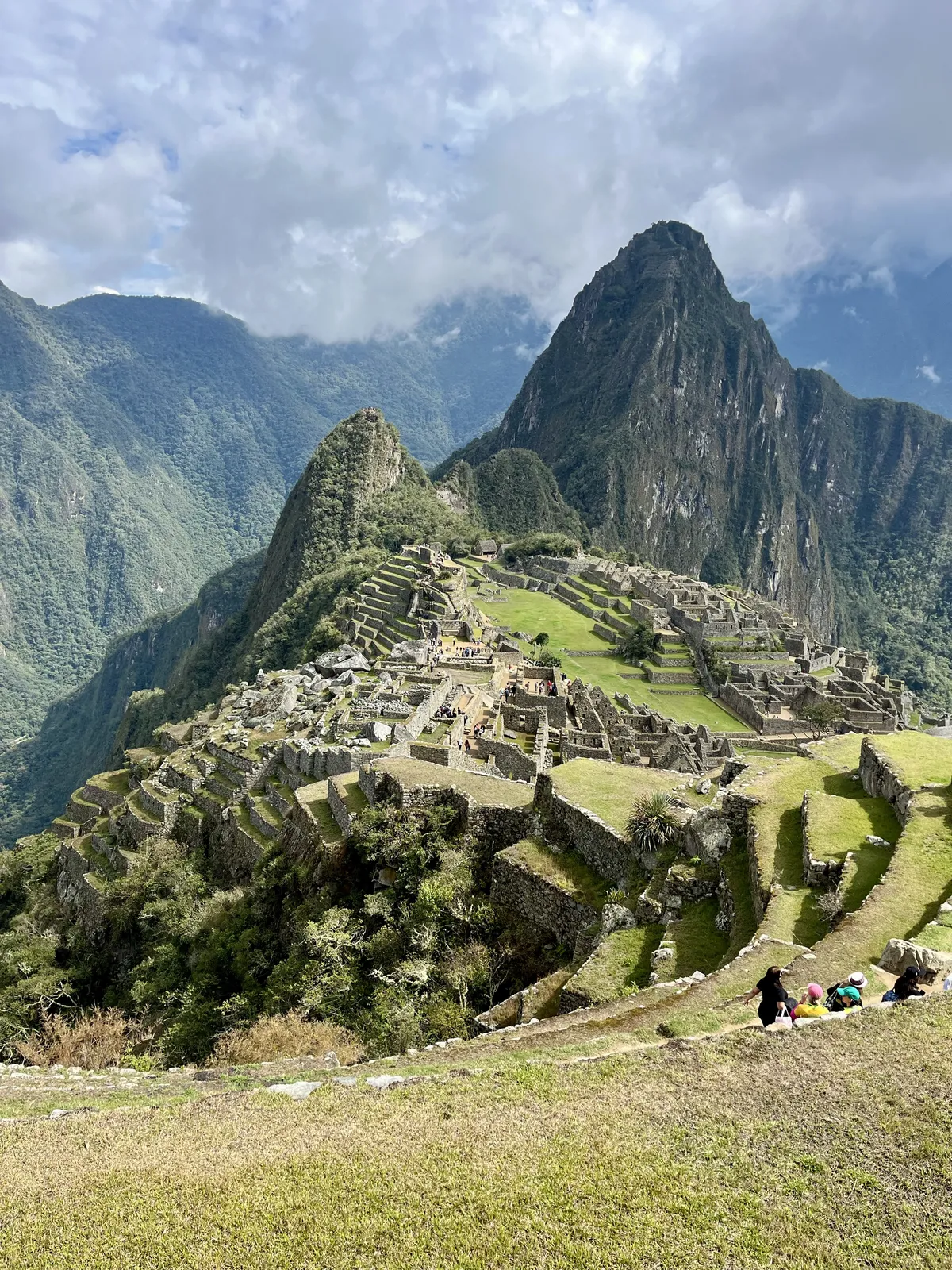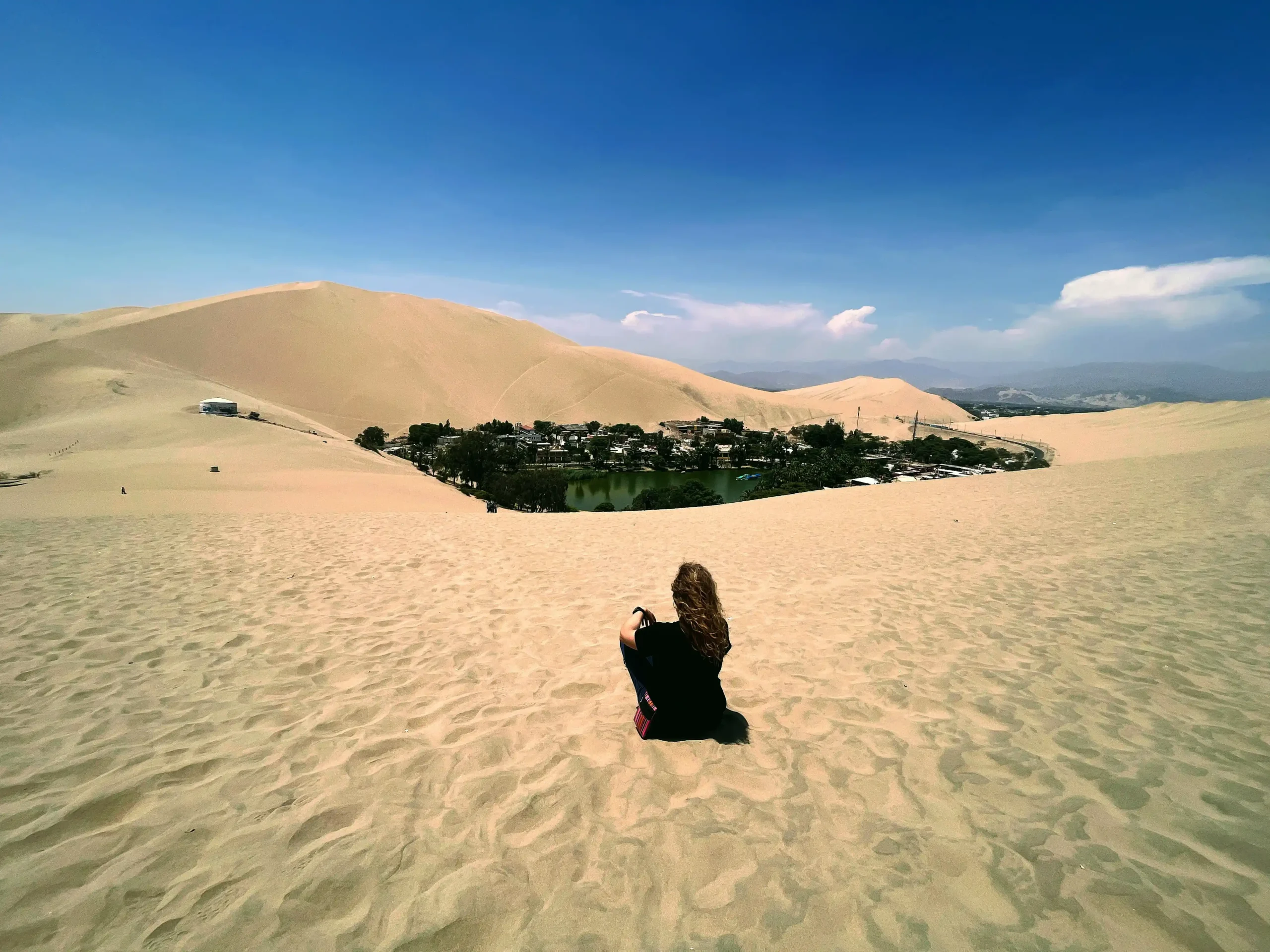
The first question that comes up when thinking about Peru is almost never “where will I sleep.” It’s “how much will this cost me.” And rightly so — a Peru trip isn’t a weekend in Kraków you plan over a lunch break. Here you need an international flight across half the world, domestic flights between regions, a train to Machu Picchu, permits, insurance and a few weeks of accommodation. The good news — when you break it all into parts, it turns out Peru is cheaper than many Western European destinations, and a 2–3 week trip fits into a very realistic budget.
Some links in this article are affiliate links. If you book through them I earn a small commission, at no extra cost to you.
Contents
- The short answer: how much a trip to Peru costs
- Flights from Europe — the biggest single expense
- Transport within Peru
- Domestic flights
- The train to Machu Picchu
- Andean Explorer — the train to Puno
- Buses and taxis
- Accommodation: from hostel to luxury
- Tours, permits and entries
- Inca Trail — the biggest tour line
- Other tours and entries
- Food: from a few euros to fine dining
- Insurance, visa and small expenses
- Travel insurance — not up for discussion
- Visa — free for EU citizens
- Small but real expenses
- Three budget examples for a 2–3 week trip
- Budget traveller — about 1,900–2,700 EUR
- Mid-range traveller — about 3,700–5,700 EUR
- Comfortable traveller — from ~6,300 EUR
- How to save without cutting the experience
- What all this means in practice
- FAQ
In this text I break down the whole Peru trip budget by category — flights, accommodation, transport within the country, tours and entries, food, insurance — and give three concrete overall examples for a 2–3 week trip: budget, mid-range and comfortable. All prices are taken from real Peru prices and given with numbers, so you can add up your own version rather than guess.
The short answer: how much a trip to Peru costs
If you just want a ballpark figure straight away — here it is. A 2–3 week trip for one person, including the international flight from Europe, domestic transport, accommodation, food, the main tours and insurance, fits roughly into these ranges:
| Travel style | Approx. per person (2–3 weeks) | Suits |
|---|---|---|
| Budget | ~1,900–2,700 EUR | Hostels, buses, street food, minimal luxury |
| Mid-range | ~3,700–5,700 EUR | Boutique hotels, some trains, restaurants, main tours |
| Comfort | ~6,300 EUR and up | Best hotels, luxury trains and lodges, fine dining |
The difference between the budget and comfort options is almost triple, and that’s no accident. Peru has a very wide price range: the same night in Cusco you can spend for 25 USD ≈ 20 € in a hostel or for 200 USD ≈ 180 € and up in a luxury old-town hotel. The same train to Machu Picchu can cost 50 USD ≈ 45 € or 450 USD ≈ 400 €, depending on the class. That’s exactly why one “right” figure doesn’t exist — it all depends on how you choose each part. So next we go through those parts one by one.
Flights from Europe — the biggest single expense
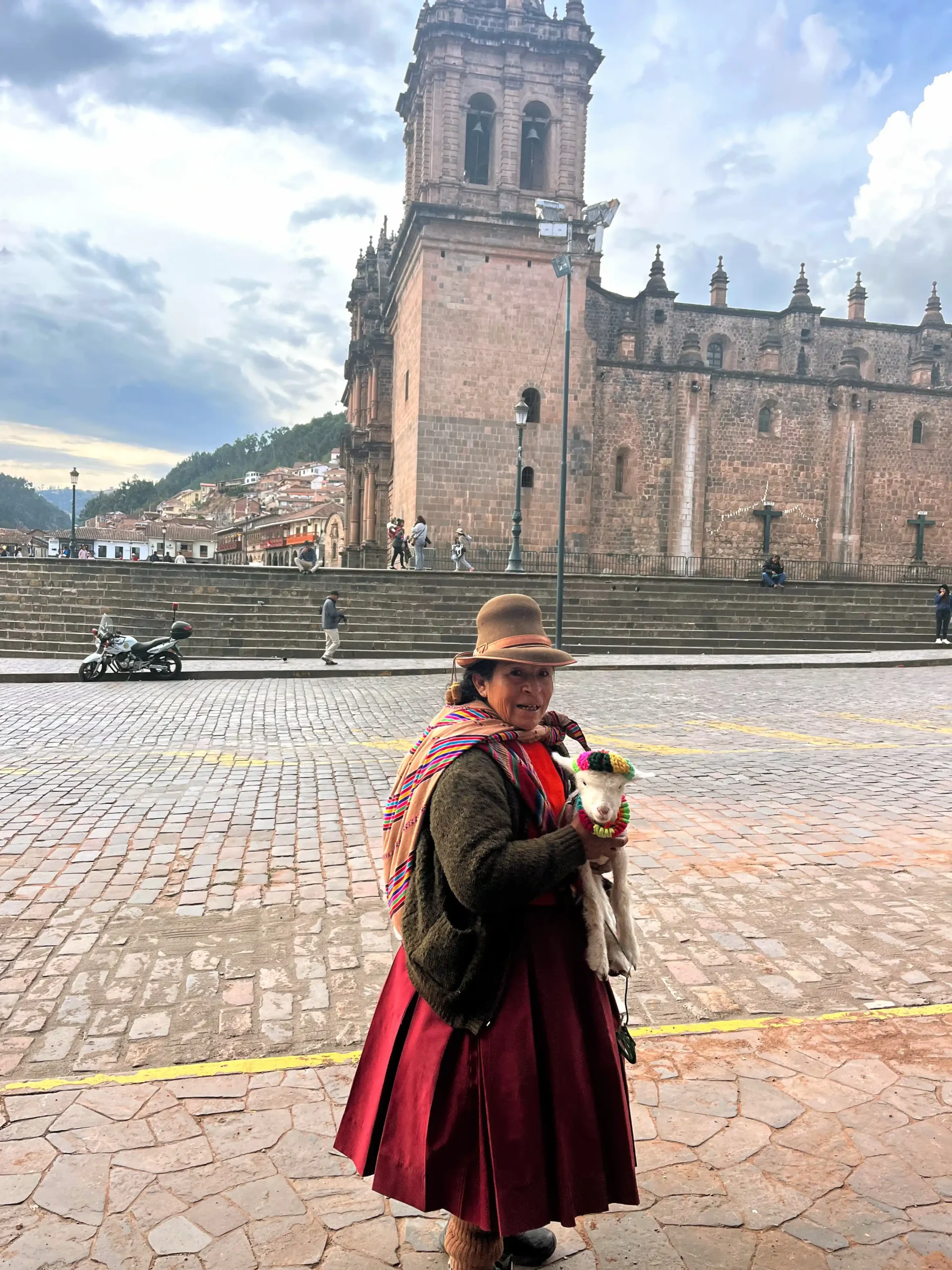
There are no direct flights from the Baltics (Vilnius or Riga) to Lima, so you always fly with 1–2 layovers — most often via Madrid, Amsterdam, Frankfurt or Paris. Madrid (Iberia, Air Europa) is one of the most convenient options, since the layover is short and the flight to Lima takes about 12 hours.
A return ticket from Vilnius to Lima costs 600–1,100 EUR, depending on the season and how early you book. You get the cheapest tickets 3–5 months before the trip while avoiding the summer peak. This is the single biggest line of your trip, so it’s worth spending time here — a difference of one week in the dates sometimes cuts off 150–200 EUR.
One nuance that costs you if you forget it: between the international flight to Lima and the domestic flight to Cusco, leave at least 4–5 hours. Cusco is sometimes delayed or closed due to mountain weather, and a missed domestic flight means extra costs and a ruined day.
Transport within Peru
Peru is big, and the distances between regions are huge. From Lima to Cusco by bus you’d travel 20–24 hours, so practically everyone uses domestic flights for the main hop and buses or trains for shorter distances. Here are the main transport prices.
Domestic flights
The main operators are LATAM Peru, Sky Airline and Star Peru. The Lima → Cusco flight takes about 1.5 hours.
- Lima → Cusco: 50–150 USD ≈ 135 € one way (price rises as the date approaches)
- Puerto Maldonado → Lima (after the Amazon): 60–130 USD ≈ 115 € one way
It’s worth booking domestic flights right after your international tickets — prices rise as the date approaches, and the same flight can cost half as much half a year out as two weeks out.
The train to Machu Picchu
Machu Picchu isn’t reachable by car — you get there either by the Inca Trail hike or by train from Cusco via Aguas Calientes. Two official operators (PeruRail and Inca Rail) run the same route, and the price depends heavily on the class.
| Class | What you get | Price (one way) |
|---|---|---|
| Expedition | Simple, functional, comfortable | ~50–70 USD ≈ 65 € |
| Vistadome | Panoramic windows, better views | ~70–100 USD ≈ 90 € |
| Hiram Bingham | Luxury — food, cocktails, service | ~400–500 USD ≈ 445 € |
For most travellers Expedition or Vistadome is a perfectly sufficient choice, and that’s what’s worth basing your budget on. The Hiram Bingham is a separate luxury that, for one ride, equals four days of accommodation. From Aguas Calientes to the Machu Picchu entrance itself there’s also a bus — about 12 USD ≈ 11 € round trip. If you plan to hike the Inca Trail, many of these costs will already be included — how exactly, I explain in the tours section, and the practice of how to reach Machu Picchu independently we’ve written up separately.
Andean Explorer — the train to Puno
The Cusco → Puno route is one of the most beautiful railway journeys in South America — the train climbs to the 4,319 m La Raya pass. The PeruRail Andean Explorer takes about 10 hours and costs 250–350 USD ≈ 315 € one way (with food in the carriage). It’s not cheap, but the journey itself is an experience. If your budget is tight, you can travel the same route by Cruz del Sur or Inka Express bus for 20–40 USD ≈ 35 € — a tenfold difference in money terms.
Buses and taxis
- Cusco → Puno (Cruz del Sur / Inka Express): 20–40 USD ≈ 35 €
- Puno → Arequipa: 20–40 USD ≈ 35 €
- Ica → Lima (after Huacachina): 25–35 USD ≈ 30 €
- Taxi / Uber from Lima airport to Miraflores: 25–35 USD ≈ 30 €
- Taxi from Cusco airport to the centre: ~4–5 USD ≈ 4 €
In the cities Uber works great and is safer and cheaper than a street taxi — use it in Lima, Cusco and Arequipa. For short distances in Cusco, Puno or Arequipa a mototaxi works (a few soles).
Accommodation: from hostel to luxury
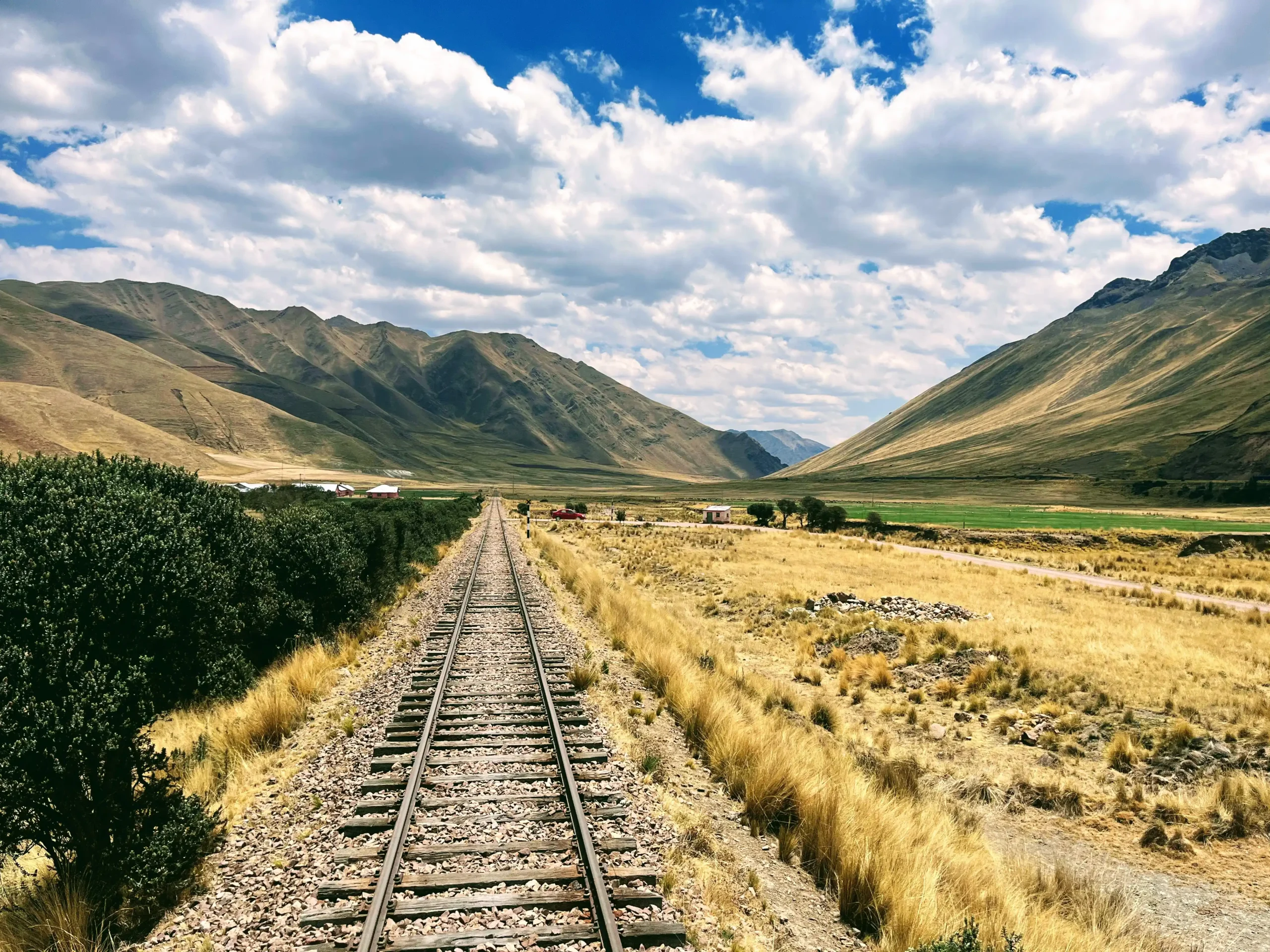
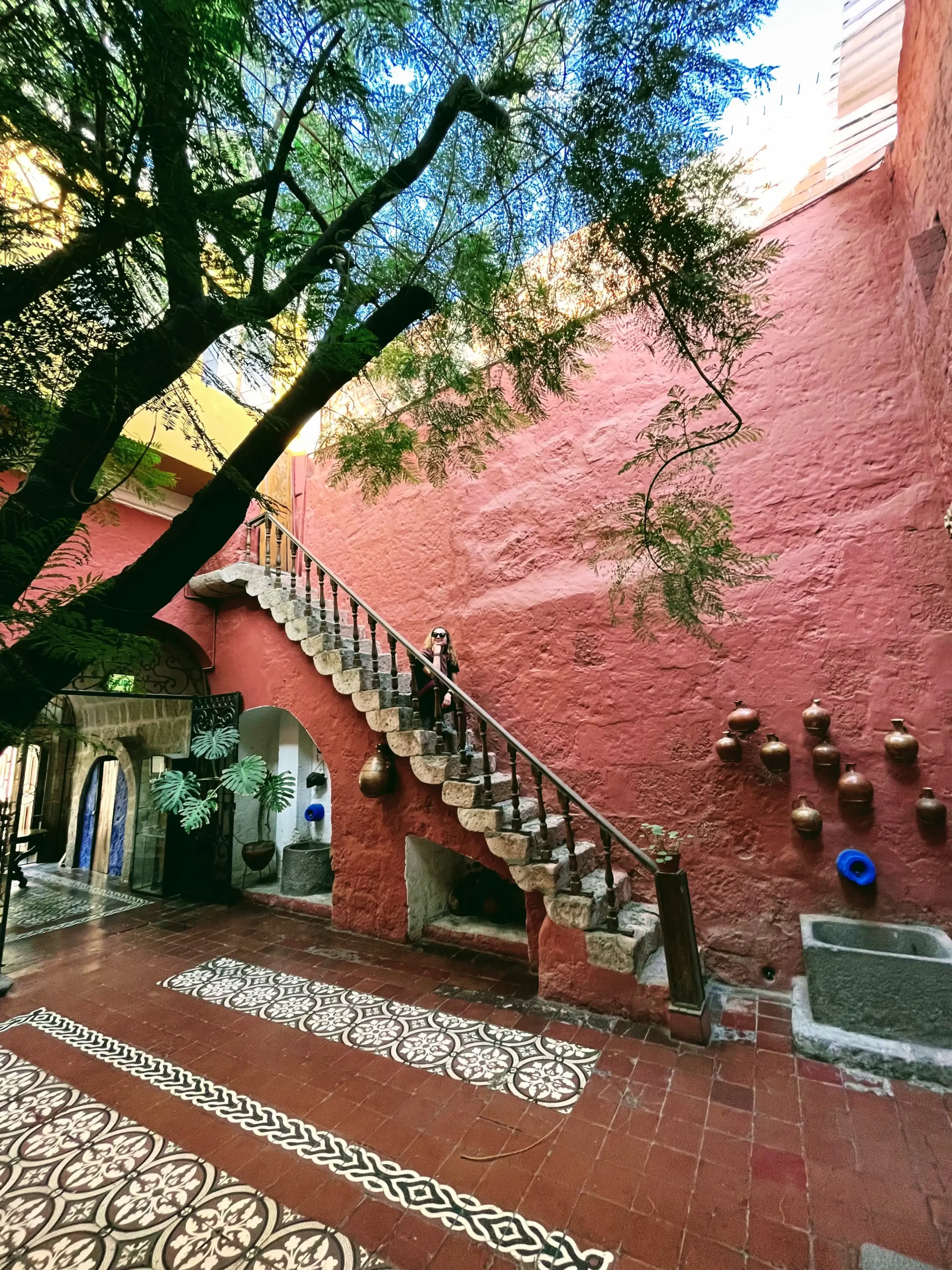
Accommodation is the second-biggest line after the flight, and it’s exactly where the budget is easiest to control. The same city offers three levels of price, and the difference between them is several times over. Below are prices per night in the main route cities by three categories. Find accommodation here.
| City | Budget (USD/night) | Mid-range (USD/night) | Luxury (USD/night) |
|---|---|---|---|
| Lima (Miraflores / Barranco) | 30–50 | 60–100 | 150+ |
| Cusco | 25–50 | 60–120 | 200+ |
| Puno | 20–40 | 50–90 | 120+ |
| Chivay (Colca Canyon) | 20–35 | 50–80 | 100–150 |
| Arequipa | 25–45 | 60–100 | 120+ |
| Aguas Calientes (after Inca Trail) | 35–50 | ~120 | ~200 |
A practical observation: if you choose the mid-range level (boutique hotels), you’ll realistically pay on average about 60–100 USD ≈ 90 € a night. A budget traveller staying in hostels keeps this line at 20–50 USD ≈ 45 €. In Lima choose the Miraflores or Barranco districts — safe and convenient; avoid Centro Histórico for sleeping. In Cusco stay as close to the Plaza de Armas as possible, especially on the first day, when the 3,400 m altitude is felt right away.
An Amazon lodge is a separate category — here you pay not for a “bed” per night but for the whole package: airport transfer, three meals a day and guided excursions. A lodge costs from 150 to 350 USD ≈ 315 € a night, and almost everything is included. A cheaper alternative is a stay in a local community, which is part of an organised Amazon tour.
Tours, permits and entries
This is a category people often forget to include in the budget — and then are surprised on the ground. Peru’s golden lines (Inca Trail, Machu Picchu, Rainbow Mountain, Titicaca, Colca Canyon, the Amazon) are almost always visited with organised tours or require entry tickets. Added together, they come to a significant sum — worth calculating in advance.
Inca Trail — the biggest tour line
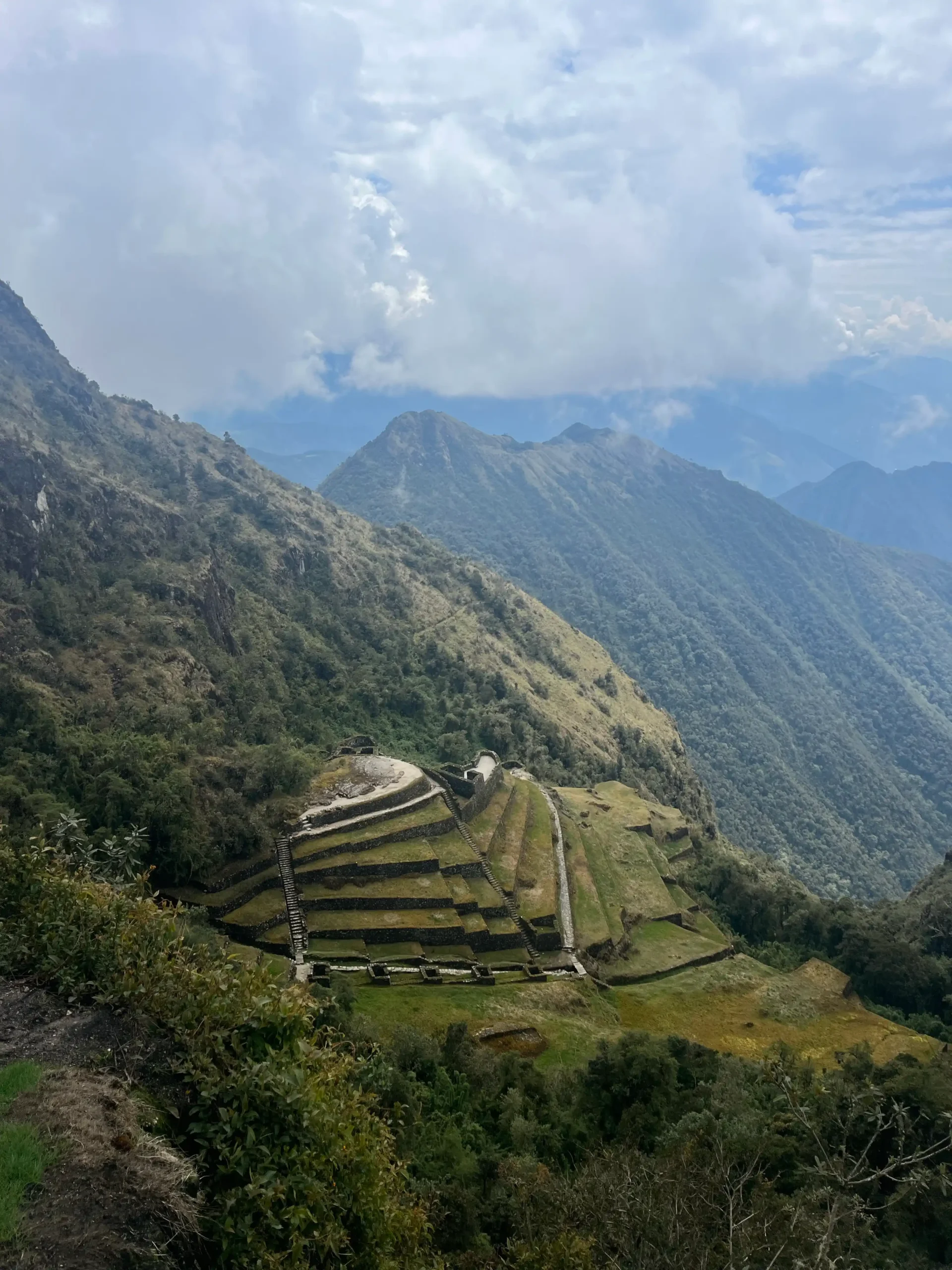
A 4-day Inca Trail hike with a licensed agency costs 800–1,400 USD ≈ 1 250 €, and almost everything is included: transfer from Cusco, an English-speaking guide, a porter (carries up to ~7 kg of your luggage), tents and sleeping bags, all meals three times a day, the Inca Trail permit and even the Machu Picchu ticket. That explains why for Inca Trail travellers the train and entry lines look smaller — some of them are already “hidden” in the hike price.
Important: permits are extremely limited (500 people a day, including guides and porters), so you need to book 3–6 months ahead, and in peak season they sell out within minutes. Add tips for the porters and guide to the price — about 20–30 USD ≈ 25 € at the end is recommended. All the logistics of how to book and what to expect, we’ve written up in the guide on Inca Trail permits.
Other tours and entries
If you don’t choose the Inca Trail (or choose a shorter route), you buy the Machu Picchu ticket separately — 45–60 USD ≈ 55 € depending on the type, only through the official site machupicchu.gob.pe. Below are the prices of the main tours and entries worth having in a table.
| Experience | Price | What’s included |
|---|---|---|
| Machu Picchu ticket | ~45–60 USD ≈ 55 € | Entry (time slot), without Inca Trail |
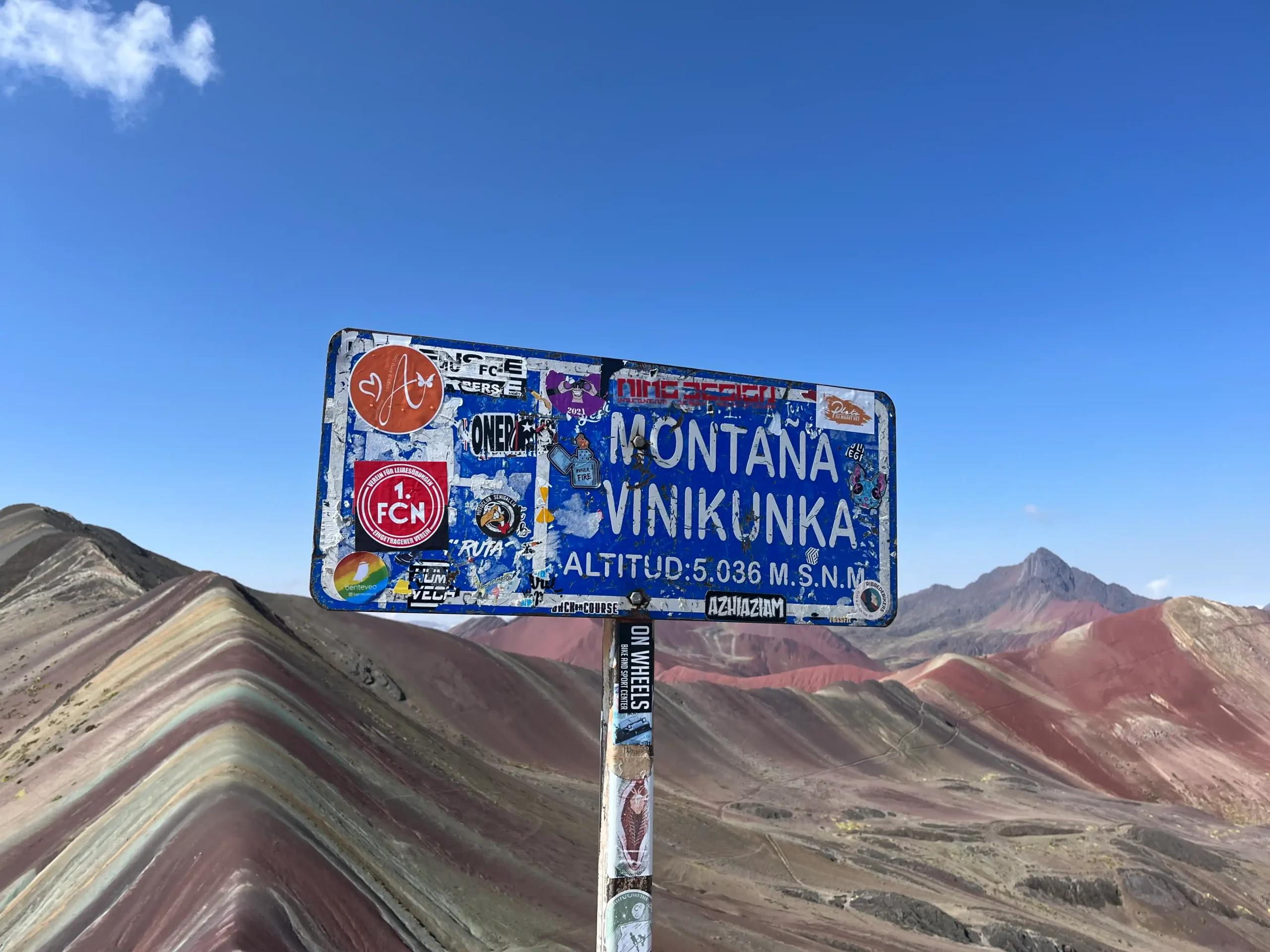
| Rainbow Mountain (Vinicunca) | 50–80 USD ≈ 70 € | Transport + guide (horse extra 20–30 USD ≈ 25 €) |
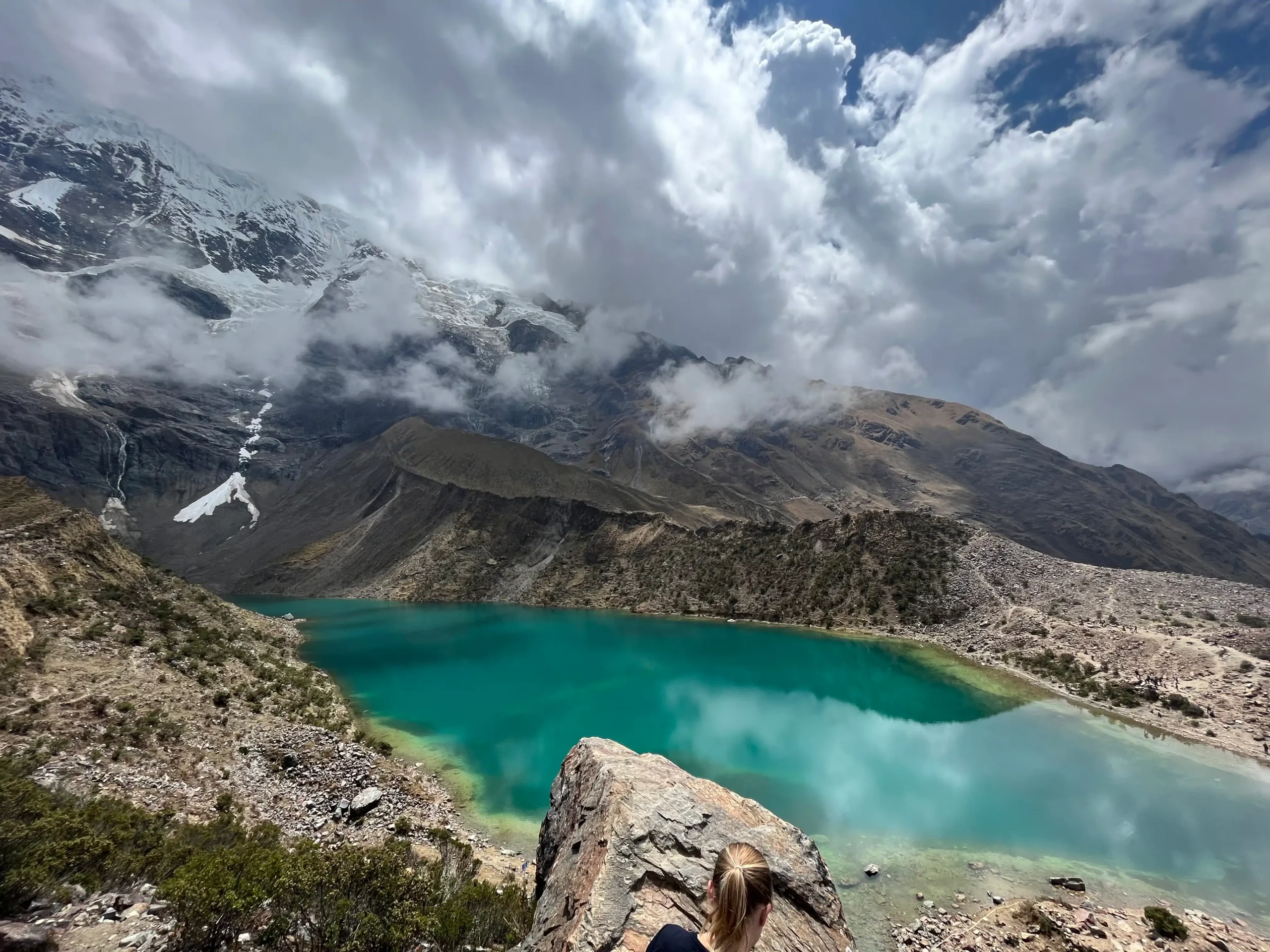
| Humantay Lake | 30–50 USD ≈ 45 € | Transport + guide |
| Lake Titicaca (Uros + Taquile) | 25–45 USD ≈ 40 € | Boat + guide + entries |
| Colca Canyon (2 days) | 60–100 USD ≈ 90 € | Transport, guide, accommodation, breakfast |
| Amazon in a community (2 days) | 80–150 USD ≈ 135 € | Transport, guide, accommodation, food |
| Paracas + Huacachina (1 day) | 50–80 USD ≈ 70 € | Transport, guide, Ballestas boat |
| Cusco Tourist Ticket | ~34 USD ≈ 30 € | Sacsayhuamán and other sites |
| Santa Catalina Monastery (Arequipa) | ~12 USD ≈ 11 € | Entry |
| Cruz del Condor entry | ~5 USD ≈ 4 € | Colca Canyon viewpoint |
Adding up the main route tours (without the Inca Trail), you realistically come to 250–450 USD ≈ 400 € per person, depending on how many places you visit. Some experiences, for example the Miraflores Malecón coastline in Lima or the Yanahuara viewpoint in Arequipa, are completely free — this balances the budget line a little. More on individual places — in the guide about Lake Titicaca and Puno.
Food: from a few euros to fine dining
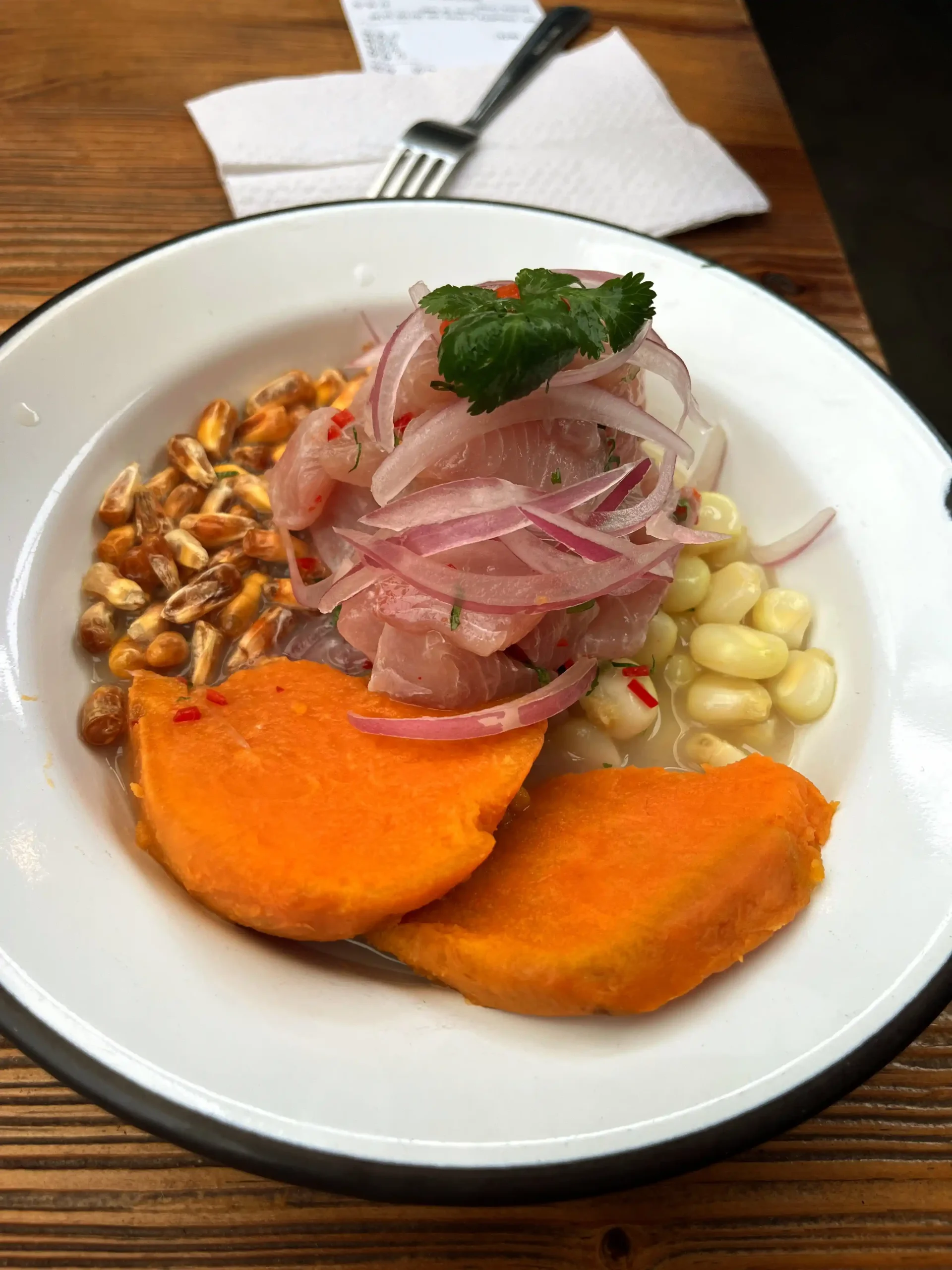
Here’s one of the best Peru news for the budget: you can eat well very cheaply. Peru has one of the world’s best food scenes, but that doesn’t mean every dish is expensive. On the contrary — street food and local lunches are both authentic and affordable.
- Lunch menu (menú del día) in Cusco or Lima — soup, main course and a drink for ~3–4 USD ≈ 4 €
- Dinner at a mid-range restaurant — ~8–16 USD ≈ 14 € per person
- A good ceviche restaurant (e.g. La Mar in Lima) — ~16–21 USD ≈ 19 € per person
- Pisco sour at a bar — ~4–7 USD ≈ 6 €
- Water (600 ml) — ~0.25–0.50 USD
Realistically, a budget traveller’s daily food budget is about 10–15 USD ≈ 13 € if eating at markets and street stands. Mid-range — 20–35 USD with restaurants. At the other pole — fine dining: a tasting menu at the world-class restaurant “Central” in Lima costs about 79–105 USD, but that’s a one-off celebration, not everyday. One important safety nuance that indirectly touches the budget too: don’t drink tap water anywhere in Peru, not even in Lima — always bottled or filtered.
Insurance, visa and small expenses
Travel insurance — not up for discussion
For Peru, insurance isn’t an “if there’s money left” thing. Medical evacuation from the Inca Trail or Rainbow Mountain by helicopter costs thousands of euros, and without insurance you’d cover that sum yourself. The main thing — that the policy covers medical evacuation and high-altitude trekking (standard insurance often doesn’t cover high-altitude hikes — check the terms separately). It’s also useful to insure flight cancellation and lost luggage, since Peru’s domestic flights are delayed more often than in Europe. Recommended insurers with high-altitude coverage — World Nomads, Allianz Travel, AXA. Compare the terms before buying.
Visa — free for EU citizens
Good news for the budget: EU citizens don’t need a visa for Peru — you can enter for up to 90 days for tourism. That means you don’t need to include any visa fee in your calculations. All you need is a valid passport (recommended valid for at least 6 months from your return) and a return ticket. Details on documents, vaccinations and health we’ve gathered in the Peru entry guide.
Small but real expenses
- eSIM plan — ~4–7 USD
- Tips for Inca Trail porters and guide — ~20–30 USD at the end
- Restaurant tips — about 10% (appreciated, not mandatory)
- Souvenirs at markets — as needed (haggling applies at the Pisac or San Pedro markets)
- A symbolic fee for a photo with locals in traditional dress — ~0.25 USD
One practical thing about money: Peru still operates very much in cash. Small shops, markets, street food, mototaxis and entry fees in many places — cash only. At an ATM (BCP, Interbank, Scotiabank) withdraw enough soles, and small notes (5, 10, 20 S/) are very useful — markets often don’t have change for 100 S/. Rough rate — 1 EUR ≈ 4.0–4.2 soles, 1 USD ≈ 3.7–3.9 soles. Before heading out on the Inca Trail be sure to take cash — there are no ATMs on the mountain.
Three budget examples for a 2–3 week trip
Now let’s put it all together. Below are three concrete examples for one person on roughly a 2–3 week trip along the main route (Lima, Cusco, Machu Picchu, Rainbow Mountain, Titicaca, Colca Canyon, Arequipa, Amazon, Huacachina). The numbers are rounded and indicative — they’re meant to show the proportions, not to be exact to the euro.
Budget traveller — about 1,900–2,700 EUR
| Category | Approx. sum |
|---|---|
| International flight | ~600–800 EUR |
| Domestic flights (2) | ~120–250 USD |
| Accommodation (hostels, ~18 nights) | ~450–650 USD |
| Transport within the country (buses, taxis) | ~120–180 USD |
| Tours and entries (without Inca Trail; Machu Picchu by train) | ~350–500 USD |
| Food (~12–15 USD/day) | ~250–320 USD |
| Insurance | ~60–120 EUR |
The budget style means hostels, buses instead of luxury trains, street food and Machu Picchu by train (Expedition class) instead of the expensive Inca Trail. It’s a completely full trip — just without the extra luxury.
Mid-range traveller — about 3,700–5,700 EUR
| Category | Approx. sum |
|---|---|
| International flight | ~700–1,100 EUR |
| Domestic flights (2) | ~200–280 USD |
| Accommodation (boutique hotels, ~18 nights) | ~1,100–1,600 USD |
| Inca Trail (4 days, all included) | ~800–1,400 USD |
| Transport (part by train, part by bus) | ~250–400 USD |
| Remaining tours and entries | ~250–400 USD |
| Food (~25–35 USD/day, restaurants) | ~500–700 USD |
| Insurance | ~80–150 EUR |
This is the most realistic scenario for most travellers: comfortable boutique hotels, the Inca Trail instead of the train, restaurants instead of street food, and part of the journey by luxury train (e.g. the Andean Explorer to Puno). Here you get most of the Peru experience without extreme luxury.
Comfortable traveller — from ~6,300 EUR
| Category | Approx. sum |
|---|---|
| International flight | ~1,000–1,100 EUR (or a higher class) |
| Domestic flights (2) | ~250–300 USD |
| Accommodation (best hotels, ~18 nights) | ~3,000–4,000 USD |
| Luxury Amazon lodge (a few nights) | ~600–1,000 USD |
| Top-class trains (Vistadome / Andean Explorer) | ~500–800 USD |
| Private / guided tours | ~500–800 USD |
| Food (fine dining, including “Central”) | ~700–1,000 USD |
| Insurance (comprehensive) | ~150 EUR |
The comfort style is a luxury Amazon lodge (Inkaterra Reserva Amazónica up to 350 USD a night), top-class hotels in the old towns, fine-dining restaurants and private tours. The sum quickly crosses the 6,300 EUR mark, especially if you travel as a pair and choose double luxury rooms.
How to save without cutting the experience
The biggest difference in a budget often comes not from what you give up, but from how you plan. Here are a few places where you save real money without much compromise:
- Buy flights early. The international ticket 3–5 months out, and book the domestic flights right after it. It’s the single biggest line, and here time turns directly into money.
- Choose the bus over the luxury train on Cusco–Puno. The Andean Explorer costs 250–350 USD, the bus 20–40 USD. If the route itself isn’t your priority, you’ll save hundreds here.
- Eat where the locals eat. The menú del día for 3–4 USD is not only cheap but authentic. Leave fine dining for one evening as a celebration.
- Travel off-peak. In the rainy season (November–April) prices are lower and there are fewer tourists — in the Amazon it’s even a better time. When to go depends on your route.
- Use cash and haggle at markets. Start at 50–60% of the stated price at souvenir markets — it’s common practice, not rudeness.
Where NOT to save: insurance (especially high-altitude coverage), the days set aside for acclimatisation in Cusco, and safety on night transport. These are three places where saving means risking the trip itself. Altitude is worth reading about separately — it affects both route planning and the budget through extra overnight stays.
What all this means in practice
A Peru trip isn’t as cheap as a weekend in Europe, but it’s also not a luxury destination reachable only by the wealthy. The most realistic mid-range budget for 2–3 weeks is about 3,700–5,700 EUR per person with the flight, and for that money you get one of the most varied trips in the world: Inca heritage, the Andes mountains, the Amazon jungle, a desert oasis and one of the best food scenes. If you’re still hesitating between neighbouring destinations, compare whether Peru or Bolivia is the better choice. A budget traveller covers the same route for roughly 1,900–2,700 EUR, and a comfort lover easily crosses the 6,300 EUR mark.
The best way to prepare is to add up your own version using the tables above, taking into account your route’s length and style. Once you have a number, all that’s left is logistics: flights, permits, bookings. All the stages from idea to departure we’ve gathered in the main Peru travel guide with Machu Picchu, the Amazon and practical tips — start there if you want the full picture in one place.
FAQ
What’s the minimum a trip to Peru from Europe costs?
The most frugal realistic option for a 2–3 week trip for one person is about 1,900–2,700 EUR. That includes the international flight (~600–800 EUR), hostel accommodation, buses instead of luxury trains, street food, the main tours and insurance. You won’t manage much cheaper, since the flight and visiting Machu Picchu and other main sites are fixed large expenses.
Is Peru expensive compared to Europe?
The country’s everyday life — food, bus transport, accommodation — is cheaper than in Western Europe. Lunch costs 3–4 USD, a hostel in Cusco from 25 USD. The most expensive part is the international flight and the main experiences (Inca Trail, trains, tours). Overall a 2–3 week trip to Peru can cost the same or even less than a week in an expensive European city.
How much cash to bring to Peru?
Peru operates in cash only in many places — markets, street food, mototaxis, entry fees. It’s most convenient to withdraw cash (soles) at a bank or ATM on the ground (BCP, Interbank, Scotiabank) rather than changing money on the street. It’s worth always having small notes (5, 10, 20 S/), since traders often don’t have change for 100 S/. Before the Inca Trail, be sure to take enough cash — there are no ATMs on the mountain.
How much does it cost to get into Machu Picchu?
The Machu Picchu entry ticket itself costs 45–60 USD depending on the type (bought only through machupicchu.gob.pe). Add the train from Cusco (50–150 USD one way by class) and the bus from Aguas Calientes (~12 USD round trip). If you choose the Inca Trail (800–1,400 USD), the train and Machu Picchu ticket are usually already included in the hike price.
Is it worth paying for the luxury train to Machu Picchu and Puno?
It depends on whether the route is an experience for you or just a means of getting there. To Machu Picchu, the Expedition (50–70 USD) and Vistadome (70–100 USD) classes are perfectly sufficient. The Hiram Bingham (400–500 USD) is a separate luxury. To Puno, the Andean Explorer (250–350 USD) is a stunning route, but you can travel the same road by bus for 20–40 USD. If your budget is tight, leave the luxury train as a one-off highlight, not a rule.
Do you need insurance and how much does it cost?
Insurance for a Peru trip is essential, not optional. Medical evacuation from high altitude by helicopter costs thousands of euros, so the policy must cover medical evacuation and high-altitude trekking (standard insurance often doesn’t cover the latter). You need to check the terms separately and, if needed, add extra cover. Recommended insurers with the right coverage — World Nomads, Allianz Travel, AXA.
Search for flights here. If something goes wrong with your flights, you can claim compensation through AirHelp or Compensair.
I always recommend booking taxi transfers to and from the airports in advance. You can do that here.
Travel Without Chaos: Peru — Classic 20-Day Itinerary Without a Car (+ Inca Trail)
Classic 20-Day Trip to Peru — Complete PDF Guide