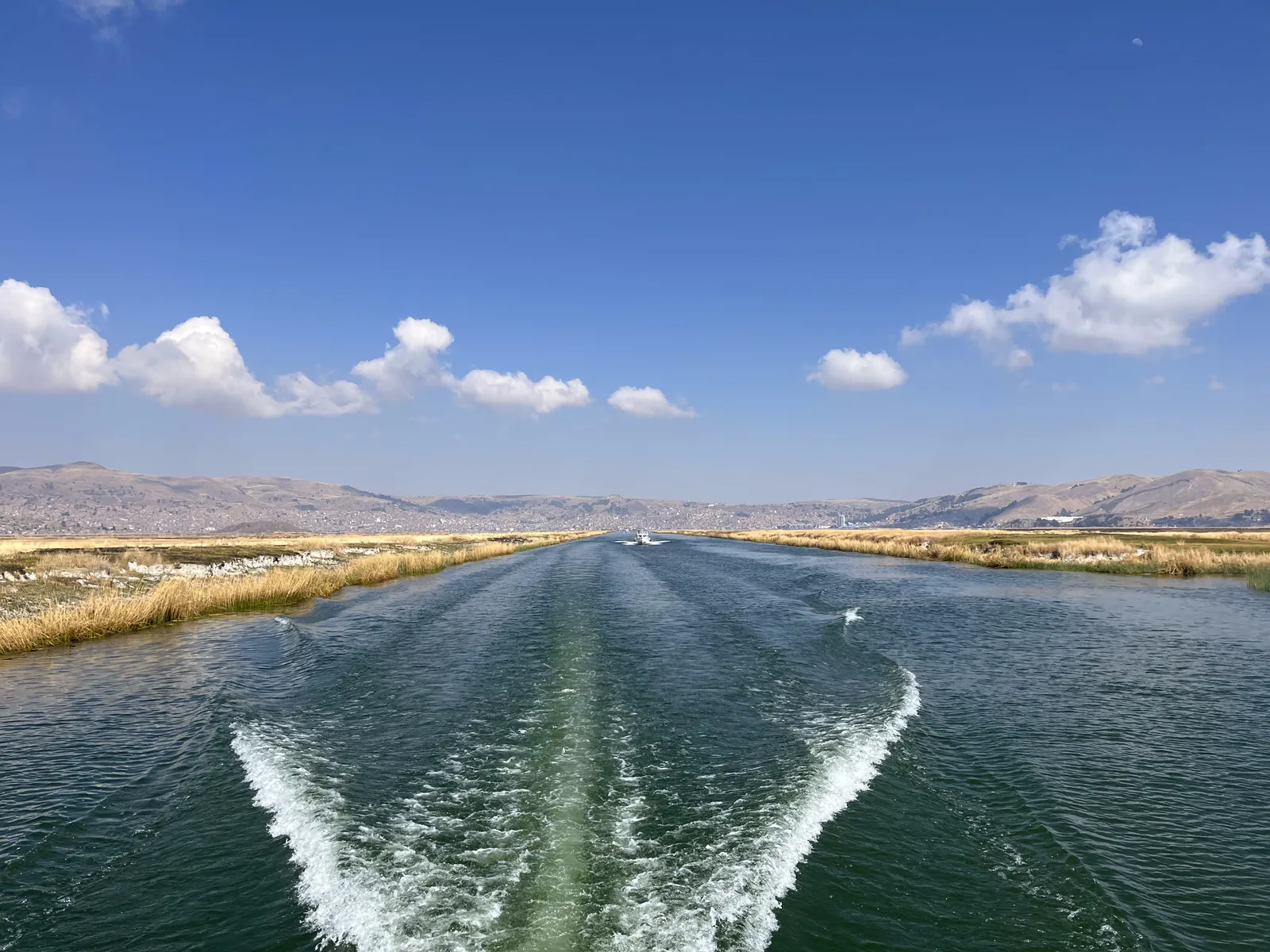
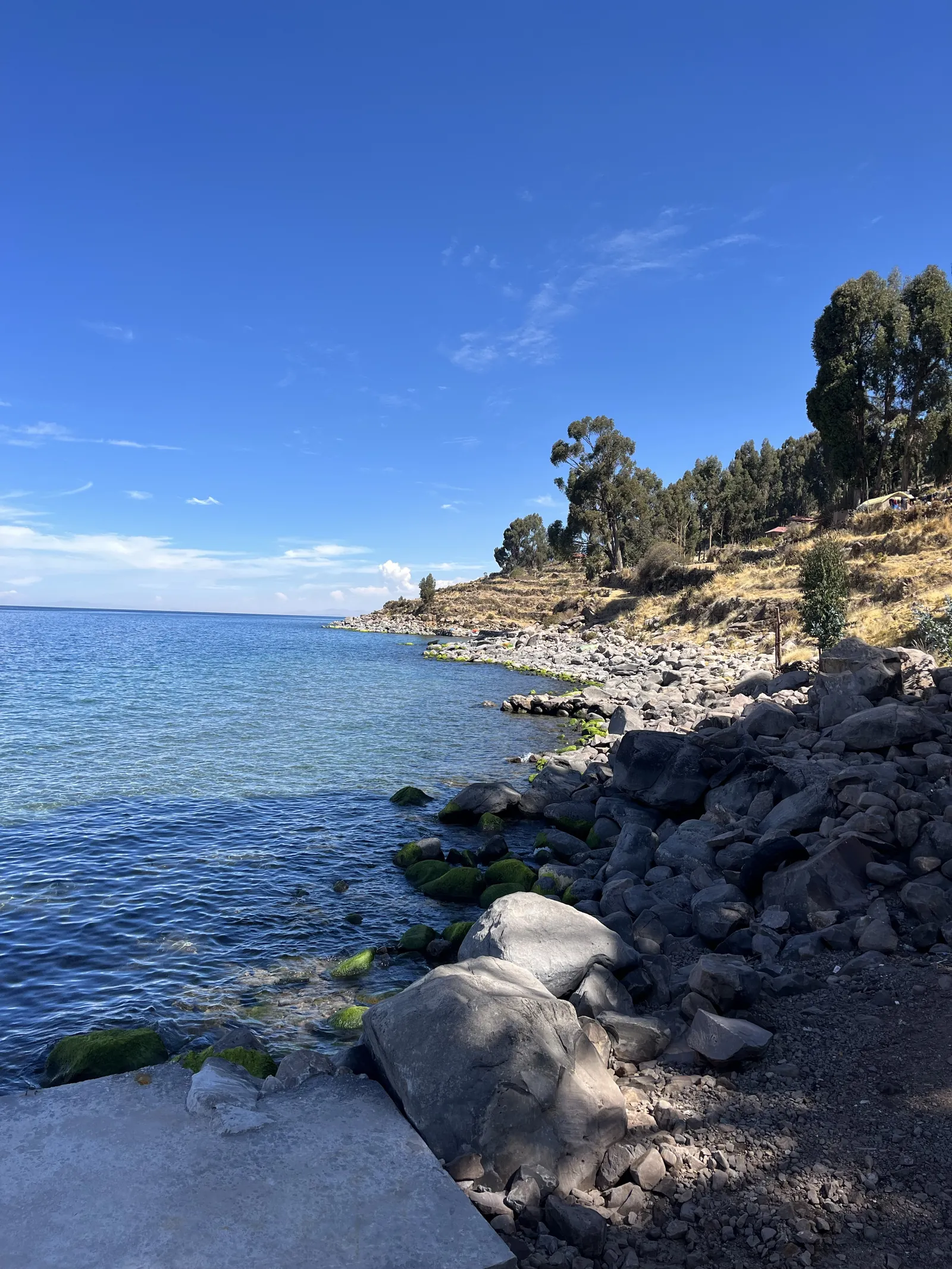
Lake Titicaca is one of those places where photos simply don’t tell the truth. You stand at 3,812 metres, looking at water that stretches so far you can’t see the other shore, and you think — this isn’t a lake, this is a sea. The highest navigable lake in the world. It’s also shared by two countries, so if you’re weighing up Peru or Bolivia, this is one of those places you’ll see on both sides. On it float islands made of reeds where people have lived for centuries, and on a neighbouring island men knit sweaters that tell you whether they’re married. If you’re planning a Peru route and wondering whether it’s worth going to Puno — it is. In this text I’ve laid out everything you need: how to get there, what to see, how much it costs and how many days to give it.
Some links in this article are affiliate links. If you book through them I earn a small commission, at no extra cost to you.
Contents
- How to reach Puno: train or bus
- PeruRail Andean Explorer — the train as an experience
- The bus — cheap and still beautiful
- Train vs bus — a comparison
- Altitude 3,812 m: what to know about Puno
- The Uros floating islands
- Taquile Island: where the men knit
- A day on the lake: what the excursion looks like
- How many days to give Titicaca and Puno
- How Titicaca connects into the Peru route
- When is the best time to go to Titicaca
- FAQ
Puno is a city on the shore of Titicaca that isn’t a beauty in itself (it’s a city, not a resort), but it’s the gateway to the lake and a convenient stopover between Cusco and Arequipa. If you want to see the full context — how Titicaca weaves into a longer Peru route — see the main Peru travel guide.
How to reach Puno: train or bus
Most travellers arrive in Puno from Cusco, and here you need to make one decision that affects both your budget and your experience: train or bus. Both options run the same route through the Andean highlands, but the price difference is tenfold, and the feeling is completely different.
PeruRail Andean Explorer — the train as an experience
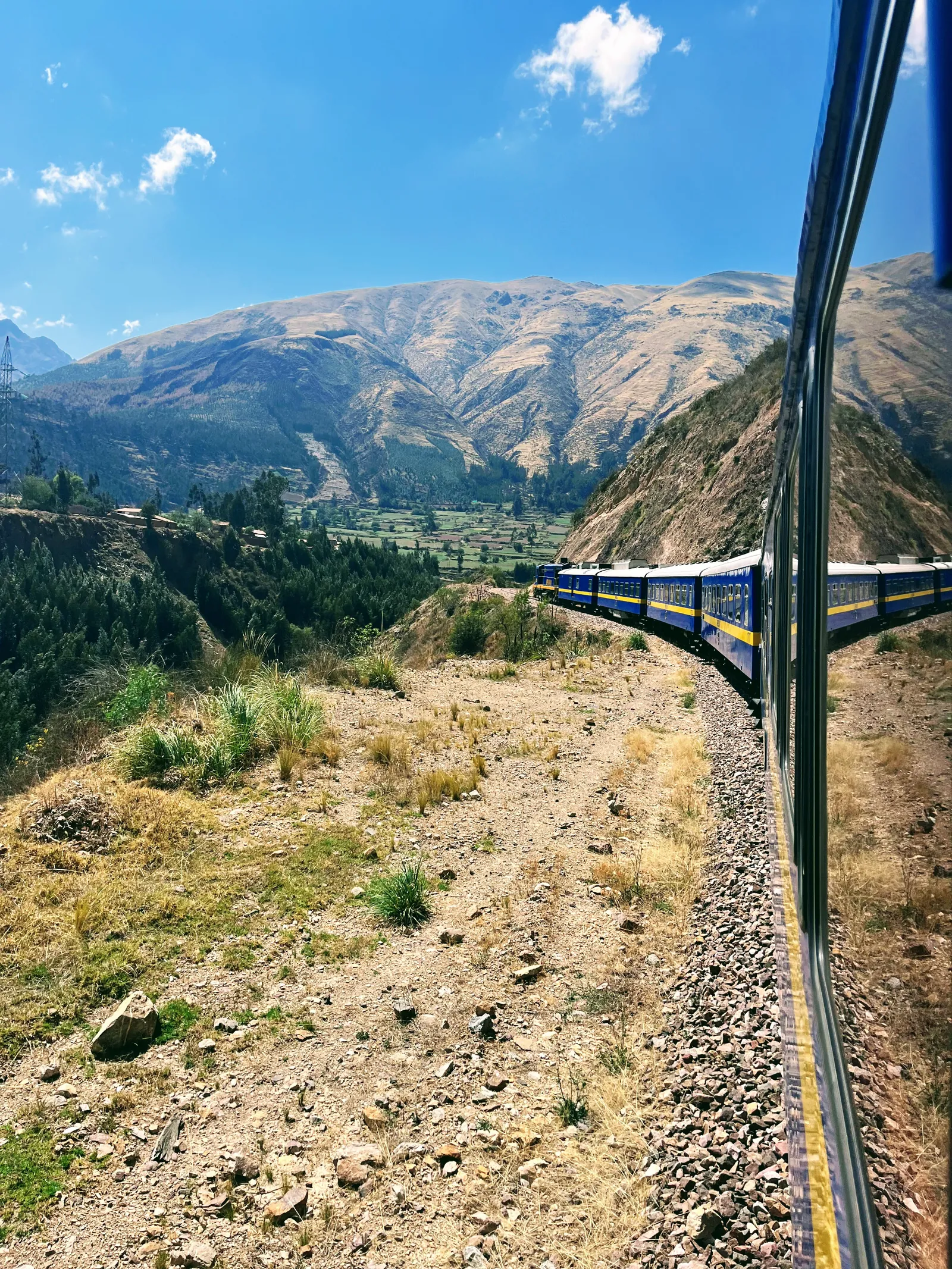
The Andean Explorer is a luxury panoramic train running the Cusco–Puno route. The journey takes about 10 hours, and it’s not the kind you want to end sooner. The train leaves in the morning from Poroy station (a 15-minute taxi from Cusco centre), climbs to the La Raya pass at 4,319 metres — the highest point of the whole trip — and descends to Puno at 3,812 metres.
At the La Raya pass the train stops for barely a minute. You step out, the air is thin, and all around — only the Andes. It’s one of those moments that needs no plan. Along the way you see local communities, llamas, mist-wrapped peaks. The train itself has panoramic windows, a dining car with local dishes, a cocktail car and an open observation deck. Meals — breakfast and lunch — are included in the ticket price.
The one-way price is about 250–350 USD ≈ 315 €. That’s a fair amount, and no one will pretend it’s cheap. But if the budget allows, the route itself replaces a separate excursion. Important: the Andean Explorer doesn’t run daily, so check the schedule in advance and book your ticket through perurail.com 1–2 months ahead — seats are few.
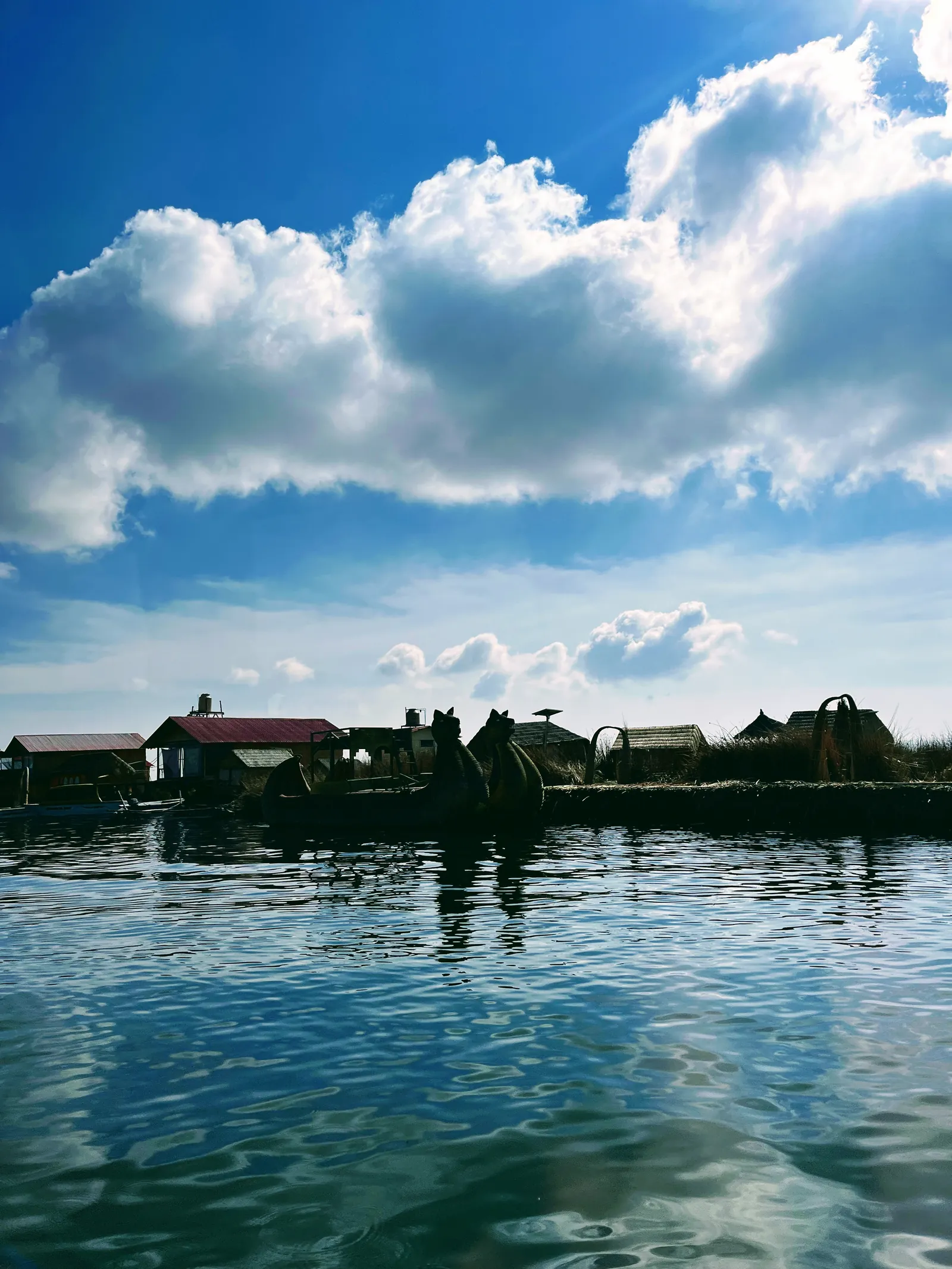
You see Titicaca for the first time through the train window — and immediately understand why it’s called a sea. So big you can’t find the other shore. Water so blue it doesn’t look real.
The bus — cheap and still beautiful
If the train price doesn’t fit your budget, the bus runs the same route for less money. You have two sensible options:
Cruz del Sur — the most reliable bus operator in Peru. Clean buses, several classes, running on time. The faster and simpler option without long stops. Book through cruzdelsur.com.pe.
Inka Express — a tourist bus on the Cusco–Puno route with stops at historic sites along the way: Raqchi, the La Raya pass, Pukara. The journey takes about 8 hours, but you don’t just ride — you see places you wouldn’t get close to by train. If time allows, this is the most valuable bus option.
Train vs bus — a comparison
| Option | Duration | Price (one way) | Suits |
|---|---|---|---|
| PeruRail Andean Explorer | ~10 h | ~250–350 USD ≈ 315 € | Those for whom the journey itself is the goal |
| Inka Express (tourist) | ~8 h | Much cheaper than the train | Those who want to stop at Raqchi, La Raya, Pukara |
| Cruz del Sur | ~7 h | Much cheaper than the train | Those who want fast and reliable |
My advice: if this is your only chance to see the Andean landscapes from the railway, and the budget allows — choose the train. If you’ll put the money to better use elsewhere on the route, Inka Express with stops is excellent value. Cruz del Sur — when you just want to get to Puno quickly.
One more detail worth noting when planning. The train and the tourist bus take you over roughly the same altitude (the La Raya pass is 4,319 m), so if you’re sensitive to altitude, the stop at the pass can be harder — don’t rush up the stairs in the dining car and don’t make sudden movements. By bus, the stops at the Raqchi temple ruins and the Pukara museum give you a chance to get out, move and breathe — sometimes that’s even more pleasant than sitting in one place for 10 hours. In the end both options bring you to the same point: Puno on the shore of Titicaca, by evening.
Altitude 3,812 m: what to know about Puno
Puno sits at 3,812 metres — higher than Cusco (3,400 m). If you arrive in Puno after a few days in Cusco and the Sacred Valley, your body will already be adjusted, and you shouldn’t feel much discomfort. But altitude is still a serious factor: the air is thin, physical effort tires you faster, and the nights are cold.
If you haven’t yet spent a few days at altitude before Puno, you may feel altitude sickness symptoms — headache, breathlessness, insomnia. How to prepare for them and what to do if they strike, I’ve described in detail in a separate text on altitude sickness in Peru. The short version for Puno: drink plenty of water, don’t eat heavily on the first evening, avoid alcohol, and coca tea is offered in almost every hotel — drink it freely.
One more thing people don’t expect: Taquile Island, which you’ll visit on the lake, is at 3,950 metres — higher than Puno itself. The climb to the island’s top by stairs is small, but because of the thin air, climb slowly. Central Puno is safe by day; just avoid dark streets at night.
The Uros floating islands
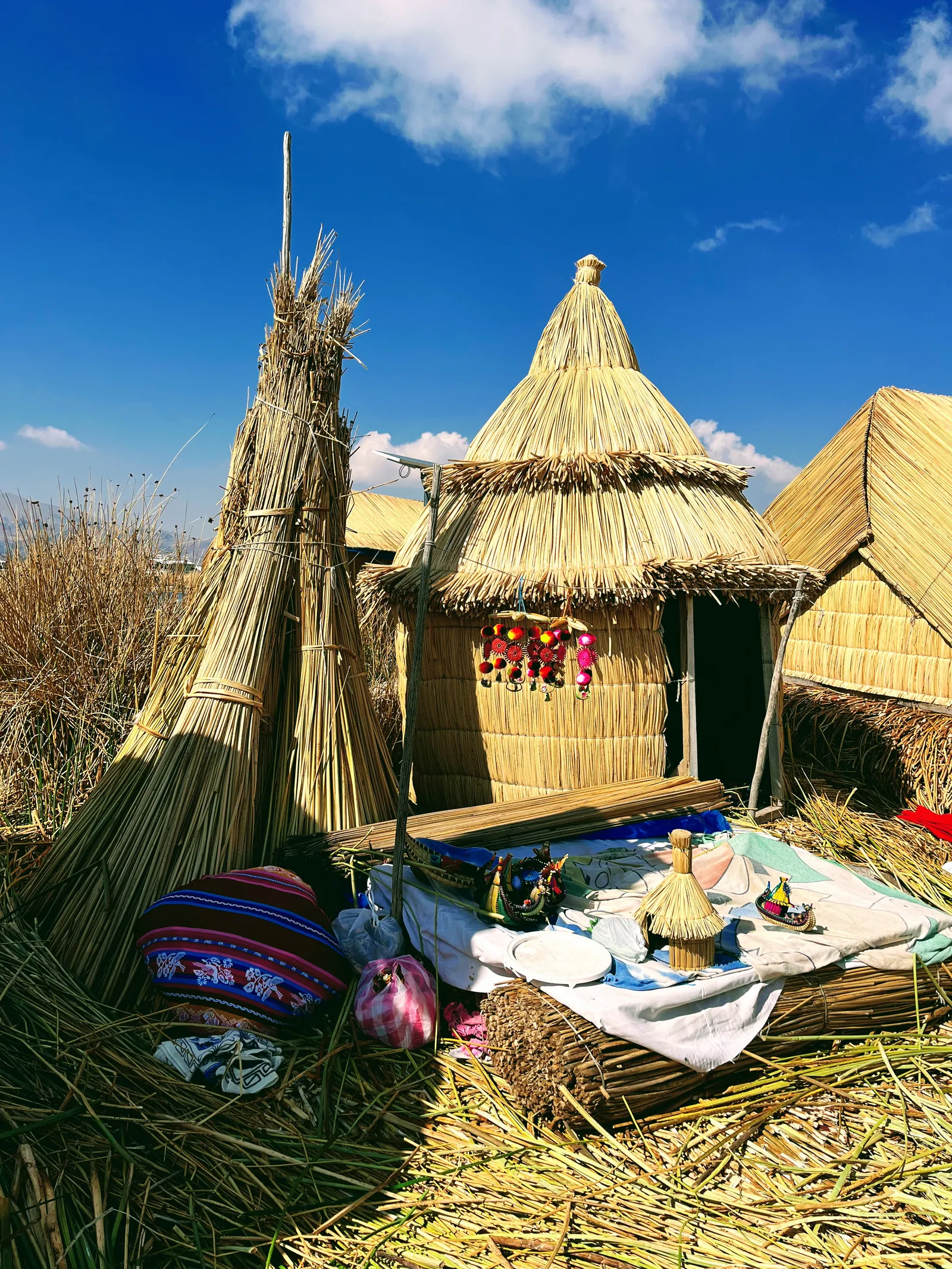
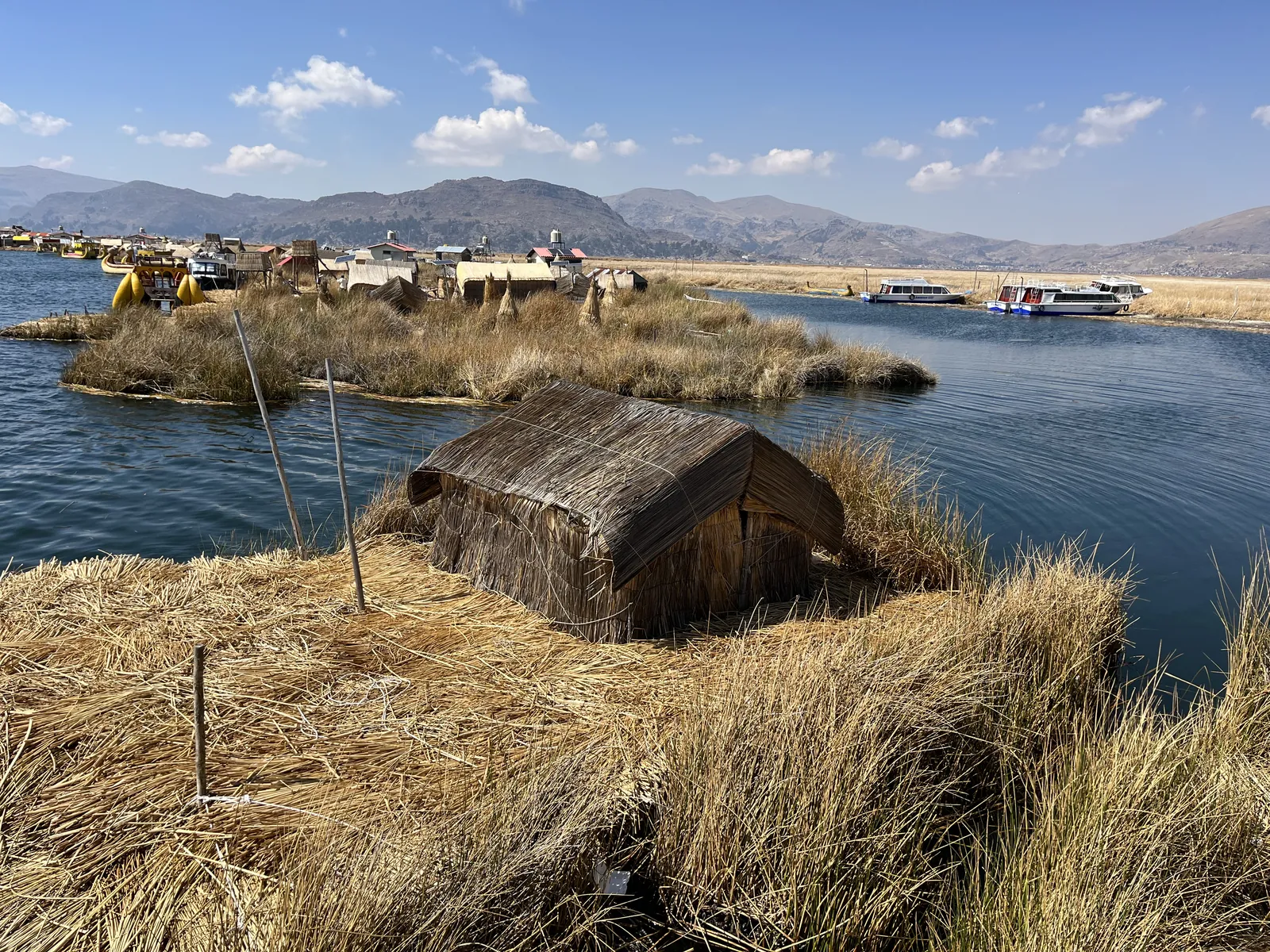
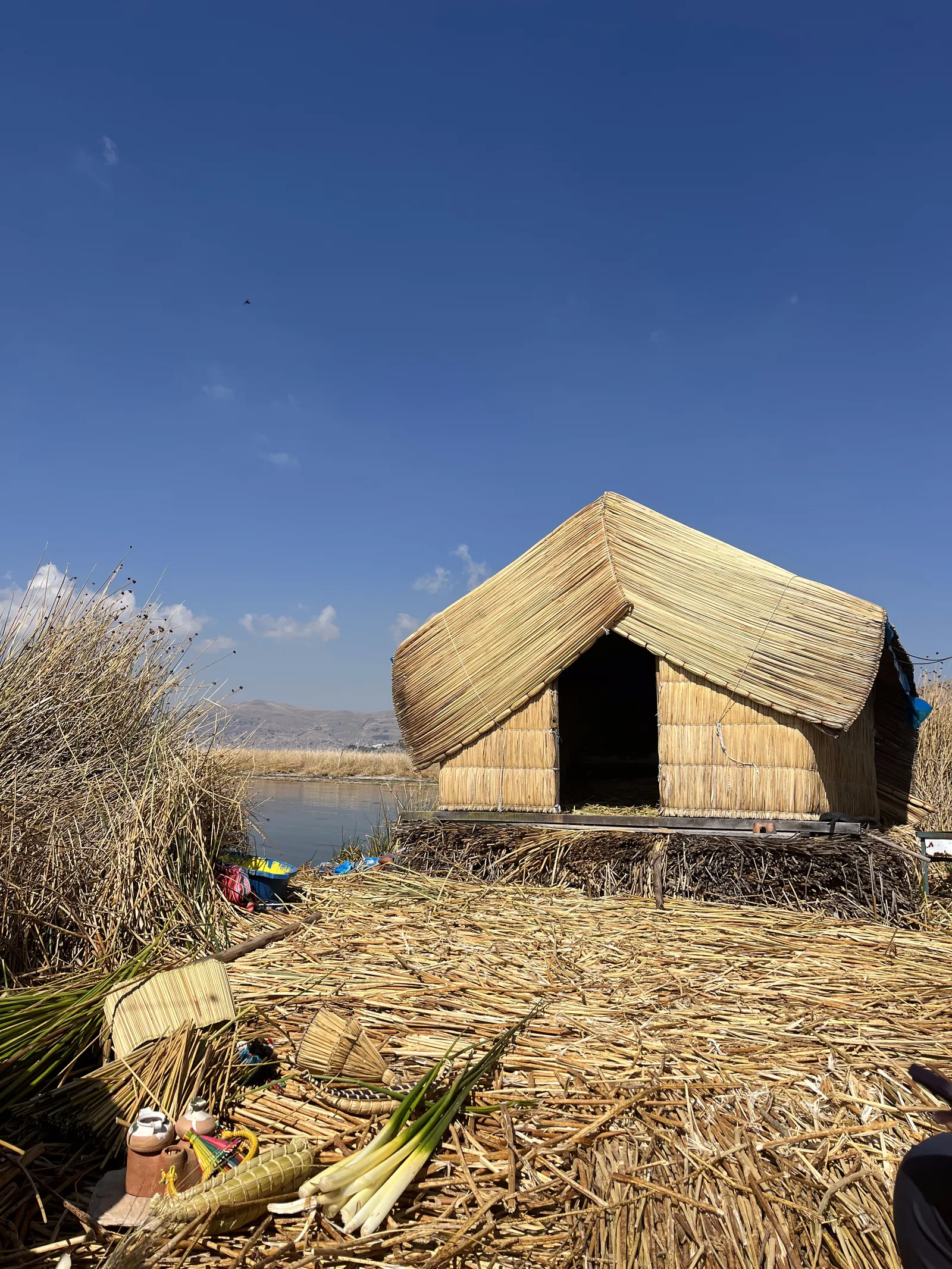
The Uros islands are the first stop on the lake and perhaps the most unexpected. They’re about 80 artificial islands made of totora reeds, floating on the lake’s surface. The Uros people have lived here for centuries — at first hiding from the Incas. Since the reeds gradually rot, the islands are constantly renewed by laying on new layers.
When you step onto an island, you feel a springiness underfoot — it’s not solid ground but a plant carpet over the water. The sensation is strange and memorable. The islands are reached by boat from Puno harbour in about 30 minutes, and this is usually included in an organised lake excursion.
Let’s be honest: the Uros islands are partly a tourist attraction, and you’ll feel it. But when you talk to the locals through the guide, you understand that people really do live here, not just for tourists. Children go to school, elders weave, the lake is their home, transport and food all at once. It’s worth seeing.
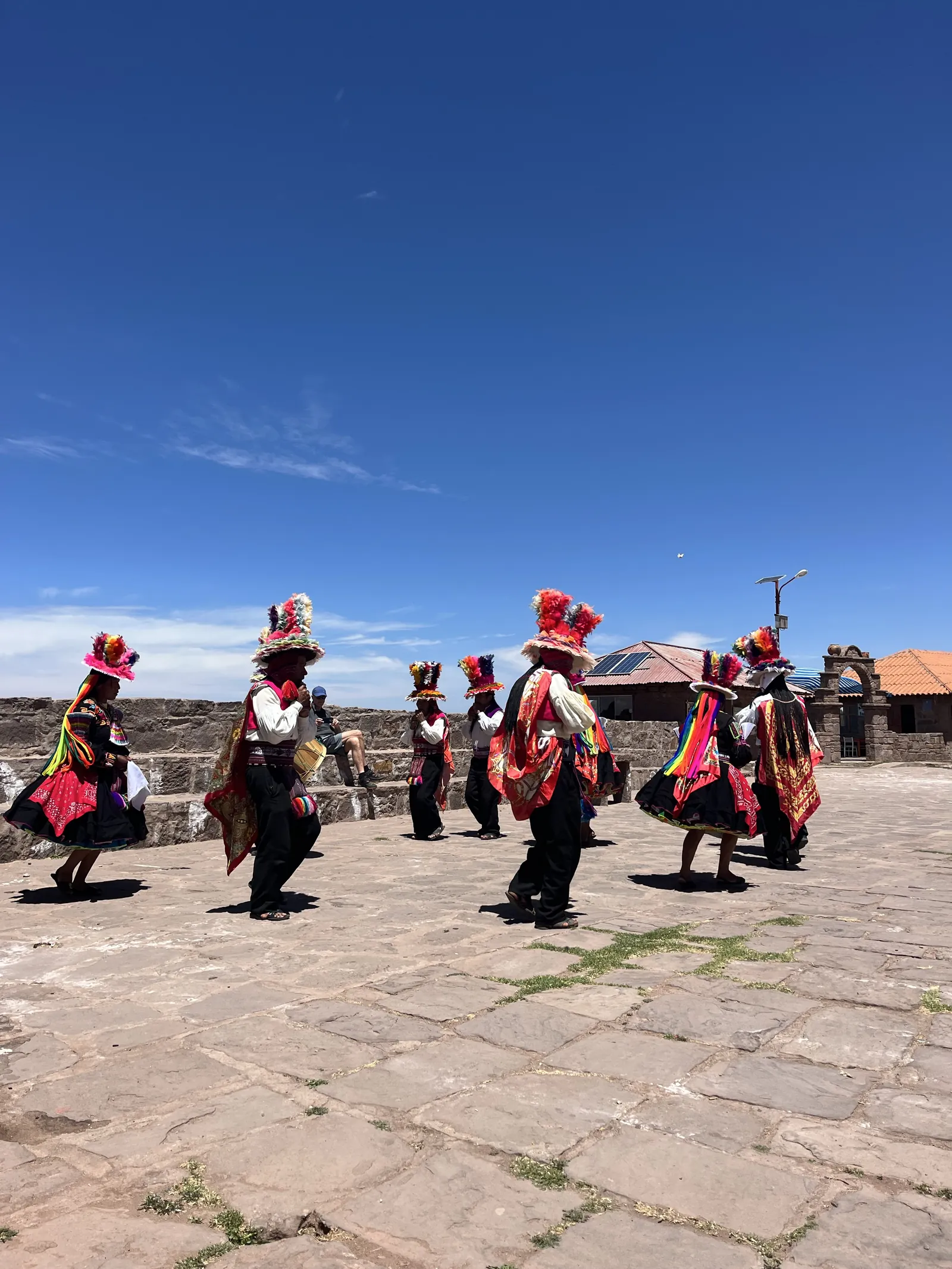
One point of etiquette worth remembering everywhere in the Andes: before photographing locals — especially women in traditional dress — ask permission. A small symbolic fee for a photo is often expected, and that’s normal. When buying souvenirs straight from island residents, know that the money stays with the community, so if you like something, buy it freely. Souvenirs here are usually more expensive than at Puno market, but you’re buying straight from the maker, not a reseller.
Taquile Island: where the men knit
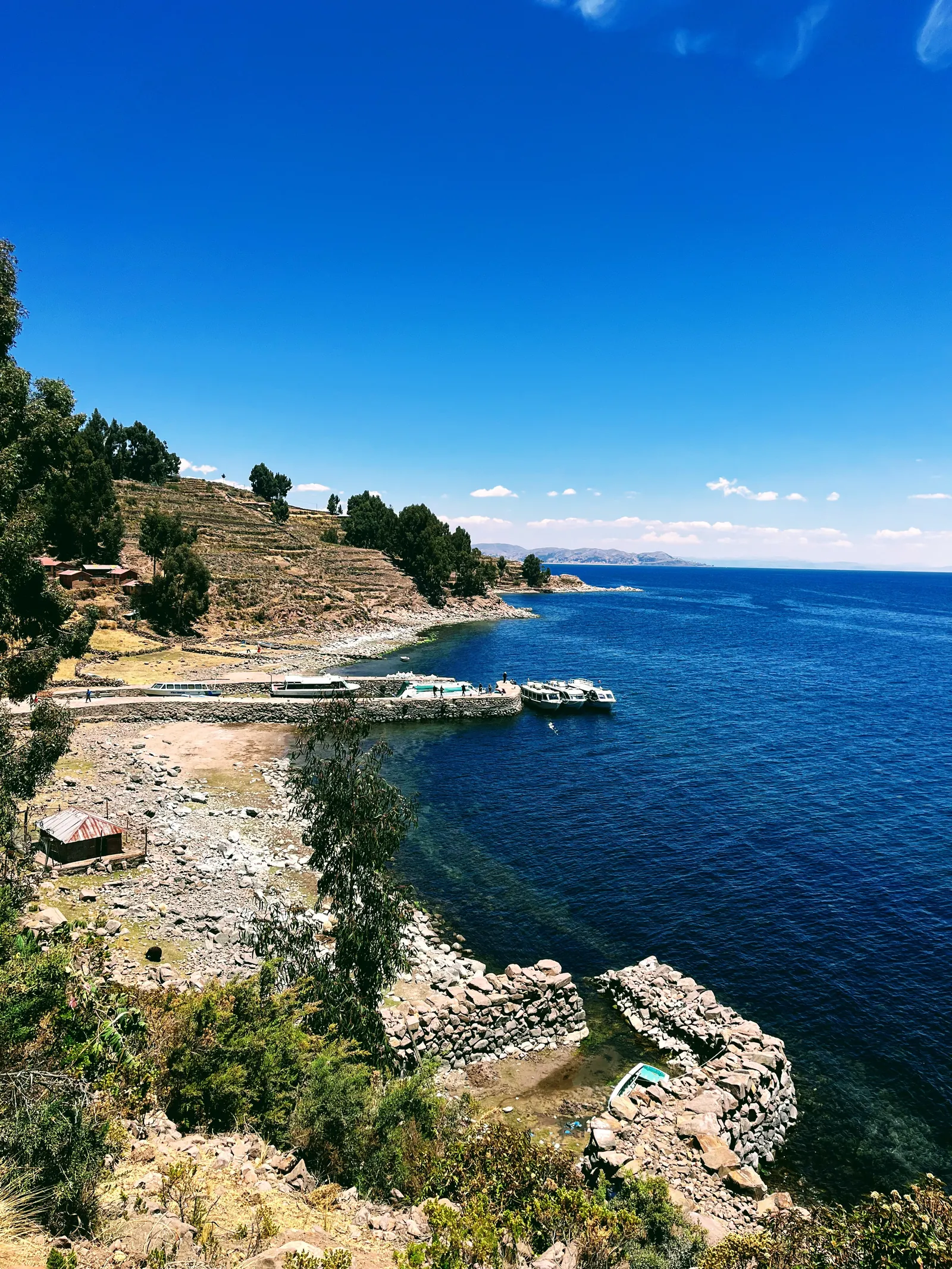
Taquile is the complete opposite of the Uros islands. It’s a real island — not floating, but solid ground — with about 2,200 residents, at 3,950 metres. From Puno you reach it by boat in about 2 hours. And although the sail is long, the view from the island’s top over the waters of Titicaca compensates for everything.
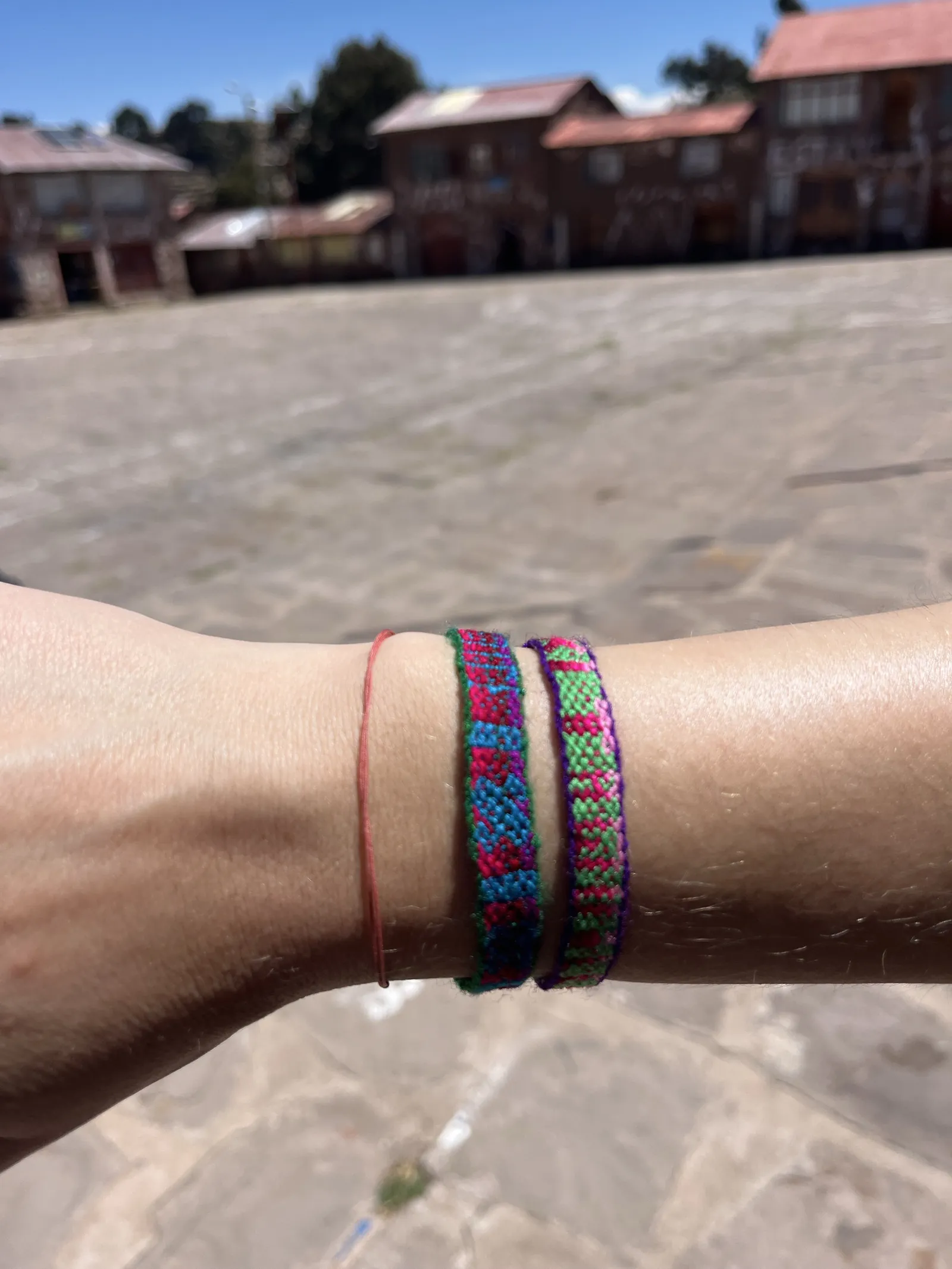
The most interesting thing on Taquile is the textiles. UNESCO recognised the local weaving and knitting tradition as intangible heritage of humanity. And here’s the key detail: it’s the men who knit, not the women. The hats and belts the men knit aren’t just clothing — their patterns and colours tell whether a person is married, their social status and connection to the community. Watching a man walk the island knitting in his hands is one of those moments that stay in memory longer than any photo.
On the island you’ll have lunch at a local restaurant — usually trucha (trout) and quinoa soup. The food is simple, but the place makes it special. The climb to the island goes by stairs; because of the altitude, take it slowly and all will be well.
A day on the lake: what the excursion looks like
The classic way to see both islands is one day with an organised boat excursion from Puno harbour. It combines Uros and Taquile, and these are two completely different worlds in a single day.
The whole excursion — boat, guide and entries — costs about 25–45 USD ≈ 40 €. Lunch on Taquile Island adds another 5–8 USD ≈ 7 €, and souvenirs (if you decide to buy) about 5–13 USD ≈ 12 €.
A practical tip on the boat: dress in layers and don’t forget sun protection. At 3,812 metres on the water, the UV intensity is twice as high as at sea level, and the wind off the lake chills you even when the sun is beating down. A wide hat, sunglasses and SPF50+ cream aren’t excessive caution but a necessity.
One more thing no one warns you about: the day on the lake is long. You set off at half past seven in the morning, return at six in the evening, and spend most of the time on the boat, sailing between islands. It isn’t a physically tiring day, but it’s long, so take water, a snack and something to shield you from the wind. Charge your phone the evening before — you’ll take lots of photos, and there’s nowhere to charge on the boat. And don’t forget cash: the toilets on the islands, souvenirs and lunch are usually paid in soles, not by card.
Book the excursion here.
How many days to give Titicaca and Puno
The short answer: two days is enough, and realistically you don’t need more. Day one — arrival in Puno (by train or bus from Cusco, the journey takes almost the whole day). Day two — the lake excursion to the Uros and Taquile islands. Then you can travel on.
Day 1: journey Cusco → Puno (train or bus), an evening by the lake, dinner with trucha
Day 2: a full-day lake excursion — the Uros islands and Taquile Island
Optional (not required): if you want to stay overnight with a local family on Amantani Island, add one more day to the route
The most convenient place to stay is near Plaza de Armas or the lakeshore. Prices vary widely: a budget hotel ~20–40 USD ≈ 35 € (for example, Mada Guest House), mid-range ~50–90 USD ≈ 80 € (for example, Casa Andina Standard Puno), and luxury over 120 USD ≈ 105 € (GHL Hotel Lago Titicaca stands right by the lake).
If you want to look for hotels yourself, click here.
Don’t forget one thing when planning: the arrival day by train practically disappears. The Andean Explorer rolls from eight in the morning to six in the evening, so you reach Puno at dusk, and that day leaves room for only a short walk by the lake and dinner. So always plan the lake excursion for the next day, not the same one. If time on the route is short and you want to save a day, the early-morning Cusco–Puno bus lets you arrive earlier, but the lake day still stays separate.
How Titicaca connects into the Peru route
Puno logically slots into the classic southern Peru route between two other important stops. The scheme is simple: Cusco → Puno → Arequipa. From Cusco you arrive by train or bus, spend a day on the lake, and then travel toward Arequipa.
- Before it — Cusco and the Sacred Valley, the former capital of the Inca empire and the gateway to Machu Picchu.
- Titicaca — Puno, the Uros and Taquile islands, two or three days at altitude.
- After that — the road to Arequipa. From Puno to Arequipa it’s about 5–6 hours (Cruz del Sur).
- Along the way — a popular option is an organised two-day excursion from Puno through Colca Canyon with an overnight in Chivay and an end in Arequipa. That way you travel and see the condors in one go.
This arrangement means Titicaca doesn’t become a separate, hard-to-reach trip — it weaves naturally into the Peru route between Cusco and Arequipa, and from Puno you can head straight toward Colca Canyon.
When is the best time to go to Titicaca
The Andes region, to which Puno and Titicaca belong, lives by two seasons, and the difference between them is felt very clearly. The dry season runs from May to October — sunny days, cold nights and minimal rainfall. This is the best time for the lake: the water is calm, the sky clear, and the island views at their brightest. If you choose this window, you’ll meet the most tourists in June–August, but the experience will also be the most reliable.
The rainy season (November–April) brings daily afternoon downpours and cooler, wetter weather. The upside — fewer people and cheaper prices. The downside — a boat excursion on a rainy day is less pleasant, and the highland roads are muddy. At any time of year the nights in Puno are cold, so always bring a warm layer — even on a hot dry-season day, the evening by the lake is much cooler than you expect.
FAQ
Is Lake Titicaca worth visiting?
Yes. It’s the highest navigable lake in the world (3,812 m), and the Uros floating reed islands and Taquile Island with its unique knitting tradition are experiences you won’t see anywhere else. Two days is enough, and they fit perfectly into the southern Peru route between Cusco and Arequipa.
Train or bus from Cusco to Puno?
The PeruRail Andean Explorer train (~10 h, ~250–350 USD ≈ 315 €) is itself an experience — panoramic windows, meals, a stop at the La Raya pass. The bus (Inka Express with historic stops ~8 h, or the faster Cruz del Sur ~7 h) runs the same route much cheaper. Choose by budget: the train if you want the spectacle, the bus if you want to save.
How high is Lake Titicaca and will there be altitude sickness?
The lake and the city of Puno are at 3,812 m, and Taquile Island even at 3,950 m. If you spend a few days in Cusco (3,400 m) beforehand, your body will be adjusted and you shouldn’t feel much discomfort. Still, drink plenty of water, move slowly and avoid alcohol on the first evening. You’ll find more tips in the text on altitude sickness in Peru.
How much does the excursion to the Uros and Taquile islands cost?
An organised full-day boat excursion (boat, guide, entries) costs about 25–45 USD ≈ 40 €. Lunch on Taquile Island adds 5–8 USD ≈ 7 €, souvenirs about 5–13 USD ≈ 12 €. Realistically the day’s sum per person is about 40–70 USD ≈ 65 €.
Why do the men knit on Taquile Island?
Knitting on Taquile is an ancient tradition that UNESCO recognised as intangible heritage of humanity. Here it’s the men who knit, and it’s not just handicraft — the patterns and colours of the hats and belts tell whether a person is married, their social status and connection to the community.
How many days to give Puno and Titicaca?
Two days is enough: day one — arrival in Puno from Cusco, day two — a full-day lake excursion. If you want to stay overnight with a local family on Amantani Island, add one more day. After Titicaca it’s convenient to travel toward Arequipa, often via Colca Canyon.
My other Peru guides: the classic 20-day Peru itinerary, Colca Canyon and condors, how much a trip to Peru costs, altitude sickness in Peru, and Cusco on your own.
Search for flights here. If something goes wrong with your flights, you can claim compensation through AirHelp or Compensair.
Staying connected? Skip expensive roaming and grab an eSIM plan — set it up before you fly and you’ll have data the moment you land.
I always recommend booking taxi transfers to and from the airports in advance. You can do that here.
Travel Without Chaos: Peru — Classic 20-Day Itinerary Without a Car (+ Inca Trail)
Classic 20-Day Trip to Peru — Complete PDF Guide