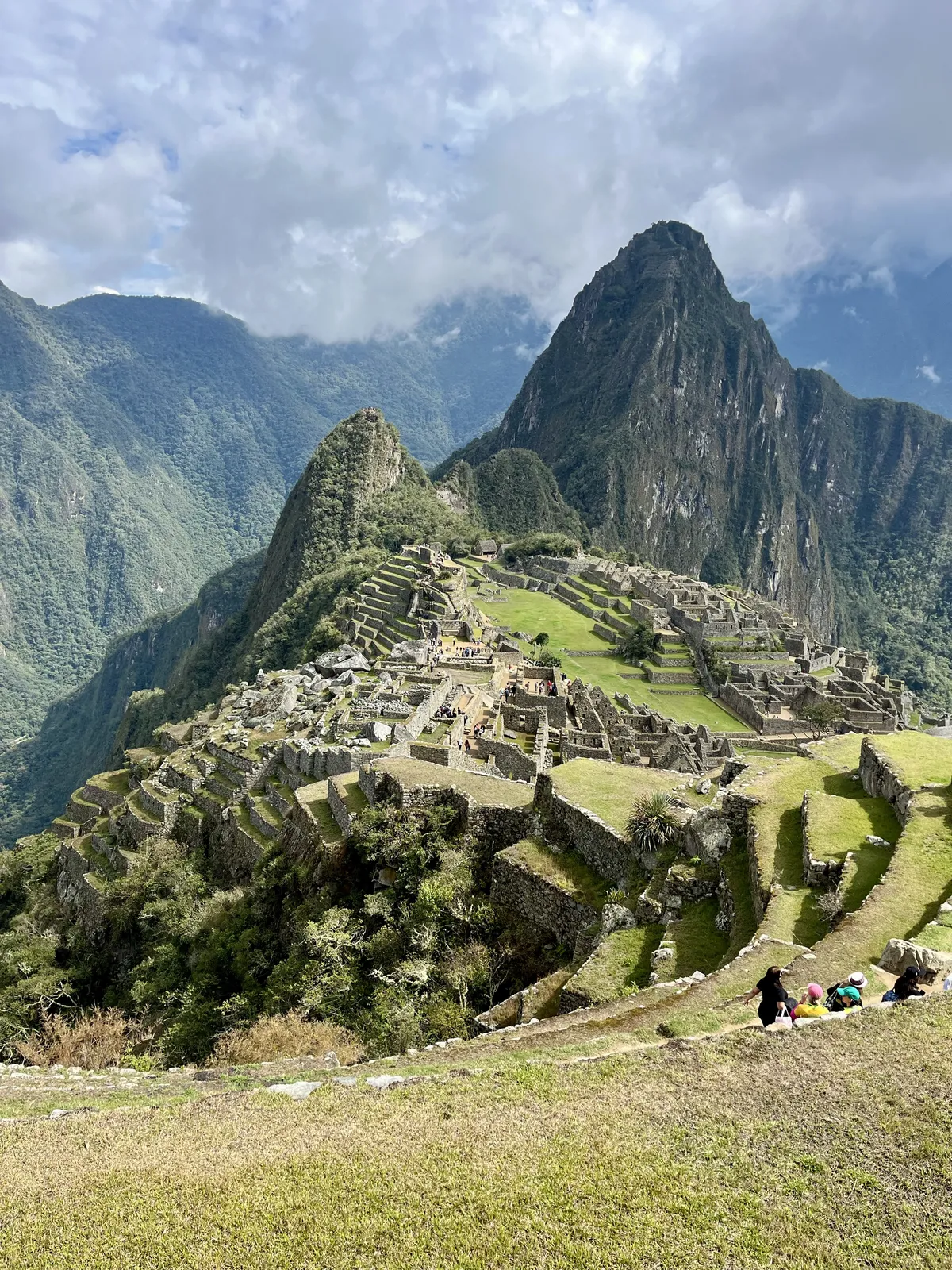
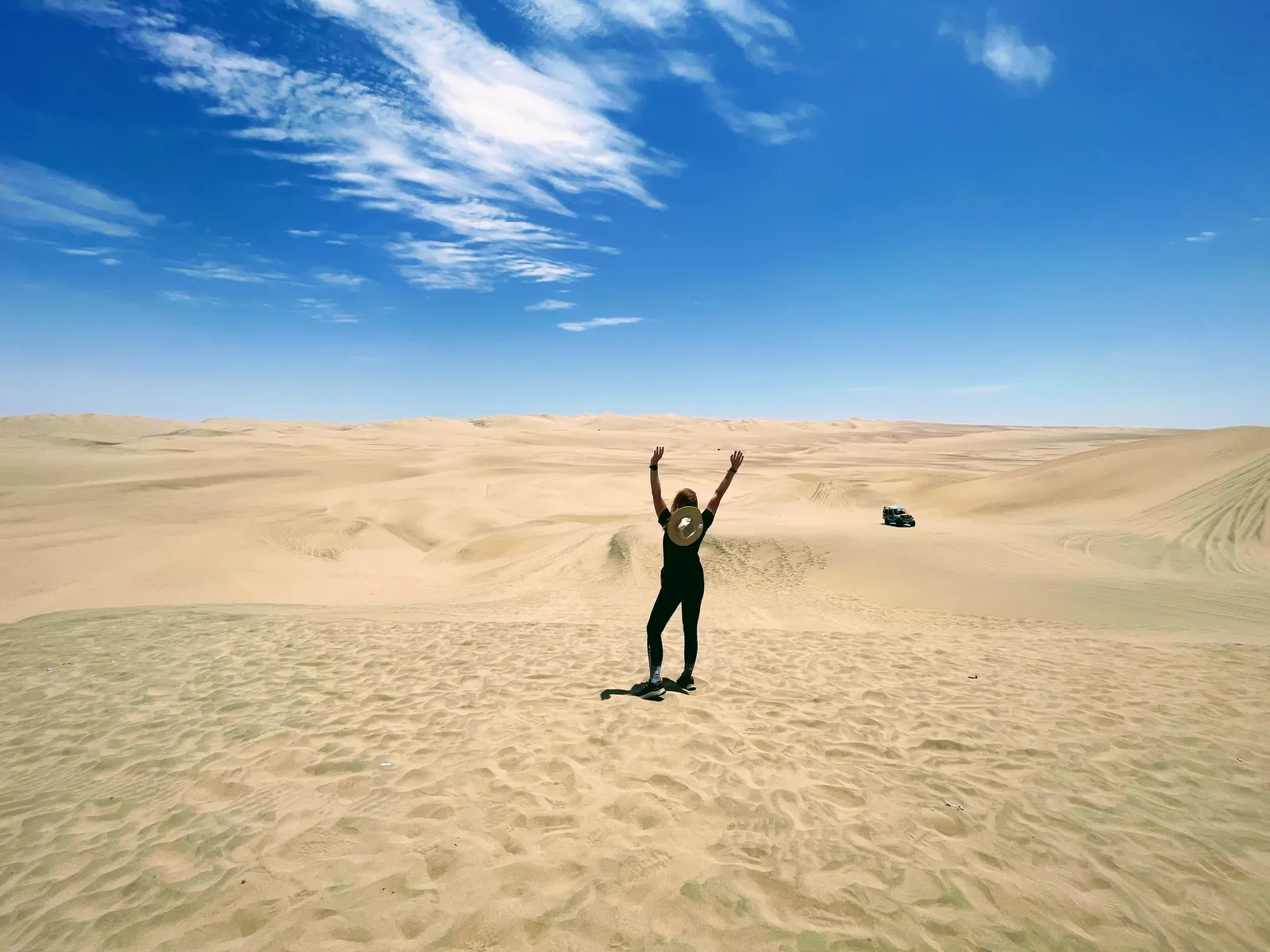
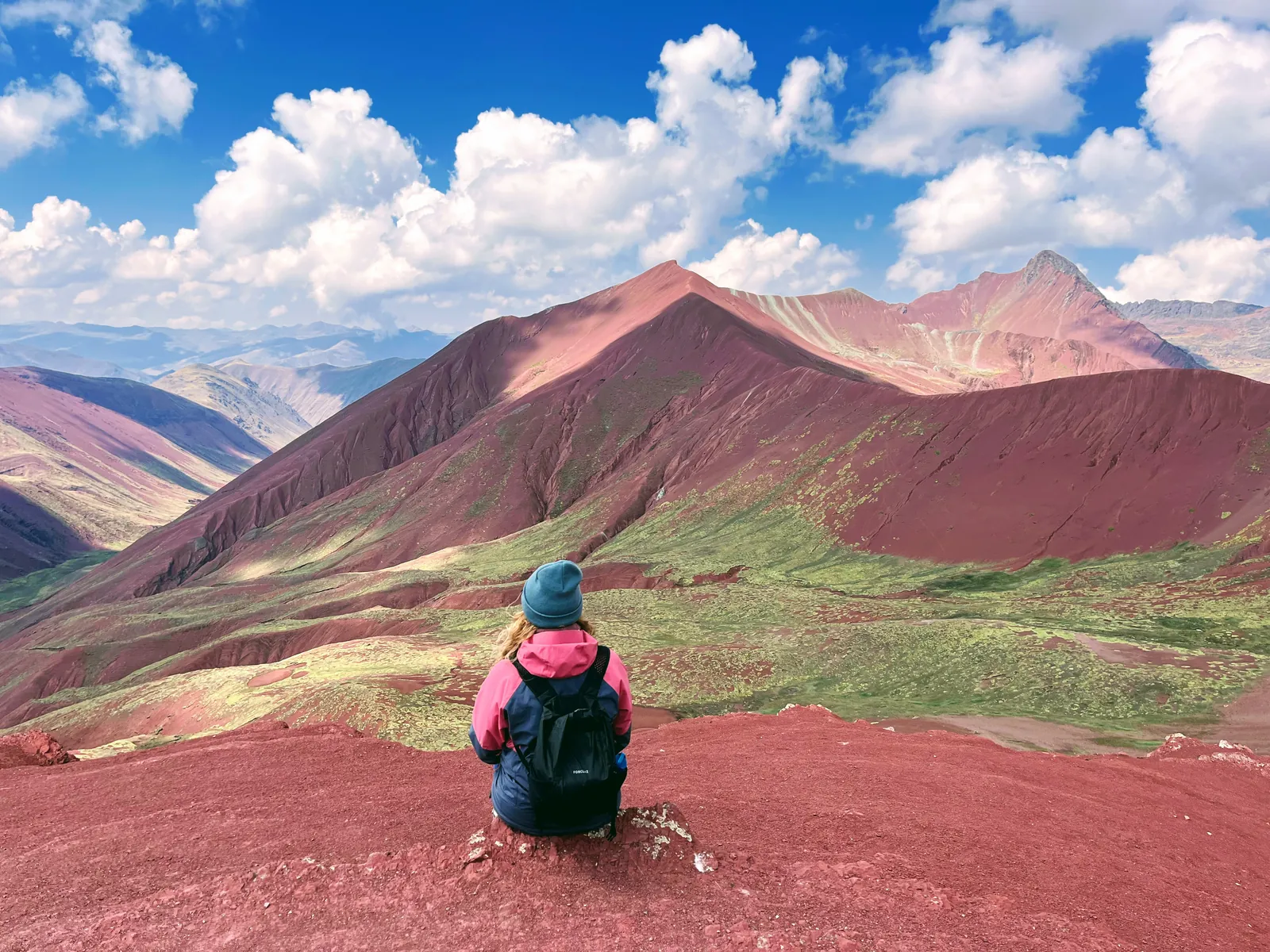
There’s one photo that makes you stop trusting your own eyes: a mountain slope painted red, yellow, green, violet and white, as if someone had dragged coloured brushes across the earth. This is Rainbow Mountain Peru — locals call it Vinicunca, or the Mountain of Seven Colours. It looks computer-generated, but it’s 100% natural, the colours coming from minerals in the soil. The only catch: this beauty sits at 5,200 metres, the highest point most travellers in Peru will ever climb to.
Some links in this article are affiliate links. If you book through them I earn a small commission, at no extra cost to you.
Contents
- What is Vinicunca and why is it so colourful
- How to reach Rainbow Mountain from Cusco
- How much does the Rainbow Mountain tour cost in 2026
- When to go for the brightest colours
- Altitude 5,200 m: why this is the hardest day of the route
- What to pack for Rainbow Mountain
- Rainbow Mountain or Humantay Lake: which day to choose
- How Vinicunca fits into a bigger Peru route
- Is it worth it? Straight talk
- FAQ
In this guide you’ll find how to reach Vinicunca from Cusco, how much it costs in 2026, when to go for the brightest colours, and what to pack so the hike doesn’t turn into suffering.
Here’s the most important thing up front: Rainbow Mountain isn’t about fitness, it’s about altitude. Even superbly trained people gasp for air up here, while a calm office worker sometimes feels perfectly fine. That’s why acclimatisation and a slow pace matter far more than any time in the gym. I go deeper into how not to get sick in my article on altitude sickness in Peru and acclimatisation, and it’s genuinely worth reading before Vinicunca.

What is Vinicunca and why is it so colourful
Vinicunca, or Rainbow Mountain, is a mountainside high in the Andes, southeast of Cusco. Its colours come from different minerals in the soil: iron oxide gives the red and brown tones, clay produces the greenish streaks, and sulphur compounds add the yellows and whites. All of it built up in layers over millions of years, and wind and rain slowly exposed it. The five main colours — red, yellow, green, violet and white — are at their brightest in the dry season on a sunny day, when the soil is dry and there’s no snow.
Here’s something interesting: Rainbow Mountain only revealed itself to the wider world very recently. It went viral around 2015, when melting snow uncovered the coloured soil. Until then the mountain had hidden under ice for centuries and was unknown even to local people. In just a few years it went from an anonymous peak to one of the most photographed places in the whole country, worked into almost every serious southern-Peru itinerary. If you’re planning a bigger trip, Vinicunca fits perfectly into the full southern loop, which I map out in detail in my main Peru travel guide.
How to reach Rainbow Mountain from Cusco
Short answer: only on an organised tour from Cusco. You can’t realistically reach Vinicunca on your own by car or public transport, so nearly everyone takes a one-day tour. Cusco is the natural base — the city has hundreds of agencies, and the Rainbow Mountain tour is one of their most popular offers. If you’re still planning your time in the city, see what else is worth doing in my guide to Cusco on your own.
The day starts very early. The minibus leaves Cusco around 4:00 or 5:00 a.m., and it’s roughly a 3-hour drive on mountain roads to the trailhead. The starting point sits at about 4,300 metres, and from there you hike up on foot. The trail to the coloured summit is about 6 kilometres one way and takes around 2–3 hours, depending on your pace and how you feel at altitude. At the top you usually get about 1–1.5 hours for photos and free time, and then you head back down. You return to Cusco in the evening, around 5:00–6:00 p.m.
The whole day is long and intense: you spend close to 14 hours on the road and hiking, most of it above 4,000 metres. So it’s smart to schedule this day once your body has already spent at least a couple of days in Cusco, rather than right after flying in from Lima. That 3 a.m. wake-up sounds brutal at first, but it makes sense: early morning skies are usually clearer, and the colours are brighter than in the afternoon when the clouds roll in. It also helps you avoid the biggest crowds — in summer, a lot of people gather at the summit.
A few small things are worth bringing into the minibus to make those three hours easier: an inflatable travel pillow for your neck, a water bottle within reach, and a light snack, since breakfast at the rest stop only comes after a couple of hours of driving. Most travellers just doze off for the first stretch, and that’s not a bad idea — you’ll need the energy for the hike.
How much does the Rainbow Mountain tour cost in 2026
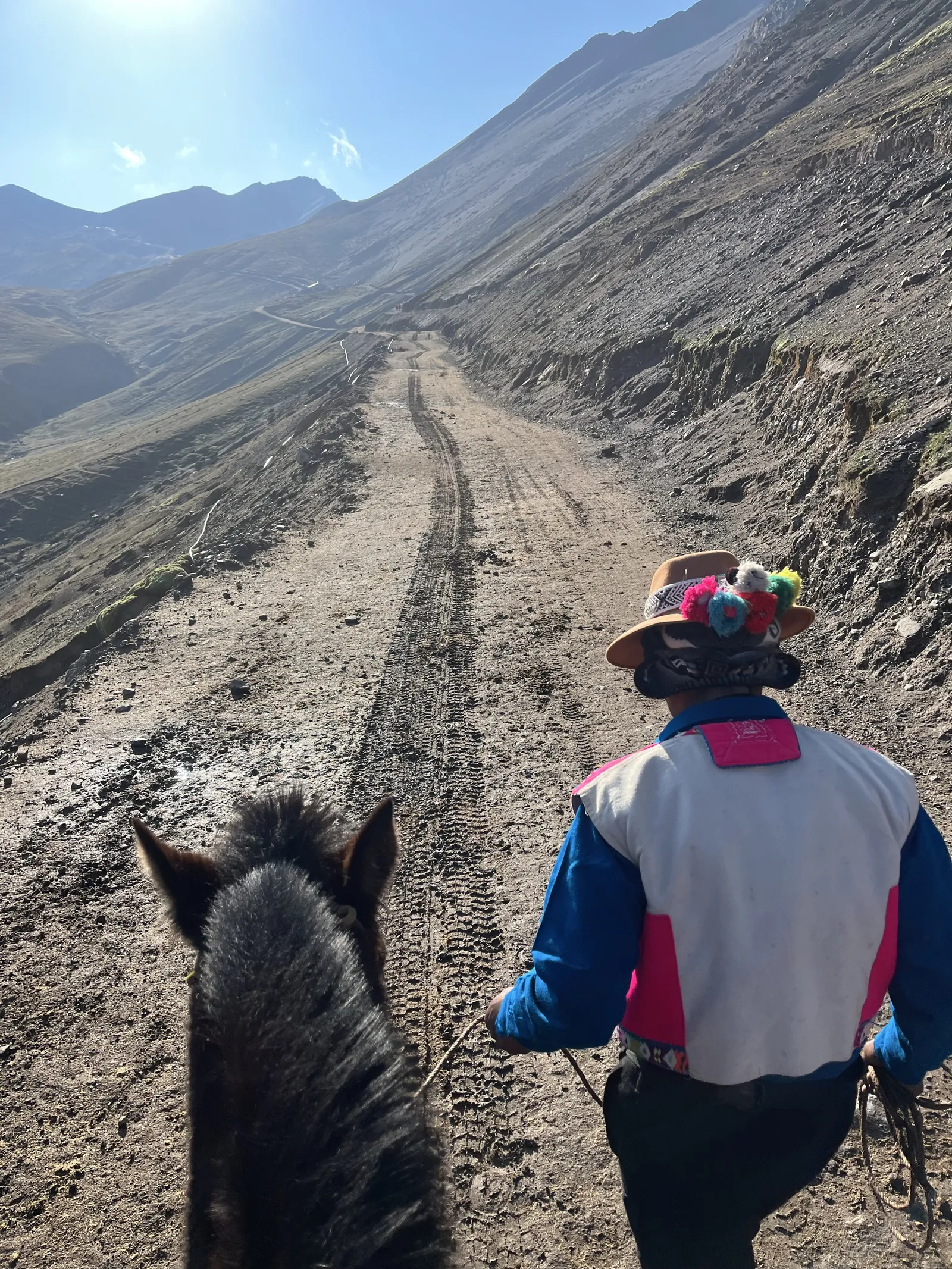
Vinicunca is one of the cheaper high-altitude experiences in Peru, especially compared to the Inca Trail, where permits and multi-day logistics run into several hundred dollars. A Rainbow Mountain tour from Cusco usually costs around 50–80 USD ≈ 70 €, and that already includes return transport and a guide. If the hike turns out to be too hard, you can rent a horse at the trailhead for roughly 20–30 USD ≈ 25 € extra. Add breakfast on the road, and a realistic day budget lands at about 60–100 USD ≈ 90 €.
| Expense | Price (USD) | Note |
|---|---|---|
| Tour (transport + guide) | 50–80 | The core tour price from Cusco |
| Horse (if needed) | 20–30 | Rented at the trailhead if hiking is too hard |
| Breakfast on the road | 3–4 | Simple local dishes at the rest stop |
| Day total | 60–100 | With a horse, closer to the upper end |
Pro tip on money: bring cash. There are no ATMs at the trailhead or along the way, and you’ll need local soles for a horse, snacks or the toilet. Different agencies quote slightly different rates, so before you book, compare exactly what’s included: is breakfast covered, is there an entry fee collected on site, is the group large or small? The cheapest tour isn’t always worse, but in very large groups you wait longer and get less time with the guide.
When to go for the brightest colours
Timing changes everything here. The best colours are visible in the dry season, on a sunny day, when the soil is dry and free of snow. The dry season in the Andes runs roughly from May to October, and the window for the brightest colours is July and August. During that time the trail to the summit is in good shape, the sky is usually clear, and the coloured bands look their richest.
In the rainy season, roughly November to April, things get tricky. The trail can become hard to pass, and access is no longer guaranteed. Colours after heavy rain are sometimes even brighter, but the whole trip becomes a lottery: the summit might be covered in cloud or snow, and the photo you came for stays a dream. If your trip is planned specifically around Rainbow Mountain, aim for the dry season.
| Month | Rainbow Mountain |
|---|---|
| January–March | Rainy season, not recommended |
| April | Transitional |
| May | Good |
| June | Excellent |
| July | Excellent (colours at their brightest) |
| August | Excellent (colours at their brightest) |
| September | Good |
| October | Good |
| November | Transitional |
| December | Rainy season, not recommended |
Vinicunca fits beautifully into the rest of a dry-season route: the same months open up the Inca Trail, Machu Picchu is sunny, and the Amazon has active wildlife. If you want to lay out your whole trip calendar, see my separate guide on when to travel to Peru by region and activity.

Altitude 5,200 m: why this is the hardest day of the route
This is where the real Rainbow Mountain story begins. At 5,200 metres, this is the highest point of most Peru routes — higher than Cusco (3,400 m), Puno (3,850 m) and even the famous Dead Woman’s Pass on the Inca Trail (about 4,200 m). At that altitude there’s roughly half as much oxygen in the air as at sea level, so every step uphill drains you like nowhere else. The hike itself isn’t long, but precisely because of the altitude it feels harder than individual Inca Trail days.
Altitude sickness — locals call it soroche — has nothing to do with fitness. Typical symptoms: headache, nausea, loss of appetite, shortness of breath and general weakness. They usually appear within 6–12 hours of climbing to altitude. The best protection is acclimatising before Vinicunca: spend at least two or three days in Cusco so your body can adjust to the thin air. On your first day in the city, the golden rule is to do nothing, drink plenty of water, avoid alcohol, and allow yourself the coca tea that many hotels offer for free.
It’s worth knowing that good fitness here not only doesn’t help — it sometimes works against you: athletes tend to climb too fast and run out of breath too early. The pace dictated by the altitude can feel almost comically slow, and that’s exactly how it should be. On the hike itself, one simple principle applies: go slow, don’t rush. Breathe calmly, take breaks, listen to your body. If the hike becomes too hard, you can rent a horse at the trailhead (~20–30 USD ≈ 25 €) to carry you most of the way up. It’s completely normal, and no one looks at you sideways for it. If serious signs appear — a strong headache that won’t go away, heavy breathlessness at rest, confusion or loss of coordination — the only right decision is to go down. The prescription drug acetazolamide (Diamox) helps you acclimatise faster; it’s worth discussing with a doctor before your trip. I’ve written out a detailed acclimatisation plan and symptom list in my article on altitude sickness and how to avoid it.
A quick safety reminder
- Acclimatise in Cusco for at least two or three days before Vinicunca.
- Go slow, take frequent breaks, drink plenty of water.
- If it’s hard, rent a horse — it’s not shameful, it’s a sensible choice.
- Talk to your doctor about Diamox before you leave home.
- Have travel insurance that covers high-altitude hikes and medical evacuation.
What to pack for Rainbow Mountain
The summit is windy and cold even in summer, so warm clothing here isn’t a choice but a necessity. At the same time you heat up while hiking uphill, so the smartest approach is to dress in layers you can easily take off and put back on. At altitude the UV radiation is very intense, so sun protection matters even on a cloudy day.
- Warm hat and gloves — at the top, up to 5,200 m, it really is cold
- Layers: thermal base, fleece jacket, windproof jacket
- Comfortable, broken-in hiking boots (not new ones)
- Sunscreen SPF50+ and a lip balm with SPF
- Sunglasses with UV protection
- Enough water (2–3 l) and your own snacks
- Cash in soles (for a horse, the toilet, snacks)
- Trekking poles if you have them — the steep trail is easier with them
Food along the way is simple: there’s a stop at a food point serving basic local dishes. You shouldn’t rely on that alone, so pack your own snacks and water in advance — the road is long and shops are far apart. Quick-digesting, high-energy snacks — nuts, bars, dried fruit — work best here, because heavy food is hard to digest at altitude. Don’t drink tap water in Peru, not even in Cusco, so take bottled water for the road.

Rainbow Mountain or Humantay Lake: which day to choose
Cusco sells two very similar one-day tours that travellers often confuse: Rainbow Mountain and Humantay Lake. Both start early in the morning, both cost about the same, and both take place at high altitude. But the experience differs. Vinicunca is about colours and altitude, while Humantay — a turquoise lake at 4,200 m beside a glacier — is about water and mountain scenery. If time is short and you can only pick one, here’s a quick comparison.
| Rainbow Mountain | Humantay Lake | |
|---|---|---|
| Altitude | 5,200 m | 4,200 m |
| Hike | ~6 km one way, ~2–3 h | ~2 km, ~1–1.5 h uphill |
| Difficulty | Intense (altitude) | Steep, but short |
| Price | ~50–80 USD ≈ 70 € | ~30–50 USD ≈ 45 € |
| Highlight | A coloured mountain | A turquoise glacial lake |
If you have enough time, many travellers do both on separate days — ideally after the body is already acclimatised in Cusco or after the Inca Trail. Humantay is at a lower altitude, so it’s a gentler start before Vinicunca if you want to build up gradually.
How Vinicunca fits into a bigger Peru route
Rainbow Mountain is rarely visited as a trip on its own — most often it’s one day within a wider southern-Peru loop. A typical sequence looks like this: you fly into Lima, take a domestic flight to Cusco, hike the Inca Trail to Machu Picchu, and back in Cusco you dedicate one day to Vinicunca before continuing on to Puno and Lake Titicaca. This ordering has logic to it: by the time you reach Rainbow Mountain, your body is already well acclimatised from Cusco and the Inca Trail heights, so 5,200 m is easier to handle.
If you’re still building the skeleton of your trip, these guides of mine will help: how to reach Machu Picchu independently, what to know about Inca Trail permits and booking them, and what else to do using Cusco as a hiking base. All the logistics, transport and budget are gathered in one place in my main Peru guide.
Is it worth it? Straight talk
Yes — if your body is acclimatised and the colours matter to you, Vinicunca is one of those places that doesn’t look real even when you’re standing right in front of it. A sight that hid under ice a decade ago is now reachable in one intense day from Cusco for 50–80 dollars. But be honest with yourself: if you’ve only just landed and the altitude is still doing its thing, it’s better to move Rainbow Mountain to the middle or end of your trip rather than force it in the first days. A slow pace, warm clothing, cash in your pocket and a realistic acclimatisation plan — and the coloured mountain will pay you back with a photo that has everyone asking whether it’s real.

FAQ
How much does the Rainbow Mountain tour from Cusco cost?
An organised one-day tour from Cusco usually costs around 50–80 USD ≈ 70 €, including transport and a guide. If you need a horse, that’s about 20–30 USD ≈ 25 € more. With breakfast on the road, the whole day budget lands at around 60–100 USD ≈ 90 €. Bring cash in advance — there are no ATMs on the mountain.
How high is Rainbow Mountain and is it dangerous?
The Vinicunca summit is at 5,200 metres, the highest point of most Peru routes. The danger isn’t the trail but altitude sickness, since there’s half as much oxygen in the air as at sea level. Acclimatise in Cusco for at least two or three days before the hike, go slow, and drink plenty of water. If a strong headache, breathlessness at rest or confusion appears, you need to go down.
When is the best time to visit Rainbow Mountain?
The best time is the dry season, roughly May to October, with the colours at their brightest in July and August. The trail is in good shape then and the sky is usually clear. In the rainy season (November–April) the trail can be hard to pass, and access isn’t guaranteed.
How long is the hike and can you ride a horse?
The hike from the trailhead (~4,300 m) to the coloured summit is about 6 kilometres one way and takes roughly 2–3 hours uphill. If hiking is too hard, you can rent a horse at the trailhead for about 20–30 USD ≈ 25 € to carry you most of the way. It’s a common and completely normal choice.
Can you reach Vinicunca on your own without a tour?
Practically no. Almost everyone goes on an organised tour from Cusco, because the trailhead is remote and the roads are mountainous. There’s no permit system, but organised tours require registration, and in the busiest months spots fill up fast — so book your tour in advance.
What must you pack for the hike?
A warm hat and gloves, clothing worn in layers, a windproof jacket, broken-in hiking boots, SPF50+ sunscreen, sunglasses, 2–3 litres of water, your own snacks and cash in soles. The summit is windy and cold even in summer, so warm clothing really is essential here.
Search for flights here. If something goes wrong with your flights, you can claim compensation through AirHelp or Compensair.
Staying connected? Skip expensive roaming and grab an eSIM plan — set it up before you fly and you’ll have data the moment you land.
I always recommend booking taxi transfers to and from the airports in advance. You can do that here.
Find accommodation here.
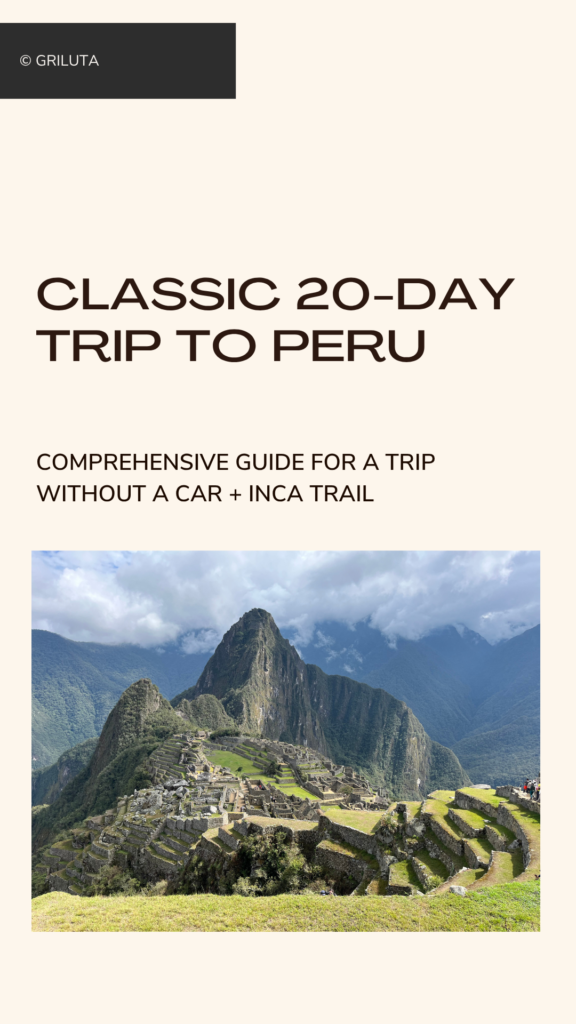
Travel Without Chaos: Peru — Classic 20-Day Itinerary Without a Car (+ Inca Trail)
Classic 20-Day Trip to Peru — Complete PDF Guide