Going to Peru was one of my biggest dreams, but I didn’t expect this country to exceed all my expectations. That life at altitude, breathing a completely different air, has a magical power. I merged with nature most of all in this country, because everything here revolves around nature: all the old Peruvian traditions, customs, languages and culture have survived. These people weren’t too affected by civilisation, so you see calm in their eyes. Calm from the frantic rush of the civilised world.
Some links in this article are affiliate links. If you book through them I earn a small commission, at no extra cost to you.
Contents
It’s a country that holds so much within itself that it was clear I’d need 3 weeks to see it all. To fully feel the spirit of the Incas, the Inca Trail (the path to Machu Picchu) is simply a must in this country. Without this hike, a visit to Peru becomes very standard and touristy.
Flight tickets. This is one of those destinations where flight tickets aren’t the first thing you need to buy. Why? Because of Machu Picchu. Entry to this wonder is limited to 600 people a day, so last-minute flight tickets really won’t do. First, we check whether there are tickets to Machu Picchu at the time we’re planning, and only then do we sort out the flights. That means planning 3–6 months ahead. In season it can be even longer. The most flights are run from Spanish cities, so it’s convenient to search from there, and then fit the trip from Lithuania around it.
The route. We decided we didn’t want to travel with an agency from Lithuania, because we want flexibility, but we’re also nervous about driving. Another thing — we wanted to hike the classic Inca Trail route (3 days). Since we wanted to keep as much strength as possible for the hike, we organised it at the very start of the trip. The other days we travelled around Peru’s cities. We arranged the movement ourselves and used local agencies’ tours.
Acclimatisation. This is something you almost can’t prepare for, little known to lowland dwellers and hard to imagine how the body will react. And it reacted differently: some fell seriously ill with altitude sickness, others felt mild symptoms, others felt nothing. Altitude sickness is a condition that arises from climbing quickly to a high altitude (usually above 2,500 m), when the body doesn’t have time to adapt to the lower oxygen in the air. The most common symptoms are headache, nausea, weakness, dizziness and sleep disturbances; in more serious cases, dangerous brain or lung oedema can develop. Interestingly, Peruvians, living constantly at such altitude, experience lowland sickness when they descend to sea level. How differently our bodies have evolved!
Preparation. To be flexible, I always travel with just a larger backpack, so it was quite a headache to fit everything into one backpack. And I had to prepare for everything: a hike high in the mountains, the hot and humid Amazon forests, walks in the city and the journey from autumnal Lithuania.
Safety. I’ll admit that after reading the Lithuanian Foreign Ministry’s information about trips to Peru, I began to have a few doubts. But it’s understandable that they want to prepare people for the worst — which won’t necessarily happen. And I was very surprised! In Peru I felt maximally safe, the people wonderful, so it never crossed my mind that it could be dangerous. I think what helped was that I put together a good route, so as to feel safe and comfortable.
Preparation
As I mentioned earlier, I had to prepare for everything and every kind of weather. I managed it. Below I’m adding a photo of my backpack’s contents.

Besides the things, it’s worth looking into vaccinations, but this country doesn’t require specific ones, though there are recommendations. You can find them on the public health website.
The flight
On the way out we had a flight via Madrid with a long wait, so it was a chance to explore this city for a day. It was a good warm-up before the long flight, because we walked a lot that day. The flight is of course long, but we had food, films and the night hours, so we slept, or at least tried to sleep. It didn’t drag at all! On the way back everything went much faster and simpler.
First impression
Lima was the first Peru stop we could explore both at the start of the trip and at the end. Since it’s a city at sea level, we felt good and morally prepared for the highlands. As we arrived off the peak season, it was fairly calm, mild autumn/spring weather, few people. In many places it even feels too empty for such a big city. The city doesn’t shine too much with luxury, and even if the buildings might look that way, the people change that impression: simple, often dressed in traditional clothes. They like tourists, so they don’t mind striking up a conversation or having a photo taken, and offer their goods for sale.
The architecture is very mixed, but beautiful. With a lot of history. Since the city is by the ocean, you can see two different sides of it: the calm centre and the noisy coasts.


The Inca Trail
This was the part we most looked forward to and most feared. When we flew into the town of Cusco, we were met by 3,400 m of altitude. It’s hard to imagine people living at such a height. We felt it differently. One fellow traveller was vomiting, couldn’t sleep, couldn’t eat, walked with difficulty. With symptoms like that you need a lot of rest and to let the body adapt. Others felt only general weakness. It’s really very strange when it’s hard to climb stairs, you’re gasping for breath and don’t understand what’s going on. But it’s normal, the body needs to adapt.
Having let the body adapt a little, we set off on the 3-day Inca Trail adventure. We had a wonderful guide who made this adventure even more magical. You can naturally see how a person walking the same path for 20 years still enjoys it anew each time. And he passes that joy perfectly to his tourists. It’s important to mention that the guides assess everyone’s condition very responsibly, and if they see a person isn’t able to finish the whole hike, they escort them back. Although the mountains themselves aren’t steep and physically it shouldn’t be hard to hike, the lack of oxygen distorts everything. You can never know how your body will react, you just have to try.
All three days were simply magical! The guide told us the whole time about what we were seeing around us, the porters carried our things, so we didn’t have to load ourselves with things unnecessary at that moment, we ate wonderful freshly cooked food in the mountains and slept in tents in wonderful places. Sometimes it felt like you wanted it never to end.
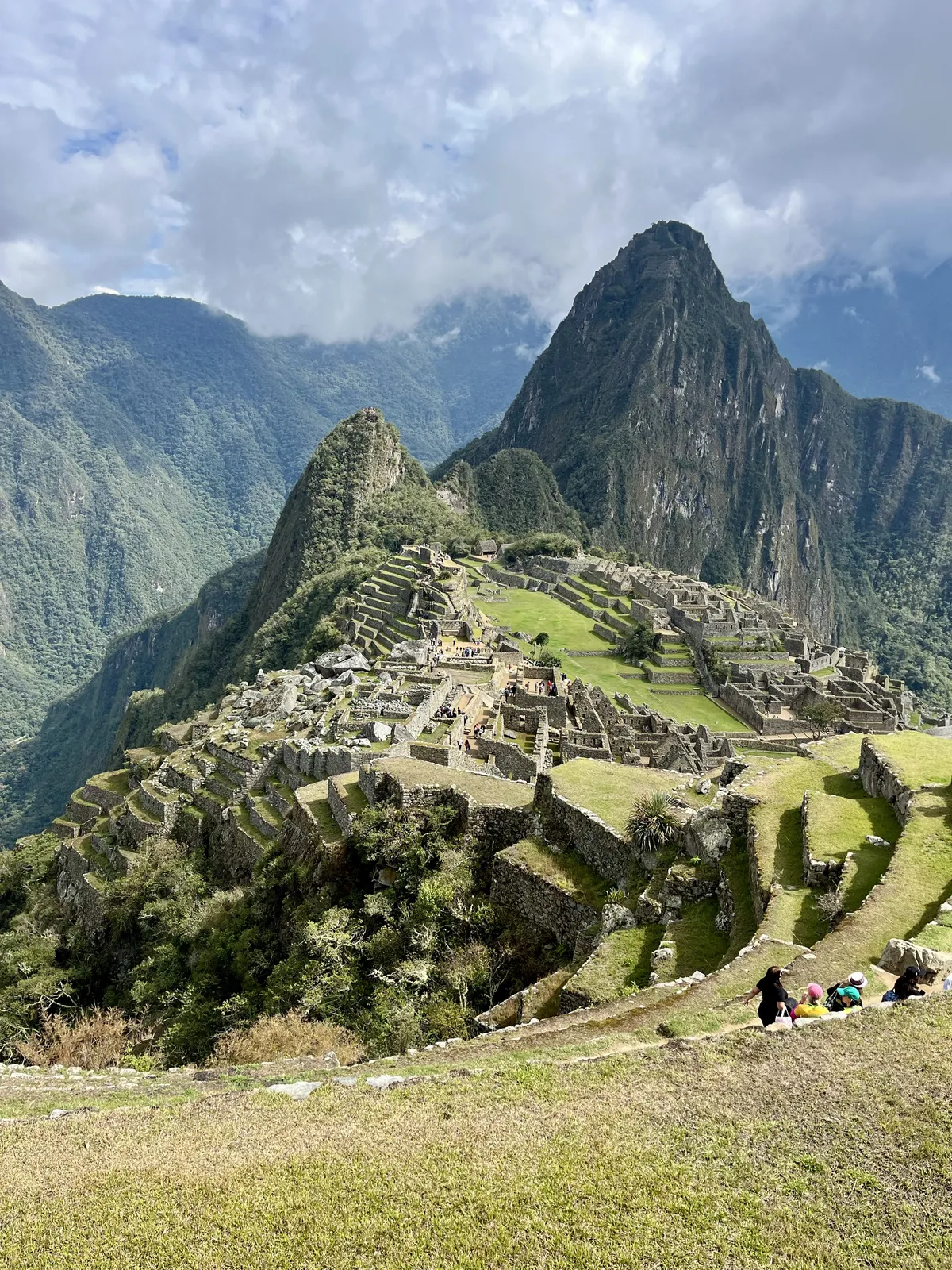
Hiking this ancient Inca trail you see different climate zones, different vegetation, ruins you can’t see any other way. And at the end of it all — the magical Machu Picchu. Although this site is impressive, after three magical days of hiking it becomes even more impressive. It can’t be described, it has to be experienced. At least once in a lifetime.


After the Inca Trail there were a few more hikes into the mountains, because the Andes have so many different faces that you want to keep looking and looking. Each of those hikes was at a different altitude, so it’s important to make sure the altitude increases gradually — after the Inca Trail there was already enough acclimatisation for higher places.
The Amazon jungle
The next thing I most looked forward to (after Machu Picchu), the Amazon jungle. So many shows watched since childhood, so many expectations, and I can say I got what I wanted. Maybe I thought there’d be more animals, but it’s probably natural that there won’t be an animal on every corner in the wild. The Amazon greeted us with indescribable humidity and heat. Since I wanted to protect myself from insects, I had to cover my body fully, and that doesn’t help with the great humidity and heat. The Amazon experience was intensified by living in the jungle with locals. I’ll never forget it. Sleeping in a house built from planks under a net and constantly watching what’s beside you. And beside you there was everything. In the shower — a tarantula. I’d been afraid of spiders since childhood, but when you see such a big one right beside you, you don’t understand how to react. I had to make friends. Don’t touch, don’t disturb and let it be the master. Probably the scariest thing is when you can no longer find the spider where it was.
Despite such interesting “roommates,” life in the jungle is very wild. The local family lives simply: they eat what they can find in the jungle — bananas, fish, mangoes. Only the local residents have the right and permits to fish or hunt, no other commercial activity is allowed.
In the jungle we sailed in a boat and looked for various animals, walked on foot through the bushes. The biggest catch — a troop of little yellow monkeys.


Peru’s cities
During the trip we visited quite a few cities, and it’s hard to believe they’re all so different! So many colours, architecture, cultures. It feels like with each city you’re in a different country of the world. That’s what makes Peru charming, it’s so varied and colourful. Moving between cities wasn’t complicated by public transport. It’s fairly easy to navigate. We also tried a train journey, so for 10 hours we could simply admire the wonderful panorama and programme. It was one of the more enjoyable pastimes of this trip. It’s important to mention that Peru’s cities are at different altitudes, so it’s smart to travel while gaining altitude gradually.


Conclusions
- Go! Don’t be afraid, go!
- If you do some sport at home or walk a lot, you can definitely handle the Inca Trail, and it maximally intensifies the first impression of Machu Picchu.
- To visit the country and see the most important places, 3 weeks is enough.
- Peru holds everything in one — different climate zones, wonderful food, impressive nature, lots of activities.
- You shouldn’t be afraid to travel independently. There are plenty of tours you can book on the spot, so you won’t have to drive around the sites yourselves.
- The country isn’t expensive; only the tourist activities and everything connected to tourism are pricey.
- You must bring back something made of alpaca wool.
And if you’re interested in another exotic country — the Republic of South Africa — you’ll find my experience here. And if you want to try such a trip, get the guide and travel with peace of mind.
My other Peru guides: how to reach Machu Picchu independently, Inca Trail permits, Cusco on your own, Arequipa in the white city, Colca Canyon, the Peruvian Amazon (Puerto Maldonado), altitude sickness in Peru, and the Peru entry guide (visa).
Search for flights here. If something goes wrong with your flights, you can claim compensation through AirHelp or Compensair.
Staying connected? Skip expensive roaming and grab an eSIM plan — set it up before you fly and you’ll have data the moment you land.
I always recommend booking taxi transfers to and from the airports in advance. You can do that here.
Find accommodation here.
Travel Without Chaos: Peru — Classic 20-Day Itinerary Without a Car (+ Inca Trail)
Classic 20-Day Trip to Peru — Complete PDF Guide