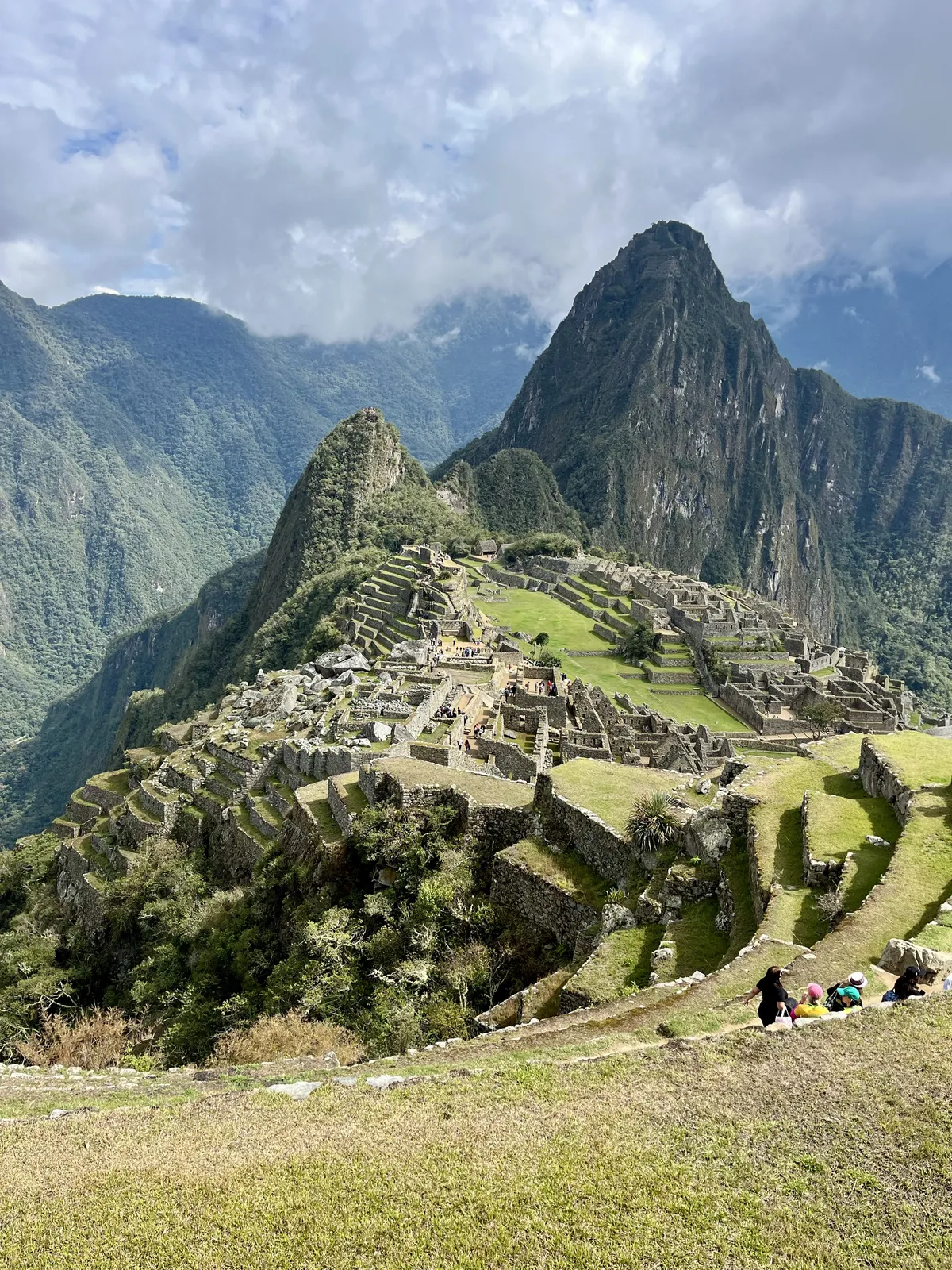
I’m standing on a terrace, an Inca city drowned in clouds below, and my heart is pounding not just from the altitude. Machu Picchu is one of those places that looks too beautiful to be real. But it is real. And reaching it on your own is entirely possible, if you know a few important things in advance.
Some links in this article are affiliate links. If you book through them I earn a small commission, at no extra cost to you.
Contents
- How to buy Machu Picchu tickets 2026 (step by step)
- Machu Picchu circuits: which to choose?
- Circuit 1 – Panoramic
- Circuit 2 – Classic
- Circuit 3 – Royal
- How to get from Cusco to Machu Picchu (3 ways)
- 1. Train (the most popular)
- 2. Bus + walking via Hidroeléctrica (the cheapest)
- 3. Inca Trail (the hike)
- Inca Trail vs. train vs. bus: a comparison
- How much does Machu Picchu cost in 2026? (tickets, transport, accommodation)
- Budget option (as cheap as possible)
- Mid-range option (by train)
- For students
- Aguas Calientes: where to stay and what to see
- Where to stay?
- What to see in Aguas Calientes?
- Practical tips for visiting Machu Picchu
- FAQ
In this article I’ve written up everything I wished I’d known before the trip: how to buy tickets, which route (circuit) to choose, how to get from Cusco cheaply and expensively, how much it costs and what to do in Aguas Calientes. No empty phrases, just concrete prices, links and tips.
If you’re only just planning a trip to Peru and want the big picture — start with my article on the whole Peru trip.
How to buy Machu Picchu tickets 2026 (step by step)
Buying tickets is the part where many independent travellers feel their first stress. The system changed, the website sometimes freezes, and the most popular times sell out quickly. But if you know the process, it’s fairly simple.
Where to buy?
The official site: machupicchu.gob.pe. This is the only direct source. All other sites (agencies, intermediaries) buy from the same system, just with a markup.
Step by step:
- Go to machupicchu.gob.pe and create an account.
- Choose your date, route (circuit + route) and entry time.
- Enter your passport details (be exact, as they check at the entrance). By the way, if you’re not yet sure about the documents — most Western passport holders don’t need a visa for Peru, but there are a few important nuances. I’ve written it all up here.
- Pay by card (Visa, Mastercard).
- Download the ticket as a PDF and keep it on your phone or printed.
A few things worth knowing:
- 2026 tickets went on sale from 17 November 2025.
- For the most popular routes (especially Circuit 2 and Huayna Picchu) you need to buy at least 1 month ahead, and in season (June–October) even 6–8 weeks in advance.
- Daily limit: from 4,500 to 5,600 visitors a day (depending on the season).
- If the site freezes (that’s normal), try early in the morning or use a different browser.
Machu Picchu circuits: which to choose?
Since 2024, Machu Picchu is divided into 3 main routes (circuits), and each has several internal trails (routes). That means you can no longer walk wherever you want. You choose the route when buying the ticket, and you stick to it.

Circuit 1 – Panoramic
Leads across the upper terraces. You see Machu Picchu from above but don’t go into the city centre itself. Good if you want beautiful photos from up high or plan to climb Machu Picchu Mountain.
Routes:
- 1-A: Machu Picchu Mountain (needs a separate permit)
- 1-B: Upper terrace (the shortest visit)
- 1-C: Sun Gate (Inti Punku)
- 1-D: Inca Bridge
Circuit 2 – Classic
The most popular choice. You walk through the inside of the citadel, see the main buildings and terraces, and can take a photo at that famous spot with Huayna Picchu in the background. If you choose the Huayna Picchu or Huchuy Picchu climb, you need exactly this route.
Routes:
- 2-A: Classic + Huayna Picchu (a limited number, sells out fast)
- 2-B: Classic + Huchuy Picchu (an easier climb)
- 2-C: Classic route (without an extra climb)
Circuit 3 – Royal
Fewer people, because the route concentrates on the lower part: the ceremonial sector and the elite residential quarters. You won’t see the classic view from above, but you’ll get a calmer experience and a different perspective.
My recommendation? If it’s your first time at Machu Picchu, choose Circuit 2-C (classic) or 2-A (with Huayna Picchu) if you want a physical challenge and an even better view.

How to get from Cusco to Machu Picchu (3 ways)
Machu Picchu isn’t near Cusco. You can’t just take a taxi and drive there. Between them are mountains, jungle and a river. Here are three real ways:
1. Train (the most popular)
Two operators: PeruRail and Inca Rail. Both run from Ollantaytambo (1.5 h from Cusco) to Aguas Calientes (2 h by train).

- Price: from ~$60 ≈ 55 € USD (Expedition class) to $500 ≈ 445 €+ (luxury Hiram Bingham).
- Budget option: Cusco → Ollantaytambo by bus ($3 ≈ 3 €–5) + train from Ollantaytambo ($60 ≈ 55 €–80 one way).
- Tickets can be bought at perurail.com or incarail.com.
Advantage: convenient, beautiful views, fast. Downside: the most expensive form of transport.
2. Bus + walking via Hidroeléctrica (the cheapest)
This is the budget option:

- Cusco → Hidroeléctrica bus/minibus: ~$15 ≈ 13 €–20 USD ≈ 18 € (6–7 h, a winding mountain road).
- Hidroeléctrica → Aguas Calientes: ~3 h on foot along the tracks (10 km, a flat path, no special preparation needed).
Total price: about $15 ≈ 13 €–30 USD ≈ 25 € one way.
Advantage: the cheapest, adventurous, a beautiful walk along the Urubamba River. Downside: a long journey, the mountain road can cause nausea, and you have to make it back before the last bus.
3. Inca Trail (the hike)
The legendary 4-day hike that ends right at the Sun Gate with a view of Machu Picchu. It’s not transport but an experience.

- Price: from $800 ≈ 700 € to $1,400 ≈ 1 250 €+ USD with a licensed operator (permits, guides, meals and campsites included).
- Permits: 500 a day (including porters), popular months (May–August) sell out months ahead.
- Buy only through a certified agency (you can’t hike it on your own).
Inca Trail vs. train vs. bus: a comparison
| Train | Bus + walking | Inca Trail | |
|---|---|---|---|
| Price (round trip) | $120 ≈ 105 €–160 USD ≈ 145 € | $30 ≈ 25 €–60 USD ≈ 55 € | $800 ≈ 700 €–1,400 USD ≈ 1 250 € |
| Duration | ~4 h (with a transfer) | ~9 h (with the walk) | 4 days |
| Comfort level | High | Low–medium | Low (camping) |
| Views | Good (train windows) | Excellent (walk along the river) | Incredible |
| Physical demand | Minimal | Medium | High |
| Suits you if… | Little time, comfort matters | Budget matters, you like walking | You want the full adventure |
How much does Machu Picchu cost in 2026? (tickets, transport, accommodation)
Here’s a realistic budget for one person, calculating an independent trip:
Budget option (as cheap as possible)
| Expense | Price |
|---|---|
| Machu Picchu ticket (Circuit 2-C) | ~152 soles / ~$40 ≈ 35 € USD |
| Bus Cusco → Hidroeléctrica (round trip) | ~$30 ≈ 25 €–40 USD ≈ 35 € |
| Bus Aguas Calientes → Machu Picchu (round trip) | ~$24 ≈ 20 € USD |
| Accommodation in Aguas Calientes (hostels) | ~$15 ≈ 13 €–30 USD ≈ 25 € |
| Food (1–2 days) | ~$15 ≈ 13 €–25 USD ≈ 20 € |
| Total | ~$125 ≈ 110 €–160 USD ≈ 145 € |
Mid-range option (by train)
| Expense | Price |
|---|---|
| Machu Picchu ticket | ~$40 ≈ 35 €–55 USD ≈ 50 € |
| Train Ollantaytambo → Aguas Calientes (round trip) | ~$120 ≈ 105 €–160 USD ≈ 145 € |
| Bus Cusco → Ollantaytambo | ~$5 ≈ 4 €–10 USD ≈ 9 € |
| Bus Aguas Calientes → Machu Picchu | ~$24 ≈ 20 € USD |
| Accommodation in Aguas Calientes (mid-range) | ~$40 ≈ 35 €–70 USD ≈ 65 € |
| Food | ~$20 ≈ 18 €–30 USD ≈ 25 € |
| Total | ~$250 ≈ 225 €–350 USD ≈ 315 € |
For students
If you have a valid ISIC card, the adult ticket costs only 77 soles (~$20 ≈ 18 € USD). Worth bringing!
Aguas Calientes: where to stay and what to see
Aguas Calientes (officially Machupicchu Pueblo) is a small town in a valley, by the river, surrounded by mountains. Many spend only one night here, but the place has its own charm.
Where to stay?
- Budget hostels: from ~$10–20 USD/night (Supertramp Hostel, Ecopackers).
- Mid-range hotels: $40–70 USD/night (Kuntur House, El Quetzal, Terrazas del Inca).
- Luxury: Casa del Sol, Inkaterra (from $200+ USD/night).
Tip: if you plan to be at Machu Picchu early in the morning (recommended!), stay in Aguas Calientes the night before. The first buses to Machu Picchu run from ~5:30.
What to see in Aguas Calientes?
- Hot springs (aguas calientes = hot waters): natural pools with hot water, great after a hike. Entry ~20 soles.
- Market: a colourful place to buy souvenirs. Prices are negotiable.
- Food places: choose restaurants on the side streets, not the central square where prices are inflated. The menú del día (set lunch) costs 10–15 soles and you’ll get a soup + main course.
- Mandor gardens: if you have an extra half-day, you can walk to the Mandor waterfall (~45 min on foot).
Practical tips for visiting Machu Picchu

Here I’ve written up the things I wish someone had told me before the trip:
- A guide is mandatory. Since 2024 you can’t enter without a licensed guide. You can hire one at the entrance (~$15–20 USD/person in a group) or book in advance.
- The passport number must match. When buying the ticket, your passport number is entered. It’s checked at the entrance. If it doesn’t match, they won’t let you in.
- Toilets only at the entrance. There are no toilets inside. Before entering, use the ones below (2 soles).
- Food and water in plastic bottles aren’t allowed in. You can have a reusable bottle, but officially you shouldn’t consume food inside.
- Go early in the morning. The first shift (from 6:00) is the best. Fewer people, and the mist often creates an incredibly beautiful view. In the afternoon there are more people and more frequent rain.
- The weather is unpredictable. Even in the dry season it can start raining. Have a light rain jacket. A poncho > an umbrella (umbrellas are forbidden).
- Comfortable footwear. The stone stairs can be slippery. Trainers with good grip or hiking boots.
- Altitude sickness. Cusco is at 3,400 m, Machu Picchu at ~2,430 m. If you arrived straight in Cusco, give yourself 2–3 days to acclimatise. I’ve written about how to recognise altitude sickness and what to do in a separate article.
- Tickets are for a specific time. You must arrive within the stated time slot (e.g. 6:00–7:00). If you’re late, they may not let you in.
And if you have time after Machu Picchu — I highly recommend Arequipa, the white city of Peru. I’ve written separately about what to see there. And from Arequipa it’s worth going to Colca Canyon — twice as deep as the Grand Canyon. My experience and tips for the hike — here.

FAQ
Can you buy a ticket on the spot, in Cusco?
Theoretically yes, at the Ministry of Culture office in Cusco (Calle Garcilaso), but the most popular routes and dates are sold out. I recommend buying online in advance.
Is Machu Picchu worth it if it costs a lot?
Short version: yes. Longer: it depends on your budget. On the cheapest option (bus + walk) you can fit into ~$130 USD. It’s not the cheapest day out, but really not as expensive as many think.
When is the best time to visit?
The dry season: May–October. The least rain, the clearest skies. But also the most people. If you want it quieter, choose April or November (shoulder months, when the weather is still not bad and there are fewer people).
Can you go to Machu Picchu with small children?
You can, but you need to consider the altitude, the stairs and the fact that there’s no infrastructure inside (no toilets, no cafés). A stroller is impossible, only a carrier.
How long does a visit take?
Circuit 2-C (classic, without an extra climb): about 2–2.5 h. If you choose Huayna Picchu (Circuit 2-A), add another 2–3 h.
Is it safe to travel independently?
Yes. The Cusco → Aguas Calientes → Machu Picchu route is one of the most well-trodden tourist routes in South America. Locals are used to travellers, information is easy to find, and people are friendly.
My other Peru guides: the classic 20-day Peru itinerary, Inca Trail permits, Cusco on your own, altitude sickness in Peru, Colca Canyon, and the Peru entry guide (visa).
Search for flights here. If something goes wrong with your flights, you can claim compensation through AirHelp or Compensair.
Staying connected? Skip expensive roaming and grab an eSIM plan — set it up before you fly and you’ll have data the moment you land.
I always recommend booking taxi transfers to and from the airports in advance. You can do that here.
Find accommodation here.
Travel Without Chaos: Peru — Classic 20-Day Itinerary Without a Car (+ Inca Trail)
Classic 20-Day Trip to Peru — Complete PDF Guide